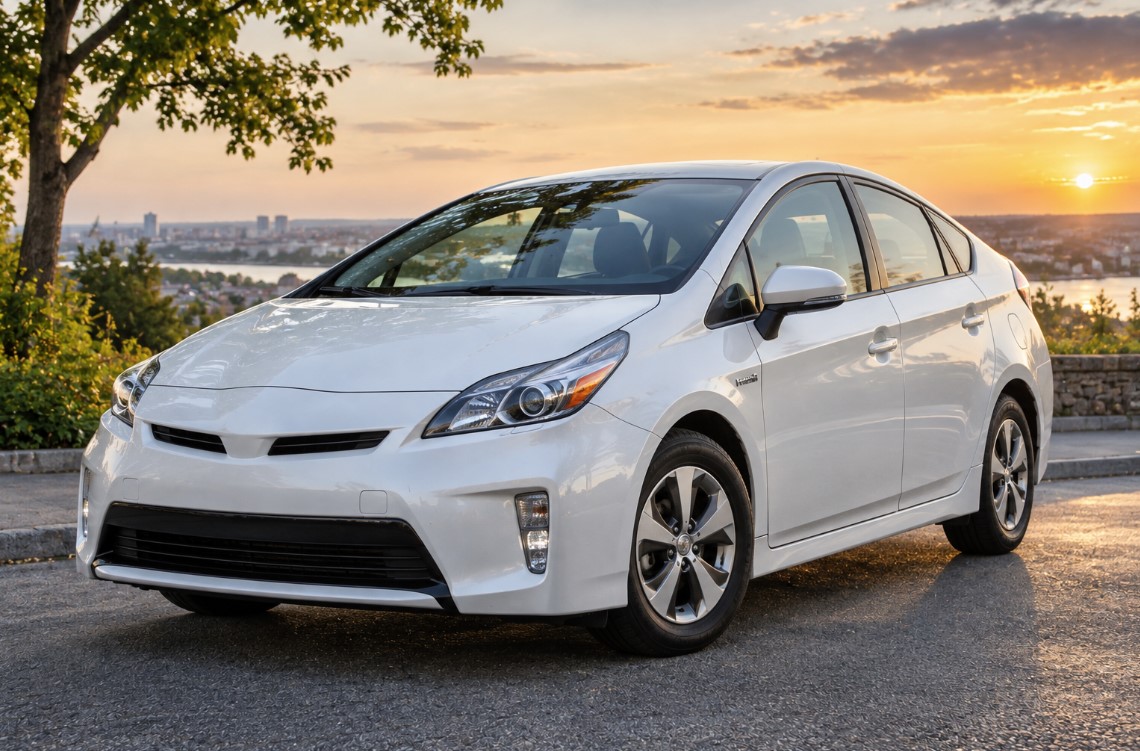
Car Keys When Buying a Used Car in Germany: How Many Should There Be and Why Can Two Different Keys Be Worth Checking?
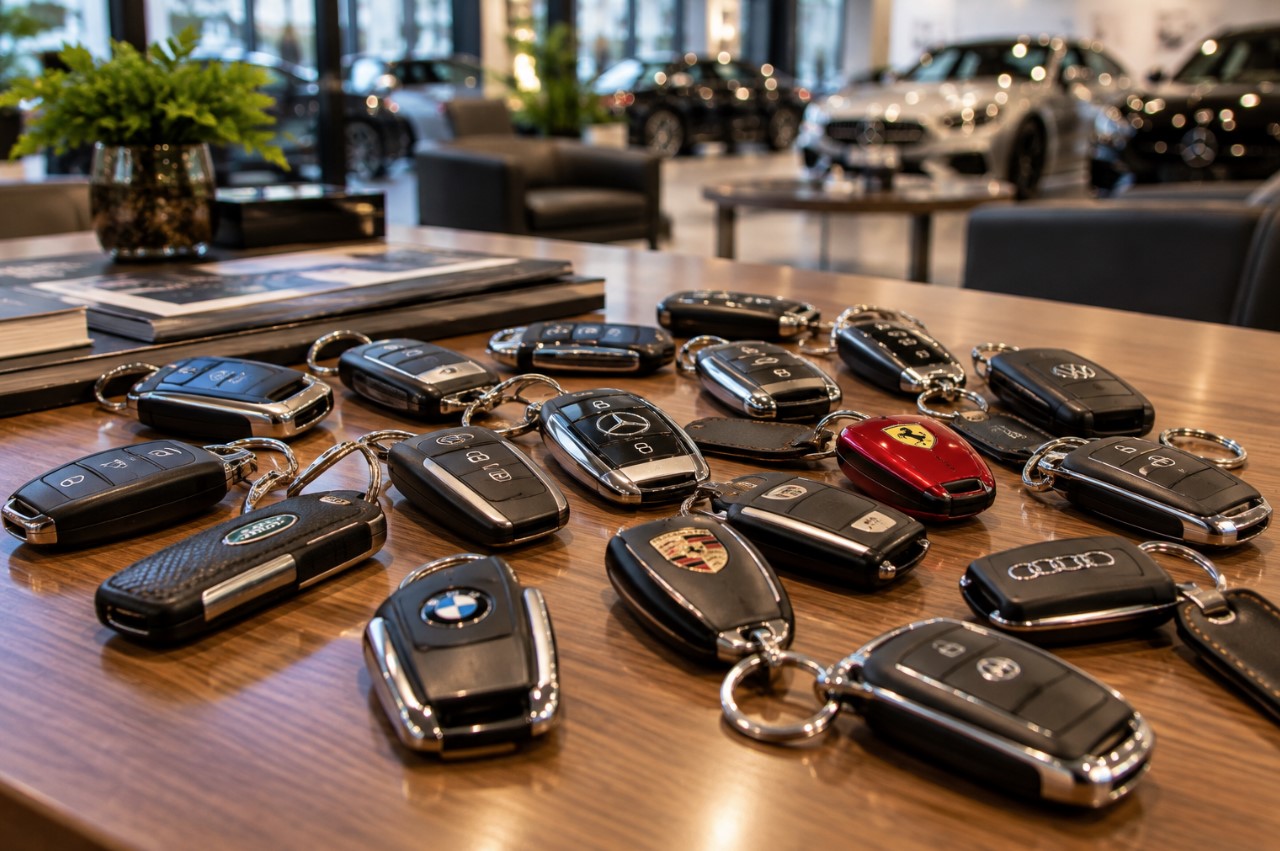
Two key fobs are lying on the table — does that automatically mean everything is fine with the car's keys? Not necessarily. When inspecting a used car, it is worth establishing how many keys or access devices are actually being handed over, whether each one works correctly, whether they match the vehicle's equipment, and why one key may look different from the other.
⚡ Quick Answer
Two different-looking keys for the same used car are not automatically a red flag.
One key may have been replaced, repaired or ordered later. On some vehicles, the main and spare keys may also differ by design or functionality.
What deserves closer attention is a key that does not work, a seller who cannot explain where a replacement key came from, an advert that promised two keys when only one is available, or a key-related inconsistency combined with discrepancies in the mileage, VIN/FIN, documents or repair history.
🔑 Why Car Keys Should Be Checked When Buying a Used Car
During a used-car pre-purchase inspection in Germany, buyers naturally focus on the bodywork, engine, transmission, mileage, service history and vehicle documents.
The keys are often left until the very end of the inspection.
The seller puts two key fobs on the table, the buyer sees that there are two, and the matter appears settled.
🧩 But Small Details Can Sometimes Tell You More About a Car's History
Why do the two keys look different?
Why does one key unlock the car and start the engine, while the other works only partially?
Why does one key fob have additional buttons?
Why does the seller say that the previous owner “simply lost the second key”?
None of these details proves that something is wrong with the car.
But a proper inspection should establish whether the supplied keys are plausible for the vehicle, correspond to its equipment and fit the history being presented by the seller.
🔑 Two Different Car Keys: Normal or a Reason to Walk Away?
The most important point first:
⚡ Different-Looking Keys Do Not Automatically Mean Trouble
If a seller hands over two car keys that look different, this is not automatic evidence of an accident, theft, manipulation or a suspicious vehicle history.
There may be perfectly ordinary explanations:
This means the question “Do both keys look identical?” is secondary.
More important questions are:
- Do both keys actually work?
- Can the engine be started with each key separately?
- Does the remote central locking work?
- Does the keyless-entry system work if the vehicle is equipped with one?
- Are the keys plausible for the vehicle's factory equipment?
- Is there a credible explanation for a replaced or missing key?
⚠️ The main reason for further investigation is not a different key housing. It is the absence of a plausible explanation, especially when combined with other inconsistencies in the vehicle's history.
🧩 What Types of Car Keys Can You Encounter?
A modern Autoschlüssel is no longer simply a piece of metal used to turn an ignition lock.
Depending on the vehicle, one key or access device may perform several functions:
- mechanically unlocking a door;
- identifying itself to the immobiliser;
- remotely controlling the central locking;
- authorising engine start;
- enabling keyless entry;
- controlling additional convenience functions.
| Key Type | Main Function | What to Check |
|---|---|---|
| 🗝 Mechanical Key | Door lock / ignition | Mechanical operation + immobiliser transponder |
| 📡 Funkschlüssel | Remote-control key | Unlocking, locking, engine start |
| 🔄 Klappschlüssel | Folding blade + electronics | Blade, buttons, immobiliser |
| 📶 Keyless Key | Vehicle access without removing the key from your pocket | Door recognition, locking, Start/Stop |
| 🆘 Emergency Key | Emergency mechanical access | Presence, blade condition and lock compatibility |
| 💳 Key Card / Digital Device | Electronic vehicle authorisation | Actual functionality, permissions and transfer to the buyer |
🗝 1. Mechanical Car Key: Simple on the Outside, Not Always Simple Inside
The traditional mechanical key is most commonly associated with older vehicles.
Its metal blade physically turns the door-lock cylinder and ignition lock.
However, even a key that looks completely mechanical may contain an immobiliser transponder.
❗ A Common Buying Mistake
The key unlocks the door and turns in the ignition, so the buyer assumes that it is fully functional.
That is not necessarily true.
If the electronic transponder is not recognised by the immobiliser, the mechanical part of the key may work while the vehicle still refuses to start normally.
✅ During a used-car inspection, start the vehicle separately with every key that the seller intends to hand over.
📡 2. Funkschlüssel: Remote Central-Locking Key
One of the most common key types found on used cars from recent decades is the German Funkschlüssel, meaning a key with remote-control functionality.
The key fob typically includes buttons for:
- 🔓 unlocking the vehicle;
- 🔒 locking the vehicle;
- 🚪 opening or releasing the luggage compartment.
Depending on the model, holding a button or using a specific combination may also control the windows, sunroof or other convenience functions.
🔍 What to Check on a Remote Car Key
🔄 3. Klappschlüssel: The Familiar Folding Key Used by Volkswagen, Audi, Škoda, SEAT and Other Brands
Pressing a button releases the metal blade from the key housing.
This type of key typically combines:
- 🗝 a mechanical blade;
- 🔐 an immobiliser transponder;
- 📡 remote central-locking controls.
On the German used-car market, it is perfectly possible to encounter a vehicle with one folding key that appears factory-original and another key with a different housing or one that was produced later.
⚡ Different Key Housing = Suspicious Vehicle History?
No.
The housing can be replaced independently of the electronics. What matters is that the second key's functionality is tested properly.
📶 4. Keyless Entry, KEYLESS-GO and Comfort Access: There Is More to Check Than the Buttons on the Key Fob
In a vehicle equipped with keyless entry, the driver can normally leave the key fob in a pocket or bag.
The vehicle detects an authorised key nearby and allows the driver to unlock the doors and, depending on the system, start the engine using the Start/Stop button.
Manufacturers use different commercial names for these systems. For example, Mercedes-Benz is well known for KEYLESS-GO, while BMW uses Comfort Access / Komfortzugang.
⚠️ Testing Only the Buttons Is Not Enough
A key fob may successfully lock and unlock the car using its buttons, but that does not prove that every function of the keyless-entry system works correctly.
🔍 Test Every Key Separately
🔑 Important: when testing one key, the second working key should not remain close to the vehicle.
Otherwise, the vehicle may detect the second key instead, causing the buyer to incorrectly conclude that the key being tested is fully functional.
🆘 5. Emergency Key Blade: A Small Detail You May Need When the Battery Is Flat
Many modern electronic car key fobs contain a small mechanical key blade.
It may be needed if:
- the key-fob battery is flat;
- the vehicle's 12-volt battery is discharged;
- the central locking system cannot be operated in the normal way.
On some vehicles, the mechanical door-lock cylinder is concealed behind a trim cover, which means an owner may rarely or never use the emergency blade.
✅ During a pre-purchase inspection, check whether the emergency mechanical blade is actually present in every key fob where one is supposed to be fitted.
💳 6. Key Cards, Electronic Devices and Digital Keys: Do Not Count Only the Key Fobs
Some manufacturers have used, or continue to use, electronic key cards and other forms of vehicle authorisation.
On newer vehicles, certain access functions may also be connected with digital solutions and compatible electronic devices.
⚡ So Instead of Asking “How Many Keys Are There?”
A more precise question is:
“Which physical and electronic access or authorisation devices are intended for this vehicle, and which of them will actually be transferred to the buyer?”
This can be particularly relevant on modern, highly equipped vehicles, where the term “set of keys” may mean more than two identical key fobs.
🇩🇪 What Types of Keys Are Found on German Cars?
Car-key design has evolved alongside vehicle generations, electronic systems and equipment specifications.
For that reason, you cannot reliably determine what the “correct key” should look like based only on the car's brand.
Even two cars from the same manufacturer and approximately the same year may use different access systems depending on the model, generation and equipment specification.
⚡ The Key Rule When Inspecting a Used Car
Avoid assumptions such as: “Every BMW from this year should have this type of key” or “Every Volkswagen should come with two identical key fobs.”
Instead, establish which access system is fitted to the specific vehicle being inspected and which keys the seller will actually hand over.
🚙 Volkswagen Keys: From a Conventional Schlüssel to Keyless Entry
Depending on the model and generation, Volkswagen vehicles can be found with:
- 🗝 conventional mechanical keys with an immobiliser transponder;
- 🔄 classic folding Klappschlüssel;
- 📡 Funkschlüssel with remote-control functions;
- 📶 electronic keys for vehicles equipped with keyless access.
The folding-key format is particularly familiar from many generations of models such as the Volkswagen Golf, Passat, Touran and Tiguan.
Newer vehicles increasingly use electronic key fobs that do not require a metal blade to be inserted into an ignition lock.
🔍 What If a Volkswagen Comes with Two Different Keys?
One original-looking key and a second key with a noticeably different housing are not, by themselves, a reason to reject the car.
However, check whether:
- both keys start the vehicle;
- remote locking and unlocking work;
- the emergency mechanical blade is present where applicable;
- the Keyless system works with each key if the vehicle is equipped with it.
◉ Audi Keys: Functions Should Match the Vehicle's Equipment
Audi has also used different generations of vehicle keys, ranging from mechanical and folding designs to electronic key fobs for keyless-access systems.
During an inspection, particular attention should be paid to whether the key's functions correspond to the actual equipment of the vehicle.
⚡ Example
If an Audi is advertised as having a comfort keyless-access system, simply pressing the lock and unlock buttons on the key fob is not sufficient.
The actual keyless-entry functionality should be tested with every key being transferred to the buyer.
On expensive models such as the Audi A6, A7, A8, Q7, Q8, S and RS models, the absence of a fully functional second key may result in additional costs after purchase.
⚠️ The cost of producing, programming or replacing a key depends on the specific model, generation, access system and method used to carry out the work.
For that reason, it is sensible to obtain a price for the specific vehicle being considered, rather than relying on a generic estimate.
🔵 BMW Keys: Why You Should Not Judge by Appearance Alone
BMW has used several recognisable generations of car keys over the past few decades.
Older models may use traditional keys with remote-control buttons.
Later generations introduced electronic key fobs that, on certain models, were used together with a dedicated key slot, while the engine was started using a Start/Stop button.
Another development was the introduction of Comfort Access / Komfortzugang, allowing the driver to use the vehicle without taking the key fob out of a pocket or bag.
Some models have also used more sophisticated electronic key solutions with additional functions.
❗ “These BMWs Always Have a Different Second Key”
A statement like this from a seller should not automatically be accepted as fact.
The relevant factors are the specific BMW model, generation, equipment specification and the actual operation of both keys.
✅ Two visually similar BMWs from the same generation may still have different access systems.
Therefore, inspect the equipment of the specific car rather than relying on a general assumption about the model.
⭐ Mercedes-Benz Keys: Standard Electronic Key vs KEYLESS-GO
Mercedes-Benz is particularly well known for the electronic keys used across various generations of models such as the C-Class, E-Class, S-Class, GLE and GLS.
Depending on the generation and equipment specification, a Mercedes-Benz may use a conventional remote electronic key or be equipped with KEYLESS-GO.
The electronic key fob can provide remote central-locking functions and engine-start authorisation, while appropriately equipped vehicles may additionally provide keyless entry.
🔑 Test Both Mercedes-Benz Keys Independently
It is possible for one key to function correctly while the second unlocks the vehicle but has problems with certain functions or is not recognised by the vehicle as expected.
Therefore, seeing two key fobs does not automatically mean that the vehicle comes with two fully functional keys.
🏁 Porsche Keys: Completeness Matters Even More on an Expensive Car
Porsche car keys often have a distinctive design, and on some generations the shape of the key fob stylistically resembles the silhouette of a car.
However, when buying a used Porsche, the appearance of the key is far from the most important issue.
🔍 This Is Particularly Relevant When Considering a
- Porsche 911;
- Cayenne;
- Panamera;
- Taycan;
- rare or expensive specification;
- potentially collectible vehicle.
Check the number of keys being supplied, whether each one works, and whether they correspond to the vehicle.
📚 On an expensive vehicle, a retained set of keys, documents and other accessories can form another useful part of the overall picture of how the car has been owned and maintained.
However, a complete set of keys and accessories does not by itself prove an impeccable vehicle history.
🚘 Opel and Other Brands: There Is No Universal “Two Identical Keys” Rule
Opel has also used mechanical, folding and electronic keys across different generations of its vehicles.
Therefore, a statement such as:
“Every Opel should have two identical keys”
is too simplistic.
The same principle applies to practically every vehicle manufacturer.
The more useful question is:
🔑 Which keys and authorisation devices are intended for this specific vehicle, and which of them will actually be handed to the buyer?
👀 Should Both Car Keys Look Identical?
⚡ Short Answer: No
Two keys looking different does not, by itself, prove that there is a problem with the car.
🔑 Scenario 1: One Key Is Heavily Worn, the Other Looks Almost New
This can be completely logical.
One key may have been used every day, while the second key spent years at home as a spare.
🔑 Scenario 2: The Main Key Is Old, but the Second Key Looks Much Newer
The second key may have been produced later, for example after the original key was lost.
This is not necessarily a problem either.
However, it raises a perfectly reasonable question:
❓ When and why was this key produced, and what happened to the previous one?
🔧 Scenario 3: Only the Key Housing Looks Different
The plastic housing of a car key is a wear item.
It may have been replaced while the original electronics remained in use.
⚠️ Therefore, the appearance of a key fob alone cannot reliably establish its origin or the history of the vehicle.
🚩 When Should Different Car Keys Actually Raise a Red Flag?
The main warning sign is not simply that the two key fobs look different.
What deserves attention is the absence of a logical explanation or an actual functional problem.
❗ The Combination of Warning Signs Matters Most
One replaced key rarely justifies a serious conclusion about a vehicle on its own.
But if it appears together with VIN/FIN discrepancies, questionable mileage, inconsistent documents, gaps in the service history or evidence of major body repairs, the overall situation deserves much closer examination.
1️⃣ Used Car Sold with Only One Key: How Serious Is It?
Cars offered with only one key are not unusual on the used-car market.
The explanation may be completely ordinary:
- the second key was lost;
- a previous owner did not hand it over;
- the second key fob was damaged;
- part of the original set disappeared during years of ownership.
For the buyer, however, a missing second key creates at least three separate issues.
💶 1. Additional Cost
After buying the car, you may need to order, produce and authorise an additional key.
The cost depends on the specific vehicle.
🧰 2. Practical Convenience
If the only remaining key is lost or damaged, the situation can become considerably more complicated.
🔐 3. Security
You may not know where the missing key is or whether it is still capable of authorising access to or use of the vehicle.
⚡ The Most Important Question
Do not ask only:
“Why is the second key missing?”
Also ask:
“Can the missing key be deactivated for this vehicle, and can a new key be correctly added and authorised?”
⚠️ The options for deleting, blocking, deauthorising or programming keys depend on the manufacturer, model, generation and electronic architecture of the vehicle.
📚 Can a Missing Second Key Indicate a Questionable Vehicle History?
⚡ It Can — but It Certainly Does Not Have To
A missing key is a reason to ask additional questions.
It is not, by itself, a reason to conclude that the vehicle has a problematic history.
Over the years, a used vehicle may have passed through:
A professional pre-purchase inspection should therefore not be built around one isolated clue.
The objective is to assess a combination of independent facts.
🧩 Example of Cross-Checking
One missing key is one isolated fact.
But:
missing key + unclear history + inconsistent documents + questionable mileage + evidence of substantial body repairs
creates a very different overall picture.
🔍 This is why the keys should be considered as one part of the wider process of establishing whether the physical vehicle corresponds to the information supplied by the seller.
🔍 How to Test Every Car Key Before Buying a Used Car
Simply seeing two key fobs on the seller's desk is not enough.
Every key that will be transferred with the vehicle should ideally be tested separately and in practice.
⚡ The Most Important Testing Rule
When testing one key, move the second working key sufficiently far away from the vehicle.
This is particularly important on cars equipped with keyless entry and Start/Stop engine authorisation.
1️⃣ Inspect the Key Housing
First check the external condition of each key:
- cracks in the housing;
- damaged buttons;
- worn or missing symbols;
- signs that the housing has been opened;
- poorly fitting housing sections;
- missing components;
- damage to the mechanical key blade.
💡 A heavily worn housing does not necessarily mean that the electronics are faulty.
Conversely, a clean new housing does not prove that the key is fully functional.
2️⃣ Test the Remote-Control Buttons
If the key fob has the relevant functions, test them separately:
3️⃣ Start the Engine with Each Key
One of the most important steps is to establish that every key being handed over genuinely authorises the vehicle to start.
Test the first key, move it away, and repeat the procedure with the second key.
❗ A key fob that operates the central locking but cannot authorise the engine to start should not be regarded as a fully functional second key.
4️⃣ Test Keyless Functions with Each Key Separately
If the vehicle is equipped with keyless access, check:
- keyless unlocking;
- keyless locking;
- recognition of the key inside the cabin;
- engine start;
- additional functions where fitted.
🔑 Why Should the Second Key Be Kept Away from the Car?
Because the vehicle may detect the second, fully functional key.
The defective key being tested could then appear to work correctly even when it does not.
5️⃣ Watch the Instrument Cluster for Key-Related Messages
When testing each key, pay attention to warnings or messages such as:
- key not detected;
- replace key battery;
- hold the key near a specified recognition area;
- access-system malfunction.
⚠️ The exact wording varies according to manufacturer, model and vehicle interface language.
🗝 Checking the Emergency Mechanical Key Blade: Why Does It Matter?
In a modern key fob, the mechanical key may remain unused for years.
That is also why a buyer may discover a problem only after purchasing the vehicle — for example, when the car's 12-volt battery is flat.
🔍 What Should You Check?
✅ Where the vehicle design and inspection conditions allow, it can be useful to test mechanical door unlocking with the appropriate blade.
⚠️ On some vehicles, the lock cylinder is concealed behind a trim cover.
Do not remove trim using excessive force or in a way that could damage the seller's vehicle.
🧮 Can Key Wear Tell You Anything About a Car's Real Mileage?
⚡ Only Indirectly
The condition of a key can be considered as one of many visual indicators, but you cannot determine a vehicle's genuine mileage from key-fob wear.
One driver may keep the car key separately and handle it carefully.
Another may carry it together with a large set of metal keys that quickly scratch and damage the housing.
Some owners regularly press the key-fob buttons, while a driver with keyless access may hardly touch those buttons at all.
🔍 So Compare the Key with the Overall Vehicle
❗ A common mistake is to see a heavily worn key and immediately claim that the car's mileage must have been rolled back.
Such a conclusion cannot be supported by the condition of the key alone.
✨ Why a Very New-Looking Key on an Older Used Car Is Also Worth Asking About
Imagine a car that is ten, fifteen or more years old.
One key looks consistent with that age, while the second appears almost new.
This is not evidence of a problem.
But it is reasonable to ask why.
🧩 A new-looking key becomes genuinely interesting not because it is new, but when the seller's explanation conflicts with other facts about the vehicle.
🧩 Compare the Keys with the Bodywork, VIN/FIN, Interior, Documents and Diagnostics
One of the fundamental principles of a professional pre-purchase vehicle inspection is simple:
do not draw major conclusions from one isolated clue.
Car keys become more useful as part of the inspection when their condition, number and functionality are compared with other information about the vehicle.
| What We Check | What We Compare | Why It Matters |
|---|---|---|
| 🔑 Keys | Number, functions, appearance | Check completeness and identify questions |
| 🔢 VIN / FIN | Vehicle and documents | Verify the vehicle's identity |
| 🎨 Bodywork | Paint, fasteners, panel gaps, repairs | Look for evidence of previous work |
| 🪟 Glass | Markings and condition | Another element in the vehicle's overall history |
| 🪑 Interior | Wear and claimed mileage | Assess whether the overall picture appears plausible |
| 📚 Documents | Dates, mileage, servicing | Build a chronological ownership and maintenance picture |
| 💻 Diagnostics | Available parameters and fault codes | Supplement the physical inspection |
⚡ The Cross-Checking Principle
The more independent elements support the same vehicle history, the easier it becomes to understand the specific car you are considering.
Conversely, if different sources of information repeatedly contradict one another, the reason should be clarified before the purchase contract is signed.
🇩🇪 What Should You Ask a German Car Seller About the Keys?
Several simple questions can be asked before you even travel to inspect the vehicle.
🔑 Wie viele Fahrzeugschlüssel sind vorhanden?
How many vehicle keys are available?
🔧 Funktionieren alle Schlüssel vollständig?
Are all the keys fully functional?
❓ Wurde ein Schlüssel ersetzt oder nachbestellt?
Has any key been replaced or ordered later?
📄 Gibt es eine Rechnung für den nachbestellten Schlüssel?
Is there an invoice for the replacement or additional key?
🔐 Ist ein verlorener Schlüssel noch im Fahrzeug angelernt?
Is a lost key still authorised in the vehicle?
📶 Funktioniert Keyless mit beiden Schlüsseln?
Does the Keyless system work with both keys?
💡 These questions are particularly useful when an advert states “2 Fahrzeugschlüssel” or “2 Schlüssel vorhanden”.
It is better to clarify what this actually means before travelling a long distance to inspect the car.
⚖️ Should You Reject a Used Car Because It Has Only One Key?
⚡ Not Automatically
A missing second key is a disadvantage, but it should be assessed in the context of the entire vehicle.
✅ Scenario A: The Situation Is Clear
The second key has been lost, the seller discloses this in advance, the remaining key works fully, and the other information about the vehicle does not raise significant concerns.
In this situation, the missing key is primarily a matter of cost and security.
🚩 Scenario B: The Story Does Not Add Up
The seller changes the explanation, the keys work only partially, the documents contain discrepancies, the mileage raises questions, and the vehicle's history remains unclear.
In this situation, the keys provide another reason to investigate the vehicle more thoroughly.
❗ A purchase decision should not be based solely on the number of vehicle keys.
Much more important are the technical condition, bodywork, documents, vehicle identity, history, mileage and price of the specific car.
✅ Mini Checklist: Car Keys Before Signing the Kaufvertrag
Before completing the purchase, run through this short checklist:
📌 If the advert explicitly states “2 Fahrzeugschlüssel” but only one key is available when the vehicle is handed over, clarify this issue before signing the purchase contract and making payment.
🔬 Used-Car Inspection in Germany: Why Sicher-Check Looks at More Than the Engine
A professional Fahrzeugcheck vor dem Kauf consists of many individual checks.
Each small detail may appear insignificant on its own. Together, however, these details help build a much more complete picture of the vehicle.
🧩 Why Can Small Inconsistencies Matter?
Paint thickness on one wing. A date marking on a window. Wear on the driver's seat. A service-history entry. Tyre condition. A fault stored in an electronic control unit. The number of keys.
Individually, these details rarely provide a definitive answer.
Together, they help establish whether the physical condition of the vehicle is consistent with its mileage, documents and the seller's description.
📍 Pre-Purchase Car Inspection in Berlin, Brandenburg and Across Germany by Arrangement
If you have found a used car in Germany but cannot inspect it thoroughly yourself, you can send us the vehicle listing.
This can be particularly useful when the buyer:
- lives in another German city;
- lives outside Germany;
- is planning to export the vehicle;
- does not want to travel hundreds of kilometres to an obviously unsuitable car;
- wants additional independent information before making a decision.
⚡ What Should You Send First?
Start with the link to the vehicle advert.
If you already have the VIN/FIN, photographs of documents, service records or additional information from the seller, these can also be useful.
🏁 Conclusion: Different Keys Are Not a Problem by Themselves — the Overall Picture Matters
Two visually different keys belonging to the same vehicle are not automatically a red flag.
One key may have been replaced, repaired or ordered later. The housing may have been replaced separately. A spare key may have seen almost no use.
Depending on the model, generation and equipment specification, the vehicle's original access and authorisation devices may also differ.
🚩 What Should Actually Concern a Buyer?
- one key does not start the vehicle;
- some functions do not work;
- the seller cannot explain the origin of a replacement key;
- the advert states that two keys are available, but only one can actually be provided;
- a lost key remains a potential security consideration;
- key-related discrepancies appear together with other inconsistencies in the vehicle's history.
🔑 Five Questions Before Buying
1. How many keys are actually available?
2. Does every key work fully?
3. Do the key functions correspond to the vehicle's equipment?
4. Why are the keys different, or what happened to the missing key?
5. Is the seller's explanation consistent with the rest of the vehicle's history?
🧩 The Main Point
A car key is a small detail.
But a good used-car inspection consists of many such details.
Together, they help answer the most important question:
does the actual vehicle correspond to what the seller is telling you about it?
❓ FAQ: Car Keys When Buying a Used Car in Germany
1. How many keys should a used car have?
There is no universal number that applies to every vehicle. It depends on the manufacturer, model, year and original specification. The buyer should establish which keys or access devices belong to the specific vehicle and what the seller is actually handing over.
2. Should both car keys look identical?
Not necessarily. One key may have been replaced, repaired or fitted with a new housing. A spare key may also have been used much less frequently. The important point is to test every key separately.
3. Can I buy a used car with only one key?
The absence of a second key does not automatically mean that you should reject the car. However, establish why it is missing, what a replacement may cost and whether the missing key can be deauthorised, where applicable to that specific vehicle.
4. Why should the engine be started with every key?
Because working remote central locking does not prove that the key is correctly authorised by the vehicle for engine start. Every key being handed over should ideally be tested separately.
5. How do I test Keyless or KEYLESS-GO?
Test normal keyless unlocking, locking, recognition of the key inside the vehicle and engine start. Keep the other working key sufficiently far away so that it does not interfere with the test.
6. Can diagnostics show how many keys are programmed to a car?
On some vehicles, relevant information may be available through diagnostic, specialist or manufacturer-level systems. The possibilities depend on the manufacturer, model, generation and electronic architecture.
7. Is it dangerous to buy a car if one key has been lost?
A missing key does not automatically mean that the car is unsafe or has a suspicious history. However, it is sensible to establish whether the missing key can be deauthorised and a new key added, because the available procedures differ between vehicles.
8. Can key wear reveal the car's real mileage?
No. Key condition is only an indirect indicator. It can be compared with the steering wheel, driver's seat, pedals, controls, service history and HU/TÜV reports, but mileage cannot be established from key-fob wear alone.
9. Why does an older car have one worn key and one almost-new key?
A new key may have been ordered after the original was lost or damaged. Only the housing may have been replaced, or the spare key may simply have seen very little use. It is a reasonable question to ask, but not proof of a problem.
10. Should I check the mechanical blade inside an electronic key?
Yes, if the key is designed to contain one. Check that it is present and corresponds to the vehicle, because it may be needed if the key-fob battery or the vehicle's 12-volt battery is flat.
11. Is a missing second key a reason to negotiate the purchase price?
It can be a legitimate negotiation point because the buyer may face additional costs for a replacement key, authorisation and potentially dealing with the missing key. The actual cost depends on the specific model.
12. Does Sicher-Check inspect the car keys during a pre-purchase inspection?
During a vehicle inspection, we can check the completeness and functionality of the keys being handed over within the available functions of the specific vehicle and the inspection conditions. The keys are assessed together with the documents, bodywork, technical condition and other available indicators.
📲 Buying a Used Car in Germany?
Do not limit a pre-purchase inspection to the engine and paint-thickness readings.
Documents, service history, electronics, interior condition, tyres, equipment and even the set of keys can help build a more complete picture of the vehicle.
If you have already found a car, send us the link to the advert.
📚 Related Articles
Continue preparing for your vehicle purchase with our guides to inspecting expensive, classic and used cars in Germany.