
 Why a same-day inspection is crucial – speed matters (article 48)
Main sources of almost new cars in Germany
Many buyers want an almost new car with a noticeably lower price than a factory-fresh one. On the European market, a car typically loses around a quarter of its value in the first year, and after three years it can be worth roughly half of its original price. This explains the popularity of cars with mileage up to 30,000 km – on the used market you can get something very close to new, but at a much lower price. However, experts warn: low mileage on its own does not guarantee a perfect car. Behind the nice odometer reading, there may be a number of “hidden traps” – which is why a proper check before purchase is essential.
In Germany, there are many low-mileage offers coming from different sources:
- ✔️Ex-leasing company cars. When leasing contracts end, companies often renew their fleets and sell cars that technically had one or two keepers. These ex-leasing cars in Germany are sold below new-car prices. They are usually serviced regularly, with transparent mileage – fleet users are obliged to observe service intervals and digital service records are often maintained. This means that, on paper at least, the service history tends to be clear.
- ✔️Short-term rental cars. Rental companies (Sixt, Europcar, etc.) regularly refresh their fleets and de-fleet nearly new cars. These vehicles may have been driven often and intensively, but after one to two years their mileage sometimes still stays in the 20,000–30,000 km range.
- ✔️Dealer demo and test-drive cars. Franchised dealers sell off demo cars and test-drive vehicles at regular intervals. Due to countless test drives (short trips, fast motorway sprints, sometimes rough treatment), these cars can be more “worked hard” than the mileage suggests – even though they look almost new. High turnover in demo fleets explains the large number of “almost new” offers: dealers constantly replace test cars with the latest models and sell the old ones after around 20–30,000 km.
- ✔️Company cars allocated to employees. Many firms provide cars for employees as part of their job. When the internal fleet is renewed, these corporate vehicles (often with a single user) reach the used market and are also considered “young” by mileage.
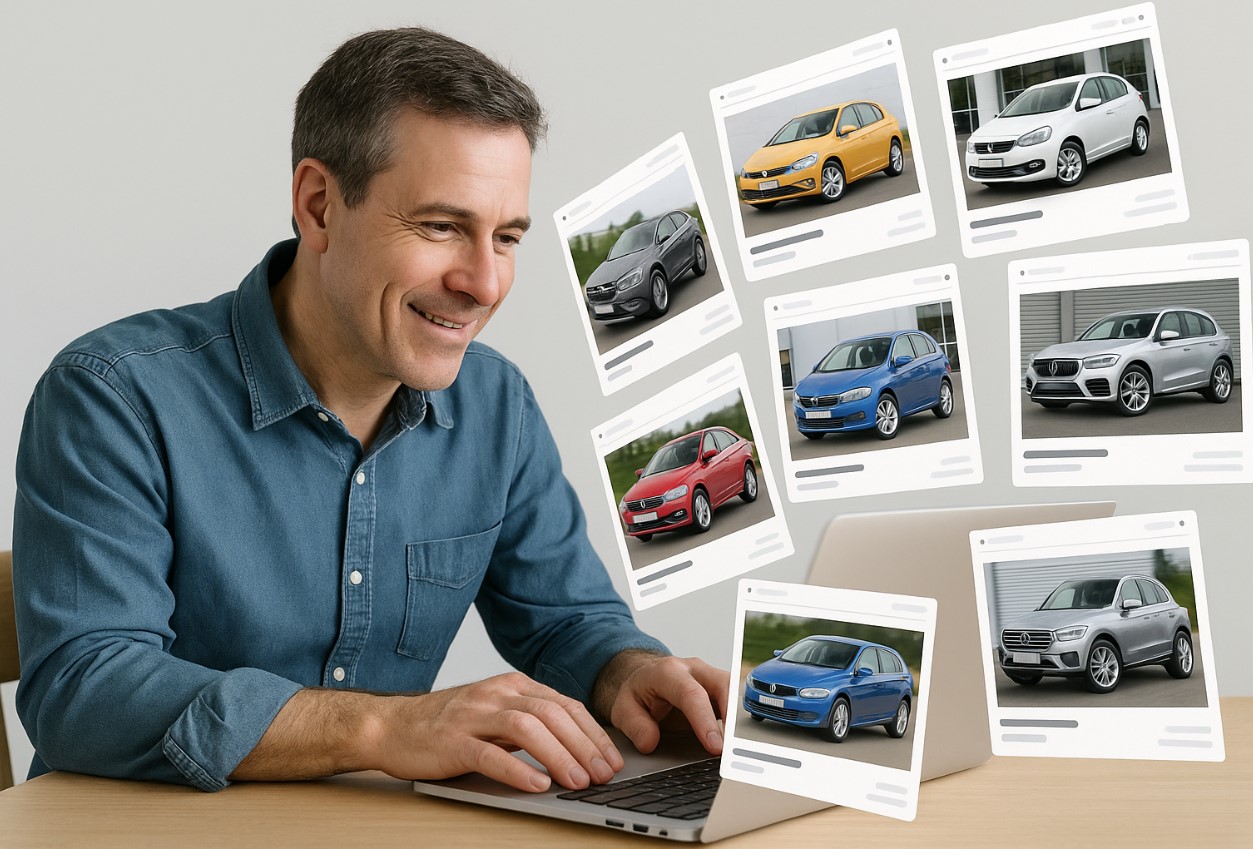
So where do you actually look for low-mileage cars in Germany? Most often on the big online platforms (mobile.de, AutoScout24, etc.) and at dealers who sell returned leasing cars, ex-rentals and demo vehicles. You can narrow down the search by adding a mileage filter such as “up to 30,000 km”.
Pros and cons of low-mileage cars
The key advantages of almost new cars are obvious:
- 💯They are significantly cheaper than new ones. Thanks to rapid depreciation, an almost new car can cost many tens of percent less than a brand-new equivalent.
- 💯The manufacturer’s warranty is often still valid (especially for cars aged 1–3 years).
- 💯The cars are usually well maintained: especially in leasing fleets, regular servicing is strictly monitored. This is confirmed by a complete service book and invoices from official dealers. Due to precise procedures, such cars often have verifiable mileage and a full service trail.
- 💯Good equipment levels. Corporate and demo vehicles often come with attractive option packs – companies appreciate practicality and safety. As a result, you can find well-specced models on the used market.
The downsides and risks:
- ❗Wear and tear from intensive use. Demo cars and ex-rentals can clock up hundreds of short trips and test drives in a very short time, which stresses components more than gentle private use. Even with low mileage, clutch, automatic gearbox and suspension components may already show noticeable wear.
- ❗Hidden accident damage. Some sellers “rejuvenate” cars after accidents with cosmetic repairs (local repainting, filler) and advertise them as accident-free. From the outside, they look new, but structural damage underneath can remain. Bargain-priced cars with suspiciously low mileage are especially likely to hide this kind of history.
- ❗Mileage fraud. In practice, a substantial share of used cars can have manipulated odometers. Even in Germany, where this is a criminal offence, dishonest sellers still roll back mileage. A low figure like 20–30,000 km is psychologically very attractive, so it is sometimes used to “mask” a real mileage that is tens of thousands of kilometres higher. So low mileage is not proof of perfection – even a “showroom-fresh” car needs to be checked.
- ❗Legal risks. When buying, you must make sure the car is not subject to outstanding finance, a lien or theft proceedings. Some almost new cars are sold because of financial difficulties, and the car might still be part of a credit agreement. If this is not discovered in time, it can cause problems later with registration or repossession.
In short, “cars with up to 30,000 km” offer all the advantages of a new vehicle (low wear, modern technology, and often warranty), but they can still come with serious hidden issues: anything from repaired accident damage to mileage manipulation. Buying an almost new car therefore requires at least as much care as buying an older one – especially if you are organising car buying in Germany from abroad.
Why even almost new cars need checking
Even for nearly new cars, you should never rely on the odometer alone. Experts recommend a pre-purchase inspection in Germany in all cases where you are not 100% certain about the car’s history. This is particularly important with mileage up to 30,000 km:
- Low mileage can still hide serious defects or traces of previous accidents that have been cosmetically repaired.
- Parallel imports without dealer warranty and financial issues of previous owners create additional risks: for instance, the car could still be pledged as collateral to a bank.
- Demo and rental cars may have seen heavy use – frequent cold starts, short trips, aggressive driving. Their electronics and suspension can therefore be more worn than the odometer suggests.
- Where sellers are not honest, they may manipulate the mileage. That can easily lead to overpaying thousands of euros.
That’s why even a “fresh” car should be checked like a normal used one: history, factory documents and real technical condition. Independent diagnostics and expert assessment reduce many of these risks – and this is a core part of any serious car-buying service in Germany.
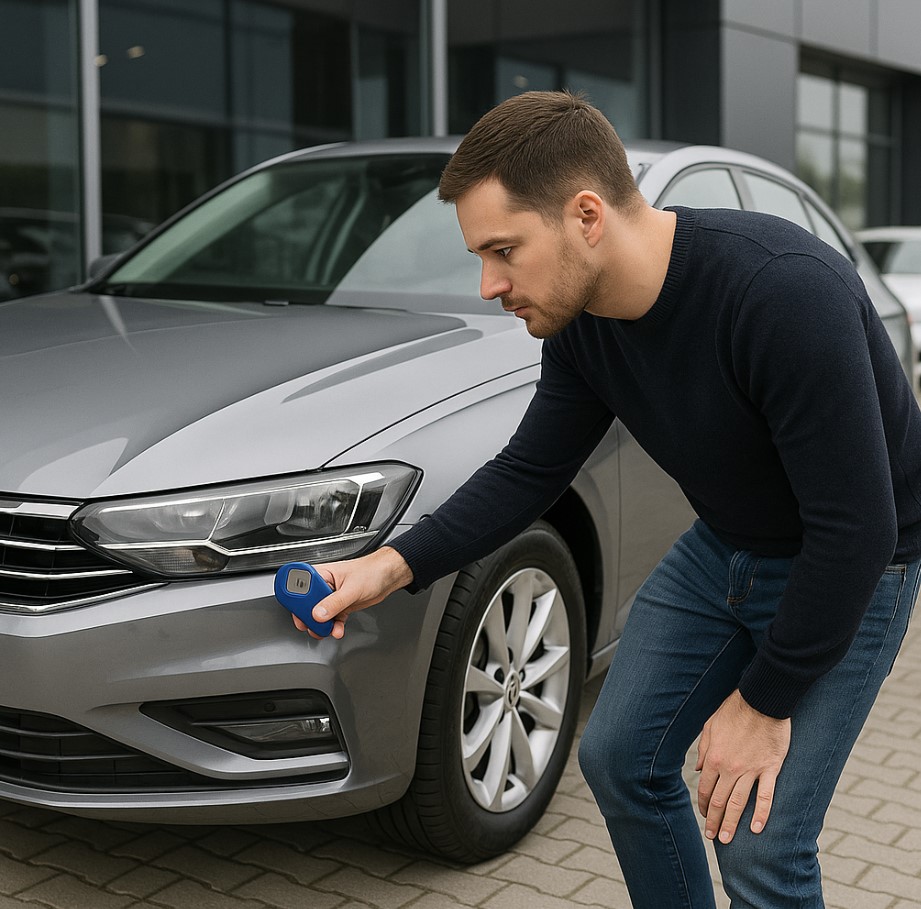
Professional bodywork inspection: the specialist checks paint thickness with a gauge and looks for dents, resprays and subtle repair signs.
How to reveal potential problems
To make your purchase as safe as possible, you should use a combination of checks. In particular:
Visual bodywork and paint inspection
Look closely at the car’s body: search for paint differences, filler marks, welding and rust. Any mismatch in colour shade or surface texture between panels can indicate repainting. Measuring paint thickness with a gauge helps to detect repaired areas that are invisible to the naked eye.
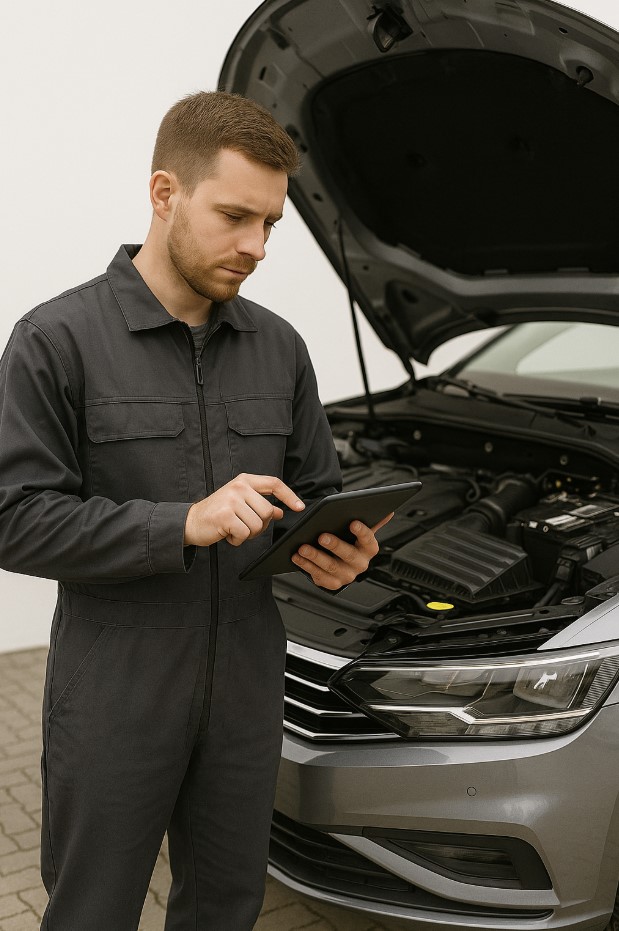
Computer diagnostics: connecting a professional scanner lets us read fault codes from all control units and check whether the mileage figure is plausible.
Computer diagnostics (OBD)
Connect a professional diagnostic tool to the car’s OBD port. Car buying experts typically use multi-brand dealer-level scanners (for example, LAUNCH or Bosch). These read out data from all control units – engine, automatic transmission, ABS, airbags, etc. They reveal hidden faults and, in many cases, stored mileage information in the ECUs. Even if the instrument cluster shows “30,000 km”, the engine control unit may remember a completely different figure.
Test drive
If possible, insist on a short test drive. It allows you to evaluate the engine and transmission (smooth starting, gearshifts), identify unwanted noises from the suspension and check how the car behaves at different speeds. During the drive, also test all electrical features: lights, wipers, air conditioning, infotainment – some faults only show up in real-world driving.
Paperwork and history
Always check the documents: service book, registration papers (Fahrzeugbrief/Zulassungsbescheinigung Teil II), inspection reports (TÜV/Dekra). Compare the VIN on the car with the number in the documents. Using paid databases (such as car history reports) you can find information about previous accidents, mileage anomalies or outstanding finance. Make sure the car is not subject to a lien or seizure. Neglecting document checks can later lead to unpleasant surprises – from registration refusals to ownership disputes.
Service records. A complete service book with regular entries, especially from an official dealer, is a very positive sign. A lack of entries or large gaps should make you cautious.
Independent expert
If you are not fully confident in your own experience, involve a professional inspection service. Even when buying from a dealer, independent used-car checks (Gebrauchtwagen-Check) are advisable. In most cases, a one-off inspection is much cheaper than repairing a modern automatic gearbox or air suspension later on. This is exactly where a professional car buying and inspection service in Germany comes into play: you let people who do this every day handle the technical and legal checks.
Following these steps helps you detect most issues before signing anything and prevents you from paying a “low-mileage premium” for a car that doesn’t really deserve it.
Examples of popular models
The German market is full of practical mid-class cars with mileage up to 30,000 km. Among them are models from major manufacturers that sell particularly fast:
- ✔️Volkswagen Golf, Passat, Tiguan. These are constant top sellers on the German market. Compact hatchbacks, estates and crossovers are widely used as fleet and leasing cars, which is why there are many low-mileage examples on the used market.
- ✔️BMW 1 Series and 3 Series. Popular in the corporate segment: stylish hatchbacks (1 Series) and relatively affordable premium saloons (3 Series) which companies often replace after 2–3 years.
- ✔️Mercedes A-, B- and C-Class. Compact and mid-size models from Mercedes-Benz attract those who want the badge and comfort. They are highly sought after and often available with low mileage from fleets.
- ✔️Audi A3, A4, Q3. Another “German trio”: the A3 hatch, A4 saloon/estate and Q3 compact SUV. Thanks to strong demand, low-mileage examples rarely stay on the market for long.
These models sell quickly because they combine practicality with prestige. They work equally well in city traffic and on the motorway, and servicing options are widely available. At the same time, the first owner has already absorbed a large part of the depreciation, which is where the real savings for the second owner come from.
From dealer or private seller?
Where is it better to buy a “young” car – from an official dealer or a private seller?
Buying from a dealer: usually you get a full set of documents and often some remaining warranty. A dealer can provide service history printouts and arrange export plates. The downside is higher prices and dealer margins. You are also likely to pay VAT and dealer fees. On the positive side, you sign a formal contract and receive an invoice – which adds legal security and clarity.
Buying from a private seller: cars from private owners can be cheaper and it is often easier to negotiate a discount – but the risks are higher. The seller is not obliged to provide warranty and you may not get a complete history (no service book, missing invoices). Many buyers run into trouble here because they skip a proper inspection and rely on trust. When buying from a private person, you must be especially careful checking the VIN, service records and possible encumbrances.
In general, the trade-off looks like this: dealers offer more legal protection and often better documented histories, but at a higher price; private sellers offer lower prices, but with less protection and more uncertainty. In both cases a full technical and legal inspection is strongly recommended – even if you are buying from a main dealer.
Tips: how not to overpay
To avoid overpaying for an “almost new” car, focus on the following points:
- ⚠️Real equipment level. Sometimes adverts mention a top specification, but the car in reality lacks expensive options. Always compare the equipment list with the actual car: missing leather interior, sunroof or navigation are good reasons to negotiate the price down.
- ⚠️Year of manufacture, not just mileage. A 2018–2020 car with 30,000 km can be more expensive than a newer 2021 model. Compare prices for similar years; it may be smarter to buy a slightly higher-mileage but younger car than an older model with artificially low mileage.
- ⚠️Mileage plausibility. Check the real mileage via documents and diagnostics. If you discover mileage manipulation, you can either walk away or demand a significant price reduction. In practice, rolled-back mileage can inflate the price by thousands of euros.
- ⚠️Use defects for negotiation. Any defects found (scratches, worn tyres, damaged wheels, minor leaks) are arguments for a discount. A detailed inspection report with a repair cost estimate gives you a strong basis for negotiation. Don’t be shy to ask for compensation or a lower price due to the issues found.
Attention to detail and confident negotiation bring the price closer to the real market value. The main thing is not to ignore flaws just because the advert looks perfect – use them as leverage for a fair deal.
Inspection by Sicher-Check: why it makes sense
Our recommendation is to let professionals inspect the car – even if it looks almost new. Sicher-Check in Berlin and Brandenburg offers full car buying support and pre-purchase inspections in Germany. We use all the key tools for an informed decision:
- 📜Exterior and interior inspection.
We carefully check paintwork, body panels, interior and engine bay to identify repaired areas, replaced parts or corrosion.
- 📜Computer diagnostics with a LAUNCH scanner.
Our specialists connect a dealer-level scanner to all control units. It detects hidden faults and lets us compare the displayed mileage with data stored in the ECUs.
- 📜Paint thickness measurements.
Using a paint thickness gauge, we can detect resprays and filler that reveal accident repairs or cosmetic touch-ups.
- 📜Paperwork and history check.
We verify the documentation (TÜV reports, service book, purchase contract) and check the VIN in external databases. This helps ensure legal clarity: no outstanding finance, no theft records, no “surprises” at registration.
- 📜Photo and video report.
All significant defects and findings are documented in photos and, where useful, short videos. You receive this report after the inspection and can use it when negotiating or clarifying warranty issues.
- 📜Consultation and negotiation support.
Based on the inspection, the expert provides a detailed condition report and clear recommendations. The list of defects and estimated repair costs gives you strong arguments when negotiating the price.
In other words, a Sicher-Check inspection is a complete package: from paint thickness measurements and OBD diagnostics to document verification and a photo protocol. In an uncertain market, it’s usually better to invest a few hundred euros in a professional check than thousands in unexpected repairs later. A buyer of an almost new car should always remember: behind a small mileage figure there can still be significant risks. Careful inspection before signing the contract is the best way to avoid overpaying and to gain peace of mind.
Conclusion: how to buy a car with up to 30,000 km without overpaying
Almost new, low-mileage cars are a great way to save on depreciation and get a modern vehicle for less than the showroom price. But behind the attractive odometer reading, there can be intensive use, accident damage, legal issues or rolled-back mileage. To avoid overpaying, you need to look beyond the numbers: check bodywork and paint, connect an OBD scanner, analyse documents and history – and, where necessary, involve an independent expert.
If you want to go through this process calmly and without unnecessary stress, the logical step is to entrust car buying in Germany and the inspection of cars with up to 30,000 km to the professionals at Sicher-Check. You don’t just get a technical report – you get support at every step of the transaction: from selecting adverts to final negotiations and signing the contract.
Let low mileage be not just a pretty figure in the advert, but a verified fact. Check, compare and make well-informed decisions – then buying an almost new car from Germany will truly be a smart investment instead of an expensive experiment.
Werbung / *Affiliate-Link
Links and banners marked with an asterisk (*) are affiliate links/banners. If you use such a link and subsequently request an offer, sign a contract or make a purchase, we receive a commission from the respective provider. For you, there are no disadvantages: the price and conditions remain the same.
FAQ – buying cars with mileage up to 30,000 km
How much can I save compared to buying a brand-new car?
In many cases you can save tens of percent compared to the list price of a new car because the first owner has already covered the steepest part of depreciation. However, the saving is only real if the car’s history is honest: if the mileage is manipulated or accident damage is hidden, you are paying “almost new” money for an ordinary used car. That’s why confirming mileage and condition is crucial.
Do I really need an inspection if I’m buying from an official dealer?
Even franchised dealers can occasionally sell problematic cars – for example, trade-ins, ex-rentals or ex-lease vehicles with issues. Independent organisations and experts recommend a separate pre-purchase check (Gebrauchtwagen-Check) before signing. It does not contradict the dealer’s warranty – it complements it and reduces your risk.
Roughly how much does a professional inspection of an almost new car cost?
The price depends on the region, scope of services and distance to the car. Typically, a comprehensive inspection with on-site visit, paint measurements, OBD diagnostics, paperwork check and report costs only a fraction of what a modern automatic gearbox, high-tech suspension or advanced electronics would cost to repair. Compared to the value of a 20–40,000 € car, it is a very sensible investment.
What should I do if mileage manipulation is discovered?
Mileage fraud is a serious violation. If it is confirmed, you have two options: walk away and look for a different car, or use this as a very strong bargaining argument – in many cases, the price would have to drop by thousands of euros to reflect the true condition. In any case, you should document the diagnostic findings in writing with photos or screenshots.
Related posts
Why a same-day inspection is crucial – speed matters (article 48)
 How to check an electric car or hybrid before buying in Germany