
Hidden defects in used cars in Germany
Which problems sellers often hide and why a polished listing does not guarantee a good car.
 Sicher-Check
If you are searching for a used car in Germany, you will see the same phrases again and again: TÜV neu, frisch TÜV, HU valid until 2027. For many buyers this sounds almost like a guarantee: if the car passed the German roadworthiness inspection, it must be fine. In reality, the situation is more complicated.
The German technical inspection is important. It is mandatory, regulated and helps keep unsafe cars off the road. But when buying a used vehicle, a fresh TÜV does not mean “the car is technically excellent”. It does not mean “there are no hidden defects” and it certainly does not mean “there will be no repairs next year”.
At Sicher-Check, we treat TÜV as an important document — not as a seller’s free pass. A fresh inspection sticker is the beginning of the check, not the end.
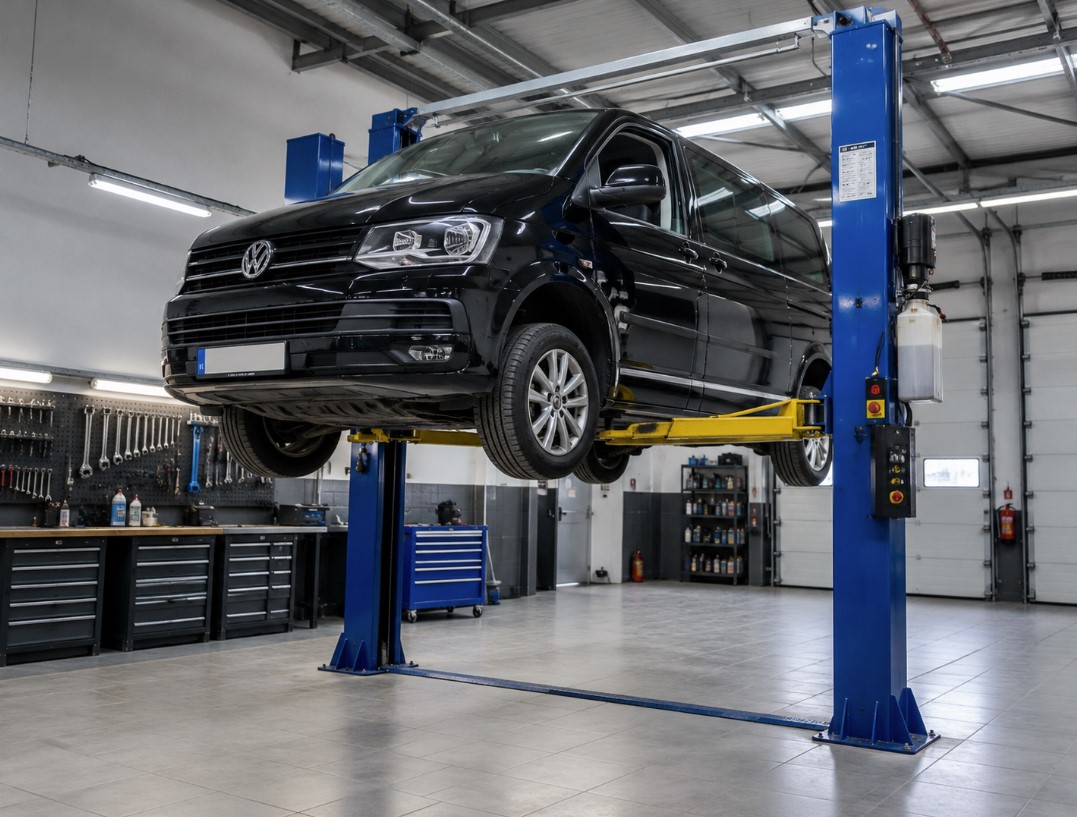
In everyday German, people often use the word “TÜV” for the entire mandatory vehicle inspection, although the official term is Hauptuntersuchung, or HU. Historically this comes from the strong association with TÜV organisations, but today HU can also be carried out by DEKRA, GTÜ, KÜS and other authorised inspection bodies.
For a normal passenger car, the first HU is usually due 36 months after first registration, and then every 24 months. So when a listing says HU bis 2027, it simply means: the car has roadworthiness approval until that date — unless new defects or legal issues appear.
It does not mean that the engine, gearbox, turbocharger, clutch, DPF, air conditioning, suspension and body are in perfect condition. HU checks compliance with road safety, legal roadworthiness and emissions requirements on the inspection date. For a purchase decision, that is not enough.
If the seller writes “TÜV neu”, do not rely only on a photo of the sticker on the number plate. The sticker shows the month and year of the next HU, but it does not show which remarks or defects were noted.
The minimum you should ask for is the HU-Bericht, the official inspection report. If the inspection was recorded digitally, ask whether a Digitaler Untersuchungsbericht is available. Even a paper report remains an important document for the buyer.
| Document | What it shows | Why it matters |
|---|---|---|
| HU report | Result of the roadworthiness inspection, notes, date, mileage | Shows whether the car passed cleanly or with remarks |
| AU / emissions part | Exhaust and emissions-related checks | Especially important for diesel cars with DPF / AdBlue / EGR |
| Service invoices | Actual repairs, maintenance and dates | Confirms whether issues were really repaired |
| e-Service / digital history | Maintenance records, mileage, dealer entries | Helps cross-check mileage and service history |
| VIN / FIN | Vehicle identification | Required to compare documents, history and the actual car |
The strength of the German inspection system is that it is not just a formality. Hauptuntersuchung includes visual, manual, electronic and measurement-based checks. The inspector evaluates whether the car remains safe to operate and complies with legal requirements.
But it is also important to understand the limits of this inspection. HU is not a deep pre-sale expert assessment, not an engine-life forecast and not a full cost prediction.
| System | What is checked | Why it matters |
|---|---|---|
| 🛑 Brakes | Brake force, discs, hoses, leaks, balance | Road safety |
| 🚘 Steering | Play, mounts, visible condition | Vehicle control |
| 💡 Lights and electrics | Headlights, indicators, brake lights, beam adjustment | Visibility and safety |
| 🛞 Tyres and suspension | Tread, damage, play, shock absorbers | Stability and braking |
| 🧱 Body and underbody | Rust, damage to load-bearing parts | Structural strength |
| 🌫️ Emissions / AU | Exhaust values, warning lights, engine-related issues | Compliance with emissions rules |
| 📑 Identification | VIN, modifications, documents | Legal operation |
That is why you can still find cars with fresh TÜV and a tired clutch, noisy gearbox, hidden leaks, body repairs or problems that only appear under load.
One common myth is that if a car passed TÜV, it has no defects at all. This is not true. German HU focuses mainly on safety and legal roadworthiness, not on whether the car is cosmetically perfect or financially risk-free for the next owner.
Some defects may be present and still not prevent HU approval if they do not directly affect safety, visibility, structural strength or emissions compliance at the time of inspection.
| Defect | Can it pass HU? | Comment |
|---|---|---|
| Small paint scratches | ✅ Often yes | If there is no dangerous corrosion |
| Minor parking dents | ✅ Often yes | If mounts and geometry are not affected |
| Worn interior | ✅ Yes | HU does not focus on cosmetic interior wear |
| Early-stage fluid leak | ⚠️ Sometimes | Depends on severity and location |
| Tired clutch / DSG symptoms | ⚠️ May pass | If symptoms are not yet critical |
| Hidden body repair | ⚠️ May pass | If it appears acceptable visually and structurally |
| Weak air conditioning | ✅ Yes | Not a central HU item |
So when a seller says “that does not matter for TÜV”, it may be a minor issue — or it may be a serious future cost that has not yet become critical for HU.
German roadworthiness inspection is not simply “passed” or “failed”. The system uses several categories of defects and notes, and these are very useful for buyers.
| Category | Meaning | What happens next |
|---|---|---|
| ✅ Ohne Mängel | No defects | Sticker is issued immediately |
| ℹ️ Hinweise | Advisories / notes | Information for the owner |
| ⚠️ Geringe Mängel | Minor defects | Sticker is usually issued, but defects should be fixed |
| ❌ Erhebliche Mängel | Major defects | Repair and re-inspection are required |
| 🚫 Gefährliche Mängel | Dangerous defects | Vehicle use is heavily restricted |
| 🛑 Verkehrsunsicher | Unsafe for road traffic | The inspection sticker can be removed |
For the buyer, this means one simple thing: even a car with fresh TÜV may have passed with remarks. Always ask for the actual HU report instead of relying only on the sticker.
The short and honest answer is simple: HU and a pre-purchase inspection have different goals.
Hauptuntersuchung answers the question: does the vehicle meet roadworthiness requirements on the inspection date? A pre-purchase inspection asks another question: what risks and costs will the next owner face after buying this car?
That is why the market includes cars with fresh TÜV and at the same time:
| What TÜV shows | What TÜV does not guarantee |
|---|---|
| Legal roadworthiness | Long engine life |
| Basic safety | No hidden accident history |
| Emissions compliance | No future repair costs |
| Important systems on inspection day | Perfect DSG / turbo / air conditioning condition |
| Formal compliance | Seller honesty and transparent history |
If you buy a used car in Germany only once every few years, you do not just need “road approval”. You need to understand the real technical condition of the car.
An independent inspection is especially useful:
At Sicher-Check, we assess the car as a complete system: documents, VIN, OBD, body, paintwork, mileage, suspension, accident traces, error codes, leaks, brakes and real driving behaviour.
| What is checked | Why it matters |
|---|---|
| VIN / documents / history | Helps exclude origin and mileage problems |
| OBD and error codes | Shows hidden technical problems |
| Body and paintwork | Helps detect accidents and poor repairs |
| Suspension and brakes | Helps estimate safety and future costs |
| Test drive | Checks gearbox, clutch, engine and noises |
| TÜV / HU report analysis | Shows how meaningful the fresh TÜV really is |
Advertisement / *Affiliate link
Links and banners marked with an asterisk (*) are affiliate links. If you click such a link and make a purchase or order a report, we may receive a commission from the partner. For you, the price and conditions do not change.
| Step | What to do | Why it matters |
|---|---|---|
| 1️⃣ | Request VIN and HU report | Understand the inspection history |
| 2️⃣ | Compare mileage in HU, e-Service and listing | Detect inconsistencies |
| 3️⃣ | Check the body with a paint thickness gauge | Detect hidden accident repairs |
| 4️⃣ | Read OBD errors | Reveal hidden faults |
| 5️⃣ | Do a proper test drive | Check engine, DSG, suspension and brakes |
| 6️⃣ | Estimate future costs | Understand the real cost of ownership |
No. It means the car complied with roadworthiness requirements on the inspection date. It is not a guarantee that there are no hidden defects or future repair costs.
Yes. The report shows notes, advisories, minor defects and other important details that cannot be seen from the sticker alone.
Yes. Examples include hidden body repairs, DSG problems, leaks, clutch wear, control-unit errors, DPF or AdBlue issues.
Because a pre-purchase inspection evaluates not only roadworthiness, but also real risks and costs for the next owner.
Which problems sellers often hide and why a polished listing does not guarantee a good car.
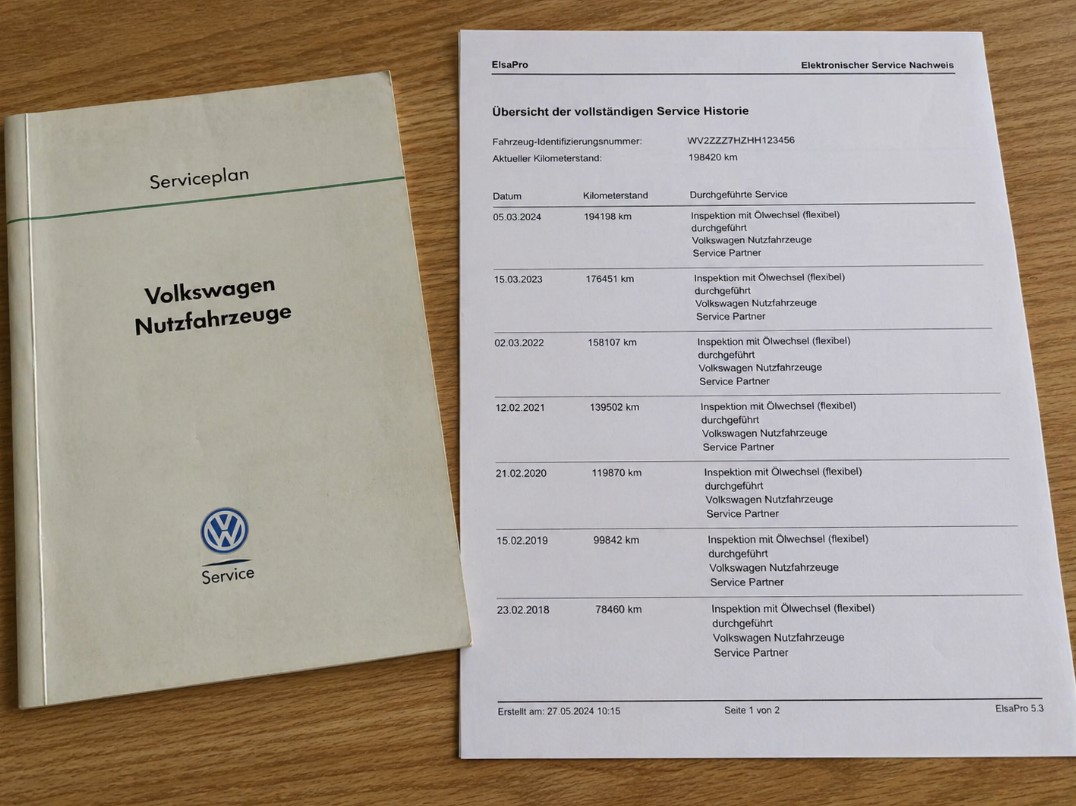
How to check digital service history, VIN, mileage and maintenance records before buying a used car in Germany.
Disclaimer:
The content of this article is for general informational purposes only and does not replace individual on-site diagnostics, legal advice or a technical inspection.
Despite careful preparation, we do not guarantee the accuracy, completeness or timeliness of the information.
You use the information on this website at your own responsibility.