Hidden defects when buying a car in Germany
Which problems sellers most often hide and how not to buy a car with expensive follow-up costs.
 Sicher-Check
If you only look at the price in the advert, it is very easy to buy not a “good deal”, but a future cost problem. In Germany this is especially noticeable: according to Destatis, prices for goods and services related to cars in 2025 were 31.2% higher than in 2020. Insurance, fuel, repairs, inspections and parking rose particularly strongly. At the same time, the vehicle fleet is getting older: the average age of passenger cars in Germany on 1 January 2025 reached 10.6 years. This means many cars on the market are already close to major expenses — not “sometime later”, but often within the next 6 to 18 months.
For anyone searching Google for Unterhaltskosten gebrauchtwagen, Folgekosten Auto, used car ownership costs in Germany or car ownership cost, the key idea is simple: you need to calculate not the purchase price, but the full life cycle after the deal — fuel, insurance, Kfz-Steuer, TÜV, maintenance, wear items, parking in Berlin, environmental restrictions and depreciation. This is why a car that looks cheap at the beginning often becomes more expensive than a newer, cleaner and better documented alternative.
For a family buyer in Berlin this matters even more. Insurance in the capital is heavy in terms of regional classes, the area inside the S-Bahn ring is an Umweltzone where only vehicles with a green environmental sticker may enter, and paid parking in several zones costs 2–4 euros per hour. So before buying, the question is not only “can I afford the purchase price?”, but also “can my family afford the ownership without constant surprises?”.
ADAC calculates the full cost of a car not by brochure fuel consumption and not only by purchase price, but by total costs over 5 years and 75,000 km: fixed costs, operation, workshop, tyres and depreciation. This is the correct logic for a used car as well. A cheap listing is only the entry ticket — not the answer to how much the vehicle will really cost a family in Germany.
German official statistics confirm this logic. Destatis reports that in March 2026, prices for everything related to cars were 6.7% higher than one year earlier. Within this category, fuel rose by 20.0%, repairs, inspection, parking and similar services by 4.1%, used cars by 2.9% and insurance by 1.4%. Looking at the longer 2020–2025 period, the increase is even more visible: insurance +63.0%, used cars +45.3%, fuel +37.5%, repair, inspection, parking and similar expenses +34.5%.
📊 Increase in car-related costs: 2020–2025
At household level this is already noticeable. In 2023, households in Germany spent an average of 361 euros per month on transport, or 11.9% of all consumer expenditure. The largest items were not only purchase or leasing, but also fuel and lubricants. For a used-car buyer, this is an important signal: after the deal, expenses do not end — they only move into another phase.
This is why, when calculating ownership costs, the price on mobile.de or Autoscout24 is only the tip of the iceberg. For a buyer in Berlin and Germany in general, the real question is: what budget is needed for the first year and for the next 3–5 years if the car is no longer new and will sooner or later need maintenance, TÜV-related repairs and wear-item replacements? This is exactly what people mean when they search for Unterhaltskosten gebrauchtwagen — not “how much does it cost to buy?”, but “how much does it cost to live with this car?”.
Let us start with mandatory and semi-predictable costs. In Germany, Kfz-Steuer for passenger cars depends on fuel type, engine displacement and CO₂. The customs authority lists a base rate of 2.00 euros per started 100 cm³ for petrol engines and 9.50 euros for diesel engines, while the CO₂ component increases the tax for higher emissions. For registrations from 2021 onwards, the CO₂ component became more progressive. In other words, a diesel that looks “cheap” in the advert may be much less attractive in annual tax than a comparable petrol estate.
🛡 The next block is insurance. GDV reminds buyers that premiums are influenced by the type class of the model and the regional class of the registration location. For Berlin, this is not theoretical. According to GDV, in the 2026 insurance year Berlin has the highest regional class for liability insurance — 12, a high class for Vollkasko — 9, and an elevated class for Teilkasko — 12. Claims in liability insurance and Vollkasko are around 36% above the national average. This is one reason why the same car can cost more to insure in Berlin than in a less accident-heavy region.
⛽ The third item is fuel. According to ADAC, on 21 May 2026 the Germany-wide average price for one litre of Super E10 was 1.996 euros, and diesel was 1.974 euros. With a family mileage of 12,000–18,000 km per year, even a difference of one litre per 100 km becomes hundreds of euros annually. Strong fuel price growth makes a “slightly thirstier but cheap in the listing” car a poor deal over several years.
🔧 The fourth item is TÜV and regular maintenance. DEKRA and TÜV SÜD remind drivers that the first technical inspection for a new passenger car is due after 36 months, and after that usually every 24 months. If the inspection is overdue by more than two months, TÜV SÜD charges a 20% surcharge for an extended inspection. According to TÜV SÜD tariffs for 2026, a passenger car inspection including AU costs roughly 160–166 euros depending on the federal state. Separately, ADAC estimates a normal inspection at 100–600 euros, not including fluids and some consumables, while brake fluid replacement usually adds another 60–130 euros. These are not “unexpected expenses”; they are a normal part of the ownership budget.
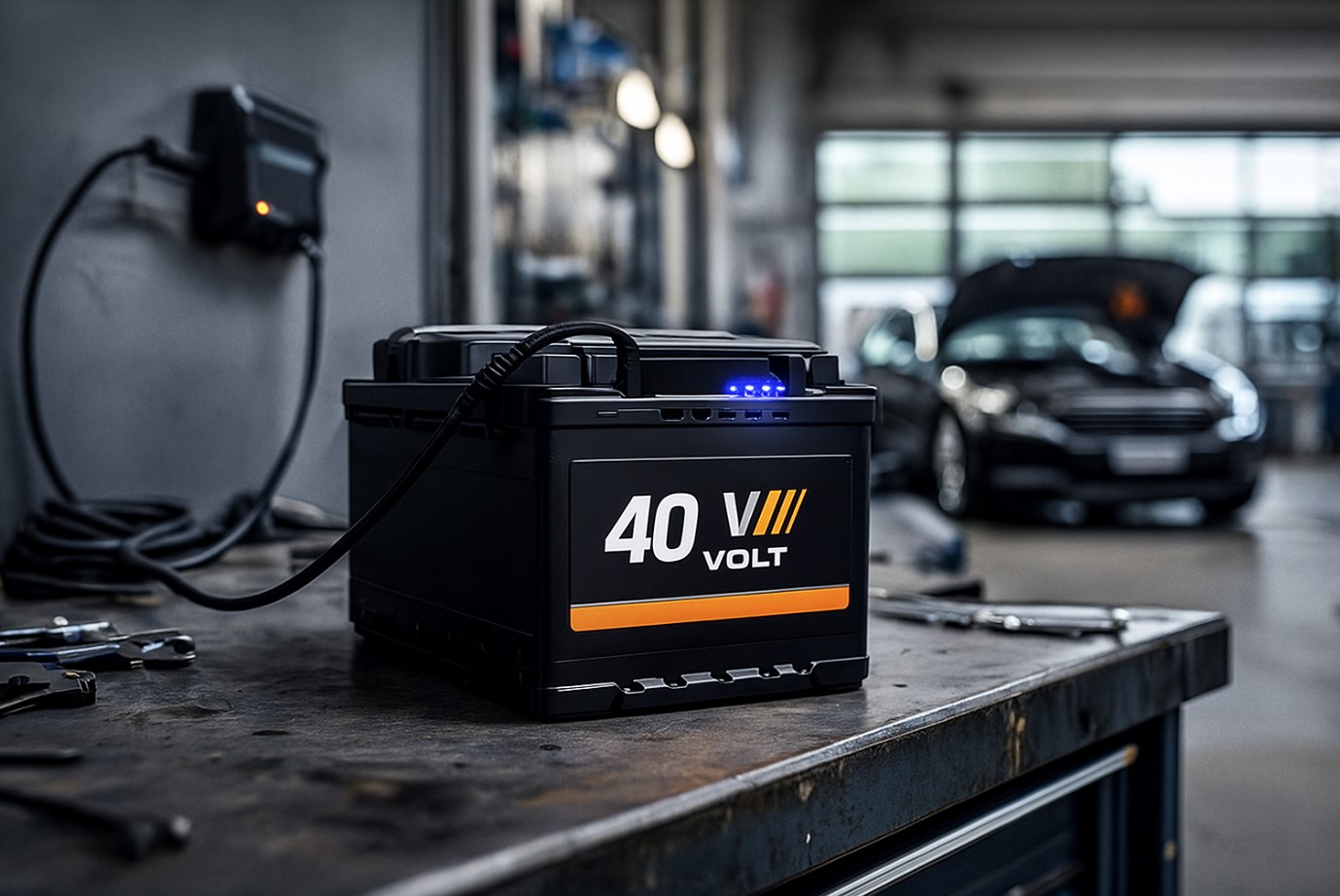
The most unpleasant costs are hidden expenses directly after purchase. TÜV Report 2026 records an increase in the share of cars with significant defects to 21.5%, while the share of cars without defects fell to 66.1%. Common problem areas include suspension and lighting. At the same time, ADAC breakdown statistics for 2025 show that 45.4% of callouts were linked to a weak or discharged 12-volt battery, 21.8% to the engine or engine electronics, and 8.9% to tyres. These are exactly the typical Folgekosten Auto that rarely appear in a polished advert.
🛠 Typical risks and breakdowns often invisible in the advert
There is also a category of risk that affects not workshop bills, but the purchase price itself. ADAC, referring to police data, writes that every third used car sold in Germany may have a manipulated odometer, with an average overpricing of around 3,000 euros per vehicle. For the buyer, this means the error can already be in the initial deal price — not only in later repairs.
Berlin adds its own urban expenses. Inside the S-Bahn ring there is an Umweltzone, and since 1 January 2010 vehicles may enter only with a green environmental sticker; a violation costs an 80 euro fine. For residents with a Bewohnerparkausweis, parking can be relatively cheap — 20.40 euros for issue or renewal for up to two years, or around 10 euros per year. But without such a permit, and with regular use of paid parking zones, costs rise quickly: in parts of Friedrichshain-Kreuzberg, for example, some zones cost 2–4 euros per hour. For a family car used in the city, this is not a detail, but a real selection factor.
Below is an editorial calculation showing the order of magnitude for Berlin. It is not a universal calculator, but a working model: fuel is calculated using ADAC average prices from 21 May 2026; the cost logic is based on official and industry sources for cost increases, insurance, TÜV, inspections and typical wear work. Insurance and tax are shown as realistic Berlin-oriented ranges, but the final figure always depends on driver age, Schadenfreiheitsklasse, specific engine, CO₂, first registration date and equipment.
| Scenario | Assumptions after purchase | First-year estimate | Five-year estimate |
|---|---|---|---|
| City hatchback, 8 years old, petrol, purchase price around €8,500 | 12,000 km/year, consumption 6.0 l/100 km; fuel ~€1,437; tax and insurance ~€930; maintenance and wear ~€900; TÜV reserve ~€80; resident parking ~€10; depreciation ~€900 | ~€4,200–4,500 | ~€21,000–23,000 |
| Compact estate, 6 years old, diesel, purchase price around €15,000 | 18,000 km/year, consumption 5.0 l/100 km; fuel ~€1,777; tax and insurance ~€1,300–1,400; maintenance and wear ~€1,250; TÜV reserve ~€80; parking ~€10; depreciation ~€1,800 | ~€6,000–6,400 | ~€31,000–34,000 |
| Family SUV or large hybrid estate, 4 years old, purchase price around €24,000 | 15,000 km/year, consumption 6.8 l/100 km; fuel ~€2,036; tax and insurance ~€1,500; maintenance and wear ~€1,400; TÜV reserve ~€80; parking ~€10; depreciation ~€2,600 | ~€7,400–7,900 | ~€38,000–42,000 |
Note: the calculation does not include financing, chain-reaction failures after a bad purchase, seasonal tyre storage, washing and detailing, or paid street parking without a resident permit. This is a “normal ownership without disaster” scenario, not the maximum possible cost.
The table shows the key point: even a relatively cheap used city car can easily consume 4,000–4,500 euros in the first year of ownership in Berlin after purchase. For a mid-class family car, the realistic annual budget moves towards 6,000–8,000 euros, excluding financing. That is why the question “is this car 10 or 13 thousand euros?” is often less important than “what will happen in the first 12 months?”.
Another practical point: if brakes, service, TÜV and, for example, a timing belt are all due soon, the benefit of “saving 1,500 euros on purchase” disappears quickly. ADAC states that front brake discs with pads on the example of a Skoda Fabia cost around 440 euros, brake fluid 60–130 euros, a normal inspection 100–600 euros, and timing belt replacement can cost from several hundred to thousands of euros depending on model and labour intensity.
The visual scheme below shows why the price in the advert does not reflect the real ownership cost. Every year after purchase adds new cost layers: fuel, insurance, tax, service, TÜV, wear repairs, hidden defects and depreciation.
flowchart LR
    A["🚗 Car purchase"] --> B["📅 Year one"]

    B --> B1["⛽ Fuel"]
    B --> B2["🛡 Insurance and Kfz-Steuer"]
    B --> B3["🔧 First service and wear parts"]
    B --> B4["⚠️ Hidden defects after purchase"]
    B --> B5["📉 Depreciation"]

    B --> C["📅 Year two"]
    C --> C1["⛽ Fuel"]
    C --> C2["🛡 Insurance and tax"]
    C --> C3["🧾 TÜV and defect repairs"]
    C --> C4["🛞 Tyres and brakes"]
    C --> C5["📉 Depreciation"]

    C --> D["📅 Year three"]
    D --> D1["⛽ Fuel"]
    D --> D2["🛡 Insurance and tax"]
    D --> D3["🧰 Major service"]
    D --> D4["⚙️ Suspension, battery, electronics"]
    D --> D5["📉 Depreciation"]

    D --> E["📅 Year four"]
    E --> E1["⛽ Fuel"]
    E --> E2["🛡 Insurance and tax"]
    E --> E3["🧾 Next TÜV"]
    E --> E4["🔩 New wear repairs"]
    E --> E5["📉 Depreciation"]

    E --> F["📅 Year five"]
    F --> F1["⛽ Fuel"]
    F --> F2["🛡 Insurance and tax"]
    F --> F3["🔧 Repeated services"]
    F --> F4["🚘 Preparation for resale"]
    F --> F5["💸 Final value loss"]
This diagram works well inside the article because it immediately shows the reader: buying a car is not one sum, but a chain of regular and irregular expenses.
Family buyers usually make two mistakes: they overvalue the “status” of the body style and undervalue everyday practicality. ADAC separately shows that not every car can really carry three child seats in the rear, and three Isofix mounts in the back are rare. Minivans and high-roof estates often perform better than fashionable but cramped crossovers.
If you look at family cars as tools rather than pictures in adverts, the criteria become rational. In its selection of affordable family cars under 20,000 euros, ADAC used practical filters: at least 5 seats, at least 450 litres of boot space, age up to 5 years and mileage up to 100,000 km. For a family with a stroller, child seats and trips around Berlin or across Germany, this is far more useful than the badge on the bonnet.
Safety should also be judged practically. In family-oriented selections, ADAC uses criteria such as Euro NCAP child safety of at least 70% and the ability to deactivate the front passenger airbag for correct child seat installation. Euro NCAP itself emphasises that its child occupant ratings assess not only crash protection, but also ease and correctness of installing different types of child restraints. For a family purchase, this is not a “nice extra” but part of cost control: a safe and practical car leads to fewer expensive compromises — from urgent replacement to additional accessories and constant frustration when loading a stroller.
This is exactly where family buyers should look at used car ownership costs in Germany more broadly. Sometimes a slightly more expensive estate with clear history, good boot space and reasonable insurance is cheaper in real life than a “cheap SUV from the advert” with higher fuel consumption, higher insurance, worse visibility, less usable space for a stroller and a higher risk of suspension and wheel-related costs.
ADAC directly advises buyers to inspect the vehicle before signing the contract, take a test drive, check documents and avoid pressure from the seller. Its used-car buying advice mentions typical traps: hidden defects, odometer manipulation and missing or fake documents. Technical inspection organisations also remind us that any professional inspection focuses on brakes, steering, lights, tyres, body, seat belts and other safety-critical areas.
Economically, the payback of a pre-purchase inspection is straightforward. If an on-site check reveals even nearby expenses — for example front brakes around €440, brake fluid €60–130, an upcoming inspection €100–600 and TÜV/AU around €160–166 — the potentially avoided or negotiated costs already reach about €760–1,336. If timing belt risk or mileage inconsistencies appear, the effect can be much higher. ADAC, citing police data, notes that corrected mileage-related value differences can average around €3,000.
For families from Berlin and the surrounding area, a mobile pre-purchase inspection is not an “extra expense”, but a way to turn unknown risks into understandable numbers. A proper inspection is useful not only when the expert says “you can buy it”, but when they show what must be done immediately, what may come in 3–6 months, what may fail TÜV, whether the stated mileage is plausible, whether there are body repair traces, whether the car is suitable for use in the Berlin Umweltzone and what can realistically be negotiated with the seller.
🚘 If you are buying a car in Berlin or anywhere in Germany and do not want to guess about hidden costs, order a pre-purchase inspection on site. We check documents and history, perform visual and technical inspection, estimate urgent expenses, provide negotiation arguments and help you understand the real ownership cost — not only the advert price.
A practical pre-purchase checklist should be short and useful:
A large infographic works very well for this article under the title “Cheap in the Listing, Expensive to Own”. The composition: in the centre — the advert price; around it — rings of real costs over 5 years. Callouts can include the key figures: +31.2% increase in car-related cost components from 2020 to 2025, +63.0% insurance, +37.5% fuel, +34.5% repair/inspection/parking, average passenger car age 10.6 years, 45.4% of breakdowns linked to the 12V battery, 80 € fine for entering the Umweltzone without the required sticker, and TÜV/AU orientation around 160–166 € every two years.
A request for real visuals for a designer or editor can be formulated like this:
📊 Five-year ownership comparison for three scenarios
Below is a visual block that can be inserted into the CMS as a graphic ownership-cost section. It does not replace a calculator, but clearly shows how expenses accumulate. The logic is based on ADAC’s full ownership cost model, official TÜV/tax/insurance logic and Destatis statistics on rising car-related costs.
🚗 How costs accumulate after buying a car
Advertisement / *Affiliate link
Links and banners marked with an asterisk (*) are affiliate links. If you use such a link, we may receive a commission from the partner. For you, the price does not change.
This article intentionally does not state the exact price of the company’s mobile inspection service, because no fixed price was provided in the source material. For publication, it is better to insert the actual company price range or leave an honest note such as “price on request”. Insurance in Germany is also too individual for one universal number: it depends on the model’s type class, regional class, driver age and experience, annual mileage, deductible and no-claims history.
The tax examples in the scenarios are approximate because exact Kfz-Steuer depends on the combination of displacement, fuel type, CO₂ and first registration date. In addition, there are few official English-language explanations specifically about used car ownership costs in Germany, so the article relies primarily on German primary sources such as Destatis, GDV, Berlin.de, Zoll, KBA, ADAC, TÜV and DEKRA.
The exact amount depends on the model, mileage, engine, insurance, region, tax and condition. Even a relatively inexpensive city car can cost around 4,000–4,500 euros in the first year after purchase. For a family estate or SUV, the annual budget can quickly reach 6,000–8,000 euros without financing and without major unexpected repairs.
Because the low purchase price is often compensated by hidden costs: worn brakes, old tyres, overdue service, TÜV issues, leaks, body repairs, high tax, expensive insurance or suspicious mileage. The buyer pays less at purchase, but then quickly spends money after the deal.
Estimate insurance, Kfz-Steuer, fuel consumption, next TÜV date, upcoming service costs, tyre condition, brakes, battery, suspension, body, lights and service documents. For diesel cars, DPF, EGR, AdBlue and typical risks of the specific engine are also important.
Often yes. If the inspection reveals upcoming expenses for brakes, TÜV, service, tyres, bodywork or technical defects, it gives the buyer negotiation arguments or helps avoid a bad car. Even one serious issue can save more than the inspection costs.
For a family, price and appearance are not enough. Real boot space, child seat fit, Isofix, safety, fuel consumption, insurance, parking, Umweltzone, suspension condition and upcoming maintenance costs matter. Sometimes a practical estate is a better choice than a fashionable SUV.
Which problems sellers most often hide and how not to buy a car with expensive follow-up costs.
How to measure paint thickness, where to look for filler and why readings must be interpreted in context.
Disclaimer:
The content of this article is for general informational purposes only and does not replace an individual on-site inspection, technical diagnosis, financial advice or legal advice.
Despite careful preparation, we do not guarantee the accuracy, completeness or timeliness of the information.
You use the information on this website at your own responsibility.