
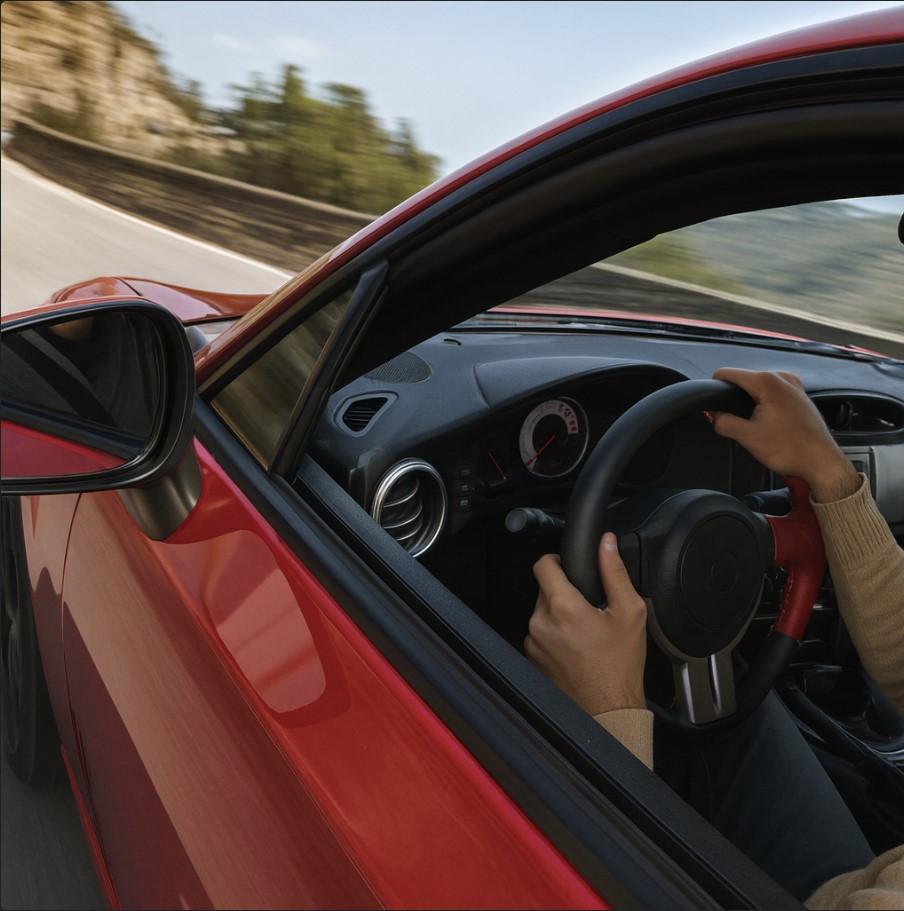
Whether you buy a car from a trader or a private person, a proper test drive before buying is your best protection against unexpected repair bills. Especially if you organise the used car inspection and pre-purchase check on your own. Below we share a structured approach based on real cases from our car buying service in Berlin and Germany.
Why do you need a test drive before buying?
A test drive is not a formality, but a mandatory step when you buy a used car. Many issues can only be spotted while driving. On the move you can feel problems with brakes, suspension, steering or gearbox — things that are hard to judge on a parking lot while the car is standing still.
A well-organised test drive helps you evaluate:
- 🛠️ Engine under load. Does it rev up smoothly, without flat spots or hesitation? Any strange noises?
- 🛠️ Gearbox operation (automatic/manual). Smooth, predictable shifts without bangs, flares or slipping?
- 🛠️ Braking system. Efficient braking without vibration on the pedal, pulling to one side or metallic noises.
- 🛠️ Steering and chassis. Straight-line stability, steering feel, absence of clunks from suspension and play in the steering wheel.
- 🛠️ Comfort and ergonomics. Seating position, visibility, noise level at different speeds, climate control performance under load.
A proper test drive drastically reduces the risk of “surprise” investments right after you pay for the car. Statistics show that a large share of used cars in Germany have discrepancies between the advertised and the real condition. Only by testing the car on the road can you understand what you are actually buying.
How to prepare for the test drive
Good preparation makes the drive itself calmer and more productive. Pay attention to these points:
- 📜 Arrange the test drive in advance. In Germany both dealers and private sellers usually agree to a reasonable test drive. Clarify by phone or message that you want to drive the car, not only “look at it”. If the car is still registered and insured, it is normally not a problem. If it has been deregistered, you may need dealer plates or Kurzzeitkennzeichen.
- 📜 Check documents and insurance. Before you sit behind the wheel of someone else’s car, make sure you have a valid driving licence. The seller may also want to see it. For private sales it is important that the car is insured for the test drive. If insurance does not allow you to drive, the owner can drive while you evaluate the car from the passenger seat. Ideally, however, you should be allowed to drive yourself to really feel how the car behaves.
- 📜 Do a walk-around inspection first. Walk around the car, check bodywork, tyres and glass, open the bonnet and look for leaks. Check oil and coolant level. This is important for safety and also helps you focus during the drive on components that already look suspicious.
- 📜 Adjust seating and visibility. Take a minute to set up the seat, steering wheel and mirrors. Learn where the indicators, lights, wipers, climate control and hazard lights are. The more familiar you are with the controls, the less you will be distracted while driving.
- 📜 Plan a meaningful route. Ideally your route should include city traffic, some rougher road and a short motorway section. Check in advance if there is an Autobahn nearby where you can legally accelerate. Discuss the route with the seller so there are no surprises.
Proper preparation means you can fully concentrate on how the car drives, instead of fighting with mirrors, navigation or climate settings.
Checklist: what to observe during the test drive
Once you are on the road, start calmly and pay attention to how the car behaves in different situations. Here is a structured checklist:
-
🔥 Engine and performance.
The engine should start easily, idle smoothly and pull confidently from low revs. Accelerate gently at first, then more firmly. Watch the rev counter and listen: no metallic knocking, pinging or misfires. Look in the mirror for smoke from the exhaust — blue or thick black smoke is a red flag. -
🔥 Gearbox (automatic or manual).
In an automatic, shifts should be smooth and timely, without strong jolts. Kick-down (full throttle) should be quick and predictable. In a manual, pay attention to the clutch: does the pedal bite in the middle of its travel, or very high? High biting point and slipping under load may mean a worn clutch. Try all gears including reverse. -
🔥 Brakes.
On a safe stretch of road, brake several times with different force. The car should remain stable, without pulling to one side. No vibration in the steering wheel or pedal. Squealing or grinding noises can indicate worn pads or discs. After a few stronger stops, check for a strong burning smell – it may indicate a sticking caliper. -
🔥 Steering.
On a straight road the car should go straight with the steering wheel centred, without constant corrections. There should be minimal free play. When turning the wheel at low speed, listen for clunks or knocking sounds, which can point to worn steering joints or rack issues. -
🔥 Suspension.
Drive over speed bumps and small potholes at low speed. The car should absorb bumps without loud bangs, excessive bouncing or side-to-side rocking. Repeated dull knocks from below often mean worn drop links, shock absorbers or bushes. -
🔥 Electronics.
While driving, test climate control, heated windows, wipers, lights, indicators, infotainment and all buttons you are likely to use later. On the instrument cluster no warning lights (Check Engine, ABS, airbag etc.) should stay on or appear again after a short time. If they do, plan an OBD diagnostics session before buying. -
🔥 Noises and vibrations.
Turn the radio off and ask for silence for a few minutes. Listen to tyre roar, wind noise and general vibrations. A constant humming that changes in corners can indicate a worn wheel bearing. Vibration at motorway speed can be caused by unbalanced wheels or worn suspension parts. Vibration only under acceleration may point to driveshaft issues.
During the test drive try to imagine typical everyday use: commuting, family trips, motorway runs. The car should feel safe and predictable in all those scenarios. If anything feels “off”, better investigate before signing the contract.
Petrol, diesel, LPG, hybrid & EV: what is different?
Different drivetrains have their own typical behaviours and weak points. Here are the basics:
📌 Petrol cars
- Usually quieter and with less vibration than diesels. Idle should be stable, without shaking.
- At higher revs the engine should pull eagerly to the red line without hesitation or misfire.
- For turbo petrol engines: no loud whistle, no sudden loss of power and no heavy smoke when accelerating hard.
📌 Diesel cars
- More noise and vibration are normal — but clouds of blue or thick black smoke are not.
- Poor cold start, long cranking and heavy white smoke can indicate glow plug or compression issues.
- Strong shaking when stopping the engine can mean worn engine mounts.
📌 Cars with LPG (gas)
- Test both on petrol and on gas. Switching between fuels should be smooth, without power loss.
- There must be no smell of gas in or around the car — leakage is dangerous.
- No “backfires” in the intake, no popping when driving on gas — this often means poor LPG system setup.
📌 Hybrid cars
- Pay attention to how smoothly the car switches between electric motor and combustion engine.
- In EV mode at low speed the car should be able to drive only on battery for a short distance.
- If the high-voltage battery drains and charges very quickly in normal driving, its state of health might be poor.
📌 Electric vehicles (EVs)
- Acceleration is usually very strong and immediate. The car should respond predictably to small pedal movements.
- Watch how much the remaining range drops after a realistic drive — a big drop on a short route can indicate battery degradation.
- Test regenerative braking: when lifting off the accelerator, the car should slow down smoothly and consistently.
You do not have to be a professional mechanic. The key idea is simple: the car should drive in a stable, predictable way, without strange noises, smells or behaviour. When in doubt, it is always better to do a deeper diagnostics or involve a specialist.
Interesting facts and typical mistakes during test drives
From our experience there are several patterns that appear again and again:
- 💎 Test drive that is too short. A quick 5-minute loop around the block is almost useless. Many issues only show up after 20–30 minutes of real driving. Try to plan 30–60 minutes with a mix of city and motorway.
- 💎 No motorway section. At 50 km/h almost any car feels fine. Imbalances, wind noise and stability problems appear at 90–130 km/h. If possible, include a short Autobahn section in your route.
- 💎 Too much talking, too little listening. Some sellers love to talk non-stop to distract from noises or vibrations. It is okay to kindly ask for a few minutes of silence to focus on the car.
- 💎 Ignoring real-life use. Drive in the way you realistically plan to use the car: with passengers, on rougher roads, in tight parking situations. Only then you will understand whether the car really fits your life.
- 💎 Falling in love with one specific car. It is easy to get emotionally attached to a particular model, colour or configuration. Try to stay objective: if the car clearly shows problems, be ready to walk away and look for a better one.
- 💎 No notes after the drive. After seeing several cars in one day it is easy to mix them up. Right after each test drive write down your impressions or record a short voice memo with pros, cons and open questions.
And, of course, professional help is never a bad idea. If you are unsure whether you can correctly judge a car during a test drive, let an expert help you. A specialist will combine the drive with OBD diagnostics, paint thickness measurements, VIN and history checks and an honest written report.
Summary: trust your feelings – and the experts
A test drive before buying a car in Germany is your main tool for separating good cars from problems on wheels. Take your time, be attentive and do not be afraid to ask questions or to say “no”.
If you cannot be on site yourself or you are unsure about the technical side, our company Sicher-Check can help. We provide professional pre-purchase inspections and car buying support in Berlin and throughout Germany. We check the car on the spot, do the test drive, run computer diagnostics and verify the paperwork. You receive a clear, honest report about the condition of the vehicle.
With Sicher-Check Auto you save time and money, avoid risky cars and get more confidence in your purchase.
Werbung / *Affiliate-Link
Links and banners marked with an asterisk (*) are affiliate links/banners. If you use such a link and subsequently request an offer, sign a contract or make a purchase, we receive a commission from the respective provider. For you, there are no disadvantages: the price and conditions remain the same.