Used Volkswagen Golf and Passat in Germany: generations, engines, DSG and common weak points
The Golf and Passat may look like some of the safest and easiest choices on the German used-car market: there are thousands for sale, parts are widely available, and almost every workshop knows the basic engineering. That familiarity can also make buyers underestimate the risks.
Over the past two decades, the names Golf and Passat have covered very different TSI, FSI, TDI, DSG, GTE, e-Golf and 4Motion powertrains.
That is why descriptions such as “1.4 TSI” or “DSG” are not precise enough. Before buying, it is useful to identify the generation, engine code, gearbox code, DSG type and actual service history.
⚡ Which used Golf or Passat is worth buying in Germany?
On a limited budget, a mechanically simple petrol version with a transparent history can make more sense than a technically complex bargain. Among newer cars, the Golf VII and Passat B8 often offer a strong balance of age, comfort, availability and running costs.
For drivers covering high annual motorway mileage, a properly serviced 2.0 TDI can be a rational choice. For city driving and moderate mileage, a petrol TSI is often easier to justify than a diesel.
But never buy purely on the badge TSI, TDI or DSG. Early chain-driven EA111 engines and later EA211 engines belong to different families, while DSG can mean several transmissions with different clutch designs and torque capacities.
🎯 Key rule: identify the engine and transmission first, then assess their known weak points, and only after that decide whether the specific car is good value.
📑 Contents
- Golf or Passat?
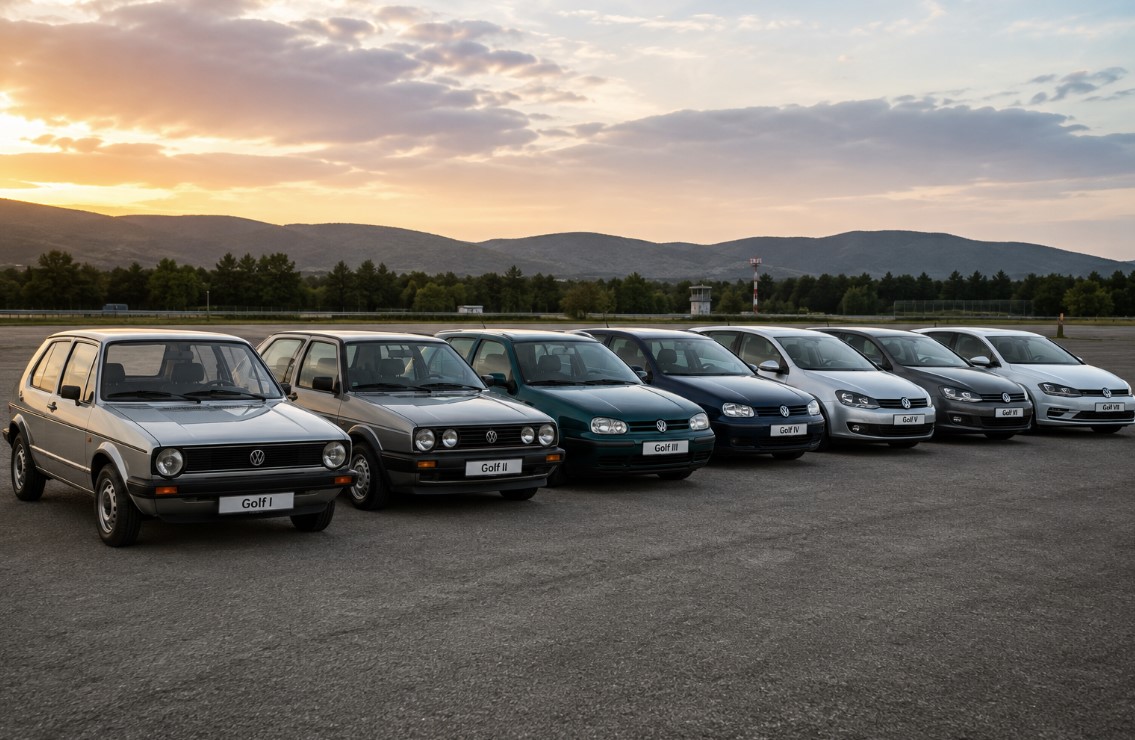
- Golf and Passat generations
- Why the engine code matters
- Golf V
- Golf V 1.4 / 1.6 MPI
- Golf V FSI
- Early 1.4 TSI
- Golf V TDI
- Golf VI
- 1.2 / 1.4 TSI EA111
- 1.4 TSI Twincharger
- Golf VI GTI / R
- Golf VI TDI
- Golf VII
- EA211 1.0 / 1.2 / 1.4 TSI
- 1.5 TSI
- Golf VII GTI / R
- Golf VII TDI EA288
- GTE and e-Golf
- Golf VIII
- Passat B5
- Passat B6
- Passat B7
- Passat B8
- Passat B9
- Which DSG is fitted?
- Bodywork and corrosion
- Why TÜV is not enough
- Which Golf should you choose?
- Which Passat should you choose?
- How we inspect a Volkswagen
- FAQ
🚗 Golf or Passat: what is the practical difference?
🚗 Volkswagen Golf
More compact, easier to use in cities, and generally cheaper for tyres, brakes and some service items.
Available as hatchback, Variant estate, Sportsvan, GTI, GTD, R, GTE, e-Golf and Alltrack.
🚘 Volkswagen Passat
More spacious, more comfortable on the Autobahn, and particularly practical as a Variant estate.
Many were used as company cars, sales-representative vehicles, taxis or high-mileage motorway cars.
✅ Golf advantages
- compact dimensions;
- good handling;
- very wide engine choice;
- excellent parts availability;
- strong resale demand;
- large supply on the German market.
✅ Passat advantages
- spacious cabin;
- large boot;
- excellent motorway comfort;
- versions suitable for towing;
- wide choice of TDI engines;
- high equipment levels;
- very practical Variant body style.
⚠ A Passat with 200,000–300,000 km is not unusual in Germany. Documented motorway mileage may be less worrying than a much lower odometer reading from years of short urban trips.
📊 Golf and Passat generations commonly considered on the German used-car market
| Model | Period | Main buying consideration |
|---|---|---|
| Golf V | 2003–2008 | Age, early TSI engines, PD TDI and first widely used DSG gearboxes |
| Golf VI | 2008–2012 | EA111, Twincharger, early EA888 and Common Rail diesels |
| Golf VII | 2012–2019 | MQB platform, EA211, EA288, GTE and e-Golf |
| Golf VIII | from 2019 | Electronics, software, eTSI and plug-in hybrid systems |
| Passat B5/B5.5 | 1996–2005 | Age, suspension, cabin water leaks and 1.9/2.5 TDI |
| Passat B6 | 2005–2010 | Early TSI/TDI, DSG and electronic parking brake |
| Passat B7 | 2010–2014 | EA111, EA888, Common Rail TDI and Alltrack |
| Passat B8 | 2014–2023 | EA211, EA288, DSG, GTE and high company-car mileage |
| Passat B9 | from 2024 | Electronics, eTSI, eHybrid, ADAS and accident history |
🔢 Why you should identify the engine and gearbox codes before buying a Volkswagen
One of the biggest mistakes when choosing a used Volkswagen is to look only at engine displacement.
❗ “1.4 TSI” is not precise enough
The 1.4 TSI badge can refer to different generations: early chain-driven engines, Twincharger versions and later EA211 engines using a timing belt.
Their typical failure patterns are fundamentally different.
In the same way, the word DSG does not tell you whether the car uses DQ200, DQ250, DQ381 or another transmission.
Before viewing the car, it is useful to establish:
- 🔢 VIN;
- ⚙ engine code;
- 🔄 gearbox code;
- 🧩 DSG type;
- 📈 power output;
- 🌱 emissions standard;
- 🛞 drivetrain;
- 📋 original factory specification.
🟤 Volkswagen Golf V 2003–2008: a low purchase price no longer guarantees cheap ownership
The Golf V is attractive today mainly because of its low price, excellent parts availability and the enormous amount of repair experience available from independent garages.
Even the newest examples, however, are now old cars.
Body condition, wiring, hoses, suspension and the quality of previous repairs can therefore matter as much as the original engine design.
🟢 Golf V 1.4 / 1.6 MPI: old-fashioned, but relatively straightforward
Simple naturally aspirated petrol versions can appeal to buyers who want to minimise mechanical complexity.
✅ Strengths
- no turbocharger;
- port fuel injection;
- relatively straightforward repairs;
- suitable for short journeys;
- no diesel DPF;
- widely available parts.
🔧 What to inspect
- ignition coils;
- spark plugs;
- throttle body;
- crankcase ventilation;
- thermostat;
- coolant leaks;
- timing belt on relevant versions;
- oil consumption;
- compression if there are specific concerns.
✅ For relaxed everyday driving, a healthy 1.6 MPI can sometimes be a more rational purchase than a more powerful but poorly maintained early TSI.
🔵 Golf V 1.6 FSI and 2.0 FSI: direct injection adds complexity
FSI improved engine efficiency, but introduced a more complex fuel-injection system.
💶 Potential expense areas
- carbon deposits on intake valves;
- fuel injectors;
- high-pressure fuel pump;
- sensors;
- unstable idle;
- difficult starting;
- variable valve timing components.
⚠ FSI does not automatically mean a bad engine, but ownership can be more technically demanding than with a simple MPI petrol engine.
🔴 Early Golf V 1.4 TSI: timing chain and Twincharger versions need caution
The Golf V introduced early versions of the 1.4 TSI, including higher-output Twincharger engines using both a turbocharger and a mechanical supercharger.
🚩 Potentially expensive problem areas
- timing-chain stretch;
- chain tensioner;
- pistons and piston rings;
- oil consumption;
- detonation;
- turbocharger;
- mechanical supercharger;
- intercooler system;
- cooling system.
❗ A cheap Twincharger with no documented history can require repairs costing a substantial proportion of the vehicle's purchase price.
🌫 Golf V 1.9 and 2.0 TDI: forget the phrase “indestructible diesel”
🟢 1.9 TDI
Many 1.9 TDI versions earned an excellent reputation, but the condition of an individual engine still depends on its engine code, maintenance and previous use.
Check:
- turbocharger;
- EGR system;
- mass-air-flow sensor;
- tandem pump;
- unit injectors;
- camshaft;
- dual-mass flywheel;
- clutch;
- DPF if fitted;
- correct engine-oil specification.
🔴 2.0 TDI PD
Early 2.0 TDI pump-nozzle engines require even more precise engine identification.
Depending on the version, potentially expensive areas can include:
- cylinder head;
- unit injectors;
- oil pump;
- balance-shaft module drive;
- EGR;
- turbocharger;
- DPF;
- dual-mass flywheel.
🔢 On an older TDI, the engine code is often more informative than the simple badge “1.9” or “2.0”.
🚗 Volkswagen Golf VI 2008–2012: more modern than the Golf V, but still closely related underneath
The Golf VI brought a better-quality interior, improved sound insulation and more modern equipment, while still using the PQ35 platform family.
For used-car buyers, the main questions remain early TSI engines, Twincharger versions, DSG and diesel emissions systems.
⛓ Golf VI 1.2 and 1.4 TSI EA111: the timing chain should be one of your first questions
For these engines, the history of the timing-chain drive is particularly important.
🚩 Warning signs
- metallic rattle during a cold start;
- cam/crank correlation faults;
- unstable idle;
- misfires;
- no invoice for a previous chain replacement;
- very long oil-change intervals.
⚠ The statement “the chain has already been replaced” only becomes useful when supported by an invoice, date, mileage and a clear list of the parts replaced.
🚀 1.4 TSI Twincharger: strong performance, but too complex to buy blindly
The Twincharger system combines a supercharger and a turbocharger.
The concept produced impressive power from a small displacement, but today buyers are looking at older cars with several potentially expensive components.
🔍 What to check
- compression;
- oil consumption;
- timing chain;
- chain tensioner;
- supercharger;
- turbocharger;
- cooling system;
- detonation;
- misfires;
- history of piston-related repairs.
🏁 Golf VI GTI and R: inspect the previous lifestyle, not just the engine
Performance Golf models are often modified with ECU remaps, different intake systems, exhaust systems or suspension changes.
🔍 Main inspection areas
- oil consumption;
- timing chain and tensioner;
- crankcase ventilation;
- water pump;
- intake carbon deposits;
- turbocharger;
- fuel system;
- DSG;
- all-wheel drive on Golf R;
- brakes;
- tyres;
- signs of tuning;
- evidence of track use.
❗ Low mileage on a GTI or R does not prove easy use. On a performance car, how it was driven can matter more than the odometer figure alone.
🌫 Golf VI TDI Common Rail: quieter and smoother than PD, but the DPF is still part of the equation
Common Rail made diesel Golf models quieter and more refined, but the overall system remains technically complex.
🔧 Check
- DPF;
- EGR;
- injectors;
- turbocharger;
- fuel pressure;
- high-pressure fuel pump;
- intake flaps;
- clutch;
- dual-mass flywheel;
- history of emissions-related software updates.
✅ With regular long-distance driving, a good TDI can be very economical. For constant short trips, an older diesel can create more risk than savings.
⭐ Volkswagen Golf VII 2012–2019: one of the strongest all-round choices on the German used-car market
For many buyers, the Golf VII is the point where a used Volkswagen becomes noticeably more modern without yet becoming excessively dependent on complex digital interfaces.
Built on the MQB platform, the Golf VII became lighter, more efficient and more refined than its predecessor. Germany offers an enormous selection: basic petrol hatchbacks, Variant estates, diesels, GTI, GTD, R, GTE, e-Golf and Alltrack.
This wide choice is an advantage, but it also means that “Golf VII” alone tells you very little about the mechanical risk of a specific car.
🟢 Why Golf VII is attractive
- modern MQB platform;
- good driving comfort;
- wide engine range;
- excellent parts availability;
- strong resale demand;
- many cars with documented German service history.
🔍 Main buying risks
- DSG condition;
- DPF and EGR on diesels;
- cooling-system leaks;
- high-mileage company cars;
- accident repairs;
- poor maintenance hidden by good cosmetics.
🟢 Golf VII 1.0, 1.2 and 1.4 TSI EA211: do not confuse them with earlier EA111 engines
This distinction is extremely important when searching for a used VW Golf in Germany.
The later EA211 engine family differs substantially from the earlier EA111 generation. Among other design changes, these engines generally use a timing belt rather than the problematic timing-chain arrangement associated with many earlier small TSI engines.
🔢 This is why an advertisement saying only “Golf 1.4 TSI” is not enough. A Golf VI 1.4 TSI and a Golf VII 1.4 TSI can represent very different technical propositions.
🔧 What should still be checked?
- water pump and thermostat housing;
- coolant loss;
- turbocharger operation;
- ignition coils and spark plugs;
- misfire counters;
- oil consumption;
- crankcase ventilation;
- timing-belt condition and service history;
- DSG operation if fitted.
Versions with ACT cylinder deactivation should also be checked for smooth operation and stored engine-management faults.
✅ For moderate annual mileage and mixed city/motorway use, a well-maintained Golf VII 1.4 TSI EA211 can be one of the more balanced petrol choices in the Golf range.
🔵 Golf VII 1.5 TSI: newer technology, but check low-speed behaviour
The 1.5 TSI appeared during the later years of the Golf VII and replaced many 1.4 TSI applications.
It offers good fuel economy and strong everyday performance, but early examples became known for hesitation or jerky behaviour at low engine speeds, particularly when cold.
🧪 During the test drive
- start the engine completely cold;
- drive gently in first and second gear;
- test light acceleration at low rpm;
- check for hesitation or surging;
- check software/update history where available;
- scan the engine control unit for stored faults.
⚠ Do not evaluate a 1.5 TSI only after the seller has already warmed up the engine. Cold-start and low-speed behaviour can reveal information that disappears once the powertrain is warm.
🏁 Golf VII GTI and Golf R: excellent cars, but previous modifications matter
The Golf VII GTI and especially the Golf R are highly desirable on the German used market. They are also frequently modified.
A visually standard car may previously have had:
- ECU tuning;
- increased boost pressure;
- aftermarket intake;
- sports downpipe;
- modified exhaust;
- lowered suspension;
- different wheels;
- DSG software tuning.
🔍 What we would pay particular attention to
- cold start;
- oil consumption;
- coolant loss;
- water pump / thermostat module;
- turbocharger;
- ignition and misfire data;
- DSG behaviour;
- brake wear;
- tyre type and wear pattern;
- suspension modifications;
- paint thickness and accident repairs;
- 4Motion system on the Golf R.
❗ A Golf R with 70,000 km that has spent years running increased boost pressure may represent a greater risk than an original, properly maintained car with significantly higher mileage.
🌫 Golf VII 1.6 and 2.0 TDI EA288: excellent motorway engines, but usage profile matters
Diesel Golf VII models are extremely common in Germany. Many have covered substantial mileage on the Autobahn, which is not automatically negative.
A diesel with 200,000 documented motorway kilometres may have experienced a more suitable operating cycle than a 100,000 km diesel used almost exclusively for short urban journeys.
🔍 Main inspection areas
- DPF soot and ash data;
- regeneration history where diagnostic data allows;
- EGR system;
- turbocharger;
- injector corrections;
- fuel pressure;
- cooling system;
- dual-mass flywheel;
- DSG or clutch condition;
- AdBlue / SCR system on relevant versions.
🛣 If you regularly drive long motorway distances, a healthy Golf VII 2.0 TDI can still be a very effective long-distance car.
🔋 Golf GTE and e-Golf: battery condition becomes part of the inspection
⚡ Golf GTE
The Golf GTE combines a petrol engine, electric motor, high-voltage battery and hybrid DSG.
It can be attractive for buyers who can charge regularly, but the inspection should cover more than a conventional petrol Golf.
🔍 Check
- high-voltage battery behaviour;
- charging function;
- charging cable;
- hybrid-system faults;
- petrol engine;
- cooling circuits;
- hybrid DSG;
- transition between electric and combustion drive.
🔌 e-Golf
The e-Golf is mechanically simpler in several respects, but battery health has a direct influence on real-world usability and vehicle value.
🔋 Important questions
- What is the realistic range?
- How does the battery behave at a high state of charge?
- Does AC charging work correctly?
- Does DC fast charging work where equipped?
- Are there high-voltage system faults?
- Does cabin heating work correctly?
- Is the charging cable included?
💡 With an electric Volkswagen, mileage alone is not enough. Battery condition, charging history, climate, age and usage pattern all influence the practical value of the car.
💻 Volkswagen Golf VIII from 2019: mechanical inspection is no longer enough
The Golf VIII moved much further toward digital vehicle architecture.
This means that when inspecting a used Golf VIII, it is important to evaluate not only the engine, transmission, brakes and suspension, but also:
- infotainment;
- digital instrument cluster;
- touch controls;
- parking systems;
- cameras;
- radar systems;
- driver-assistance functions;
- software behaviour;
- warning messages;
- 12V battery condition.
⚡ eTSI
eTSI versions use mild-hybrid technology. They therefore add a 48-volt electrical system and additional components to the conventional petrol powertrain.
🔌 Golf VIII GTE and eHybrid
Plug-in hybrid versions require checks of both the combustion-engine side and the high-voltage system.
⚠ On a modern Golf, an apparently minor electronic fault can involve sensors, control units, software, calibration or communication between modules. A full diagnostic scan is therefore particularly useful.
🟤 Volkswagen Passat B5 / B5.5: legendary reputation does not cancel ageing
The Passat B5 remains popular among buyers looking for a spacious and inexpensive German estate or saloon.
The famous 1.9 TDI contributes heavily to the model's reputation, but today the condition of the entire vehicle matters more than nostalgia.
🔧 Typical inspection points
- front multi-link suspension;
- driveshaft boots;
- wheel bearings;
- steering components;
- turbocharger;
- vacuum system;
- dual-mass flywheel;
- automatic transmission if fitted;
- coolant leaks;
- air-conditioning;
- electrical equipment.
💧 Water ingress
One particularly important age-related issue is water entering the cabin through blocked drains or leaking seals.
Moisture under the carpets should not be dismissed as a cosmetic issue, because control units and wiring can also be affected.
⚠ On a Passat B5, lift the mats and check for dampness, mould, condensation and signs that the interior has previously been dried out.
🔵 Volkswagen Passat B6 2005–2010: more equipment, more electronics and more expensive failure scenarios
The Passat B6 feels substantially more modern than the B5, but its technology also became more complex.
⚙ Petrol engines
Depending on year and market, buyers encounter naturally aspirated FSI engines as well as turbocharged TSI units.
The exact engine code matters because potential problems can differ considerably.
🌫 Diesel engines
Both older pump-nozzle technology and later Common Rail diesels can appear within the B6 generation.
Again, simply reading “2.0 TDI” in the advertisement is not enough.
🅿 Electronic parking brake
The B6 introduced an electronic parking brake, adding motors, switches and control electronics to a system that had previously been mechanical.
🔧 What to inspect
- engine code and service history;
- DSG operation;
- electronic parking brake;
- steering lock / electronic systems;
- air conditioning;
- door locks;
- tailgate wiring on Variant;
- DPF and EGR on diesels;
- body corrosion and previous accident repairs.
🚘 Volkswagen Passat B7 2010–2014: an improved B6, but engine choice remains critical
The B7 refined the B6 concept with updated styling, equipment and powertrains.
On today's German used-car market, it can offer a lot of space for relatively little money.
⛓ TSI engines
Earlier EA111 petrol engines require attention to timing-chain history, while some larger TSI engines have their own oil-consumption and timing-system concerns.
🌫 TDI
The 2.0 TDI Common Rail is a natural choice for motorway use, but at higher mileage the complete emissions system becomes increasingly important.
🏔 Passat Alltrack
The Alltrack adds increased ground clearance and all-wheel drive, which makes it attractive for towing, winter driving and rural use.
But it also adds components that require their own maintenance history.
🛞 On a 4Motion Volkswagen, inspect not only the engine and DSG. Check the all-wheel-drive system, tyre matching and evidence of regular maintenance.
⭐ Volkswagen Passat B8 2014–2023: perhaps the most interesting used Passat today
For many buyers searching for a used VW Passat in Germany, the B8 represents the strongest compromise between price, comfort, technology and remaining useful life.
It uses the MQB architecture and was sold in huge numbers to private buyers, businesses and fleet operators.
💡 A large proportion of used Passat B8 cars in Germany have a company-car background. This can mean high mileage, but it can also mean regular documented servicing.
🟢 Passat B8 petrol TSI
Petrol versions can be particularly attractive for buyers who do not cover enough kilometres to justify a diesel.
Depending on model year, the market includes different TSI outputs and engine generations.
🔍 Check
- cooling system;
- water pump / thermostat module;
- oil consumption;
- turbocharger;
- ignition system;
- misfire counters;
- DSG operation;
- service history.
🌫 Passat B8 2.0 TDI
The 2.0 TDI is one of the most common Passat B8 engines in Germany and is particularly well suited to long-distance use.
🔍 At higher mileage inspect
- DPF values;
- EGR system;
- AdBlue / SCR where fitted;
- NOx-related components where applicable;
- turbocharger;
- injector corrections;
- cooling system;
- dual-mass flywheel;
- DSG maintenance.
🚀 Passat B8 2.0 BiTDI
The powerful BiTDI can be extremely attractive for drivers wanting strong motorway performance and towing ability.
But the combination of high engine output, twin turbocharging, DSG, 4Motion and emissions equipment creates a more expensive technical package.
❗ A cheap high-mileage BiTDI should not be evaluated as if it were a simple base-model Passat. Several major systems can generate substantial repair costs.
🔌 Passat GTE
The plug-in hybrid Passat GTE combines the practicality of a large family car with electric urban driving.
Before purchase, the inspection should include:
- high-voltage battery;
- charging process;
- charging cable;
- hybrid fault memory;
- petrol engine;
- hybrid DSG;
- cooling circuits;
- electric heating / climate functions;
- realistic electric range.
🆕 Volkswagen Passat B9 from 2024: newer cars require a different inspection strategy
The B9 generation is significantly newer than most vehicles discussed in this guide.
Here, age-related wear is usually less important than:
- accident history;
- quality of body repairs;
- electronics;
- software;
- driver-assistance systems;
- cameras and radar sensors;
- eTSI mild-hybrid systems;
- eHybrid high-voltage systems;
- correct maintenance after purchase.
📡 After front-end accident repairs, a modern Passat may require correct calibration of cameras, radar and assistance systems. Good-looking paintwork alone does not confirm that these systems are functioning correctly.
⚙ Which DSG is fitted? DQ200, DQ250 and DQ381 are not the same gearbox
One of the most common mistakes when buying a used Volkswagen is treating every DSG transmission as one identical design.
It is not.
| DSG | Typical design | Often found with | What matters before purchase |
|---|---|---|---|
| DQ200 | 7-speed, dry clutch | Lower-torque petrol and some diesel applications | Clutch behaviour, mechatronics, judder, fault memory, smooth take-off |
| DQ250 | 6-speed, wet clutch | Higher-torque engines, many 2.0 TDI / TSI applications | Oil-service history, mechatronics, clutch wear, smooth shifting |
| DQ381 | 7-speed, wet clutch | Later higher-torque MQB applications | Service history, diagnostic faults, shift quality, adaptation behaviour |
⚠ This table is a practical orientation, not a VIN-specific gearbox identification chart. Volkswagen used different combinations depending on engine, model year, drivetrain and market. Identify the actual transmission fitted to the specific vehicle.
🟠 DQ200: what to watch for
DQ200 uses dry clutches. Its behaviour during take-off and low-speed manoeuvring deserves particular attention.
During the test drive, check:
- engagement of D and R;
- judder when moving away;
- hesitation;
- shudder during parking manoeuvres;
- unusual noises;
- warning messages;
- stored transmission faults.
🟢 DQ250
DQ250 uses wet clutches and is designed for higher torque.
The service history of the transmission oil is particularly important.
🟢 DQ381
The newer DQ381 also uses wet clutches and appears in many later MQB vehicles.
Again, the correct conclusion should be based on the specific gearbox, its maintenance and diagnostic condition, rather than the generic statement “7-speed DSG”.
⚡ Is DSG a reason not to buy a Volkswagen?
No. A properly maintained DSG that behaves correctly and has a transparent history can provide excellent everyday performance.
The risk increases when the buyer does not know which DSG is installed, ignores service history or accepts abnormal behaviour because “all DSG gearboxes do that.”
🎨 Bodywork, corrosion and accident repairs: a German car is not automatically accident-free
The fact that a Golf or Passat has spent its life in Germany does not guarantee an original body or perfect corrosion protection.
🔍 During a pre-purchase inspection
- measure paint thickness on all accessible panels;
- compare neighbouring panels;
- inspect panel gaps;
- check bolts and mounting points;
- inspect welds and sealant;
- look for overspray;
- inspect headlights and production dates;
- check glass date markings;
- inspect underbody damage;
- look for corrosion and poor previous repairs.
🧂 Winter use
German roads are treated during winter, so older vehicles can develop corrosion on:
- subframes;
- suspension components;
- brake lines;
- fasteners;
- heat shields;
- exhaust components;
- underbody seams.
🔍 Surface corrosion on an older German car is not automatically a reason to reject it. The important distinction is between normal age-related oxidation and structural corrosion requiring repair.
🧾 “TÜV neu” does not mean the Golf or Passat is mechanically perfect
A fresh HU / TÜV is useful information, but buyers often interpret it too broadly.
Passing the German roadworthiness inspection does not mean that someone has guaranteed:
- the remaining life of the DSG;
- the condition of the turbocharger;
- the future life of the DPF;
- absence of oil consumption;
- perfect injectors;
- perfect hybrid battery health;
- absence of previous accident repairs;
- correct odometer history.
⚠ Treat a fresh TÜV as one useful document in the overall assessment, not as a substitute for a pre-purchase vehicle inspection.
🎯 Which used Volkswagen Golf should you choose in Germany?
| Buyer profile | Versions worth considering | Main checks |
|---|---|---|
| Low budget, simple city car | Healthy older MPI petrol version | Age, corrosion, timing service, oil leaks, suspension |
| Balanced everyday car | Golf VII EA211 petrol | Cooling system, turbo, timing history, DSG if fitted |
| High annual motorway mileage | Golf VII 2.0 TDI | DPF, EGR, injectors, turbo, DSG |
| Performance | Golf VII GTI / R | Tuning, cooling, turbo, DSG, brakes, accident history |
| Regular charging available | Golf GTE | HV battery, charging, hybrid DSG, petrol engine |
| Local electric driving | e-Golf | Battery, charging, heating, realistic range |
💡 For many private buyers, the Golf VII occupies a particularly attractive position: modern enough for everyday comfort, widely available in Germany and generally easier to evaluate than the increasingly software-dependent Golf VIII.
🎯 Which used Volkswagen Passat should you choose in Germany?
| Buyer profile | Version worth considering | Main checks |
|---|---|---|
| Very limited budget | Carefully selected B5 / B5.5 | Age, corrosion, suspension, water ingress, engine condition |
| Affordable family estate | Good B7 | Exact engine, DSG, DPF, body, maintenance |
| Modern family / business car | Passat B8 | Mileage history, TSI/TDI systems, DSG, electronics |
| Long motorway journeys | B8 2.0 TDI | DPF, EGR, SCR, turbo, DSG |
| Towing / winter use | Passat 4Motion / Alltrack | AWD system, DSG, tyres, tow-bar use |
| Plug-in hybrid use | Passat GTE | HV battery, charging, hybrid DSG, petrol engine |
🛣 For a buyer who genuinely drives 20,000–30,000 km or more per year, much of it on the Autobahn, a well-maintained Passat B8 2.0 TDI can still be one of the most practical long-distance used cars available in Germany.
🔍 How we inspect a used Volkswagen Golf or Passat before purchase
A proper Volkswagen pre-purchase inspection should not be limited to reading fault codes or taking the car for a five-minute test drive.
Golf and Passat models can differ dramatically depending on engine, gearbox, drivetrain, emissions system and model generation.
The inspection should therefore combine:
- 📄 documents and vehicle history;
- 🎨 bodywork and paint measurements;
- 🧊 cold start;
- 🖥 OBD diagnostics;
- ⚙ engine and gearbox inspection;
- 🌫 DPF / EGR / SCR assessment where relevant;
- 🛞 suspension and brakes;
- 🚗 road test;
- 💶 estimate of likely upcoming maintenance.
1️⃣ Documents, VIN and service history
Before assessing the mechanical condition, the vehicle itself should be matched to its documents.
📄 We compare
- VIN on the vehicle;
- Zulassungsbescheinigung Teil I;
- Zulassungsbescheinigung Teil II;
- HU / TÜV reports;
- service book;
- digital service history where available;
- workshop invoices;
- timing-belt or timing-chain repair documentation;
- DSG service invoices;
- previous major repairs;
- number of keys;
- documents for modifications or tuning.
📚 A thick folder of invoices can be more valuable than the phrase “Scheckheftgepflegt” in the advertisement. The aim is to understand what was actually serviced, when, and at what mileage.
2️⃣ Mileage plausibility
Golf and especially Passat are often used for very high annual mileage.
A low odometer reading should therefore be consistent with several independent indicators.
🧮 Useful mileage evidence includes
- service records;
- workshop invoices;
- HU / TÜV mileage entries;
- digital Volkswagen service data where available;
- diagnostic information from control units;
- old advertisements;
- tyre production dates;
- interior wear;
- number of owners;
- previous fleet or company-car use.
⚠ A Passat with 240,000 documented motorway kilometres may be more transparent than a ten-year-old example showing 95,000 km with almost no historical documentation.
3️⃣ Cold start
Whenever possible, the engine should be genuinely cold before the first start.
This is particularly useful when checking earlier TSI engines, diesels and higher-mileage vehicles.
🧊 During a cold start we look for
- starting time;
- timing-chain noise on relevant engines;
- misfires;
- unstable idle;
- blue, white or excessive black smoke;
- mechanical noises;
- abnormal vibration;
- warning lights;
- coolant behaviour as the engine warms up.
❗ If a seller has already fully warmed up the engine before your arrival, this does not prove that a problem exists. But on a car where cold-start behaviour is important, it removes useful diagnostic information.
4️⃣ Full OBD diagnostics
Reading only the engine control unit is not enough on a modern Golf or Passat.
Depending on the vehicle, relevant modules may include:
| Control system | What we look for |
|---|---|
| ⚙ Engine | Fault codes, misfires, temperatures, boost, fuel-system data and relevant live values |
| 🔄 DSG | Fault memory, temperature, adaptation information and abnormal operating behaviour where data is available |
| 🌫 DPF | Soot load, ash-related values, differential pressure and regeneration information where supported |
| 🛑 ABS / ESC | Wheel-speed sensors, braking-system faults and stability-control issues |
| 🛡 Airbag / SRS | Safety-system faults and possible evidence requiring further investigation |
| 📡 ADAS | Radar, camera, lane-assistance and related calibration faults |
| 🛞 4Motion | All-wheel-drive faults, pump or coupling issues where accessible |
| ⚡ Hybrid / EV | High-voltage faults, battery-related data and charging-system information |
⚠ No stored fault codes does not mean the car is mechanically perfect. Some faults are mechanical, intermittent or have been recently cleared.
5️⃣ DSG inspection
Before evaluating the transmission, we first determine which DSG is actually fitted.
The test drive should include:
- cold operation where possible;
- engagement of D and R;
- slow manoeuvring;
- creeping in traffic;
- gentle acceleration;
- stronger acceleration;
- upshifts;
- downshifts;
- behaviour after the gearbox warms up.
🚩 Warning signs
- strong shudder when moving away;
- delayed engagement;
- hard impacts;
- unexpected neutral-like behaviour;
- abnormal mechanical noise;
- gearbox warnings;
- transmission fault codes.
🔧 On wet-clutch DSG versions, evidence of correct oil servicing is an important part of the service-history assessment.
6️⃣ Diesel: DPF, EGR, turbo and SCR
When checking a used Golf TDI or Passat TDI, the diesel emissions system should be treated as one complete package.
🌫 DPF
Assess relevant loading, pressure and regeneration information where diagnostic access allows.
♻ EGR
Look for faults, abnormal operation and signs of excessive deposits.
🌀 Turbo
Check boost behaviour, hoses, leaks and unusual noises.
💉 Injection
Evaluate starting, idle quality, correction values and fuel-pressure behaviour where available.
🧪 SCR / AdBlue
Relevant on later diesels: pumps, sensors, NOx-related faults and dosing-system errors.
🔄 Dual-mass flywheel
Listen for abnormal vibration, rattling or drivetrain noise.
❗ A diesel can drive perfectly during a short test while still carrying a heavily loaded DPF, an ageing EGR system or expensive SCR-related faults.
7️⃣ 4Motion
On Golf R, Golf Alltrack, Passat 4Motion and Passat Alltrack, the all-wheel-drive system adds additional components and service requirements.
🛞 Check
- Haldex-related service history where applicable;
- pump operation;
- fault codes;
- propshaft;
- rear differential;
- oil leaks;
- tyres of matching size and similar wear;
- vibration under load.
✅ For predominantly urban and motorway driving, front-wheel drive is mechanically simpler. 4Motion is useful, but it should be purchased because you need it, not simply because it appears on the options list.
8️⃣ GTE, eHybrid and e-Golf
Electrified Volkswagen models need additional checks beyond the standard petrol-car inspection.
⚡ Important areas
- high-voltage battery behaviour;
- stored hybrid or EV faults;
- charging function;
- charging port;
- charging cable;
- cooling systems;
- 12V battery;
- hybrid DSG on GTE / eHybrid;
- realistic electric range;
- underbody condition around HV components.
🚗 What the test drive can reveal
A useful test drive is not simply a trip around the block.
Depending on local conditions, it should allow the vehicle to operate under several different loads.
🧪 We pay attention to
- engine response;
- boost delivery;
- DSG behaviour;
- clutch operation on manual cars;
- steering straight-line stability;
- braking;
- suspension noises;
- wheel-bearing noise;
- driveline vibration;
- temperature behaviour;
- new warning lights after load;
- adaptive cruise and assistance systems where practical.
⚠ Some problems become visible only after the engine, DSG or other systems reach operating temperature.
💶 The purchase price is only part of the real cost
Two used Passats offered at the same price may have completely different financial implications.
One may have recently received:
- timing service;
- DSG service;
- new brakes;
- new tyres;
- DPF-related maintenance;
- new battery.
The other may need all of those items shortly after purchase.
| Item | Why check before purchase? |
|---|---|
| ⛓ Timing belt / chain | A major service may already be due |
| ⚙ DSG | Missing maintenance or existing clutch/mechatronic issues can be expensive |
| 🌫 DPF | High loading can turn a cheap diesel into an expensive purchase |
| 🛑 Brakes | Large Passat, GTI and R brake components can add significant immediate cost |
| 🛞 Tyres | Large wheels, premium tyres and 4Motion requirements affect the budget |
| 🔋 Battery | Important for Start-Stop, modern electronics and hybrid systems |
🎯 The relevant question is not only: “How much does the car cost today?” but also: “How much is this particular car likely to require during the first 12–24 months?”
🚩 Red flags when buying a used Golf or Passat
No single sign proves that a car is a bad purchase. Several inconsistencies together, however, should significantly increase caution.
📚 No service evidence
Especially problematic when the car has TSI, DSG, TDI or 4Motion.
🧊 No cold start
The engine is always warm before every viewing.
⚙ “All DSGs do that”
Used to explain strong judder, delay or abnormal noises.
🌫 DPF data unavailable
On a high-mileage diesel, emissions-system condition deserves attention.
🎨 Fresh paint everywhere
Particularly suspicious when repair history is unclear.
🖥 Fault memory recently cleared
Not proof of fraud, but worth clarifying before purchase.
📉 Price far below market
A large price gap usually has a reason.
⏱ Seller creates urgency
Pressure to pay quickly should never replace a technical inspection.
📍 VW Golf and Passat pre-purchase inspection in Berlin, Brandenburg and across Germany
Sicher-Check provides independent used car inspections in Germany for buyers who want to understand the real condition of a Volkswagen before signing the contract.
We can inspect Golf, Golf Variant, GTI, Golf R, GTE, e-Golf, Passat, Passat Variant, Alltrack, GTE and other Volkswagen models.
📄 VIN & history
Documents, service records, invoices and mileage plausibility.
🎨 Bodywork
Paint thickness, accident repairs, corrosion and underbody.
🖥 OBD
Engine, DSG, DPF, Airbag, ADAS and other control units.
⚙ Mechanical systems
Engine, gearbox, suspension and brakes.
🛞 4Motion
Haldex, pump, propshaft and rear drivetrain.
⚡ Hybrid / EV
HV battery, charging and hybrid-system faults.
📸 Report
Photos, video and practical purchase recommendations.
💬 Decision support
Buy, negotiate or walk away.
📍 Inspections can be arranged particularly quickly in Berlin and Brandenburg. By arrangement, vehicle inspections are also possible in other regions of Germany.
📲 Already found a Golf or Passat?
Send us the listing. From the VIN, model year, engine, DSG, mileage and available service history, we can identify the areas that deserve particular attention on that specific car.
🏁 Conclusion: a Golf or Passat is a good buy when the engine, gearbox and history are the right ones
Few manufacturers offer more combinations of engines, transmissions and equipment than Volkswagen has offered across the Golf and Passat ranges.
This is both their greatest advantage and one of the main risks for used-car buyers.
One Golf 1.4 TSI can be an early chain-driven EA111, while another can use the significantly newer EA211 architecture.
One DSG can use dry clutches, while another uses wet clutches.
One Passat 2.0 TDI may have spent its life covering long Autobahn journeys, while another may have endured constant short trips and interrupted DPF regenerations.
🎯 The correct sequence is: identify the exact technical version → verify the history → run diagnostics → perform a proper test drive → estimate upcoming costs.
❓ FAQ — buying a used VW Golf or Passat in Germany
Which used Volkswagen Golf is best to buy?
For many buyers, the Golf VII offers a good balance of age, price and equipment. Among petrol versions, well-maintained EA211 engines can be attractive, while for high annual mileage a 2.0 TDI may make sense if the DPF, EGR system and transmission are in good condition.
Which used Volkswagen Passat is a good choice?
A good Passat B8 is often more rational than a cheaper B6 or B7. Petrol TSI versions can suit urban and moderate-mileage use, while a properly maintained 2.0 TDI is particularly suitable for regular motorway driving.
Are all Volkswagen 1.4 TSI engines problematic?
No. The 1.4 TSI designation covers different engine families. Earlier EA111 engines and later EA211 engines have different designs and different typical weak points. The engine code and model year should always be identified.
Which Volkswagen DSG gearbox is more reliable?
DSG should not be judged only by the number of gears. DQ200, DQ250 and DQ381 are different transmissions. The exact gearbox code, service history, diagnostic condition and test-drive behaviour are more useful than a general statement that one DSG is always good or bad.
Is a used Golf or Passat 2.0 TDI worth buying?
Yes, particularly for regular long-distance driving. Before purchase, the DPF, EGR, turbocharger, injectors, dual-mass flywheel and DSG or manual transmission should be assessed.
What is better for city driving — TSI or TDI?
For relatively low annual mileage and frequent short trips, a petrol TSI is often easier to justify than a diesel. It avoids several risks associated with DPF regeneration and diesel emissions systems.
Does DSG oil need to be changed?
Service requirements depend on the exact DSG transmission. Oil servicing is particularly important on wet-clutch DSG versions. The gearbox type should therefore be identified before evaluating the service history.
Is a used Golf GTE or Passat GTE worth buying?
These plug-in hybrids can make sense when the owner can charge regularly. Before purchase, inspect the high-voltage battery, charging system, petrol engine, cooling system and hybrid DSG.
Does a fresh TÜV mean a used Golf or Passat is in perfect condition?
No. A valid HU / TÜV confirms specific roadworthiness requirements at the time of inspection. It does not guarantee the future condition of the DSG, DPF, turbocharger, engine, hybrid battery or the absence of previous accident repairs.
Where can I have a used Volkswagen Golf or Passat inspected in Berlin?
Sicher-Check provides independent pre-purchase inspections in Berlin and Brandenburg and, by arrangement, in other regions of Germany.
📚 Related articles