Buying a Used Honda in Germany After 2011: Best Models and Engines, Common Problems and What to Check
Honda has built a strong reputation for naturally aspirated petrol engines, practical interiors and excellent manual transmissions. However, a Civic 1.8 i-VTEC, a diesel CR-V, a turbocharged Civic and a modern Jazz e:HEV are technically very different cars.
This is why the familiar advice “buy a Honda — they are reliable” is far too general when choosing a used car. The specific engine, transmission, age, previous use and documented maintenance history matter far more than the badge alone.
In this guide we look at the Honda Jazz, Civic, Accord, CR-V, HR-V, Insight, CR-Z and Honda e, as well as naturally aspirated petrol engines, diesels, VTEC Turbo engines, CVT transmissions and Honda hybrid systems.
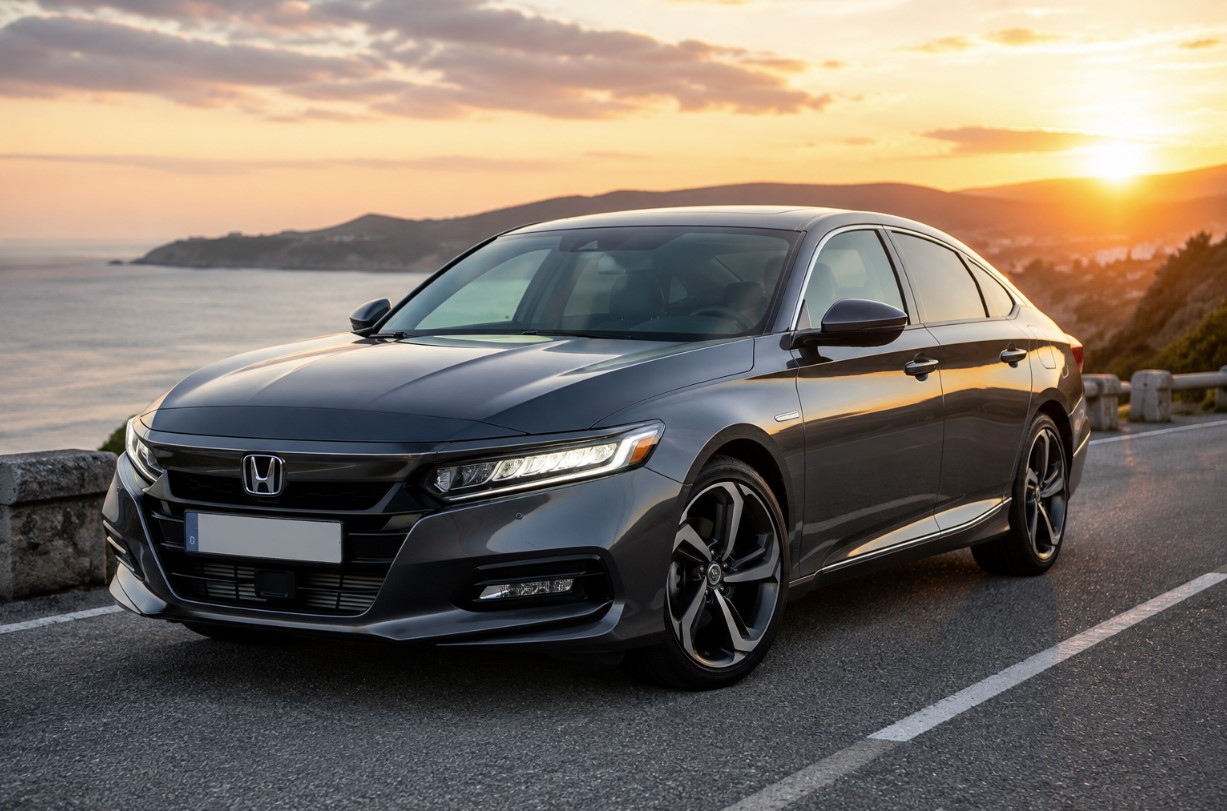
⚡ Which Used Honda Is Best to Buy in Germany?
If your priority is mechanical simplicity and predictable maintenance costs, naturally aspirated petrol versions are particularly worth considering: the Jazz 1.3, Civic 1.8, Accord 2.0, HR-V 1.5 and CR-V 2.0, provided the individual car is in good condition.
For drivers covering high annual mileages and spending a lot of time on the German Autobahn, a well-maintained diesel Honda can also make sense. However, the DPF, EGR system, turbocharger, injectors, clutch and dual-mass flywheel should be checked carefully before purchase.
For urban driving, newer Jazz, Civic, HR-V and CR-V e:HEV models are attractive because of their efficient hybrid systems. When buying one used, however, the inspection should include the high-voltage system in addition to the conventional mechanical checks.
🎯 Key point: there is no such thing as “a Honda that can safely be bought without an inspection.” Even a fundamentally robust design cannot protect a used car from neglected maintenance, overheating, accident damage or poor-quality repairs.
📑 Contents
- Why Honda Has a Reputation for Reliability
- Used Honda Models Available in Germany
- Quick Used Honda Buying Guide
- Honda Jazz
- Jazz 2011–2015
- Jazz 2015–2020
- Jazz e:HEV
- Civic IX 2012–2017
- Civic 1.8 i-VTEC
- Civic 1.6 / 2.2 i-DTEC
- Civic Tourer
- Civic X
- 1.0 and 1.5 VTEC Turbo
- Civic Type R
- Civic XI e:HEV
- Honda Accord
- Honda CR-V
- Honda HR-V
- Insight and CR-Z
- Honda e
- Honda Transmissions
- What to Check on Any Used Honda
- Honda Recalls and VIN Checks
- Honda Pre-Purchase Inspection in Germany
- Which Honda Should You Choose?
- Frequently Asked Questions
🛠 Why Honda Has Such a Strong Reputation for Used-Car Reliability
Honda's reputation for reliability was not built around one single technology. It comes from a combination of successful petrol engines, strong manual transmissions, practical body designs and relatively straightforward engineering in many of the brand's mainstream models.
⚙ Naturally Aspirated Engines
Many petrol-powered Hondas avoid turbochargers and the complex exhaust after-treatment systems found on modern diesel engines.
🔧 VTEC Technology
Honda's valve-control technology helps combine efficiency, everyday drivability and the high-revving character for which many Honda engines are known.
🕹 Manual Transmissions
Honda manual gearboxes are widely appreciated for their precise, positive and enjoyable shift action.
🪑 Practical Interior Design
Features such as Magic Seats and intelligent packaging allow compact Honda models to offer surprisingly versatile interiors.
However, a reliable design is not the same thing as a guaranteed reliable used car. Once a vehicle is ten, twelve or fifteen years old, its previous maintenance and use become critical.
🚩 Even a Good Honda Engine Can Be Damaged
- 🛢 by driving with an insufficient oil level;
- 🌡 through overheating;
- 🔧 by neglecting valve-clearance maintenance;
- 🧴 by using unsuitable engine oil;
- ⚡ through worn spark plugs or ignition coils;
- ❄ through cooling-system problems;
- ⛽ by an incorrectly calibrated LPG conversion;
- 🏁 through sustained hard or track use;
- 🚗 by poor-quality repairs following an accident.
⚠ The phrase “Hondas don't break” should therefore be treated as a broad reputation, not as a technical guarantee for an individual used car.
🇩🇪 Which Honda Models After 2011 Can You Find on the German Used-Car Market?
Honda has a considerably smaller market presence in Germany than Volkswagen, Mercedes-Benz, BMW, Opel, Ford or Škoda.
As a result, there are fewer used Hondas to choose from, and a genuinely good example with a transparent service history can cost more than buyers expect when comparing cars only by age and mileage.
🚗 Honda Jazz
A compact but exceptionally practical city car, particularly attractive for urban use.
🏁 Honda Civic
Available in everything from relatively simple naturally aspirated versions to diesels, turbocharged models, e:HEV hybrids and the Type R.
🚘 Honda Accord
A spacious saloon or Tourer that remains interesting for long-distance driving.
🚙 Honda CR-V
One of Honda's most popular family SUVs on the German used-car market.
🏙 Honda HR-V
A compact crossover with a practical interior and easy everyday usability.
⚡ Honda Hybrid / EV
Insight, CR-Z, Jazz e:HEV, Civic e:HEV, CR-V Hybrid and the fully electric Honda e.
🌍 Imported Honda Models in Germany
Less commonly, the German market also contains imported Honda Pilot, Odyssey, Ridgeline and Acura models, as well as vehicles originally intended for Japan, the United Kingdom or North America.
❗ A rare imported Honda can offer unusual equipment or an attractive specification, but its origin, documentation, compliance with German and EU requirements and the availability of model-specific spare parts should be checked carefully before purchase.
📊 Honda After 2011: Quick Used-Car Buying Guide
| Model / Engine | Best For | Main Areas to Check |
|---|---|---|
| Jazz 1.3 i-VTEC | City driving, low annual mileage, maximum practicality | Valve clearances, engine oil, CVT, brakes, corrosion |
| Civic 1.8 i-VTEC | One of the most versatile petrol Honda options | Oil, valve clearances, cooling system, bodywork, clutch / automatic transmission |
| Civic 1.6 i-DTEC | High annual mileage and Autobahn driving | DPF, EGR, turbocharger, injectors, clutch |
| Accord 2.0 i-VTEC | Space, long-distance driving, naturally aspirated petrol engine | Valve clearances, engine oil, automatic transmission, suspension, corrosion |
| CR-V 2.0 i-VTEC | Family use, low to medium annual mileage | Automatic transmission, rear differential, valve clearances, underbody |
| HR-V 1.5 i-VTEC | City use and general family driving | CVT, valve clearances, air conditioning, brakes |
| e:HEV | City and mixed driving | HV battery, hybrid fault codes, 12V battery, cooling system, brakes |
🎒 Honda Jazz: Small Outside, Surprisingly Spacious Inside
The Honda Jazz is interesting not because of outright performance, but because of its clever packaging. Honda's Magic Seats system allows the compact body to be used far more efficiently than its exterior dimensions suggest.
The rear-seat system allows you to:
- 📦 fold the backrests down to create a large luggage area;
- ⬆ lift the rear seat bases upwards;
- 🌿 carry tall objects inside the passenger compartment;
- 👶 transport children's equipment and pushchairs more easily;
- 👵 benefit from a relatively high and convenient seating position for such a compact car.
✅ For urban use, the Jazz is one of those cars whose real-world practicality is much greater than its compact dimensions suggest.
🟢 Honda Jazz 2011–2015: Simple Petrol Engines or Early IMA Hybrid
On the German used-car market, cars from this period are commonly found with 1.2 and 1.4 i-VTEC petrol engines, as well as the Jazz Hybrid with Honda's IMA system.
✅ Strengths of the Petrol Jazz
- simple naturally aspirated engines;
- good visibility;
- comfortable seating position;
- highly practical interior;
- moderate fuel consumption;
- timing-chain drive;
- strong suitability for city driving.
🔍 What to Check
- 🧱 the underbody and rear section of the body;
- 🛑 brake components;
- 🛞 wheel bearings;
- ❄ air conditioning;
- ⚡ spark plugs and ignition coils;
- 🔧 valve clearances;
- ⚙ clutch condition;
- 🔄 CVT operation;
- 🔋 hybrid battery condition on IMA models;
- 🚦 signs of intensive urban use.
⚠ A low-mileage Jazz has not necessarily had an easy life. A city car may have experienced thousands of cold starts, parking knocks and repeated short journeys.
⭐ Honda Jazz 2015–2020: One of the Most Rational Petrol Choices
For the European market, the key version of this generation is the naturally aspirated 1.3 i-VTEC, combined either with a manual transmission or a CVT.
For a buyer who wants a small used car without a diesel DPF and without turbocharging, this Jazz is well worth considering.
⚙ Simple Powertrain Concept
Naturally aspirated petrol engine without a complex turbocharging system.
📦 Practicality
Magic Seats and impressive usable interior space for a compact car.
⛽ Everyday Use
Particularly suitable for short trips and moderate annual mileage.
🔧 What to Check Before Buying
- 🧊 cold start;
- 🛢 engine oil level and condition;
- ⛓ unusual timing-drive noises;
- 🔧 valve clearances;
- ⚙ idle stability;
- ❄ air-conditioning performance;
- 🔋 12V battery condition;
- 🛑 brakes;
- 🛞 suspension;
- 🔄 CVT operation.
💡 If the 1.3 i-VTEC revs relatively high during strong acceleration, that does not automatically indicate a fault. A naturally aspirated engine produces a significant part of its power higher in the rev range.
⚡ Honda Jazz e:HEV: A Hybrid That Should Not Be Judged Like a Conventional CVT
The modern Honda Jazz is sold in Europe with the full hybrid e:HEV system.
The powertrain combines:
- ⛽ a petrol engine;
- ⚡ a traction electric motor;
- 🔌 a generator;
- 🔋 a high-voltage battery;
- ♻ regenerative braking.
Depending on driving conditions, the system automatically uses electric drive, hybrid drive or direct engine drive.
❗ The term e-CVT used in connection with Honda e:HEV should not be confused with a conventional belt-driven CVT using two variable pulleys.
🔋 What to Check on a Used Jazz Hybrid
- condition of the high-voltage battery;
- hybrid-system fault codes;
- cooling-system operation;
- 12V battery condition;
- smooth transitions between operating modes;
- condition of the mechanical brakes;
- cameras and driver-assistance systems;
- service history;
- previous body-repair history.
✅ For city driving, the Jazz e:HEV is especially well suited: the traction motor works efficiently during frequent starts, low-speed acceleration and stop-and-go traffic.
🏁 Honda Civic IX 2012–2017: A Practical Alternative to the Usual German Compact Cars
The ninth-generation Civic combines distinctive styling, a relatively low seating position, a practical cabin and Honda's Magic Seats concept.
On the German used-car market you may find:
- ⛽ 1.4 i-VTEC;
- ⭐ 1.8 i-VTEC;
- 🌫 1.6 i-DTEC;
- 🛣 2.2 i-DTEC;
- 📦 Civic Tourer;
- 🏁 performance-oriented versions.
🟢 Civic 1.4 i-VTEC
The naturally aspirated 1.4 is attractive because of its simplicity, but it can feel underpowered in the Civic, particularly when fully loaded or driven at higher Autobahn speeds.
It makes the most sense for:
- 🏙 urban driving;
- 📉 relatively low annual mileage;
- 🚗 a relaxed driving style;
- 🔧 buyers who value simplicity more than outright performance.
🔍 What to Check on the 1.4
- engine-oil consumption;
- valve clearances;
- ignition coils;
- spark plugs;
- timing-drive operation;
- clutch condition;
- cooling system;
- air conditioning.
⭐ Honda Civic 1.8 i-VTEC: One of the Most Interesting Petrol Hondas of This Era
The 1.8 i-VTEC is often one of the most balanced Civic IX choices. It offers enough performance for both city use and Autobahn driving, while retaining a naturally aspirated engine design.
✅ No Turbocharger
There is no separate turbocharger, boost-control system or associated turbo hardware.
⛓ Timing Chain
This does not mean the chain lasts forever, but there is no scheduled timing-belt replacement as on some other engine designs.
🛣 Versatility
The engine is suitable for both urban use and long-distance motorway driving.
🔧 What to Inspect
- 🛢 engine oil level and condition;
- 💧 visible leaks;
- 🧊 cold start;
- 🔧 valve clearances;
- 🌡 cooling system;
- 🔩 engine mounts;
- ⚡ ignition coils and spark plugs;
- 🌫 exhaust-system condition;
- 📚 documented service history.
⛽ Civic 1.8 with LPG
A Civic fitted with LPG may be economically attractive, but such a car deserves an additional layer of inspection.
Important points include:
- installation documentation;
- quality of the installation;
- fuel-mixture calibration;
- valve-clearance condition;
- compression testing if there are relevant concerns;
- maintenance history of the LPG system.
⚠ LPG itself does not make a Honda a bad purchase. The real risk comes from poor installation, incorrect calibration or neglected maintenance.
🌫 Honda Civic 1.6 and 2.2 i-DTEC: Good Long-Distance Engines, but Not Ideal for Constant Short Trips
Diesel Civics are particularly interesting for drivers who regularly cover long distances and spend a lot of time on the German Autobahn.
The basic principle is simple: a modern diesel prefers longer journeys, stable operating temperature and enough time to complete DPF regeneration properly.
🟢 Civic 1.6 i-DTEC
The 1.6 i-DTEC is known for low fuel consumption and suits long-distance use well.
Before buying, however, you need to assess not only the engine itself but also the emissions-control systems.
🌫 DPF
Check soot loading, differential pressure and regeneration history where diagnostic data is available.
♻ EGR
Contamination can affect engine operation and the intake system.
🌀 Turbocharger
Check boost behaviour, hose sealing and signs of excessive oil contamination.
💉 Injectors
Injection corrections, starting behaviour and engine operation under load are useful indicators.
🔧 What to Check on the 1.6 i-DTEC
- DPF;
- EGR;
- turbocharger;
- injectors;
- exhaust-system sensors;
- boost-system sealing;
- dual-mass flywheel;
- clutch;
- intake contamination;
- evidence of regular long-distance driving.
⚠ If the car has spent most of its life doing journeys of only 5–10 km, the diesel's lower fuel consumption may not compensate for the potential cost of DPF and EGR problems.
🔵 Civic 2.2 i-DTEC
The larger diesel engine provides strong torque and is well suited to Autobahn use, full loads and long-distance driving.
However, most examples are now older, so the actual maintenance history matters at least as much as the underlying engine design.
🔍 Main Areas of Attention
- 🌫 DPF;
- ♻ EGR;
- ⛓ timing chain;
- 🌀 turbocharger;
- 💉 injectors;
- ⚙ clutch;
- 🔄 dual-mass flywheel;
- 🌬 intake system;
- 🛢 oil leaks;
- 📚 regeneration and maintenance history.
💡 A strong diesel-engine reputation does not remove the cost of a DPF, turbocharger, clutch or injector replacement.
📦 Honda Civic Tourer: A Rare and Very Practical Used Estate
The Civic Tourer is considerably rarer in Germany than a Volkswagen Golf Variant, Škoda Octavia Combi or Ford Focus Turnier.
Its main strength is the combination of a large luggage compartment and Honda's Magic Seats system.
📦 Large Usable Load Space
Well suited to family use, travel and carrying luggage.
🪑 Magic Seats
Add a level of interior flexibility that is unusual even among estate cars.
⭐ 1.8 i-VTEC
One of the more attractive petrol-engine options.
🌫 1.6 i-DTEC
Best suited to high annual mileage and Autobahn driving.
🔍 Additional Checks for the Tourer
- rear suspension;
- shock absorbers;
- springs;
- luggage-compartment condition;
- signs of carrying heavy loads;
- lower rear-bumper area;
- rear section of the underbody;
- seat mounting points;
- Magic Seats folding operation.
⚠ An estate car with low mileage may still have spent years carrying heavy loads. Mileage therefore does not replace a proper inspection of the suspension and rear body structure.
🚀 Honda Civic X 2017–2022: Honda Moves from Naturally Aspirated Engines to Turbocharging
The tenth-generation Civic became larger, more modern and technically more complex.
On the German used-car market, typical versions include:
- 1.0 VTEC Turbo;
- 1.5 VTEC Turbo;
- 1.6 i-DTEC;
- 2.0 VTEC Turbo in the Type R.
⚡ The Main Difference with the Civic X
The old rule “Honda means a simple naturally aspirated petrol engine” no longer applies across the entire range. Turbocharging, a more demanding lubrication system and different maintenance requirements make the service history much more important.
⚙ Honda Civic 1.0 and 1.5 VTEC Turbo: What Needs Extra Attention
🟡 Civic 1.0 VTEC Turbo
The three-cylinder 1.0 Turbo delivers good performance for its relatively small displacement, but its design requires more careful attention to engine oil and maintenance history.
One of the key areas in this engine's technical assessment is the timing drive, which operates in oil, together with the general condition of the lubrication system.
🔍 What to Check Before Buying
- 📄 proof of regular engine-oil changes;
- 🧴 the oil specification that was actually used;
- ⛓ timing-drive condition;
- 🛢 possible contamination in the lubrication system;
- ⚙ oil pressure if there is a technical reason to investigate it further;
- 🌀 turbocharger operation;
- 🧊 cold-start behaviour;
- 💧 coolant consumption;
- 🖥 engine fault memory;
- 📚 invoices for previous repairs.
❗ A seller saying “the timing belt has already been replaced” is useful only if there is an invoice showing exactly what work was carried out and when.
🔴 Civic 1.5 VTEC Turbo
The four-cylinder 1.5 Turbo is significantly more powerful and suits the Civic X chassis very well.
⚡ Performance
Strong torque is available from relatively low revs, making the car noticeably more flexible than older naturally aspirated Civics.
🛣 Autobahn Use
The engine is well suited to motorway driving and overtaking.
⚙ Turbocharged Design
The powertrain is more complex than the older 1.8 i-VTEC and therefore depends more heavily on correct maintenance.
🔧 Main Inspection Points
- engine-oil level and history;
- correct oil specification;
- turbocharger operation;
- cooling-system condition;
- cold-start behaviour;
- unusual engine noise;
- boost-system sealing;
- ignition system;
- stored engine faults;
- previous tuning or ECU modifications.
⚠ On a turbocharged Civic, maintenance history becomes more important than on an older naturally aspirated Honda. A powerful engine that has been neglected can be a much worse purchase than a simpler car with higher mileage but proper servicing.
🏁 Honda Civic Type R: Excellent Performance, but Previous Use Matters
The Civic Type R is one of Honda's most desirable performance cars, but buying one used requires a completely different mindset from buying a Jazz or a standard Civic 1.8.
The main question is not only whether the engine runs well, but also how the car has been used.
🔍 What to Check
- evidence of track use;
- ECU tuning or aftermarket software;
- modified intake or exhaust components;
- turbocharger condition;
- clutch wear;
- gearbox behaviour;
- brakes;
- tyre condition and matching tyre specifications;
- suspension modifications;
- wheel alignment;
- accident-repair history;
- cooling-system condition.
❗ A Type R with relatively low mileage can still have experienced a harder life than a standard Civic with twice the odometer reading.
⚡ Honda Civic XI e:HEV: A Modern Hybrid for Everyday Driving
The latest European Civic uses Honda's e:HEV hybrid system and represents a very different technical concept from older naturally aspirated and turbocharged Civic generations.
The petrol engine works together with electric drive and a high-voltage battery, while the system automatically chooses the most efficient operating mode.
✅ Why It Is Attractive
- smooth low-speed operation;
- strong response in city traffic;
- good efficiency;
- comfortable everyday driving;
- no conventional diesel DPF concerns.
🔋 What to Check on a Used Civic e:HEV
- high-voltage battery condition;
- hybrid-system fault memory;
- 12V battery;
- cooling systems;
- regenerative braking;
- mechanical brakes;
- charging-related and power-management data where available;
- driver-assistance systems;
- accident history;
- complete service records.
💡 A modern Honda hybrid should be assessed as a hybrid system, not simply as a petrol car with an additional battery.
🚘 Honda Accord After 2011: A Mature and Comfortable Alternative to the Usual German Mid-Size Cars
The Accord is less common on the German used-car market than a Volkswagen Passat, BMW 3 Series, Mercedes C-Class or Opel Insignia, but a well-maintained example can still be a very interesting choice.
Buyers typically encounter petrol and diesel versions, with the 2.0 i-VTEC being particularly attractive for those who prefer a naturally aspirated petrol engine.
⭐ Accord 2.0 i-VTEC
The 2.0 petrol engine offers a good compromise between simplicity, smooth operation and acceptable performance.
🔍 What to Inspect
- engine-oil condition;
- valve clearances;
- cooling system;
- ignition system;
- manual clutch or automatic-transmission behaviour;
- suspension;
- brakes;
- underbody corrosion;
- body-repair history;
- service documentation.
🌫 Accord Diesel
Diesel versions can make sense for high annual mileage and long Autobahn journeys, but the same basic diesel rules apply: DPF, EGR, turbocharger, injectors, clutch and dual-mass flywheel should be assessed carefully.
⚠ The Accord is now an older model on the German market. At this age, maintenance history often matters more than whether the original design was considered reliable when new.
🚙 Honda CR-V: One of the Most Interesting Used Honda SUVs in Germany
The CR-V is one of Honda's most established family SUVs. It combines a spacious interior, comfortable driving and practical everyday usability.
Depending on the generation, buyers may encounter:
- 2.0 i-VTEC petrol;
- diesel engines;
- manual transmission;
- automatic transmission;
- all-wheel drive;
- later hybrid versions.
⭐ CR-V 2.0 i-VTEC
For buyers who want a petrol SUV without diesel emissions hardware, the naturally aspirated 2.0 can be particularly interesting.
🔧 What to Check
- valve clearances;
- engine-oil condition;
- cooling system;
- automatic transmission;
- rear differential on AWD versions;
- suspension;
- wheel bearings;
- brakes;
- underbody condition;
- tow-bar use if fitted.
🌫 Diesel CR-V
Diesel versions remain attractive for long-distance use, but a pre-purchase inspection should include DPF, EGR, turbocharger, injectors and the clutch / dual-mass flywheel where relevant.
⚡ CR-V Hybrid
Later CR-V hybrids add Honda's electrified powertrain to the SUV concept.
The inspection should therefore include:
- HV battery diagnostics;
- hybrid-system fault codes;
- 12V battery;
- cooling systems;
- brakes;
- AWD system where fitted.
✅ For a family buyer who wants a Honda SUV, the CR-V is usually one of the first models worth considering, but choosing the correct engine for the intended usage pattern is essential.
🏙 Honda HR-V: Compact SUV with a Practical Interior
The HR-V sits below the CR-V and is aimed more at urban and mixed-use driving.
One of its strongest practical advantages is again Honda's intelligent interior packaging.
⭐ HR-V 1.5 i-VTEC
The naturally aspirated petrol engine is attractive for buyers who prefer mechanical simplicity and do not need diesel torque or turbocharged performance.
🔍 What to Check
- engine-oil condition;
- valve clearances;
- cold start;
- CVT behaviour;
- air conditioning;
- brakes;
- suspension;
- Magic Seats operation;
- body condition;
- previous urban-use damage.
⚡ HR-V e:HEV
Newer HR-V models use Honda's hybrid system and are particularly suitable for city and mixed driving.
Used examples should be checked for hybrid-system faults, HV battery condition, 12V battery health and proper operation of the braking and cooling systems.
🔋 Honda Insight and CR-Z: Early Honda Hybrids on the German Used-Car Market
The Insight and CR-Z use Honda's earlier IMA hybrid concept.
Compared with modern e:HEV models, the electric motor plays a more supporting role, while the combustion engine remains central to propulsion.
🚗 Honda Insight
Focused primarily on economy and everyday use.
🏁 Honda CR-Z
Combines the IMA hybrid system with a more compact, sporty concept.
🔍 What to Check
- hybrid-battery condition;
- battery charge behaviour;
- IMA warning lights;
- hybrid fault codes;
- 12V battery;
- engine condition;
- transmission condition;
- service history;
- age-related corrosion and suspension wear.
⚠ On older hybrids, age can be just as important as mileage. A low-mileage battery is still an old battery if the vehicle has been on the road for many years.
🔌 Honda e: Attractive City EV, but Range and Battery Condition Matter
The Honda e is one of the most unusual modern Honda models. It was designed primarily as a compact urban electric vehicle, with a strong focus on design, technology and manoeuvrability.
It is not the ideal choice for every buyer, particularly if frequent long-distance Autobahn travel is expected.
✅ Strengths
- compact dimensions;
- excellent urban manoeuvrability;
- distinctive interior;
- quiet operation;
- electric drivetrain simplicity compared with a combustion engine.
🔍 What to Check Before Buying
- traction-battery condition;
- realistic remaining range;
- AC charging;
- DC fast charging;
- HV-system fault memory;
- 12V battery;
- battery thermal-management system;
- charging port;
- cameras and digital mirrors;
- infotainment displays;
- driver-assistance systems;
- accident history and underbody condition.
❗ With a used EV, the odometer reading alone is not enough. Battery condition, charging behaviour and the intended driving profile should be evaluated together.
🔄 Honda Transmissions: Manual, Conventional Automatic, CVT and e:HEV
Honda uses several very different transmission concepts, and a used-car buyer should understand which one is fitted to the specific vehicle.
🕹 Manual Transmission
Often one of Honda's strong points: precise shift action, simple construction and generally predictable maintenance.
⚙ Conventional Automatic
Found on various older Honda models. Smooth operation and fluid-service history are key inspection points.
🔄 CVT
Common on Jazz, HR-V and some other models. Correct fluid, smooth engagement and absence of judder are especially important.
⚡ e:HEV Drive
Not a conventional belt CVT. The system combines electric drive, a generator and direct engine drive depending on conditions.
🔍 Manual Gearbox Checklist
- clutch bite point;
- slippage under load;
- gear engagement quality;
- synchromesh behaviour;
- gearbox noises;
- clutch hydraulics.
🔍 Conventional Automatic Checklist
- cold and hot shift quality;
- delay when selecting D or R;
- fluid-service history;
- fault memory;
- unusual vibration or flare between gears.
🔍 CVT Checklist
- smooth engagement into D and R;
- absence of judder when pulling away;
- stable acceleration;
- correct transmission fluid history;
- fault codes;
- unusual whine or vibration.
⚠ A Honda CVT can work very well, but it is much more important to verify the correct maintenance history than to rely on the idea that “Honda gearboxes are always reliable”.
✅ What to Check on Any Used Honda Before Buying
Regardless of whether you are looking at a Jazz, Civic, Accord, CR-V or HR-V, the inspection should follow the same basic logic: verify the vehicle history, check the body, inspect the powertrain, scan the electronics and compare the actual condition with the seller's description.
| Area | What to Check | Why It Matters |
|---|---|---|
| 📄 Documents | VIN, service history, HU/AU, invoices | Confirms maintenance and mileage logic |
| 🎨 Bodywork | Paint thickness, panel gaps, fasteners, repair traces | Helps identify previous accident repairs |
| ⚙ Engine | Cold start, oil level, leaks, cooling system, unusual noise | Reveals neglected maintenance or mechanical problems |
| 🔄 Transmission | Clutch, automatic, CVT, e:HEV operation | Transmission repair can be expensive |
| 🛞 Suspension | Play, shock absorbers, wheel bearings | Important on older and high-mileage cars |
| 🛑 Brakes | Discs, pads, calipers, parking brake | Urban Hondas often accumulate brake wear |
| 🖥 OBD | Engine, transmission, SRS, ABS, hybrid and comfort modules | Shows problems not visible in a simple walk-around |
| 🛣 Test Drive | Steering, braking, vibration, gearbox behaviour | Confirms real operating condition |
📢 Honda Recalls and VIN Checks
When buying a used Honda, it is worth checking whether any manufacturer recall or service campaign applies to the specific VIN.
This is particularly important on older cars where previous owners may have ignored or postponed campaign work.
✅ A recall does not automatically make a car a bad purchase. The important question is whether the required work has already been completed.
🔍 Honda Pre-Purchase Inspection in Berlin, Brandenburg and Across Germany
A used Honda can be a very rational purchase, but only if the specific car matches the reputation of the model.
Sicher-Check can inspect the vehicle before you buy and help you understand:
- the actual body condition;
- previous accident repairs;
- engine condition;
- transmission behaviour;
- DPF / EGR / diesel risks;
- CVT condition;
- hybrid-system faults;
- service-history consistency;
- realistic future maintenance costs.
🎯 Which Used Honda Should You Choose?
🏙 Mostly City Driving
Jazz 1.3, Jazz e:HEV or HR-V 1.5 are particularly sensible choices.
🛣 High Annual Mileage
A well-maintained Civic or CR-V diesel can make sense if the car regularly covers long distances.
🚙 Family SUV
CR-V petrol, diesel or hybrid depending on driving profile.
⭐ Simple Petrol Car
Civic 1.8, Accord 2.0, Jazz 1.3 and HR-V 1.5 are especially interesting.
⚡ Modern Hybrid
Jazz e:HEV, Civic e:HEV or CR-V Hybrid.
🏁 Performance
Civic 1.5 Turbo or Type R, but only after a careful inspection of previous use and modifications.
💡 Most Rational Used Honda Choices
For many buyers, the safest balance between simplicity, reliability and future maintenance costs is found in naturally aspirated petrol models with a documented service history.
❓ Frequently Asked Questions
Are used Hondas reliable in Germany?
Many Honda models have a strong reliability reputation, especially naturally aspirated petrol versions. However, the condition of the individual used car, maintenance history and previous use are more important than brand reputation alone.
Which Honda engine is the safest used-car choice?
Naturally aspirated petrol engines such as the Civic 1.8 i-VTEC, Accord 2.0 i-VTEC, Jazz 1.3 and HR-V 1.5 are often attractive because of their relative simplicity.
Is the Honda 1.6 i-DTEC a good diesel?
It can be a good long-distance engine, but the DPF, EGR, turbocharger, injectors, clutch and dual-mass flywheel should be checked carefully before purchase.
Is Honda CVT reliable?
A Honda CVT can be reliable when the correct fluid is used and maintenance is performed on time. Smooth engagement, absence of judder and service documentation are important before purchase.
Is e:HEV the same as a normal CVT?
No. Honda's e:HEV drive system is technically different from a conventional belt-driven CVT.
Is a Honda Type R a good used buy?
It can be, but previous track use, tuning, tyre wear, brakes, clutch, gearbox and accident history are especially important.
Which Honda is best for city driving?
Jazz, Jazz e:HEV and HR-V are particularly well suited to urban use.
📚 Related Articles