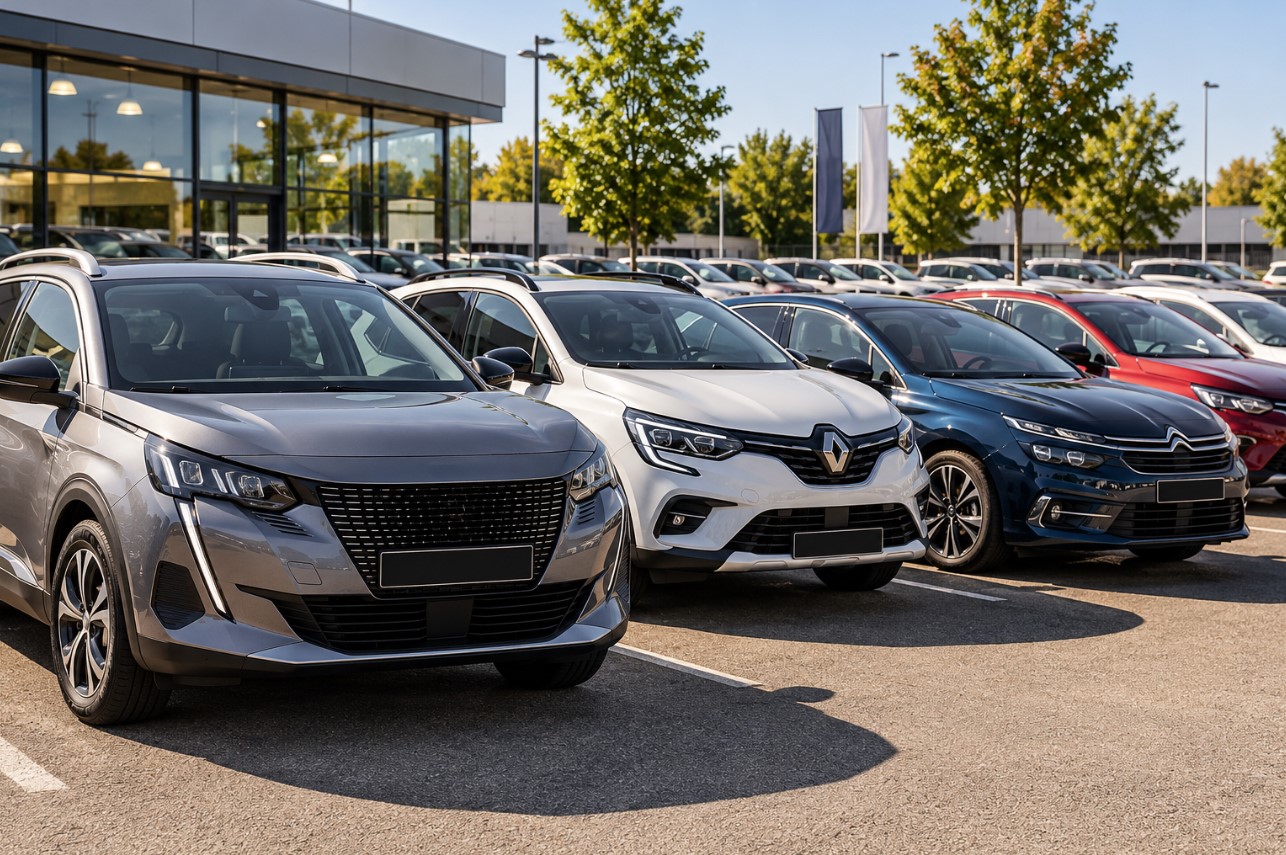
⚡ Quick Answer: Are French Used Cars Worth Buying in Germany?
Yes. A used Renault, Peugeot, Citroën or DS can be a sensible purchase in Germany.
Compared with some competing models from German manufacturers, French vehicles may offer a newer registration year, more equipment or greater comfort for a similar budget.
However, the purchase decision should not be based on the badge alone. It is particularly important to verify:
- The exact engine version and production period.
- The transmission type and its operating condition.
- Documented service history and maintenance intervals.
- The condition of the timing belt or timing chain system, where applicable.
- Diesel emissions equipment, including DPF, SCR and AdBlue.
- Vehicle mileage, accident history and previous repairs.
Particular attention is advisable with certain earlier 1.2 PureTech petrol engines using an oil-immersed timing belt, some Renault 1.2 TCe engines, diesel SCR/AdBlue systems and automated manual transmissions such as EGS and ETG.
These technical considerations do not mean that every vehicle fitted with such components is defective. The actual condition and documented maintenance of the individual car remain decisive.
💶 Why Are French Used Cars Often Cheaper in Germany?
The German used-car market has traditionally shown strong demand for domestic brands such as Volkswagen, Audi, BMW and Mercedes-Benz.
As a result, comparable vehicles from Renault, Peugeot, Citroën and DS may sometimes be advertised at more attractive prices.
However, the price difference depends on the model, registration year, mileage, equipment, mechanical condition and current market demand.
📉 Five Reasons Behind the Price Difference
📊 Market Demand
German brands enjoy strong recognition and demand in several market segments. This can support their residual values.
A comparable French vehicle may therefore offer more equipment for the same purchase budget.
🧠 Brand Reputation
Long-standing stereotypes about French cars can influence buying decisions.
Such perceptions do not necessarily reflect the actual technical condition of a particular vehicle.
⚙️ Technical Reputation
Certain generations of engines and transmissions have developed mixed reputations.
Known technical concerns can reduce demand, even though individual vehicles may have been properly maintained.
🚘 Vehicle Background
The German market includes former company cars, leased vehicles, rental cars and imports from other EU countries.
Previous use should be assessed through maintenance records, mileage verification and physical inspection.
💡 Where Can Buyers Actually Save Money?
A French used car can represent excellent value when it combines a suitable engine and gearbox with transparent service history and good mechanical condition.
For example, a well-maintained Renault Mégane or Peugeot 308 may be worth considering alongside a similarly priced Volkswagen Golf.
But the lower advertised price is only an advantage if it does not conceal substantial maintenance requirements.
🎯 Compare Total Ownership Costs — Not Just Advertised Prices
A realistic buying decision should include:
- Purchase price and registration costs.
- Insurance and vehicle tax.
- Scheduled servicing and consumables.
- Possible engine, transmission and emissions-system repairs.
- Expected resale value.
A cheaper car that requires an expensive repair shortly after purchase may ultimately cost more than a better-maintained alternative.
🚗 Renault, Peugeot, Citroën and DS: Which French Brands Are Available in Germany?
French manufacturers offer everything from compact city cars to seven-seat family vehicles, crossovers, executive cars and electric models.
Each brand has its own market positioning, but many models share technical components with vehicles from the same automotive group.
🇫🇷 Renault: Practicality and Model Variety
Renault offers a particularly broad selection of used cars on the German market.
Common examples include:
- Clio: compact urban hatchback.
- Captur: small crossover.
- Mégane: family hatchback or estate, depending on generation.
- Grand Scénic: practical family vehicle.
- Kadjar: compact SUV.
- Espace and Talisman: larger, comfort-oriented models.
- Arkana and Zoe: crossover and electric-car options.
Renault's strengths can include practicality, comfortable seating, efficient powertrains and reasonably accessible replacement parts.
Before purchasing, pay particular attention to the exact TCe petrol engine, the condition of any dCi diesel, the operation of the EDC transmission and the vehicle's electronics.
🦁 Peugeot: Design and Driving Comfort
Peugeot is particularly interesting to buyers looking for modern styling, distinctive interiors and comfortable road manners.
Popular used models include the 208, 308, 2008, 3008, 5008 and 508.
Depending on the model and generation, buyers may find:
- Peugeot's distinctive i-Cockpit dashboard layout.
- Comfortable and well-equipped interiors.
- Conventional automatic transmissions such as EAT6 and EAT8.
- Petrol, diesel, hybrid and electric powertrains.
The most important technical question is often not whether the car is a Peugeot, but which generation of PureTech or BlueHDi engine it uses.
🛋 Citroën: Comfort and Everyday Practicality
Citroën has traditionally emphasised ride comfort, practicality and family-friendly vehicle concepts.
German used-car listings frequently include:
- Citroën C3 and C3 Aircross.
- Citroën C4 and C4 Cactus.
- Citroën C5 Aircross.
- Citroën Berlingo.
- Citroën Grand C4 Picasso and Grand C4 SpaceTourer.
Many Citroën vehicles share engines and transmissions with Peugeot and DS models.
Consequently, concerns involving PureTech engines, BlueHDi diesels, AdBlue systems or EGS/ETG transmissions may be relevant across several model ranges.
💎 DS Automobiles: Premium Equipment and Design
DS Automobiles targets a more premium-oriented segment with models such as the DS 3, DS 4, DS 7 and DS 9.
Depending on specification, these cars can offer:
- Higher-grade interior materials.
- Distinctive exterior design.
- Advanced lighting systems.
- Camera-based driver assistance.
- Hybrid powertrains.
- Comfort-focused equipment.
The additional equipment can also increase potential repair costs.
Expensive headlights, cameras, electronic modules and model-specific body parts deserve particular attention during a pre-purchase inspection.
⚠️ Important: The Badge Does Not Tell the Whole Technical Story
The same engine family may appear in Peugeot, Citroën, DS and certain Opel models.
Reliability should therefore be assessed using the engine code, production generation, gearbox type and documented maintenance history rather than the manufacturer's badge alone.
📊 Renault vs Peugeot vs Citroën vs DS: Used-Car Comparison
The following table summarises the main advantages and inspection priorities for each brand.
| Brand | Strengths | Check Carefully | Typical Buyer |
|---|---|---|---|
| Renault | Practicality, model variety, efficient engines | 1.2 TCe, EDC, electronics, diesel emissions systems | Urban drivers, families, long-distance users |
| Peugeot | Design, interiors, EAT6/EAT8, ride comfort | PureTech, BlueHDi, AdBlue, oil-service history | City, family and motorway driving |
| Citroën | Comfortable suspension, practical family models | PureTech, EGS/ETG, BlueHDi, electrical systems | Comfort-focused buyers and families |
| DS | Equipment, materials, styling and comfort | Electronics, lighting, hybrid systems, parts costs | Buyers prioritising equipment and individuality |
📈 Chart 1: Illustrative Brand Positioning
The chart below illustrates selected characteristics commonly associated with the brands.
Practicality
Design
Comfort
Equipment
Editorial illustration of brand positioning only. The scores are subjective and are not measured reliability statistics, independent test results or model-specific quality ratings.
⚙️ Peugeot, Citroën and DS: What Should Buyers Know About the 1.2 PureTech Engine?
The three-cylinder 1.2 PureTech petrol engine has been fitted to a wide range of Peugeot, Citroën and DS vehicles.
Examples include certain versions of the Peugeot 208, 308, 2008, 3008 and 5008, as well as the Citroën C3, C4, C5 Aircross and various DS models.
This compact engine can provide good fuel economy and respectable performance for its displacement.
However, earlier generations became associated with concerns involving the oil-immersed timing belt, commonly called a wet belt.
🔧 Why Can an Oil-Immersed Timing Belt Become a Problem?
In certain versions, the timing belt operates inside the engine and comes into contact with motor oil.
Under unfavourable conditions, the belt material can deteriorate as a result of ageing, oil contamination, fuel dilution or operating conditions.
Detached belt particles may contaminate the oil pickup and components of the lubrication system.
In more serious cases, restricted oil circulation can contribute to:
- Reduced engine oil pressure.
- Inadequate lubrication.
- Engine warning messages.
- Damage to components dependent on reliable oil supply.
- Potentially expensive engine repairs.
🚨 When Should You Postpone the Purchase?
Do not ignore a PureTech engine with an unknown timing-belt history, oil-pressure warnings, abnormal mechanical noises or visible signs of belt deterioration.
The cause should be investigated before paying for the vehicle. A warning-free dashboard does not, by itself, establish that the timing system is healthy.
📋 1.2 PureTech Pre-Purchase Inspection Checklist
| Inspection | Why It Matters | Potential Risk |
|---|---|---|
| 🔢 Engine code | Identifies the engine generation and timing drive configuration. | Incorrect assessment of the engine version. |
| 🛢 Engine oil | Checks the specified oil approval and maintenance intervals. | Accelerated component deterioration. |
| ⏱ Timing belt | Verifies replacement history and assesses accessible belt condition. | Belt degradation and lubrication-system contamination. |
| 💻 Diagnostics | Checks available fault codes and relevant parameters. | Undetected or previously cleared warnings. |
| 🌫 Oil consumption | Reviews oil top-ups, operating history and possible symptoms. | Engine wear or costly repairs. |
| 📚 Service history | Confirms maintenance and relevant repair work. | Unknown mechanical condition. |
🆕 Do All PureTech Engines Have a Wet Timing Belt?
No. The PureTech name covers different generations and technical configurations.
Certain newer 1.2 Hybrid versions use a timing chain instead of the earlier oil-immersed belt design.
It would therefore be incorrect to assume that every vehicle advertised as PureTech has exactly the same timing-system risks.
The specific engine code and production version must be identified.
🛡 Manufacturer Support and Special Programmes
Stellantis has announced special support arrangements for certain PureTech engines, subject to eligibility criteria that may include vehicle age, mileage and maintenance history.
Any possible support should be verified using the vehicle's VIN and the applicable programme conditions.
An announcement of support does not mean that every engine or repair is covered.
⚡ Is a Used Peugeot with a 1.2 PureTech Worth Buying?
It can be, provided that the exact engine generation is known, maintenance is documented and the timing system has been properly assessed.
If important records are missing or suspicious symptoms are present, further specialist diagnosis is preferable to making a purchase based only on the attractive price.
🔧 Peugeot and Citroën 1.6 VTi and 1.6 THP Engines: What Should You Check?
Petrol engines from the Prince engine family were fitted to various Peugeot, Citroën and DS vehicles.
Naturally aspirated VTi and turbocharged THP versions differ in their construction, output and potential fault patterns.
🔍 Main Inspection Areas
⛓ Timing Chain
Listen for unusual noises during cold start. Check for timing-related fault codes and symptoms of incorrect valve timing.
🛢 Oil Consumption
Review the history of oil top-ups, crankcase ventilation, visible leaks and exhaust smoke.
🔥 Carbon Deposits
Direct-injection versions may require attention to symptoms associated with deposits on intake valves.
⛽ Fuel System
Assess the high-pressure fuel pump, injectors and available diagnostic information.
🌡 Cooling System
Inspect for leaks, thermostat problems, abnormal temperatures and evidence of previous overheating.
🌀 THP Turbocharger
Check boost behaviour, abnormal noises, leaks and associated components.
⚠️ Not Every 1.6 THP Is Technically Identical
Later versions received technical changes. It is therefore important to distinguish between production periods and engine variants.
The engine code, confirmed maintenance and actual condition are more informative than a general claim that all 1.6 THP engines are unreliable.
🔥 Renault Petrol Engines: 0.9 TCe, 1.0 TCe, 1.2 TCe and 1.3 TCe
Renault has produced several generations of compact turbocharged petrol engines.
Their commercial names may appear similar, but they do not necessarily share the same design or technical risks.
🚙 Renault 0.9 TCe and 1.0 TCe
These engines are commonly found in compact vehicles, including certain versions of the Renault Clio and Captur.
They can be suitable for urban driving, but a pre-purchase inspection should cover:
- Cold-start behaviour.
- Turbocharger operation.
- Cooling-system condition.
- Ignition-system performance.
- Oil-change history.
- Visible leaks and abnormal noises.
🚨 Renault 1.2 TCe H5Ft: A Higher-Risk Used-Car Choice
The turbocharged 1.2 TCe H5Ft engine deserves particular attention when purchasing a used Renault.
Variants of this engine family were used in certain Renault, Nissan and Dacia models.
Some engines have been associated with reports of excessive oil consumption, timing-chain concerns and serious damage involving cylinders and pistons.
🚩 Warning Signs That Should Not Be Ignored
- Frequent engine-oil top-ups.
- Unusual noises during a cold start.
- Rough or unstable engine operation.
- Exhaust smoke or ignition misfires.
- Missing maintenance records.
- Inconsistent explanations from the seller about oil consumption.
Where there are reasonable grounds for concern, additional checks may be necessary.
Depending on the symptoms, further testing may include:
- Compression testing.
- Inspection of cylinder condition.
- Assessment of crankcase ventilation.
- Additional engine diagnostics.
Such procedures normally require separate agreement, suitable equipment and, where necessary, permission from the seller.
✅ Renault 1.3 TCe: A More Modern Alternative
The later 1.3 TCe is often considered an attractive alternative to the earlier 1.2 TCe H5Ft.
However, the engine still requires a proper mechanical assessment.
Particular attention should be paid to:
- Turbocharger operation.
- Cooling-system condition.
- Ignition components.
- Direct-injection operation.
- Oil and coolant leaks.
- Documented maintenance.
📊 Renault TCe Engine Comparison
| Engine | Inspection Priorities | Buying Approach |
|---|---|---|
| 0.9 TCe | Turbocharger, cooling, ignition and maintenance. | Consider after assessing the individual vehicle. |
| 1.0 TCe | Cold start, oil condition, turbocharger and cooling. | Consider with documented service history. |
| 1.2 TCe H5Ft | Oil consumption, timing chain, compression and cylinder condition. | Exercise increased caution. Arrange further diagnosis if symptoms are present. |
| 1.3 TCe | Turbocharger, injection, cooling and oil-service history. | Worth considering when properly maintained and in good condition. |
⚡ Which Used Renault Petrol Engine Should You Choose?
The answer depends on the vehicle model, budget and intended use.
For many buyers, a well-maintained 1.3 TCe may be a more appealing option than an earlier 1.2 TCe H5Ft.
Nevertheless, a documented service history and the actual condition of the individual engine are more important than any generalised reliability ranking.
⛽ French Diesel Engines: HDi, BlueHDi and Renault dCi — Which Are Worth Buying Used?
Diesel engines have traditionally played an important role in French automotive engineering. Renault, Peugeot and Citroën offered diesel powertrains in everything from compact cars to family estates, SUVs and commercial vehicles.
On the German used-car market, diesel-powered French vehicles can be attractive to buyers who regularly travel longer distances.
However, modern diesel engines combine mechanical components with increasingly complex emissions-control systems.
⚡ Are French Diesel Engines Reliable?
Several HDi, BlueHDi and dCi engine families have demonstrated the ability to cover substantial mileage.
Nevertheless, reliability varies between engine generations, maintenance histories and operating conditions.
Before buying, pay particular attention to the timing drive, fuel-injection system, turbocharger, EGR, diesel particulate filter and SCR/AdBlue equipment.
🔧 Peugeot and Citroën 1.6 HDi / BlueHDi
The 1.6-litre HDi diesel family has been widely used in Peugeot and Citroën vehicles, as well as in certain models from other manufacturers.
Depending on the generation, these engines can provide good fuel economy and sufficient performance for everyday driving.
Typical inspection priorities include:
- Oil-change history and correct lubricant specification.
- Turbocharger condition and oil supply.
- Injector sealing and possible combustion-gas leakage.
- Timing-belt replacement history.
- EGR system operation.
- DPF condition and regeneration behaviour.
- SCR/AdBlue equipment on versions fitted with it.
⚠️ Injector Seals and Turbocharger Lubrication
On some older 1.6 HDi engine variants, leaking injector seals and oil contamination have been associated with further mechanical problems.
Evidence of combustion-gas leakage, heavy deposits around injectors or unusual turbocharger symptoms should be investigated.
The exact failure pattern depends on the engine version and maintenance history.
🚙 Peugeot and Citroën 2.0 HDi / BlueHDi
The 2.0-litre HDi and BlueHDi diesel families have been fitted to numerous medium-sized and larger French vehicles.
They are worth considering for regular motorway driving, provided that the individual vehicle has been properly maintained.
A pre-purchase inspection should concentrate on:
- Timing-drive maintenance.
- Turbocharger operation.
- Fuel-injection performance.
- Cooling-system condition.
- DPF differential pressure.
- EGR-related faults.
- AdBlue/SCR system warnings.
- Automatic gearbox condition.
🚨 1.5 BlueHDi: Timing-Chain Concerns
The 1.5 BlueHDi diesel engine deserves particular attention because certain earlier versions have been associated with premature wear of the chain connecting the camshafts.
This is separate from the main timing-belt system.
Some affected engines may produce unusual mechanical noises or develop problems related to chain deterioration.
🚩 Before Buying a 1.5 BlueHDi
Verify the engine identification, production period and applicable manufacturer service information.
Check whether relevant technical measures, repairs or recall campaigns have already been completed.
A cold-start inspection and review of maintenance documentation are particularly important.
The presence of a 1.5 BlueHDi engine does not automatically mean that the vehicle is defective.
Risk assessment should be based on the exact version, applicable manufacturer information and the condition of the car.
🇫🇷 Renault 1.5 dCi: A Popular Used Diesel
Renault's 1.5 dCi, commonly associated with the K9K engine family, has been used across numerous models and production generations.
It can provide excellent fuel economy and is frequently found in the Renault Clio, Mégane, Captur, Scénic and other vehicles.
Important inspection areas include:
- Service intervals and oil specification.
- Timing-belt replacement.
- Injector operation and fuel-system condition.
- Turbocharger performance.
- DPF regeneration behaviour.
- EGR operation.
- Cold-start characteristics.
Earlier and later versions should not be treated as technically identical. Equipment, emissions systems and individual components changed over time.
🔩 Renault 1.6 dCi and 2.0 dCi
The 1.6 dCi and 2.0 dCi families are found in various larger Renault models.
Depending on the engine version, these powertrains can provide stronger performance and comfortable long-distance driving.
The inspection should include the timing system, cooling equipment, turbocharger, injection system, exhaust aftertreatment and relevant diagnostic information.
💡 Choosing a Diesel: Match the Engine to Your Driving
A diesel vehicle used mainly for very short journeys may experience operating conditions that are unfavourable for DPF regeneration.
For buyers who drive mostly short urban routes, a suitable petrol or hybrid alternative may deserve consideration.
📊 French Diesel Engine Comparison
| Engine | Main Advantages | Inspection Priorities | Buying Assessment |
|---|---|---|---|
| 1.5 dCi | Fuel economy, wide availability. | Injection, timing belt, turbocharger, DPF. | Worth considering with documented maintenance. |
| 1.6 HDi | Efficient, common engine family. | Injector seals, oil supply, turbocharger, timing belt. | Check maintenance and engine-specific history. |
| 1.5 BlueHDi | Modern, economical diesel. | Camshaft chain, timing drive, SCR/AdBlue, DPF. | Verify engine version and applicable technical measures. |
| 2.0 HDi / BlueHDi | Suitable for larger vehicles and long journeys. | Injection, turbocharger, DPF, SCR and cooling. | Consider after a thorough inspection. |
| 1.6 / 2.0 dCi | Stronger performance in larger models. | Timing system, cooling, injection, emissions equipment. | Assess the exact generation and condition. |
⚠️ AdBlue and SCR Problems in Used Peugeot, Citroën, DS and Renault Diesels
Modern diesel vehicles frequently use Selective Catalytic Reduction (SCR) to reduce nitrogen oxide emissions.
The system injects a urea-based fluid, commonly known as AdBlue, into the exhaust system.
Although this technology can significantly reduce harmful NOx emissions, its components can be expensive to diagnose and repair.
🔧 Which Components Can Cause Problems?
🧴 AdBlue Tank
Depending on the design, the tank assembly may include sensors, heating elements and other integrated components.
⚙️ Pump and Pressure System
Problems with fluid delivery or pressure regulation can prevent the SCR system from operating correctly.
💉 AdBlue Injector
Deposits, crystallisation or injector faults may interfere with correct fluid dosing.
📡 NOx Sensors
These sensors monitor relevant exhaust conditions. Sensor faults may generate emissions-system warnings.
🚨 What Does an AdBlue Starting Countdown Mean?
Some vehicles display a warning indicating the remaining distance before engine restarting may be prevented.
Such warnings can occur because of insufficient AdBlue fluid or a malfunction of the emissions-control system.
⚠️ Do Not Ignore an SCR Warning
A warning countdown should be diagnosed before purchasing the vehicle.
Simply adding AdBlue may not resolve a component malfunction.
The exact fault must be identified using appropriate diagnostics.
💻 What Can Electronic Diagnostics Reveal?
Depending on the vehicle and diagnostic equipment, available information may include:
- SCR-related fault codes.
- NOx sensor faults.
- AdBlue delivery and pressure-related data.
- System status information.
- Warning or starting-inhibition countdown information.
🛠 Is AdBlue System Repair Always Expensive?
Not necessarily. Repair costs depend on the defective component, the vehicle design and the labour required.
However, replacing an integrated tank assembly, control component or multiple sensors can involve substantial expense.
Before buying, obtain a vehicle-specific diagnosis and repair estimate if an SCR fault is present.
♻️ DPF and AdBlue: Two Different Systems
The Diesel Particulate Filter (DPF) primarily reduces particulate emissions, while SCR uses AdBlue to reduce nitrogen oxides.
They perform different functions, although both may form part of the vehicle's overall exhaust aftertreatment system.
A fault in one system does not automatically prove a fault in the other.
🔍 DPF Inspection Before Buying
Where supported, useful diagnostic information may include:
- DPF differential pressure.
- Calculated soot loading.
- Available regeneration history.
- Relevant exhaust-temperature sensor information.
- DPF-related fault codes.
📌 Technical Limitation
A single soot-load value or differential-pressure reading cannot reliably establish the complete condition of a diesel particulate filter.
Results must be interpreted in relation to the engine, operating conditions, sensor accuracy and available manufacturer data.
🔄 French Automatic Gearboxes: EAT6, EAT8, EDC, EGS and ETG — What Is the Difference?
When choosing a used French car, the transmission type can be just as important as the engine.
The term "automatic gearbox" does not describe one single technology.
French manufacturers have used conventional torque-converter automatics, dual-clutch transmissions, automated manual gearboxes and other transmission designs.
⚙️ EAT6 and EAT8: Conventional Automatic Gearboxes
Peugeot, Citroën and DS use the designations EAT6 and EAT8 for certain six-speed and eight-speed automatic transmissions.
These are generally torque-converter automatic gearboxes developed in cooperation with transmission specialists, including Aisin.
Depending on the vehicle, they can provide smooth gear changes and comfortable driving.
🔍 What Should Be Checked on EAT6 and EAT8?
- Engagement of Drive and Reverse.
- Gear changes under light and moderate acceleration.
- Behaviour when cold and warm.
- Unusual vibration or jolts.
- Visible fluid leaks.
- Transmission-related diagnostic fault codes.
- Available maintenance records.
💡 Is EAT8 Better Than EAT6?
EAT8 offers additional gear ratios, which can support efficiency and driving comfort in suitable applications.
However, the number of gears alone does not establish reliability.
The gearbox variant, operating condition and maintenance history remain more important when buying used.
⚡ Renault EDC: Dual-Clutch Transmission
Renault's EDC designation refers to dual-clutch transmission technology.
Different EDC variants have been used across Renault models.
Some use dry clutches, while others use wet-clutch arrangements.
The exact gearbox version must therefore be identified before making conclusions about servicing or potential defects.
🚦 EDC Inspection: Why Low-Speed Driving Matters
A test drive should, where possible, include gentle acceleration, low-speed manoeuvring and stop-and-go conditions.
Potential warning signs include:
- Excessive juddering when moving away.
- Unusual delay in engaging a gear.
- Harsh or inconsistent shifts.
- Abnormal vibration.
- Transmission warning messages.
- Unusual noises.
These symptoms require interpretation in relation to the particular transmission design.
⚠️ EGS and ETG: Automated Manual Transmissions
Some older Peugeot and Citroën vehicles were equipped with EGS or ETG automated manual transmissions.
These systems are fundamentally different from conventional torque-converter automatics.
They use an automated clutch and gear-selection mechanism based on a manual transmission.
Gear changes may feel less smooth than those of a conventional automatic, particularly at low speeds.
🚩 Do Not Confuse Normal Behaviour with a Defect
Some interruption in acceleration during gear changes may be characteristic of an automated manual gearbox.
However, severe juddering, failure to engage gears, persistent warning messages or abnormal clutch operation require further investigation.
📊 French Automatic Transmission Comparison
| Transmission | Design | Driving Character | Inspection Priorities |
|---|---|---|---|
| EAT6 | Torque-converter automatic | Generally smooth and comfort-oriented | Shifting, engagement, leaks, maintenance |
| EAT8 | Torque-converter automatic | Eight ratios, smooth operation in suitable applications | Shift quality, diagnostics, service history |
| EDC | Dual-clutch transmission | Fast gear changes; behaviour varies by version | Clutch operation, low-speed judder, mechatronics |
| EGS / ETG | Automated manual | More noticeable interruption during shifts | Clutch wear, actuators, calibration |
💶 What About Automatic Gearbox Repair Costs?
Repair expenditure can vary considerably.
A relatively minor electronic or adjustment issue is very different from a damaged clutch assembly, mechatronic unit or internal transmission fault.
Before buying a car with abnormal shifting, request a specific diagnosis rather than assuming the problem can be solved by a simple software reset.
⚡ Which French Automatic Is Worth Considering?
For buyers prioritising conventional automatic driving comfort, a properly functioning EAT6 or EAT8 may be particularly appealing.
Renault EDC transmissions can also be suitable, but their exact design and condition matter.
Older EGS and ETG systems should be test-driven before purchase so that the buyer understands their operating characteristics.
🔋 10. Used French Electric and Hybrid Cars: Renault Zoe, Peugeot e-208, e-2008 and Plug-in Hybrids
French manufacturers have expanded their electric and electrified vehicle ranges considerably. On the German used-car market, buyers can find fully electric Renault, Peugeot and Citroën models, as well as plug-in hybrid vehicles from Peugeot, Citroën and DS.
These vehicles can offer quiet driving, lower local exhaust emissions and attractive equipment. However, their inspection requires a different approach from a conventional petrol or diesel car.
⚡ Renault Zoe: Affordable Electric Mobility?
The Renault Zoe is one of the better-known French electric cars available on the German used market.
Depending on its production year and specification, it may have different battery capacities, charging capabilities and equipment levels.
An important consideration with some older Zoe vehicles is the historical availability of battery-leasing arrangements.
📑 Check Battery Ownership
Before buying a Renault Zoe, establish whether the traction battery is included in the vehicle sale or subject to a separate contractual arrangement.
Do not rely solely on the advertisement. Request documentary confirmation of the battery's contractual status.
🚘 Peugeot e-208 and e-2008
The Peugeot e-208 and e-2008 provide fully electric alternatives to their combustion-engine counterparts.
They may be attractive for urban and regional use, but buyers should assess real-world range requirements, charging compatibility and battery condition.
🔍 Electric Car Inspection Checklist
🔋 High-Voltage Battery
Review available battery-health information, diagnostic data, warranty conditions and any previous repairs.
🔌 Charging System
Check charging-port condition, supplied cables and, where possible, authorised charging operation.
🌡 Thermal Management
Assess available information about battery cooling, heating and relevant warning messages.
💻 Electronic Diagnostics
Examine accessible fault codes, battery-related parameters and control-unit warnings.
📌 What Does Battery SOH Mean?
State of Health (SOH) is an estimate of the battery's condition relative to a defined reference state.
Its interpretation depends on the manufacturer, battery-management system and measurement method.
A single SOH percentage does not independently guarantee the battery's remaining service life or actual driving range.
🔌 Peugeot, Citroën and DS Plug-in Hybrids
Plug-in hybrid vehicles combine a combustion engine with an electric drive system and a rechargeable battery.
Examples include certain versions of the Peugeot 3008, Peugeot 508, Citroën C5 Aircross and DS 7.
A pre-purchase inspection should consider both powertrains.
- Combustion-engine condition and maintenance history.
- High-voltage battery information.
- Charging-system operation.
- Electric and hybrid driving modes.
- Transmission behaviour.
- Cooling systems and electronics.
⚠️ High-Voltage Safety
High-voltage components must not be opened, disconnected or dismantled during an ordinary pre-purchase inspection.
Such work requires appropriately qualified personnel and suitable safety procedures.
🎨 11. Bodywork, Suspension and Electronics: What Should You Check?
Engine reliability is important, but it is only one part of a used-car assessment.
Bodywork repairs, corrosion, worn suspension components and electronic faults can also lead to unexpected expenditure.
🎨 Paintwork and Accident Repairs
A visual examination should look for:
- Differences in paint colour or surface texture.
- Uneven panel gaps.
- Signs of previous dismantling.
- Visible repair marks.
- Unusual corrosion.
- Differences in glass markings or replacement history.
Paint-thickness measurements may help identify previously refinished panels.
However, repainting does not automatically establish serious accident damage. Equally, original-looking paintwork cannot guarantee that a vehicle has never been damaged.
🛞 Suspension and Steering
Depending on the model, inspection priorities include:
- Control arms and bushes.
- Ball joints.
- Shock absorbers.
- Springs and mountings.
- Wheel bearings.
- Steering components.
- Uneven tyre wear.
Unusual knocking, vibration or steering behaviour should be documented and investigated where necessary.
🛋 Citroën Comfort Suspension
Some Citroën models use distinctive suspension designs intended to improve ride comfort.
Older hydropneumatic systems and newer suspension arrangements are technically different and must not be confused.
Buyers should identify the actual system fitted and check for leaks, abnormal ride height, noises or warning messages where relevant.
💡 Electronics and Equipment
Modern French vehicles can include sophisticated multimedia, lighting and driver-assistance systems.
| System | What to Check | Possible Consequence |
|---|---|---|
| Infotainment | Screen, controls, navigation and connectivity. | Software or hardware repairs. |
| Climate control | Heating, cooling, airflow and controls. | Additional diagnosis or component replacement. |
| LED headlights | Lighting functions, damage and warnings. | Potentially expensive lighting components. |
| Driver assistance | Sensors, cameras, warning messages and available functions. | Repair or calibration costs. |
| Parking equipment | Cameras, parking sensors and displayed information. | Sensor or wiring repairs. |
⚠️ Equipment Can Be Expensive Even When the Car Is Cheap
A used vehicle may have depreciated considerably, while replacement headlights, electronic modules and other components remain relatively expensive.
Test important equipment before purchase rather than assuming every advertised feature works correctly.
🌍 12. Used Cars Imported from France or Belgium: What Should German Buyers Know?
Some French-brand vehicles advertised in Germany were originally registered in France, Belgium or another European country.
An imported vehicle is not automatically a worse purchase.
However, its documentation, maintenance records and registration history deserve careful examination.
📑 Documents Worth Checking
- VIN/FIN consistency across available records.
- Previous registration documents.
- Service history and invoices.
- Available roadworthiness inspection reports.
- Mileage entries from different dates.
- Seller identity and authority to sell the vehicle.
🇫🇷 Vehicles from France
French vehicle-history information may be available through official documentation and services such as HistoVec, subject to eligibility and access conditions.
Ask the seller for relevant supporting records rather than assuming that a foreign registration automatically provides a complete history.
🇧🇪 Vehicles from Belgium
Belgium operates the Car-Pass system, which can provide useful recorded mileage information for vehicles within its scope.
A Car-Pass can support mileage assessment, but it should still be considered alongside service records, registration documents and the actual vehicle.
🔎 What About Online VIN Reports?
Commercial vehicle-history reports may provide additional information about recorded mileage, damage or registration events.
However, database coverage varies considerably. The absence of a reported accident does not prove that the car has never been damaged.
🧂 Corrosion and Previous Use
The geographical origin of a vehicle may be relevant to its exposure to humidity, coastal conditions and winter road salt.
Nevertheless, corrosion risk cannot be determined from the country of registration alone.
Inspect the actual underbody, structural areas, suspension components and visible corrosion points.
🏆 13. Which French Used Cars Are Worth Considering in Germany?
There is no universally reliable model that suits every buyer.
The following vehicles are worth including in a used-car search, provided that the engine, gearbox, maintenance history and individual condition are assessed carefully.
| Model | Why Consider It? | Inspection Focus |
|---|---|---|
| Renault Clio | Compact dimensions, practical city use, broad engine selection. | Exact TCe version, electronics, clutch or gearbox. |
| Renault Mégane | Family practicality, comfortable long-distance use. | Engine generation, EDC, diesel systems, service history. |
| Renault Grand Scénic | Family-friendly interior, flexible seating. | Engine condition, electronics, suspension and gearbox. |
| Peugeot 308 | Practical hatchback or estate, attractive equipment. | PureTech timing system, BlueHDi, EAT transmission. |
| Peugeot 3008 | SUV practicality, distinctive interior. | Engine generation, AdBlue, electronics, hybrid equipment. |
| Citroën C3 | Comfortable small car, city-friendly dimensions. | PureTech version, suspension, maintenance. |
| Citroën C5 Aircross | Comfort-focused SUV, practical cabin. | Engine, EAT gearbox, SCR and electronics. |
| DS 7 | Premium equipment, comfort and design. | Lighting, electronics, powertrain and repair costs. |
⚡ What Is the Best French Used Car for the Money?
A well-maintained vehicle with a suitable powertrain and transparent history is generally a better choice than a newer or more expensive example with unresolved technical problems.
Compare specific cars, not only model names.
📊 14. French Used-Car Technical Risk Matrix
The table below highlights technical areas that deserve additional attention during a pre-purchase inspection.
These are qualitative inspection priorities, not measured failure rates or statistical reliability scores.
| Powertrain / System | Known Concern | Recommended Action |
|---|---|---|
| Earlier 1.2 PureTech wet-belt versions | Timing-belt deterioration and possible oil-system contamination. | Verify engine code, belt history and maintenance. |
| Renault 1.2 TCe H5Ft | Oil consumption and potential engine damage. | Check oil history, cold start and engine condition. |
| Earlier 1.5 BlueHDi versions | Camshaft-chain concerns. | Verify applicable technical measures and engine history. |
| SCR / AdBlue | Pump, tank, sensor or dosing faults. | Check warnings, diagnostics and repair history. |
| Renault EDC | Possible clutch or control-system faults. | Assess cold and warm shifting behaviour. |
| EGS / ETG | Clutch wear, actuator problems and characteristic shift behaviour. | Perform an authorised test drive and assess gearbox operation. |
| Electric / plug-in hybrid | Battery, charging and high-voltage equipment. | Review battery information and arrange specialist checks where necessary. |
⚠️ How to Interpret This Matrix
The presence of a component on this list does not establish that it is defective.
The purpose is to identify areas where additional documentation, testing or specialist diagnosis may be justified.
💸 15. Potential Repair Costs: Why a Cheap French Car Can Become Expensive
A low purchase price is attractive only when the vehicle's condition and foreseeable maintenance costs are taken into account.
The actual repair cost depends on the model, component, workshop and extent of the damage.
🔧 Repairs That May Affect the Purchase Decision
⛓ Timing System
Timing-belt or chain repairs may involve additional labour and component replacement, depending on the engine.
🌀 Turbocharger
A turbocharger problem may require investigation of oil supply, intake and exhaust components.
♻️ DPF / SCR
Emissions-system repairs can range from sensor replacement to more extensive component work.
🔄 Transmission
Clutch, actuator, mechatronic or internal gearbox problems may involve substantial expense.
💡 Electronics
Headlights, cameras and electronic control units can remain expensive even on an older car.
🔋 Hybrid / EV Battery
High-voltage repairs require specialist assessment. Costs depend on the fault and available repair options.
📊 Illustrative Purchase Budget Comparison
Consider two hypothetical used vehicles. The amounts below are examples for calculation, not actual market prices or workshop quotations.
| Cost | Vehicle A | Vehicle B |
|---|---|---|
| Purchase price | €7,000 | €8,000 |
| Assumed immediate repairs | €1,800 | €300 |
| Illustrative total | €8,800 | €8,300 |
In this example, the initially cheaper car becomes €500 more expensive after the assumed repairs.
The calculation demonstrates why buyers should evaluate total foreseeable expenditure rather than relying on the advertised price alone.
💡 Use Inspection Findings in Price Negotiations
Documented defects can provide a factual basis for discussing the price.
However, a defect does not automatically entitle the buyer to a discount. The final price remains subject to agreement between buyer and seller.
✅ 16. French Used Car Inspection: 20-Point Checklist Before Buying
Whether you are considering a Renault Clio, Peugeot 3008, Citroën C5 Aircross or DS 7, a structured inspection can help identify observable defects and unresolved technical risks.
Use the following checklist when viewing a used French car in Germany.
| No. | Inspection Point | What to Verify |
|---|---|---|
| 01 | Vehicle identification | Compare VIN/FIN markings with available documents. |
| 02 | Registration documents | Review Zulassungsbescheinigung Teil I and Teil II. |
| 03 | Service history | Check invoices, maintenance records and documented repairs. |
| 04 | Mileage consistency | Compare recorded mileage with documents and vehicle condition. |
| 05 | Accident history | Examine panel alignment, visible repairs and available disclosures. |
| 06 | Paintwork | Inspect finish and, where possible, measure paint thickness. |
| 07 | Corrosion | Examine accessible underbody and structural areas. |
| 08 | Cold engine start | Listen for abnormal noises, observe starting and idle behaviour. |
| 09 | Timing drive | Verify belt or chain configuration and maintenance history. |
| 10 | Engine fluids | Check accessible levels, leaks and service records. |
| 11 | Turbocharger | Assess operation, noises and relevant diagnostic information. |
| 12 | Diesel emissions system | Check DPF, EGR and SCR/AdBlue where fitted. |
| 13 | Gearbox | Assess engagement, shifting and abnormal behaviour. |
| 14 | Electronic diagnostics | Read accessible control-unit fault codes and relevant data. |
| 15 | Suspension | Inspect accessible components and listen for unusual noises. |
| 16 | Brakes | Assess visible condition and braking behaviour. |
| 17 | Tyres | Check tread, age, damage and uneven wear. |
| 18 | Electrical equipment | Test lighting, climate control, displays and controls. |
| 19 | Test drive | Assess engine, transmission, steering and braking, where permitted. |
| 20 | Purchase decision | Consider defects, repair costs, uncertainties and asking price. |
⚠️ Important Inspection Limitation
A non-invasive inspection cannot guarantee the absence of hidden defects.
Some checks require workshop equipment, dismantling or specialist diagnostic procedures.
🔍 17. Independent French Used Car Inspection in Berlin and Brandenburg
Buying a used French car can be a sensible decision, but choosing the right engine and gearbox is only part of the process.
The actual condition of the vehicle should be examined before signing a purchase contract.
Sicher-Check offers independent pre-purchase vehicle inspection services in Germany, including Berlin, Potsdam and Brandenburg.
🧰 What Can an Inspection Include?
🎨 Bodywork
Visual assessment, paint-thickness measurements and inspection for indications of previous repairs.
💻 Diagnostics
Reading accessible fault codes and examining relevant electronic information.
⚙️ Mechanical Condition
Assessment of accessible engine, transmission, suspension and braking components.
📑 Documents
Comparison of available vehicle identification, registration and maintenance information.
🚘 Test Drive
Assessment of operating behaviour where a test drive is authorised and practical.
📷 Findings
Documentation of relevant observations, limitations and recommendations according to the agreed scope.
💡 Why an Independent Inspection Can Help
An inspection may reveal additional maintenance needs, visible accident repairs, diagnostic faults or inconsistencies in the vehicle's history.
This information can help the buyer assess the purchase and discuss documented findings with the seller.
📲 18. How to Arrange a Pre-Purchase Inspection of a French Car in Germany
If you have found a Renault, Peugeot, Citroën or DS vehicle on the German used-car market, you can contact Sicher-Check to discuss an inspection.
Four Simple Steps
- Send the advertisement. Provide a link to the vehicle and its location.
- Describe your requirements. Mention any known problems or particular concerns.
- Confirm the scope. Agree on the inspection, appointment and applicable costs.
- Review the findings. Consider the results before making your purchase decision.
❓ 19. Frequently Asked Questions About French Used Cars in Germany
1. Are French cars reliable?
Reliability depends on the exact model, engine generation, gearbox, maintenance history and individual condition. It is not accurate to classify all French cars as reliable or unreliable.
2. Why are some French used cars cheaper in Germany?
Differences in demand, brand perception, depreciation and vehicle specification can influence asking prices. A lower price does not automatically indicate poor condition.
3. Is the Peugeot 1.2 PureTech a bad engine?
Certain earlier wet-belt versions have known technical concerns. However, PureTech covers different engine generations. The exact version, maintenance and timing-system condition should be checked.
4. Which Renault petrol engine should I avoid?
The earlier 1.2 TCe H5Ft deserves increased caution because of reported oil-consumption and engine-damage concerns. Assess the individual engine before purchase.
5. Is the Renault 1.3 TCe worth considering?
A properly maintained 1.3 TCe can be a reasonable option. Its condition, service history and relevant diagnostic findings should still be examined.
6. What is the problem with some 1.5 BlueHDi engines?
Certain earlier versions have been associated with premature wear of the chain connecting the camshafts. Check the exact engine and applicable technical measures or repairs.
7. Is EAT8 better than EDC?
They use different transmission technologies. EAT8 is generally a torque-converter automatic, while Renault EDC is a dual-clutch transmission. Suitability depends on driving preferences and gearbox condition.
8. Are French diesel cars good for motorway driving?
A suitable and properly maintained diesel can be practical for regular longer journeys. DPF, EGR, SCR and AdBlue equipment should be assessed before purchase.
9. Is a used Renault Zoe worth buying?
It may suit buyers whose driving and charging requirements match the vehicle. Check battery condition, charging capability and battery ownership or leasing arrangements.
10. Can I trust a French car imported into Germany?
An imported vehicle is not automatically a poor purchase. Verify its documents, mileage records, maintenance history and physical condition.
11. Does a valid TÜV guarantee a good used car?
No. A valid Hauptuntersuchung is not a comprehensive assessment of the engine, transmission, service history or all possible hidden defects.
12. Can I arrange a used car inspection in Berlin or Potsdam?
Sicher-Check provides pre-purchase vehicle inspection services in the Berlin, Potsdam and Brandenburg region. Contact the service with the vehicle advert to discuss availability and the inspection scope.
🏁 20. Conclusion: Should You Buy a French Used Car in Germany?
French used cars can offer attractive value for money on the German market.
Renault, Peugeot, Citroën and DS provide a broad selection of practical, comfortable and well-equipped vehicles.
However, technical differences between engine generations and transmission types are important.
⚡ Five Rules for Buying a French Used Car
- Identify the exact engine and gearbox.
- Verify service history and important repairs.
- Inspect bodywork, mechanical components and electronics.
- Assess potential repair costs and uncertainties.
- Compare the total expected expenditure with the asking price.
A well-maintained French vehicle may be a better purchase than a more expensive alternative with unresolved defects.
The most important principle is simple: buy the actual condition of the vehicle, not the reputation of its badge.