Used Car Buying Guide · Germany · Article 118
Electric, Hybrid, Petrol or Diesel: Which Used Car Should You Buy in Germany?
Battery electric vehicles, full hybrids, plug-in hybrids, petrol and diesel cars each have advantages and limitations. We compare their real-world suitability, running costs, technical risks and inspection requirements to help you make an informed used-car purchase.
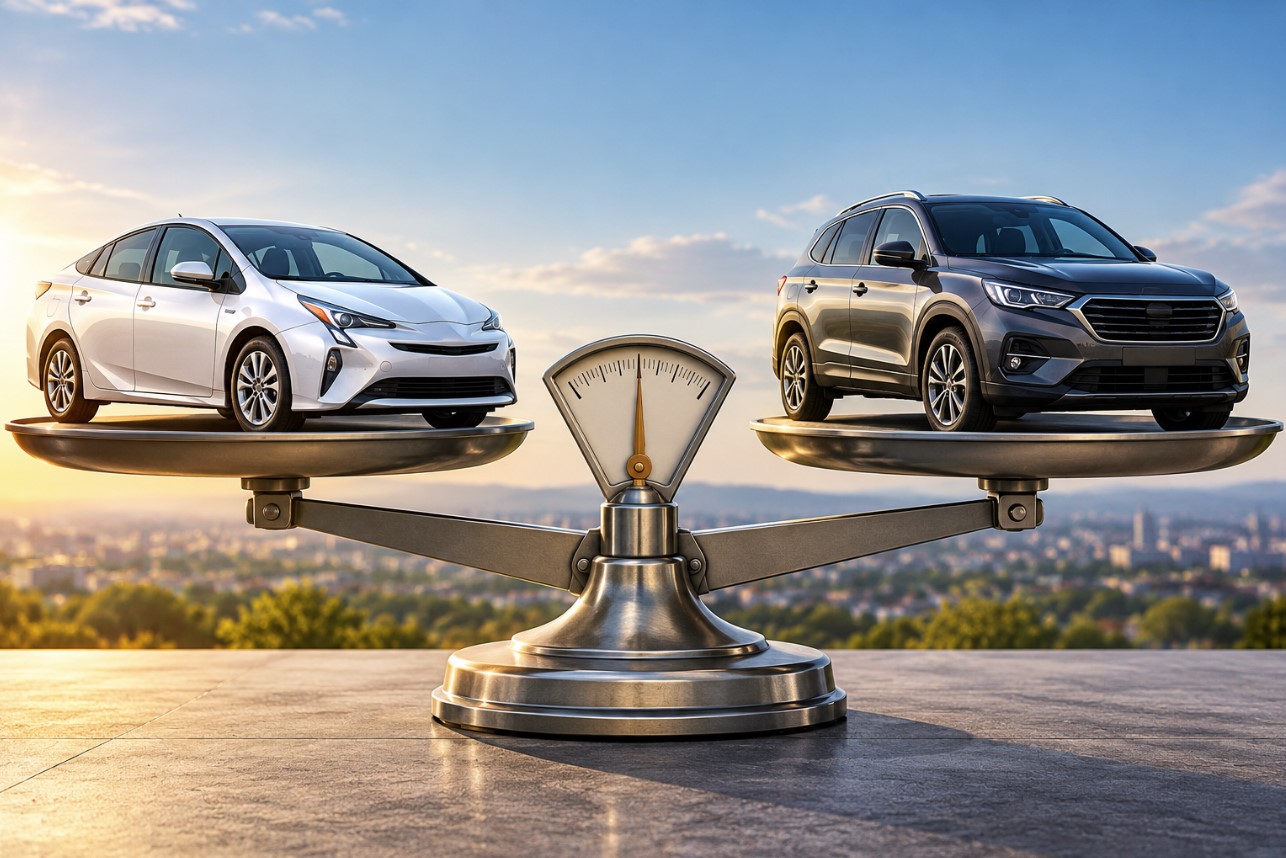
🚗 1. Why Choosing the Right Powertrain Matters When Buying a Used Car in Germany
The German used-car market offers more drivetrain choices than ever. Buyers can choose between conventional petrol and diesel engines, self-charging full hybrids, plug-in hybrids and fully electric cars.
Each technology promises something different: low fuel consumption, reduced local emissions, longer driving range, simpler maintenance or greater flexibility on long journeys.
However, the advertised advantages do not necessarily translate into lower costs for every driver.
A used electric vehicle may be inexpensive to run when charged at home, but less attractive if it relies heavily on costly public rapid charging. A plug-in hybrid may be efficient on short journeys with regular charging, but consume substantially more fuel when driven with a depleted battery.
Diesel vehicles may still suit drivers covering long motorway distances, while petrol cars and full hybrids may be more practical for shorter journeys.
⚡ Quick Answer: Which Used Car Is Best in Germany?
There is no universal winner. For frequent short urban journeys, a full hybrid or suitable petrol car can be a practical choice. An electric car becomes particularly attractive when reliable, affordable charging is available.
A plug-in hybrid makes most sense when its battery is charged regularly. Diesel remains worth considering for substantial motorway mileage, provided the vehicle's emissions systems and maintenance history are in good condition.
The decisive factors are your annual mileage, typical journey length, charging access, purchase budget and tolerance for unexpected repairs.
⚙️ 2. BEV, HEV, PHEV, Petrol and Diesel: What Is the Difference?
Before comparing costs and reliability, it is important to understand how these five powertrain categories actually work.
🔋 BEV — Battery Electric Vehicle
A fully electric vehicle uses one or more electric motors powered by a rechargeable high-voltage battery. It has no conventional combustion engine.
Examples include the Volkswagen ID.3, Tesla Model 3 and Renault Zoe.
🌿 HEV — Full Hybrid
A full hybrid combines a combustion engine with an electric motor and a relatively small traction battery. It can drive electrically for limited periods without external charging.
Examples include the Toyota Prius and Toyota Corolla Hybrid.
🔌 PHEV — Plug-in Hybrid
A plug-in hybrid has a combustion engine, electric drive components and a battery that can be charged externally.
Examples include the Volkswagen Golf GTE and BMW 330e.
⛽ Petrol — Gasoline Engine
A petrol vehicle relies primarily on a spark-ignition combustion engine. It may use a manual, automatic or dual-clutch transmission.
Examples include many Volkswagen TSI, Opel and Ford models.
🛣️ Diesel — Compression Ignition
Diesel engines typically offer strong low-speed torque and can be efficient on longer journeys. Modern versions usually incorporate complex exhaust aftertreatment.
Examples include Volkswagen TDI, Mercedes-Benz CDI/d and BMW diesel models.
ℹ️ What About Mild Hybrids?
A mild hybrid (MHEV) uses electrical assistance to support the combustion engine, but generally cannot provide sustained independent electric driving.
It should not be confused with a full hybrid or a plug-in hybrid.
💡 Important Terminology
The marketing term "self-charging hybrid" does not mean that a vehicle creates energy without a source. Its battery receives energy from regenerative braking and from the combustion engine.
In Germany, advertisements may use the terms Elektroauto, Vollhybrid, Plug-in-Hybrid, Benziner and Diesel. Always verify the actual drivetrain configuration.
📊 3. Electric vs Hybrid vs Petrol vs Diesel: Comparison at a Glance
The following table compares general characteristics. Actual costs and reliability depend on the individual vehicle, usage pattern and maintenance history.
| Criterion | BEV | HEV | PHEV | Petrol | Diesel |
|---|---|---|---|---|---|
| External charging | Required | No | Strongly beneficial | No | No |
| Local exhaust emissions | None | Yes, when engine runs | Yes, when engine runs | Yes | Yes |
| Urban driving | Very suitable | Very suitable | Suitable if charged | Suitable | Depends on usage |
| Long motorway trips | Charging-dependent | Suitable | Suitable | Suitable | Often suitable |
| Key used-car risk | Battery and charging system | Hybrid system condition | Two propulsion systems | Engine and gearbox | Engine and emissions system |
| Fuel or electricity costs | Highly tariff-dependent | Often economical in town | Highly usage-dependent | Consumption-dependent | Often efficient on long trips |
| Best purchase strategy | Check battery, charging and warranty | Check hybrid operation and history | Check both systems | Check engine, gearbox and servicing | Check DPF, SCR and usage history |
This comparison is a starting point, not a ranking. A well-maintained petrol vehicle may be preferable to a neglected electric car, just as a carefully inspected used hybrid may be more economical than a diesel driven mostly on short urban journeys.
🧭 4. Which Powertrain Suits Your Driving Profile?
Your everyday usage is often more important than the manufacturer's claimed efficiency figures. Consider the following typical scenarios.
🏙️ City Driving
Frequent stops, short trips and urban congestion can favour electric cars and full hybrids.
Repeated short journeys may be less suitable for certain diesel vehicles, particularly where DPF regeneration is interrupted.
🏡 Suburban Commuting
A predictable daily commute may suit a BEV or PHEV if convenient charging is available at home or at work.
Without reliable charging, a full hybrid or efficient petrol vehicle may be simpler.
🛣️ High Annual Mileage
Regular long-distance driving can favour an efficient diesel or an electric vehicle with adequate range and a suitable charging network.
Compare motorway consumption, travel time and total energy expenditure.
🚙 Occasional Driving
For relatively low annual mileage, purchase price, depreciation, insurance and maintenance may matter more than small differences in energy consumption.
A straightforward used petrol vehicle may be sufficient.
⚠️ Do Not Choose Solely by Fuel Consumption
A lower advertised consumption figure does not necessarily mean lower total ownership costs. Consider purchase price, depreciation, insurance, vehicle tax, servicing, tyres, repairs and charging or fuel expenditure.
In the next sections, we examine each drivetrain in greater detail, including its most important used-car inspection points.
⚡ 5. Buying a Used Electric Car in Germany: Advantages, Disadvantages and Hidden Risks
Battery electric vehicles (BEVs) are becoming an increasingly visible part of the German used-car market. Buyers can choose from earlier electric models with relatively small batteries to more recent vehicles offering longer driving ranges and faster charging.
However, the absence of a conventional combustion engine does not mean that an electric car is free from expensive mechanical or electronic components.
✅ Main Advantages of Electric Cars
⚙️ High Energy Efficiency
Electric motors convert electrical energy into movement efficiently. This advantage is particularly useful in urban traffic with frequent acceleration and braking.
🔇 Quiet and Comfortable Driving
Electric cars provide smooth acceleration, rapid throttle response and low powertrain noise. These characteristics can make everyday driving more comfortable.
🛠 Fewer Routine Powertrain Services
There are no conventional engine-oil changes, spark plugs or diesel exhaust aftertreatment systems. Nevertheless, other maintenance requirements remain.
🏠 Convenient Home Charging
Drivers with suitable private parking and an approved electrical installation may be able to charge overnight. This can reduce dependence on public charging stations.
♻️ Regenerative Braking
During deceleration, the electric drive system can recover some kinetic energy and return it to the traction battery. This can reduce energy consumption and mechanical brake wear.
🌿 No Tailpipe Emissions
A fully electric vehicle produces no exhaust emissions while driving. However, vehicle manufacturing, battery production and electricity generation still have environmental impacts.
❌ Potential Disadvantages of a Used EV
- 🔌 Regular access to external charging is necessary.
- ❄️ Real-world driving range may decrease significantly in cold weather.
- 🛣 Energy consumption generally rises at higher motorway speeds.
- ⏳ Charging stops can take longer than conventional refuelling.
- 💶 Public DC rapid charging may be considerably more expensive than charging at home.
- 🔋 High-voltage battery damage can result in substantial repair costs.
- ⚡ Onboard chargers, inverters and power electronics can develop faults.
- 📉 Future resale values may be uncertain for some models and battery technologies.
💡 Lower Maintenance Does Not Mean Maintenance-Free
Electric cars generally require fewer routine services related to the propulsion system. However, tyres, brakes, suspension, air conditioning, cooling circuits and electronic systems still need inspection and maintenance.
The weight and high instantaneous torque of some electric vehicles may also contribute to increased tyre wear, depending on driving style.
❄️ Why Does an Electric Car Have Less Range in Winter?
During cold weather, additional energy may be needed for cabin heating, battery temperature management and other electrical consumers. Low battery temperatures can also affect charging performance.
The impact may be particularly noticeable on short journeys, when the cabin and battery repeatedly need warming.
At motorway speeds, aerodynamic drag becomes another important factor. Driving substantially faster can increase electricity consumption and reduce the distance available between charging stops.
⚠️ WLTP Range Is Not a Guaranteed Real-World Driving Range
WLTP figures are measured under standardised test conditions. They do not guarantee the same range in winter, at high speeds, with a fully loaded vehicle or with an ageing battery.
Before buying a used EV in Germany, compare the specific model's realistic range with your daily journeys and charging opportunities.
🔋 6. How to Check the Battery of a Used Electric Car
The high-voltage traction battery is one of the most important and potentially expensive components of a battery electric vehicle.
When inspecting a used EV, mileage and vehicle age alone are not enough. Buyers should also examine the available information about battery condition, charging performance, thermal management and recorded faults.
📊 What Does Battery SOH Mean?
SOH (State of Health) is an indicator of battery condition. Depending on the manufacturer and diagnostic method, it may represent an estimate of remaining capacity or other battery parameters.
If a vehicle displays a battery charge of 100%, this normally indicates its current SOC (State of Charge). It does not mean that the battery has retained 100% of its original capacity.
🔌 SOC — State of Charge
Indicates how much charge is currently available relative to the battery's usable charging range.
🔋 SOH — State of Health
Indicates an estimated condition of the battery relative to a defined reference or original state.
SOH is not calculated identically by every manufacturer. A value displayed by a diagnostic application should not automatically be treated as equivalent to an independent battery-capacity test.
🔍 Used EV Battery Inspection Checklist
| Component | What to Check | Why It Matters |
|---|---|---|
| Battery SOH | Available diagnostic readings; independent testing if necessary | Assessment of remaining battery condition |
| Battery Modules | Available cell or module voltage data and imbalance | Possible signs of uneven battery condition |
| BMS | Fault codes and available battery-management parameters | Potential high-voltage operating restrictions |
| AC Charging | Connection, charging start and process stability | Onboard charger operation |
| DC Charging | Charging functionality, available power and faults | Important for long journeys |
| Battery Housing | Accessible external damage, deformation and impact marks | Potential safety and expensive repair risks |
| Thermal Management | Cooling operation, faults and available data | Affects charging and operation |
| Heating System | Cabin heating, climate control and heat pump where fitted | Winter comfort and consumption |
| 12V Battery | Condition, voltage and related diagnostic faults | May affect vehicle electronic systems |
| Documents | Battery warranty, service history and ownership or leasing status | Financial and contractual risks |
⚡ Testing AC and DC Charging
Ideally, a used electric vehicle should be checked during an actual charging session as well as through electronic diagnostics.
AC charging uses alternating current and the vehicle's onboard charging equipment. DC charging supplies direct current to the high-voltage battery through the appropriate vehicle charging system.
Charging performance must be interpreted in context. Battery temperature, state of charge, charging-station capacity, network restrictions and vehicle specifications all affect the result.
⚠️ Slow Charging Does Not Automatically Mean a Fault
A low charging rate observed at one station is not sufficient evidence of a vehicle defect. Testing conditions and charging limitations must be considered.
Also note that some older electric vehicles do not support DC rapid charging, have limited charging power or use different connector standards.
🚘 Popular Used Electric Cars: Model-Specific Inspection Points
| Model | Important Checks |
|---|---|
| Volkswagen ID.3 / ID.4 | Battery, software updates, charging, electronics, suspension and service campaigns |
| Tesla Model 3 / Model Y | Body repairs, suspension, battery, charging, climate control and available history |
| Renault Zoe | Battery condition, charging equipment and, on relevant older vehicles, battery ownership status |
| Nissan Leaf | Battery condition, temperature-related limitations, realistic range and rapid-charging compatibility |
| Hyundai Kona Electric | Battery, relevant service campaigns, charging, cooling and drivetrain noises |
| BMW i3 | Battery, charging, body condition, climate control and available service documentation |
🛡️ Battery Warranty: Check the Actual Conditions
Some manufacturers provide separate warranties for high-voltage batteries. Coverage, duration, mileage limits, capacity thresholds and exclusions vary by manufacturer and model.
Do not assume that a remaining battery warranty covers every charging, electronics or battery-related problem. Check the written conditions for the specific vehicle.
🔄 7. Buying a Used Full Hybrid in Germany: Efficiency Without a Charging Cable
A full hybrid, also called an HEV, combines a combustion engine with an electric drive system. The battery is charged through regenerative braking and, when required, by the engine.
Unlike a plug-in hybrid, a conventional full hybrid does not need external charging. Depending on the design, it can move under electric power for limited periods.
✅ Advantages of a Full Hybrid
- 🌿 Potentially low fuel consumption in urban traffic.
- 🔌 No dependence on external charging infrastructure.
- ♻️ Energy recovery during braking.
- 🚗 Smooth operation in stop-and-go traffic.
- 🛣 Flexibility for longer journeys using conventional fuel.
- 🛠 Some hybrid transmissions avoid conventional clutch arrangements, depending on their construction.
❌ Disadvantages and Technical Risks
- 🔋 The high-voltage battery still ages over time.
- ⚡ Inverters, electric motors and hybrid control components may require expensive repairs.
- ⛽ Fuel consumption can increase at sustained motorway speeds.
- 🔧 The combustion engine still requires servicing.
- 💻 Hybrid-specific faults may require specialised diagnostics.
🔍 What Should Be Checked on a Used Full Hybrid?
🔋 Hybrid Battery
Check available diagnostic information, fault codes, battery cooling and unusual operating behaviour.
⚡ Hybrid Electronics
Assess the available data from the inverter, power electronics and hybrid control system.
⚙️ Combustion Engine
Check engine operation, cooling, oil consumption indicators, leaks and maintenance history.
🚗 Road Test
Evaluate transitions between electric and combustion operation, acceleration, braking and transmission behaviour.
🚘 Examples of Full Hybrids on the German Used-Car Market
Popular examples include the Toyota Prius, Toyota Corolla Hybrid, Toyota Yaris Hybrid and various hybrid models from Honda, Hyundai and Kia.
Their hybrid systems differ in construction, battery type, transmission design and maintenance requirements. Reliability should therefore be assessed by model, generation and service history, not by the word "hybrid" alone.
🎯 Who Should Consider a Used Full Hybrid?
A full hybrid is particularly worth considering for drivers who frequently travel in town, cannot charge at home and want to reduce fuel consumption without changing their refuelling habits.
🔌 8. Buying a Used Plug-in Hybrid: A Smart Compromise or Expensive Complexity?
A plug-in hybrid electric vehicle (PHEV) combines a combustion engine, electric drive components and a rechargeable traction battery.
Unlike a conventional full hybrid, a PHEV can be charged from an external electricity supply and typically offers a greater electric-only driving range.
In suitable conditions, short daily journeys may be completed largely on electricity. For longer journeys, the combustion engine provides additional flexibility.
✅ Advantages of a PHEV
- 🔋 Electric driving on suitable short journeys.
- 🛣 Combustion-engine support for longer distances.
- 🏠 Potentially convenient charging at home or work.
- ♻️ Regenerative braking.
- 🚗 Flexible operation when driving conditions vary.
❌ Disadvantages of a Used PHEV
- ⚙️ Two propulsion systems increase technical complexity.
- 🔋 The high-voltage battery may have reduced capacity.
- 🔌 Charging equipment can develop faults.
- 💶 Repairs may involve both combustion and high-voltage components.
- ⛽ Fuel consumption can be high when the battery is depleted.
- ⚖️ Additional battery weight can affect efficiency and vehicle characteristics.
⛽ Why Real PHEV Consumption Can Differ from Official Figures
Official fuel-consumption figures for plug-in hybrids depend on standardised testing assumptions. Real-world consumption is strongly influenced by how often the vehicle is charged.
A driver who charges regularly and completes most daily journeys within the electric range may use relatively little petrol or diesel.
A driver who rarely charges may operate the same vehicle predominantly as a heavier combustion-engine car.
⚠️ A Plug-in Hybrid Is Not Automatically Economical
Before buying, calculate the expected proportion of electric driving, charging costs, fuel consumption and seasonal differences.
The suitability of a PHEV depends heavily on whether regular charging is realistic in everyday life.
🔍 Used Plug-in Hybrid Inspection Checklist
| System | Inspection Points |
|---|---|
| Traction Battery | Available condition data, faults, charging and electric operation |
| Charging Equipment | Socket, cables, charging start, stability and diagnostics |
| Combustion Engine | Starting, noises, leaks, cooling, servicing and fault codes |
| Transmission | Gear changes, transitions between driving modes, noises and faults |
| Cooling Systems | Engine, battery and power-electronics cooling, depending on design |
| Road Test | Electric driving, combustion-engine operation and transitions between modes |
🚘 Popular Used Plug-in Hybrids in Germany
Examples include the Volkswagen Passat GTE, Volkswagen Golf GTE, BMW 330e, BMW 530e, Mercedes-Benz C 300 e, Mitsubishi Outlander PHEV, Ford Kuga PHEV and various Volvo Recharge models.
These vehicles differ in hybrid-system construction, battery capacity, electric driving range, charging capability and repair costs.
It would therefore be misleading to judge the reliability of all plug-in hybrids using a single model or manufacturer's experience.
⛽ 9. Buying a Used Petrol Car in Germany: Flexibility Without Charging Infrastructure
Petrol cars remain one of the most versatile options on the German used-car market. They do not require charging infrastructure and are available in almost every vehicle class and price category.
✅ Advantages of Petrol Cars
- 🚗 Wide selection of used vehicles.
- ⛽ Fast and convenient refuelling.
- 🛣 Suitable for longer journeys.
- 💶 Some models offer relatively simple and affordable technology.
- 🌡 Many comparable petrol engines warm up faster than diesel engines.
- 🔧 No diesel DPF or AdBlue system.
❌ Disadvantages and Potential Problems
- ⛽ Fuel consumption may be relatively high in urban traffic.
- 🛢 Regular oil and filter changes are necessary.
- ⚙️ Timing-chain or timing-belt problems can occur.
- 🔥 Some direct-injection engines may develop intake-valve deposits.
- 🌀 Turbocharger faults are possible.
- 🌫 Some modern petrol engines use an OPF/GPF particulate filter.
- 🛠 Oil consumption, cooling-system faults and leaks may lead to expensive repairs.
⚙️ Why Modern Petrol Engines Are Not Always Simple
A modern petrol engine may combine turbocharging, direct injection, variable valve timing, complex cooling systems and a petrol particulate filter.
Certain engine generations have design-specific issues requiring particular attention. Examples include wet timing belts, timing-chain wear, excessive oil consumption and cooling-system weaknesses.
⚠️ Engine Capacity and Power Are Not Enough
Two vehicles with the same engine displacement may have different engine generations, timing systems, injection arrangements and known weaknesses.
Before buying, identify the exact engine code, production period and documented maintenance history.
🔍 Petrol Car Pre-Purchase Checklist
| Component | Potential Risks |
|---|---|
| Timing System | Chain or belt wear; missed replacement intervals |
| Lubrication | Oil consumption, leaks and insufficient oil pressure |
| Turbocharger | Wear, leaks and boost-control problems |
| Fuel Injection | Injectors, fuel pressure and carbon deposits |
| Cooling | Water pump, thermostat, radiators and leaks |
| OPF / GPF | Faults, damage and system problems where fitted |
| Transmission | Jerking, noises, diagnostic faults and service history |
🎯 Who Should Consider a Used Petrol Car?
Petrol may suit buyers without charging access who drive short to medium distances, want a wide choice of vehicles and do not regularly cover very high mileage.
🚛 10. Buying a Used Diesel Car in Germany: Motorway Efficiency and Technical Risks
Diesel vehicles retain certain advantages for longer journeys, heavy loads and regular high-mileage use.
For drivers who cover substantial motorway distances, a well-maintained modern diesel may remain an economically attractive option.
✅ Advantages of Diesel Cars
- ⛽ Often economical fuel consumption on longer journeys.
- 🛣 Long driving range.
- ⚙️ Strong low-speed torque.
- 🚐 Suitable for larger vehicles, heavy loads and approved towing.
- 🚗 Wide choice of estate cars, SUVs and commercial vehicles.
❌ Disadvantages and Technical Risks
- 🌫 DPF regeneration requirements.
- 🔄 Possible EGR system faults.
- 💧 SCR/AdBlue system problems.
- 💻 Potentially expensive NOx sensors and control components.
- ⚙️ Injector and turbocharger wear.
- ❄️ Slower warm-up in cold conditions on many models.
- 🏙 Unfavourable operating conditions during repeated short journeys.
🌫 DPF: Why Short Journeys Can Cause Problems
The diesel particulate filter (DPF) traps particulate matter produced during combustion. The system periodically attempts to remove accumulated soot through regeneration.
When a diesel vehicle is used almost exclusively on short journeys, regeneration may repeatedly be interrupted. Exhaust temperatures may also be insufficient for the process to complete successfully.
This can increase the risk of soot accumulation, warning messages and additional repair costs.
🚨 Possible Signs of DPF Problems
- Frequent regeneration attempts.
- Increased fuel consumption.
- Rising engine-oil level, potentially associated with fuel dilution.
- DPF or differential-pressure sensor fault codes.
- Reduced engine power.
- Implausible sensor readings.
⚠️ A DPF Warning Does Not Automatically Mean a Blocked Filter
These symptoms do not independently prove that the particulate filter itself is defective.
Pressure sensors, temperature sensors, exhaust leaks, engine operation and regeneration conditions may also need examination.
💧 AdBlue and SCR: Another Potential Repair Expense
Selective catalytic reduction (SCR) is used to reduce nitrogen oxide emissions.
Depending on the vehicle, the system may include an AdBlue tank, pump, heating components, dosing equipment, NOx sensors and electronic control units.
A fault in one component can trigger warning messages and operating restrictions defined by the manufacturer.
If an AdBlue warning appears, the underlying cause should be identified through diagnostics. Simply adding AdBlue may not resolve the problem.
📋 Used Diesel Car Inspection Checklist
| System | What to Check |
|---|---|
| DPF | Fault codes, available soot-load data, differential pressure and regeneration history |
| EGR | Fault codes, available operating data and signs of malfunction |
| SCR / AdBlue | Warnings, fault codes, system condition and available parameters |
| Injectors | Engine operation, available correction data, leaks and abnormal noises |
| Turbocharger | Boost behaviour, leaks, noises and actuator operation |
| Cooling | Operating temperature, leaks and component condition |
| Engine | Starting, smoke, unusual noises, oil condition and service history |
⚠️ Euro 6 Does Not Guarantee Trouble-Free Ownership
An emissions classification does not establish the mechanical reliability of an engine or its exhaust aftertreatment system.
The exact engine generation, maintenance history, vehicle usage and diagnostic findings remain essential.
🎯 Who Should Consider a Used Diesel Car?
Diesel may suit drivers who regularly cover long distances, use motorways extensively, transport substantial loads or need a suitable towing vehicle.
For predominantly short urban journeys, it is worth comparing petrol, full hybrid and electric alternatives before making a decision.
💶 11. Electric vs Hybrid vs Petrol vs Diesel: Total Cost of Ownership in Germany
The purchase price is only one part of the financial decision when buying a used car in Germany. A cheaper vehicle can become more expensive over several years if its fuel consumption, maintenance requirements, depreciation or repair costs are significantly higher.
To compare electric, hybrid, plug-in hybrid, petrol and diesel vehicles fairly, buyers should consider the Total Cost of Ownership (TCO).
⚡ Quick Answer: Which Powertrain Is Cheapest to Own?
A used electric car can have low energy and routine servicing costs when charged economically. A full hybrid can be efficient in urban traffic without requiring charging infrastructure.
A diesel may be competitive for high annual motorway mileage, while a petrol car may offer an attractive balance of purchase price and flexibility for drivers covering fewer kilometres.
The cheapest option depends on purchase price, depreciation, annual mileage, charging access and the condition of the individual car.
📊 What Is Included in TCO?
🚘 Purchase Price
The amount paid for the vehicle, including relevant transaction and registration costs.
📉 Depreciation
The difference between purchase value and expected resale value over the ownership period.
⛽ Energy
Petrol, diesel or electricity expenditure based on actual consumption and tariffs.
🔧 Maintenance
Scheduled servicing, inspections, fluids, filters and other routine requirements.
🛠 Repairs
Potential expenditure for unexpected mechanical, electrical and electronic defects.
📋 Fixed Costs
Vehicle tax, insurance, inspections, parking and other ownership costs.
💡 A Simple TCO Calculation
Total ownership cost = depreciation + energy + maintenance + repairs + insurance + taxes + other ownership expenses.
Financing costs should also be included when applicable. To calculate a monthly figure, divide the total by the number of months in the ownership period.
⛽ Electricity, Petrol and Diesel: Illustrative Cost per 100 km
The following comparison uses hypothetical consumption figures and energy prices. It is intended to demonstrate the calculation method, not to represent verified market averages for November 2026.
| Powertrain | Assumed Consumption | Assumed Price | Cost / 100 km |
|---|---|---|---|
| BEV — Home Charging | 18 kWh | €0.30/kWh | €5.40 |
| BEV — Public DC Charging | 18 kWh | €0.65/kWh | €11.70 |
| Full Hybrid | 4.5 l petrol | €1.80/l | €8.10 |
| Petrol | 6.5 l | €1.80/l | €11.70 |
| Diesel | 5.5 l | €1.70/l | €9.35 |
These figures assume that the stated electricity consumption is measured at the charging meter and therefore already includes charging losses. If the vehicle's displayed consumption is used instead, additional charging losses should be considered.
📈 Energy Cost Comparison per 100 km
The following visual comparison uses the same hypothetical figures as the table above. Lower bars indicate lower assumed energy expenditure.
Illustrative calculation only. Bar lengths use a €13.00 scale. Actual energy costs vary by vehicle, driving conditions, location and tariff.
🔌 Why Charging Price Can Change the Entire Calculation
Consider the same electric car consuming 18 kWh per 100 km.
At an assumed home electricity price of €0.30/kWh, energy expenditure is €5.40 per 100 km.
At an assumed public rapid-charging price of €0.65/kWh, the expenditure rises to €11.70 per 100 km.
The difference is €6.30 per 100 km, even though the vehicle and its energy consumption remain unchanged.
⚠️ An Electric Car Is Not Always Cheaper to Power Than a Hybrid
Under the illustrative assumptions above, the full hybrid costs €8.10 per 100 km, while the electric car relying on public DC charging costs €11.70.
This does not establish a universal cost advantage for either technology. It demonstrates why charging conditions must be included in the purchase decision.
📅 Annual Energy Costs: 10,000, 15,000 and 25,000 km
| Powertrain | 10,000 km | 15,000 km | 25,000 km |
|---|---|---|---|
| BEV — Home | €540 | €810 | €1,350 |
| Full Hybrid | €810 | €1,215 | €2,025 |
| Diesel | €935 | €1,402.50 | €2,337.50 |
| Petrol | €1,170 | €1,755 | €2,925 |
| BEV — Public DC | €1,170 | €1,755 | €2,925 |
These are energy-only calculations. They exclude depreciation, maintenance, repairs, insurance, tax and other expenses.
🔌 What About Plug-in Hybrid Costs?
A plug-in hybrid cannot be compared fairly using a single fuel-consumption figure without specifying how often it is charged and driven electrically.
For example, suppose a PHEV completes 60 km of every 100 km using electricity at 20 kWh/100 km, and the remaining 40 km using petrol at 6.5 l/100 km.
At hypothetical prices of €0.30/kWh and €1.80/l, the calculation is:
🧮 Illustrative PHEV Calculation
Electricity: 12 kWh × €0.30 = €3.60
Petrol: 2.6 litres × €1.80 = €4.68
Combined energy cost: €8.28 per 100 km.
This is a simplified example based on two separate driving modes, not a certified vehicle-consumption figure.
📉 Depreciation: The Often Overlooked Expense
Depreciation can represent a substantial share of total ownership costs.
A used vehicle purchased for €20,000 and sold three years later for €12,000 has lost €8,000 in value, excluding transaction expenses.
This corresponds to approximately €222 per month in depreciation.
By comparison, a used car purchased for €10,000 and later sold for €7,000 loses €3,000 over the same period, or approximately €83 per month.
These examples illustrate the calculation method. They are not predictions of actual resale values.
🎯 The Financial Rule for Buying a Used Car
Compare the purchase price, realistic future resale value, energy expenditure, maintenance requirements and foreseeable repair risks.
The lowest energy consumption does not automatically produce the lowest total cost of ownership.
🔌 12. Charging an Electric Car in Germany: Home, Public AC and DC
Charging infrastructure is one of the decisive factors when choosing a used electric or plug-in hybrid vehicle.
In Germany, charging conditions can vary considerably between private homes, apartment buildings, workplaces, public AC stations and motorway rapid chargers.
🏠 Home Charging
A suitable home charging point can make electric-car ownership considerably more convenient.
However, installing a wallbox may require electrical work, approval or coordination with a landlord, property owner or homeowners' association, depending on the circumstances.
The installation must comply with applicable electrical and grid-connection requirements.
🏢 Charging at Work
Workplace charging may provide a useful alternative for drivers who cannot charge at their residence.
Before relying on this option, confirm charging availability, access conditions, costs and whether regular use is permitted.
⚡ Public AC Charging
Public AC stations are commonly used for longer parking periods, such as shopping, working or overnight parking.
Charging speed depends on the station, the vehicle's onboard charger and its technical limitations.
🚀 DC Rapid Charging
DC charging is particularly relevant for longer journeys when a driver wants to replenish battery energy relatively quickly.
Actual charging power is influenced by battery temperature, state of charge, vehicle limitations and station performance.
⚠️ Advertised Charging Power Is Not Constant Charging Power
A vehicle advertised with a maximum charging capability of 150 kW will not necessarily charge at 150 kW throughout the entire session.
Charging power typically changes according to battery conditions and state of charge.
📊 Charging Options Compared
| Charging Type | Typical Use | Main Consideration |
|---|---|---|
| Home Wallbox | Regular overnight charging | Installation, electricity tariff and available parking |
| Workplace AC | Charging during working hours | Access, price and reliability |
| Public AC | Shopping, work or longer stops | Charging power, tariffs and possible parking fees |
| Public DC | Longer journeys and shorter charging stops | Price, vehicle compatibility and charging curve |
🔎 Charging Compatibility: What to Check Before Buying
- 🔌 Supported AC connector and charging power.
- ⚡ Supported DC connector and charging capability.
- 🔋 Battery capacity and realistic usable range.
- 🧊 Battery thermal-management and preconditioning features, where available.
- 📱 Charging authentication, payment options and vehicle software.
- 🧰 Supplied charging cables and their condition.
💡 Buying an Older Electric Car?
Some older electric models may have limited DC charging capability, slower AC charging or connector systems that differ from those most commonly used by newer vehicles.
Verify the exact model, production year and equipment before making a purchase.
🔧 13. Maintenance and Repair Risks: EV, Hybrid, Petrol and Diesel Compared
Every drivetrain technology has components that can wear out or fail.
When buying a used car, it is important to distinguish between predictable routine maintenance and unexpected major repairs.
📊 Maintenance Comparison
| Maintenance Item | BEV | HEV | PHEV | Petrol | Diesel |
|---|---|---|---|---|---|
| Engine Oil | No | Yes | Yes | Yes | Yes |
| Spark Plugs | No | Usually | Usually* | Usually | No |
| DPF / SCR | No | Generally no | Version-dependent | No diesel system | Common on modern diesels |
| High-Voltage Battery | Yes | Yes | Yes | No** | No** |
| Traction Motor / Inverter | Yes | Yes | Yes | No** | No** |
| Mechanical Brakes | Yes | Yes | Yes | Yes | Yes |
| Tyres / Suspension | Yes | Yes | Yes | Yes | Yes |
* Petrol-powered PHEVs normally use spark plugs; diesel-powered variants do not. ** Conventional non-hybrid petrol and diesel vehicles are assumed. Mild-hybrid versions may have additional electrical equipment.
💶 Potentially Expensive Components
🔋 Electric Vehicles
High-voltage battery, inverter, onboard charger, thermal management and electric drive components.
🌿 Full Hybrids
Hybrid battery, inverter, hybrid control electronics and combustion-engine components.
🔌 Plug-in Hybrids
High-voltage equipment, charging system, combustion engine and transmission components.
⛽ Petrol Vehicles
Timing drive, turbocharger, fuel injection, cooling system and transmission.
🛣️ Diesel Vehicles
Fuel injectors, turbocharger, DPF, EGR, SCR/AdBlue, timing system and transmission.
🛞 Why Tyres and Brakes Still Matter on Electric Cars
Regenerative braking can reduce the frequency of conventional friction braking during everyday use.
However, brake discs may still corrode, particularly when mechanical brakes are used infrequently.
Tyre wear depends on vehicle mass, torque, wheel alignment, tyre specification and driving style.
A pre-purchase inspection should therefore include tyres, suspension and braking components regardless of drivetrain type.
⚠️ Expensive Components Are Not the Same as Frequent Failures
The fact that a component may be expensive to replace does not establish that it fails frequently.
A meaningful assessment requires information about the specific model, generation, mileage, maintenance history and observed condition.
📋 14. Vehicle Tax and Insurance in Germany: Electric, Hybrid, Petrol and Diesel
German vehicle taxation and insurance costs can differ considerably between vehicles.
These costs should be checked before purchasing a used car, especially when comparing different drivetrain technologies.
🇩🇪 German Motor Vehicle Tax (Kfz-Steuer)
For conventional passenger cars, German motor vehicle tax generally depends on registration-related factors such as engine displacement, fuel type and applicable CO₂-related rules.
The exact calculation depends on the vehicle's first registration and the legislation applicable to that vehicle.
Certain fully electric vehicles may qualify for temporary motor vehicle tax exemptions, subject to the relevant statutory conditions and eligibility periods.
💡 Verify Tax for the Specific Vehicle
Before buying, use the vehicle's registration information to check its actual tax treatment.
Do not assume that all electric vehicles are permanently tax-exempt or that all hybrid vehicles receive the same treatment.
🛡️ Car Insurance in Germany
Insurance premiums are not determined by drivetrain type alone.
Factors may include:
- Vehicle model and insurance classification (Typklasse).
- Registration region and Regionalklasse.
- Driver history and Schadenfreiheitsklasse.
- Annual mileage.
- Driver age and permitted drivers.
- Parking arrangements.
- Selected cover and deductible.
⚡ Electric Car Insurance: What to Ask
When considering comprehensive insurance for a used EV, check whether the policy includes appropriate cover for the high-voltage battery and relevant charging equipment.
Depending on the insurer and contract, conditions may differ for battery damage, charging cables, electrical faults and consequential damage.
Battery degradation caused by ordinary ageing should not be assumed to be covered by insurance.
🔌 Plug-in Hybrid Insurance
PHEV owners should also check how the insurer treats the high-voltage system and charging equipment.
Obtain vehicle-specific quotations rather than assuming that hybrid insurance is always cheaper or more expensive than petrol or diesel insurance.
🎯 Tax and Insurance: The Practical Buying Rule
Before signing a purchase contract in Germany, calculate the actual annual Kfz-Steuer and request an insurance quotation for the exact vehicle and driver profile.
These figures can materially change the comparison between two used cars with similar purchase prices.
🌍 15. Electric, Hybrid, Petrol or Diesel: Which Used Car Is Better for the Environment?
Environmental impact is an important consideration when choosing a vehicle in Germany. However, comparing cars solely by their exhaust emissions does not provide a complete picture.
A meaningful comparison should consider the entire vehicle life cycle: production, battery manufacturing, energy generation, driving, maintenance and end-of-life processing.
⚡ Battery Electric Vehicles: Zero Tailpipe Emissions
Battery electric vehicles produce no exhaust emissions while driving. This is particularly beneficial in urban environments, where local air quality matters.
Nevertheless, manufacturing an electric vehicle and its traction battery requires energy and raw materials. Electricity generation also has an environmental impact that depends on the energy mix.
Over their lifetime, electric cars can offer substantial greenhouse-gas emission advantages over comparable combustion-engine vehicles, especially when powered by relatively low-carbon electricity.
💡 Why Electricity Sources Matter
An electric vehicle charged with electricity generated from renewable sources generally has a lower operational carbon footprint than the same vehicle charged using a more carbon-intensive electricity mix.
For a fair comparison, vehicle size, battery capacity, actual electricity consumption and lifetime mileage must also be considered.
🌿 Full Hybrids: Reduced Fuel Consumption in Urban Traffic
Full hybrids can recover braking energy and use electric propulsion during suitable driving conditions.
Their efficiency advantages are often particularly noticeable in stop-and-go traffic.
However, full hybrids still consume petrol or diesel and produce exhaust emissions whenever the combustion engine is operating.
🔌 Plug-in Hybrids: Environmental Benefits Depend on Usage
A plug-in hybrid can complete some journeys using electricity without operating its combustion engine.
Its environmental performance depends strongly on charging frequency, electric driving share, vehicle weight and actual fuel consumption.
A PHEV that is rarely charged may provide substantially smaller environmental benefits than its official figures suggest.
⚠️ A Plug-in Hybrid Is Not Automatically Low-Emission
Official test-cycle emissions do not necessarily reflect the actual emissions of a PHEV driven mostly with a depleted traction battery.
Buyers should consider their realistic ability to charge regularly, rather than relying only on the advertised CO₂ figure.
⛽ Petrol and Diesel: Different Emission Characteristics
Petrol and diesel engines produce carbon dioxide during fuel combustion.
Diesel engines can offer lower fuel consumption than comparable petrol engines in certain operating conditions. However, nitrogen oxides and particulate emissions require effective exhaust aftertreatment.
Modern petrol vehicles may also use particulate filters, depending on engine design and emissions classification.
📊 Environmental Comparison
| Powertrain | Tailpipe Emissions | Important Environmental Factor |
|---|---|---|
| BEV | None while driving | Battery production, electricity mix and vehicle lifetime |
| Full Hybrid | Present when engine operates | Real-world fuel consumption and driving conditions |
| Plug-in Hybrid | None during electric-only driving; present when engine operates | Charging frequency and electric driving share |
| Petrol | Present | Fuel consumption and emissions technology |
| Diesel | Present | Fuel consumption and functioning DPF/SCR systems where fitted |
♻️ Is Buying a Used Car More Sustainable Than Buying New?
Extending the useful life of an existing vehicle can avoid the immediate need to manufacture a replacement.
However, this does not mean that keeping or purchasing an older vehicle is always environmentally preferable.
A comparison should consider remaining vehicle life, energy efficiency, expected mileage and the environmental impact of the alternative.
🎯 Environmental Conclusion
For buyers who can charge conveniently, a suitable used electric car can be an attractive option from an environmental perspective.
A full hybrid can be a practical alternative when external charging is unavailable.
Regardless of drivetrain, choosing an appropriately sized, efficient and well-maintained vehicle is important.
📉 16. Depreciation and Resale Value: Which Used Cars Hold Their Value in Germany?
Resale value is one of the most important financial factors when buying a used vehicle.
A car that appears economical because of low fuel or electricity consumption may still be expensive to own if it loses substantial value during the ownership period.
Depreciation depends on market demand, model reputation, age, mileage, condition, equipment, maintenance history and changes in technology.
⚡ Used Electric Cars: Opportunities and Uncertainty
The used electric-car market can offer attractive opportunities, particularly when the asking price has already fallen significantly from the original new-car price.
However, EV resale values may be influenced by technological development, battery capacity, charging speed, software support and changes in new-car prices.
An older electric vehicle with a small battery, slow charging and limited realistic motorway range may appeal to a narrower group of buyers.
By contrast, a vehicle with documented battery condition, suitable charging capability and a realistic purchase price may remain attractive.
⚠️ Do Not Assume Every Used EV Is a Bargain
A substantial reduction from the original list price does not automatically make an electric car a good purchase.
The current market value should be compared with battery condition, equipment, charging capability, vehicle history and competing models.
🌿 Full Hybrids: Demand and Reputation
Established full-hybrid models can appeal to buyers seeking economical urban driving without external charging.
Vehicles such as the Toyota Prius, Toyota Corolla Hybrid and Toyota Yaris Hybrid are relevant examples in the German used-car market.
Nevertheless, a model's reputation does not guarantee strong resale value for every individual vehicle.
Mileage, maintenance, accident history, battery condition and local demand remain decisive.
🔌 Plug-in Hybrids: A More Specific Buyer Group
A used plug-in hybrid may appeal to drivers who can charge regularly but still want a combustion engine for longer journeys.
However, buyers may also consider the complexity of two propulsion systems, battery condition, electric range and potential repair costs.
PHEV resale value should therefore be evaluated for the exact model, rather than assuming that all plug-in hybrids behave similarly on the market.
⛽ Petrol and Diesel: Conventional Market Factors
Petrol cars remain relevant to a wide range of buyers, particularly those without access to charging infrastructure.
Diesel cars can still be attractive to buyers covering substantial mileage or needing larger vehicles.
However, diesel demand can vary by region, vehicle class, emissions classification and expected usage.
Buyers should also consider applicable environmental-zone requirements and any relevant local restrictions.
📋 What Affects Resale Value?
| Factor | Why It Matters |
|---|---|
| Service History | Supports assessment of maintenance and repairs |
| Mileage | Influences buyer expectations and future maintenance risks |
| Accident History | May affect value, condition and buyer confidence |
| Battery Condition | Important for BEV, HEV and PHEV buyers |
| Technical Generation | Charging, efficiency, equipment and known issues |
| Emissions Classification | Relevant to combustion-engine vehicle usage and demand |
| Repair Requirements | Can reduce achievable resale value |
| Market Demand | Influences selling time and achievable price |
💡 How to Reduce Financial Risk
Before buying, compare several vehicles with similar model year, mileage, equipment and condition.
Examine completed repairs and foreseeable maintenance. Consider whether the vehicle will remain attractive to future buyers after your expected ownership period.
🔍 17. Used Car Pre-Purchase Checklist: Electric, Hybrid, Petrol and Diesel
Regardless of drivetrain technology, every used vehicle should be assessed systematically before the purchase contract is signed.
In Germany, a valid Hauptuntersuchung (HU/TÜV) does not replace an independent assessment of the vehicle's technical and mechanical condition.
📑 Step 1 — Verify Documents and Vehicle History
- Check the vehicle identification number (VIN/FIN).
- Compare the VIN with available registration documents.
- Review Zulassungsbescheinigung Teil I and Teil II.
- Examine the available maintenance and repair records.
- Compare mileage information from different documented sources.
- Check the HU history and available inspection reports.
- Clarify accident history and disclosed previous damage.
- Check the status of any outstanding financing or ownership restrictions where relevant.
🎨 Step 2 — Inspect Bodywork and Structural Condition
The bodywork inspection should not be neglected simply because the vehicle has an electric or hybrid drivetrain.
- Inspect paintwork and visible panel alignment.
- Measure paint thickness where technically suitable.
- Examine accessible structural components for visible repair indications.
- Check corrosion and underbody condition.
- Inspect lights, windows, doors and locking systems.
- Examine the condition of tyres and wheels.
💻 Step 3 — Electronic Diagnostics
Modern vehicles rely heavily on electronic control systems. Reading accessible fault codes and relevant live data can provide useful information about potential problems.
Depending on the vehicle, diagnostics may include engine, transmission, ABS, airbag, climate control, battery management and hybrid control modules.
⚠️ No Fault Codes Does Not Mean No Defects
Some mechanical problems do not produce fault codes. Others may occur intermittently or only under specific operating conditions.
Electronic diagnostics should therefore be combined with visual inspection, document review and a test drive where permitted.
⚡ Step 4 — Additional Checks for Electric Vehicles
- Check available high-voltage battery condition information.
- Review battery-management fault codes.
- Test charging where possible.
- Examine charging-port condition.
- Check the battery housing for accessible visible damage.
- Assess heating and thermal-management operation.
- Verify battery warranty and relevant documentation.
- Compare realistic range with the buyer's requirements.
🌿 Step 5 — Additional Checks for Full Hybrids
- Check hybrid-system diagnostic information.
- Assess available battery condition parameters.
- Observe engine starting and stopping behaviour.
- Check transitions between electric and combustion operation.
- Examine the combustion engine and its service history.
- Assess transmission and braking behaviour.
🔌 Step 6 — Additional Checks for Plug-in Hybrids
- Check external charging functionality.
- Review available traction battery condition data.
- Test electric-only operation where conditions permit.
- Examine combustion-engine operation and servicing.
- Assess the transmission and hybrid operating modes.
- Check cooling-system condition and relevant fault codes.
⛽ Step 7 — Additional Checks for Petrol Cars
- Identify the exact engine version and timing system.
- Review oil-change history.
- Check for oil and coolant leaks.
- Listen for abnormal engine noises.
- Assess turbocharger operation where applicable.
- Examine relevant electronic diagnostic data.
- Check gearbox behaviour.
🛣️ Step 8 — Additional Checks for Diesel Cars
- Check available DPF diagnostic parameters.
- Examine regeneration history where available.
- Review EGR-related faults.
- Check SCR/AdBlue warnings and available system data.
- Assess turbocharger and injector operation.
- Examine engine oil condition and maintenance history.
- Evaluate starting, acceleration and transmission behaviour.
🚗 Step 9 — Test Drive
A test drive can reveal operating problems that are not apparent during a stationary inspection.
Depending on permission, road conditions and practical circumstances, relevant checks may include:
- Acceleration and engine response.
- Transmission operation.
- Steering behaviour.
- Suspension noises.
- Braking performance.
- Vibrations at different speeds.
- Warning messages.
- Hybrid-mode transitions.
- Regenerative braking behaviour.
📊 Step 10 — Evaluate Findings Before Buying
Once the inspection is complete, the buyer should consider the observed condition together with the asking price.
Potential repair costs, missing documentation, unresolved diagnostic faults and inspection limitations should be taken into account.
🎯 The Most Important Pre-Purchase Principle
Do not choose a used car solely because of its drivetrain technology, advertised fuel consumption or brand reputation.
The actual condition of the individual vehicle is essential to a sound purchase decision.
🔍 18. Independent Used Car Inspection in Germany: Why It Matters Before Buying
Choosing between an electric, hybrid, plug-in hybrid, petrol or diesel vehicle is only the first step towards a successful purchase.
Even a model with a strong reliability reputation may have hidden damage, incomplete maintenance, technical defects or an unrealistic asking price.
This is why an independent pre-purchase vehicle inspection can be particularly valuable when buying a used car in Germany.
🛠️ Used Car Inspection with Sicher-Check
Sicher-Check provides independent used-car inspection and purchase support services in Berlin, Potsdam, Brandenburg and, by arrangement, other locations in Germany.
Our objective is to help prospective buyers understand the observable condition of a vehicle before committing to a purchase.
The inspection approach depends on the vehicle, its drivetrain technology, available documentation and the practical conditions at the seller's location.
📑 Vehicle Documents
Review of available registration documents, maintenance records, service information and relevant vehicle history.
🎨 Body and Paintwork
Visual assessment of body panels, paint condition, visible repair indications and accessible structural areas.
Paint-thickness measurements may be performed where suitable.
💻 Computer Diagnostics
Reading accessible electronic control units, fault codes and relevant operating data using suitable diagnostic equipment.
⚙️ Mechanical Condition
Inspection of accessible engine components, transmission behaviour, fluid leaks, suspension, tyres and brakes.
🚗 Test Drive
Assessment of driving behaviour, acceleration, braking, steering, transmission operation and abnormal noises when a test drive is permitted and feasible.
📋 Inspection Findings
Structured communication of observed defects, relevant limitations and matters requiring further investigation before purchase.
⚡ Electric and Hybrid Vehicle Inspection Considerations
Electric and hybrid vehicles require particular attention to their electronic and high-voltage systems.
Depending on the vehicle and available diagnostic access, the assessment may include relevant battery-management fault codes, charging behaviour, operating modes and available battery-related diagnostic information.
However, a general pre-purchase inspection is not equivalent to a certified high-voltage battery capacity or SOH test.
Where specialised testing is necessary, buyers should arrange an appropriate manufacturer-specific or independent battery assessment.
⚠️ Inspection Scope and Practical Limitations
Computer diagnostics, test drives, charging tests and access to vehicle systems depend on seller permission, equipment compatibility, vehicle condition and practical circumstances.
No non-invasive inspection can guarantee that a used vehicle is completely free from hidden or future defects.
High-voltage components must not be opened or dismantled without the appropriate specialist qualifications and safety procedures.
📍 Used Car Inspection in Berlin, Potsdam and Brandenburg
Buyers looking for a used-car inspection in Berlin or Potsdam can contact Sicher-Check before visiting a seller.
The service is also relevant to customers purchasing a vehicle from abroad who cannot easily travel to Germany for an initial assessment.
Depending on the agreed scope of service, inspection findings can help buyers decide whether to proceed, request additional checks or reconsider the purchase.
❓ 19. Frequently Asked Questions: Electric, Hybrid, Petrol and Diesel Used Cars in Germany
These answers address common questions from buyers comparing different drivetrain technologies on the German used-car market.
1. Is it better to buy a used electric or hybrid car in Germany?
It depends on charging access, daily mileage and budget. A used electric car can be particularly attractive with affordable home charging. A full hybrid may be more convenient when external charging is unavailable. In both cases, vehicle condition and maintenance history are essential.
2. Are used electric cars cheaper to maintain than petrol cars?
Electric vehicles generally have fewer routine propulsion-system maintenance requirements. However, tyres, brakes, suspension, cooling systems and electronics still require attention. Major battery or power-electronics repairs can be expensive.
3. What is the difference between a full hybrid and a plug-in hybrid?
A full hybrid (HEV) does not require external charging and uses regenerative braking and its combustion engine to replenish the battery. A plug-in hybrid (PHEV) can be charged externally and normally offers a longer electric-only driving range.
4. Is a used diesel car still worth buying in Germany?
A diesel may remain a sensible choice for regular long-distance motorway driving or certain towing needs. Buyers should pay particular attention to the DPF, EGR, SCR/AdBlue system, maintenance history and applicable environmental restrictions.
5. Which type of used car is best for short city journeys?
Full hybrids and electric cars are often well suited to frequent urban journeys. An efficient petrol car may also be practical. Repeated short journeys can be unfavourable for some diesel vehicles because of DPF regeneration requirements.
6. How can I check the battery health of a used electric car?
Review available battery-management diagnostic data, charging behaviour, service records and warranty conditions. Where reliable SOH information is required, consider an appropriate independent or manufacturer-specific battery assessment.
7. Is a plug-in hybrid economical without regular charging?
Not necessarily. Without regular charging, a PHEV may operate predominantly using its combustion engine while carrying the additional weight of the hybrid system. Real-world fuel consumption can therefore be substantially higher than official figures suggest.
8. How much does it cost to drive 100 km in an electric car in Germany?
The cost depends on actual electricity consumption and the charging tariff. For example, 18 kWh per 100 km at €0.30/kWh costs €5.40. At €0.65/kWh, the same consumption costs €11.70. These are illustrative calculations, not verified current tariffs.
9. Are electric cars exempt from vehicle tax in Germany?
Certain fully electric vehicles may qualify for temporary German motor vehicle tax exemptions under the applicable rules. Eligibility depends on statutory conditions and relevant dates. Buyers should verify the tax status of the specific vehicle.
10. Which used cars lose the least value in Germany?
Depreciation varies by model, age, mileage, condition, market demand and technical generation. No drivetrain category guarantees strong resale value. Buyers should compare current asking prices, vehicle condition and realistic future demand.
11. Does a valid TÜV guarantee that a used car has no hidden defects?
No. A valid German Hauptuntersuchung (HU) confirms that the vehicle met the applicable inspection requirements at the time of testing. It is not a comprehensive guarantee of mechanical condition, battery health or freedom from hidden defects.
12. Can I arrange a used-car inspection in Berlin or Potsdam before purchasing?
Yes. Sicher-Check provides independent pre-purchase vehicle inspection and buying support in Berlin, Potsdam and Brandenburg. The exact inspection scope depends on the vehicle, seller permission and practical conditions.
🏁 20. Final Verdict: Which Used Car Should You Buy in Germany in 2026?
Electric, hybrid, plug-in hybrid, petrol and diesel vehicles all have legitimate advantages. The best choice depends on how the vehicle will actually be used.
Rather than choosing a drivetrain based on marketing claims, buyers should evaluate their individual needs, total ownership costs and the technical condition of the vehicle.
⚡ Choose a BEV If...
You have reliable charging, suitable daily driving distances and want an efficient vehicle with no tailpipe emissions.
Check battery condition, charging capability and realistic range.
🌿 Choose a Full Hybrid If...
You frequently drive in urban traffic and want improved efficiency without relying on external charging.
Check hybrid operation, battery-related information and maintenance history.
🔌 Choose a PHEV If...
You can charge regularly, often complete short journeys electrically and still need combustion-engine flexibility for longer trips.
Check both propulsion systems and the charging equipment.
⛽ Choose Petrol If...
You want a wide selection, convenient refuelling and a vehicle suitable for short to medium annual mileage.
Check the exact engine generation and known model-specific weaknesses.
🛣️ Choose Diesel If...
You regularly cover long motorway distances, need substantial range or require suitable towing capability.
Check DPF, EGR, SCR/AdBlue systems and engine condition.
🔍 Choose an Inspection If...
You want to reduce uncertainty before buying, especially when purchasing an unfamiliar vehicle or dealing with a seller at a distant location.
Independent findings can support a more informed decision.
🎯 Our Final Recommendation
The best used car is not necessarily the newest, most efficient or most technologically advanced vehicle.
It is the vehicle that fits your needs, offers reasonable ownership costs and has a technical condition consistent with its asking price.
Before purchasing, verify documentation, examine maintenance history, assess technical condition and clarify unresolved risks.
🚗 Planning to Buy a Used Car in Germany?
Whether you are considering a Tesla Model 3, Volkswagen ID.3, Toyota Corolla Hybrid, BMW 330e, Volkswagen Golf TSI or a diesel estate car, the condition of the individual vehicle matters.
Sicher-Check offers independent used-car inspection and purchase support services in Berlin, Potsdam and Brandenburg.
⚖️ Legal and Technical Disclaimer
This article provides general information about vehicle technology, ownership costs and used-car purchasing considerations in Germany.
The information is not a substitute for vehicle-specific technical diagnostics, professional legal advice, tax advice or an individual insurance quotation.
Vehicle specifications, maintenance requirements, warranty conditions, charging capabilities, tax treatment and applicable regulations may differ by model, production year, registration date and individual circumstances.
Cost examples are illustrative calculations based on stated assumptions and do not represent guaranteed market prices, consumption figures or future expenses.
Any inspection findings relate to the observable vehicle condition and accessible information at the time of inspection. Hidden or future defects cannot be completely excluded.
Information is provided for general guidance as of 9 November 2026.