
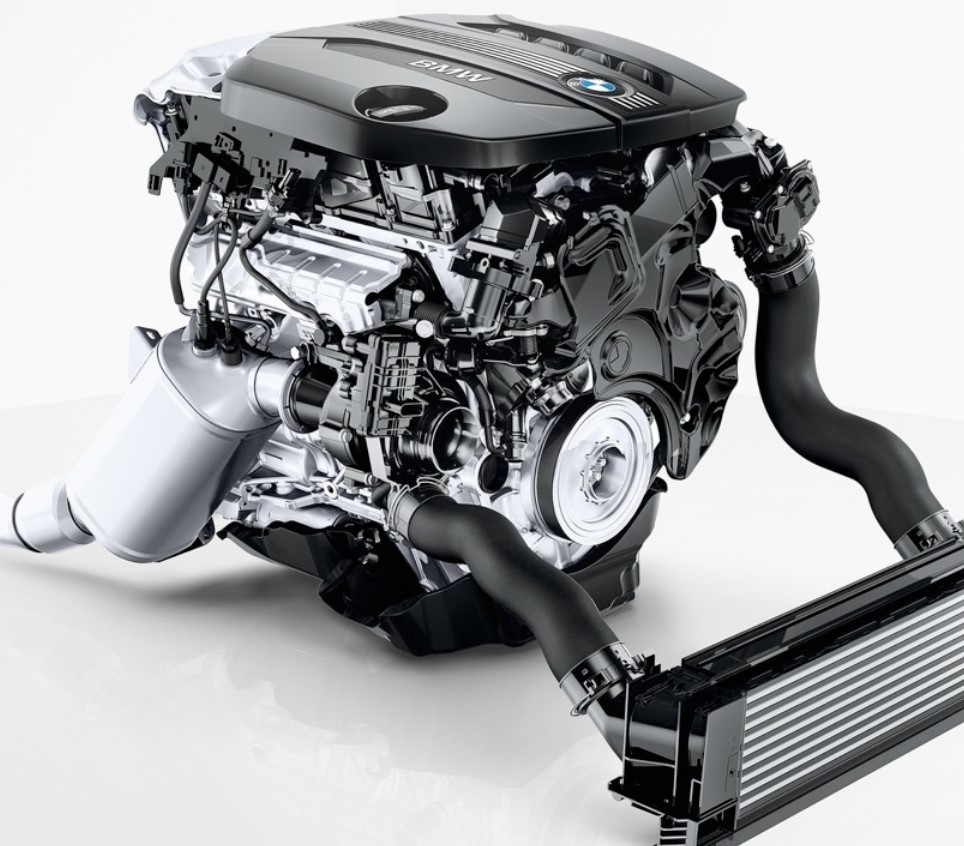
Important: even the best engine needs a thorough computer diagnostics before you buy. We read fault codes, measure paint thickness, cross-check mileage in ECUs and provide a written “buy / don’t buy” report.
When choosing a used car, many buyers focus heavily on the engine. Ideally you want strong performance without constant headaches. In recent years German manufacturers have launched a lot of new powertrains — and some of them stand out. Instead of listing everything, we focus on three of the best German petrol engines after 2015, one each from BMW, Mercedes-Benz and Volkswagen (VAG). These units have earned very positive feedback from both owners and specialists. We’ll explain which models they power, what makes them so good and which weaknesses to keep in mind. Of course, even a very robust engine can be ruined by bad maintenance, so at the end we’ll go through a diagnostics checklist for used cars in Germany. Let’s dive in.
BMW B58 — benchmark straight-six
Type: R6 3.0 turbo petrol · Years: from 2015 · Models: BMW 2/3/4/5/7, X3–X6 and Toyota Supra.
Whenever people talk about powerful yet reliable modern engines, the BMW B58 almost always comes up. It is a 3.0-litre, six-cylinder straight-six with a single twin-scroll turbocharger that replaced the earlier N54/N55 units — and improved on them in almost every way. Since 2015 it has been fitted to a huge part of the BMW line-up: from 2-series and 3-series to 5- and 7-series and the X3–X6 SUVs. Even the latest Toyota Supra uses the B58, and Toyota does not casually “borrow” engines — a strong vote of confidence.
In different versions, the B58 delivers roughly 326–382 hp and 450–500 Nm of torque. Engineers addressed most of the weaknesses of its predecessors. Owners of N54/N55 engines often complained about cooling issues, oil leaks and early failures of various pumps. In the B58 these weak spots were reinforced or redesigned. The result is a very durable modern turbo engine, as long as it is serviced correctly. Many B58-powered cars reach 200–300,000 km without major internal work — an impressive figure for a current-generation turbo six.
In daily use, the B58 feels like a worthy successor to classic BMW straight-sixes: eager, elastic and with a great soundtrack. It accepts moderate ECU tuning without drama, but the key is maintenance discipline — high- quality fuel, good oil and sensible warm-up / cool-down of the turbo.
| Pros | Points to watch |
|---|---|
| 🔥 Very strong reliability for its class (many enthusiasts call the B58 one of the most dependable modern German engines), excellent performance and elasticity, classic smooth straight-six character and sound. Works well with reasonable tuning. Owners praise it for combining effortless low-end torque with a lively top-end, without being fragile. | ❗ Sensitive to maintenance quality. Direct injection means intake valve deposits are possible over time — a walnut-blast cleaning around 100,000 km can be a good idea if you notice power loss or rough running. Only use quality petrol and oil: poor fluids can lead to heavy deposits and, in extreme cases, serious damage. In general there are no systemic design “flaws” widely reported — just normal wear items (spark plugs, coils) and the usual recommendation to treat the turbo kindly. |
Mercedes-Benz M256 — new-generation straight-six
For a long time Mercedes didn’t have a truly trouble-free flagship petrol engine in its line-up. Well-known V6 motors like the M276 suffered from oil leaks and timing-chain issues, four-cylinders were “okay but not great”. That changed around 2017 with the launch of the M256 — a thoroughly modern 3.0-litre straight-six turbo that replaced the old V6 family. It uses a 48-volt mild-hybrid system and, in some versions, an electric supercharger.
The M256 powers high-end Mercedes models from 2017/2018 onwards: E-Class (from the E450), S-Class, GLE, GLS, the AMG GT 53 four-door and others. Depending on tune it produces around 367–435 hp and 500+ Nm. The 48-volt system allows Mercedes to remove traditional belt-driven accessories (fewer failure points) and to smooth out power delivery. Variable valve timing (Camtronic) and clever thermal management help both efficiency and longevity.
Type: R6 3.0 turbo + 48V mild-hybrid · Years: from 2017 · Models: E-/S-Class (E450 and up), GLE/GLS, AMG GT 53 and others.
So far the M256’s track record is encouraging: there are no widespread, well-known design failures, and owners typically praise its smoothness and power. Of course, the engine is still relatively young, so long-term data beyond 300,000 km is limited, but the early picture is positive.
| Pros | Points to watch |
|---|---|
| 🔥 High power with reasonable fuel consumption, very modern architecture (mild hybrid, electric assistance) that gives strong low-rpm torque and virtually no turbo lag. The engine runs quietly with minimal vibration. Compared to older Mercedes V6 units it appears much more robust: no widespread timing chain horror stories, far fewer complaints about oil leaks. It’s a key strategic engine for Mercedes, so a good design margin was to be expected. | ❗ Complexity could show with age. There have been isolated reports of Camtronic cam phaser issues around 100,000 km, usually resolved under warranty. As with any modern direct-injection engine, intake valve deposits can build up and may need cleaning. Many M256 versions also use a gasoline particulate filter (GPF). This component doesn’t like purely short-trip, city use — if the car is rarely driven on the motorway, the filter may clog and require regeneration or replacement. None of this is catastrophic, but a future owner should be aware. |
Volkswagen/Audi EA888 Gen3/Gen4 — the mass-market turbo four
Now to Volkswagen Group. VAG (Audi, VW, Škoda, Seat, Cupra) has many engines, but the backbone of their petrol range is the EA888 — a four-cylinder turbocharged 2.0 TFSI/TSI. The first EA888 versions appeared around 2008 and initially had typical teething problems (oil consumption, timing chain issues, etc.). Continuous improvements, however, changed the picture. From roughly 2013–2015 the Gen3 engines arrived, addressing most of the early weaknesses. The current Gen3B / Gen4 versions are widely regarded as some of the most successful mass-market turbo fours.
EA888 Gen3/Gen4 powers almost everything in the VW Group hierarchy: Audi A3/A4, VW Golf and Passat, Tiguan, Škoda Kodiaq, Cupra hot hatches and many more. Power ranges from 150 to about 300 hp, and highly tuned versions make up to ~333 hp. For a 2.0 four-cylinder that’s very respectable.
Type: R4 2.0 TSI/TFSI · Years: Gen3 from ~2013/2015, Gen3B/Gen4 current · Models: wide range of Audi/VW/Škoda/Seat/Cupra (A3/A4, Golf, Tiguan, Kodiaq, etc.).
The big news is that the main issues of early EA888 generations were largely resolved. Engineers improved oil control rings, revised the timing chain and updated the PCV (crankcase ventilation) system — together this reduced oil consumption and chain-related failures. Turbos were strengthened and cooling improved. As with any turbo engine, frequent oil changes (no more than 7–8,000 km between changes in demanding use) and quality fuel are crucial, but with proper care these engines can rack up high mileages.
Another bonus: because EA888 is so common, parts and know-how are widely available, making servicing and future repairs easier and cheaper than with some exotic units.
| Pros | Points to watch |
|---|---|
| 🔥 Versatility and availability. This engine family is used in a huge number of VAG models, so any decent workshop knows it well and spare parts are easy to find. It offers a good mix of fuel economy and strong torque. Owner feedback for post-2015 engines is mostly positive: the Gen3/Gen3B finally got rid of the worst “TSI childhood diseases”. The tuning potential is also an indirect testament to its robustness — many GTI, R, S3, Cupra etc. versions are built around EA888 blocks. | ❗ Early generations (pre-~2012) did have serious problems, which damaged the engine’s reputation. When buying a used car you must ensure it has a late Gen3 or newer engine code. Also, like most direct- injection fours, it can be mechanically a bit “ticky” in sound and runs hot under heavy load — after spirited driving it’s wise to let the engine idle briefly to cool the turbo. Overall, Gen3/Gen4 have no widely reported systemic issues, and many examples reach 200,000 km without major internal repairs. |
What about diesel engines?
Among long-lasting diesels, enthusiasts often highlight the Mercedes OM642 (3.0 V6), BMW N57/B57 (3.0 R6) and the more common B47/OM654 (2.0 four-cylinders). In practice, modern diesels can easily cover huge mileages and offer excellent fuel economy, especially on motorways.
At the same time, today’s Euro 6 diesels are technically complex: high-pressure common-rail injection, DPF, AdBlue, EGR, swirl flaps and more. A minor issue with injectors or EGR can quickly become expensive. In city use DPF filters often suffer from incomplete regenerations and gradually clog. So while a modern diesel can be a fantastic long-distance engine, it demands careful maintenance and the “right” usage profile.
If you are considering a used diesel, pre-purchase diagnostics are absolutely essential. A specialist should check for injection and rail pressure faults, turbo condition, DPF loading, exhaust temperature sensors and possible leaks. Only then will you know whether the particular car is a great long-runner — or a future money pit.
Engine diagnostics when buying — quick checklist
We have looked at three outstanding petrol engines with strong reliability reputations. But again: even the “right” engine code does not guarantee a good purchase if the car has been abused or poorly serviced. When buying a used car in Germany, always combine a paper history check with an on-site inspection.
Sicher-Check offers mobile pre-purchase inspections and diagnostics at the seller’s location. We can often react on the same day, connect professional diagnostic equipment, check the body with a paint-thickness gauge, road-test the car and verify the history via VIN (including reports such as CarVertical). You receive a written report with photos and a clear verdict on the condition of the engine, drivetrain and the rest of the car.
If you haven’t picked a specific car yet, we also offer full car-sourcing services in Germany — we help you find the right vehicle for your budget and needs. Our team speaks English, German, Russian, Polish and Ukrainian and can guide you through each step of the process so buying a car with any of these engines becomes a positive experience instead of a gamble.
- 🛠️ VIN history: reports (including CarVertical), mileage plausibility, service records, TÜV validity.
- 🛠️ OBD scan: ECU fault codes, mileage / engine hours in modules, gearbox adaptations.
- 🛠️ Visual inspection: paint thickness, leaks / overheating traces, turbo condition, intake / exhaust.
- 🛠️ Test drive: low-rpm torque, shifts, vibrations / noises, braking stability.
- 🛠️ Wear items: timing chain/belt schedule, spark plugs / coils, realistic oil change intervals (7–8,000 km for heavy-use turbo engines).
Werbung / *Affiliate-Link
Links and banners marked with an asterisk (*) are affiliate links/banners. If you use such a link and subsequently request an offer, sign a contract or make a purchase, we receive a commission from the respective provider. For you, there are no disadvantages: the price and conditions remain the same.