

Vehicle history and vehicle condition are not the same
| VIN history report | In-person inspection |
|---|---|
| Searches accessible databases for recorded events | Assesses the particular vehicle at the appointment |
| May show earlier mileage or damage entries | Checks plausibility, visible wear and repair evidence |
| Coverage depends on vehicle, country and data source | Scope depends on access, time, equipment and seller permission |
| Cannot dismantle, diagnose or test-drive the vehicle | May include visual checks, measurements, diagnostics and a permitted test drive |
| Cannot guarantee complete history | Cannot guarantee the absence of hidden or future defects |
The tools become more useful when combined. A database warning can direct attention to a specific panel or date, while a physical finding can be compared with invoices, inspection records and the history timeline.
What a vehicle-history report can contribute
Mileage timeline
Recorded readings may expose decreases, unusual jumps or unexplained gaps that require further investigation.
Damage clues
Available entries may include dates, affected areas, estimates or archive photographs that guide the inspection.
Origin and use
Country changes and possible taxi, rental, leasing or fleet records help buyers interpret wear and value.
Theft and recall data
Accessible registers may contain theft or recall information that should be confirmed with the relevant authority or manufacturer.
carVertical says its service draws on more than 1,000 sources and searches databases in more than 45 countries. The provider also explains that informal repairs and inaccessible records may not appear. The same general limitation applies to other commercial history services.
What a digital report cannot assess reliably
“No findings” means no relevant records were found in the sources checked. It does not mean “accident-free”, “genuine mileage” or “mechanically sound”. Private repairs, cash jobs, older paper records and inaccessible databases may leave no digital trail.
- Engine and transmission condition: noises, leaks, overheating evidence, clutch operation and shift quality.
- Repair quality: filler, welding, corrosion protection, panel alignment and structural deformation.
- Wear: brakes, tyres, suspension, battery, interior and controls.
- Electronic condition: present or recently cleared faults and non-functioning assistance or comfort systems.
- Road behaviour: steering, braking, vibration, noises, alignment and power delivery.
What an in-person inspection may cover
The exact scope should be agreed before the appointment. A typical pre-purchase check can include:
Identity and documents
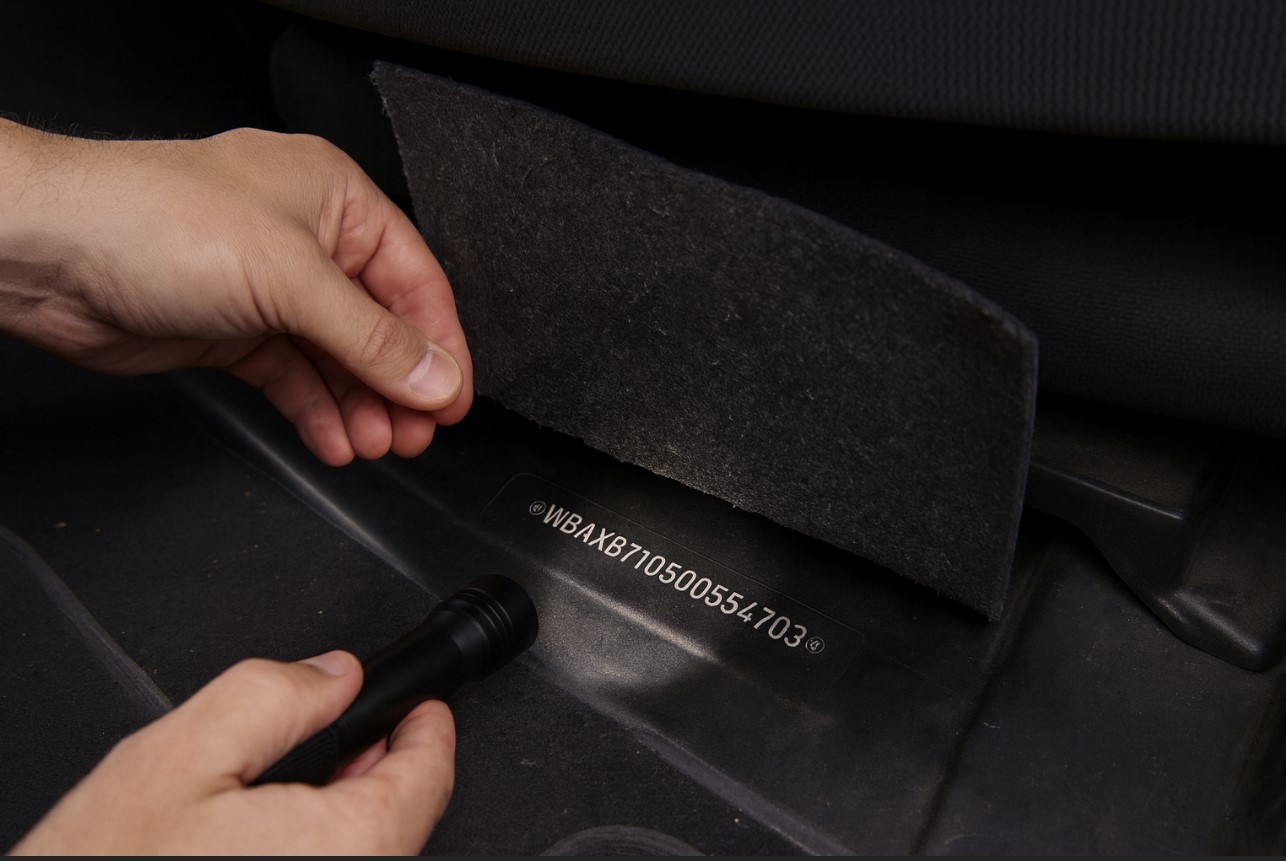
VIN comparison, registration papers, HU/TÜV records, invoices and maintenance evidence.
Body and paint
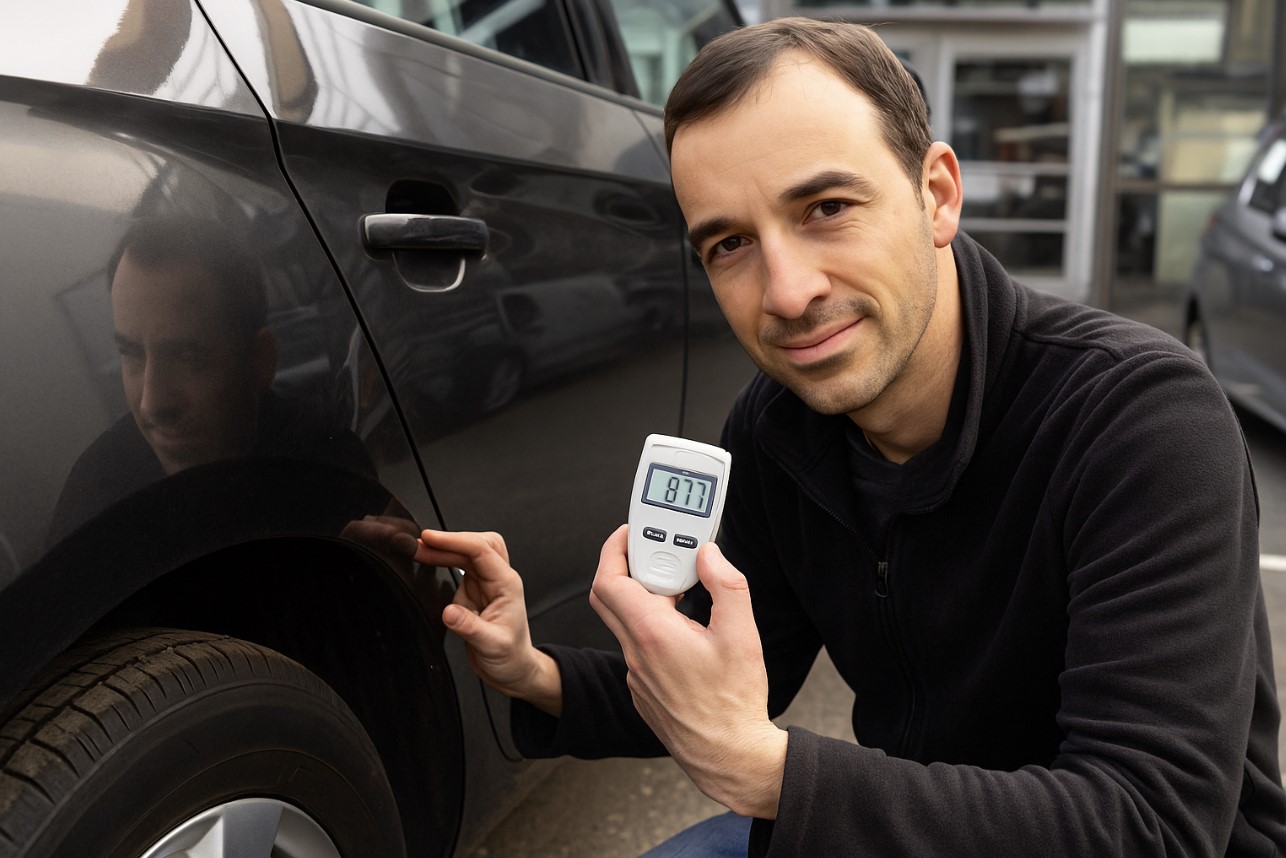
Panel alignment, glass dates, paint-depth measurements, visible repairs and corrosion.
Engine bay and underside
Fluid levels, visible leaks, hoses, mountings and accessible components without dismantling.
Interior and equipment
Warning lamps, climate control, lighting, windows, seats, infotainment and available assistance systems.
OBD diagnostics
Vehicle-dependent fault memory and selected live values can be read and interpreted.
Test drive
Where permitted: starting behaviour, engine, transmission, brakes, steering, vibration and noises.
OBD diagnostics are useful, but not complete proof
A diagnostic scanner can reveal stored faults and selected measurements. It cannot identify every mechanical problem. Faults may be intermittent, entries may have been cleared and many wear conditions have no dedicated fault code.
Mileage values stored in control units are also plausibility clues rather than universal proof. Vehicles store different data, modules can be replaced and sophisticated manipulation may affect several memories. OBD results therefore need to be compared with documents, service records and physical wear.
A safer process before buying a used car
- Save the advert, photographs, stated mileage and promised condition.
- Request the full VIN and compare it with the car and original documents later.
- List every question raised by history, HU/TÜV reports and maintenance records.
- Inspect the car in good light and, where possible, before it has been warmed up.
- Only test-drive with permission, appropriate insurance and safe conditions.
- Estimate repairs, overdue maintenance and unresolved uncertainty before negotiating.
- Sign and pay only after identity, ownership documents and material questions are resolved.
Pre-purchase inspections in Berlin, Potsdam and Brandenburg
Based in Stahnsdorf, Sicher-Check helps buyers compare available history with the vehicle’s condition. The agreed scope and relevant limitations are documented in the inspection report.
- Vehicle inspection with a written report from €200
- Travel and optional services agreed separately according to location and scope
- Appointments around Berlin, Potsdam and Brandenburg; other locations on request
- Communication in English, German, Russian or Ukrainian
The inspection is non-destructive and normally involves no dismantling. It records the condition observable at the appointment and does not guarantee freedom from hidden defects or future reliability. A test drive is only possible when seller permission, insurance and conditions allow it.
Frequently asked questions
Can I buy a car based on a clean VIN report?
A clean report is not enough on its own. It only reflects available records and does not assess the car’s current technical condition or unreported repairs.
What can an in-person inspection find that a history report cannot?
Depending on scope, it can identify visible repair evidence, paint-depth differences, corrosion, leaks, stored faults, wear and abnormal behaviour during a test drive.
Can OBD diagnostics prove the true mileage?
Not in every vehicle. Control-unit values may support a plausibility check, but different storage strategies, component replacement and manipulation prevent a universal proof.
Is a test drive always included?
A test drive is only possible when the seller agrees and insurance, registration, location and conditions permit it. Any limitation should be documented.
Should I order the VIN report before viewing the car?
Usually yes. It can help screen the vehicle and create specific questions for the inspection, provided the VIN supplied by the seller is correct.
How much does a Sicher-Check vehicle inspection cost?
An inspection with a written report starts at €200. Travel and additional services depend on location and scope and are agreed in advance.
Sources and transparency
The description of history-report coverage is based on carVertical’s official explanations of how the service works and why damage records may be missing. The recommended combination of document review, inspection and test drive is also consistent with current ADAC used-car guidance.
 How much does a vehicle inspection cost?
 How to inspect a used car before purchase