
 How to read a VIN report in Germany
What Launch X-431 is and what it consists of
Launch X-431 is a widely used multi-brand diagnostic platform for vehicle electronics. For beginners, understanding what the interface shows (and what it does not) makes diagnostics far more effective. In this guide, we explain the core features in plain language: reading and clearing OBD fault codes (DTCs), Live Data, Freeze Frame, active tests, and the most common interpretation traps. A scanner is a powerful tool, but the final result depends on the quality of your analysis.
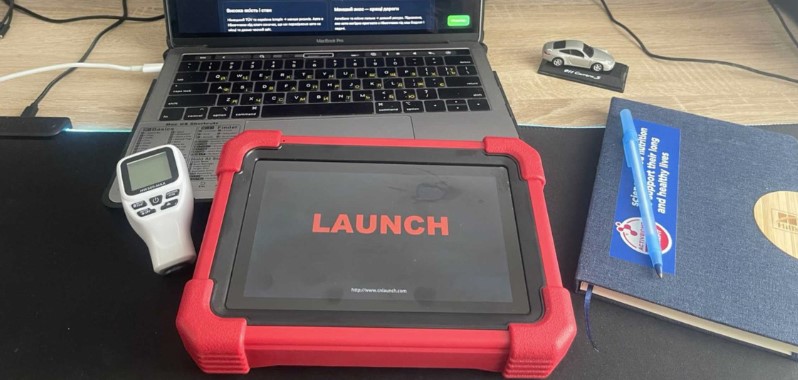
Launch X-431 is not a single “device” but a product family by Launch Tech. In most setups it consists of a tablet (or smartphone) running the X-431 software plus an OBD adapter that connects to the vehicle’s diagnostic port. Depending on the vehicle, it can access far more than engine control—transmission, ABS, airbags, climate systems, body modules and more. Functionally, it can be close to dealer-level tools on many makes, while remaining much more affordable. Software updates are important: they add vehicle coverage and refine diagnostic functions.
In the context of buying a used car in Germany: the scanner helps you detect obvious faults, but also “soft signals” (stored history, suspicious resets, inconsistencies across modules). Interpretation matters more than simply owning a scanner.
Why correct interpretation of OBD fault codes matters
When the scanner shows a fault code, the critical task is to understand what the code actually indicates. The same code can have multiple root causes. A code usually points to a system and a type of abnormal condition, but it rarely identifies a specific failed part.
Here are two reasons why interpretation requires attention and experience:
- OBD-II codes are standardised and often provide only a general direction. For example, P0303 means “misfire detected in cylinder 3”. The root cause could be a spark plug, ignition coil, injector, wiring issue, vacuum leak, low compression, or even ECU/logic conditions. The scanner reports the symptom; you must determine the cause.
- ECU memory can contain one-off “ghost” events—conditions that are not present anymore. Good diagnostics separates a recurring problem from a single incident. That’s why professionals check stored vs. current faults, analyse Freeze Frame, and verify whether a code returns after the fix.
Real-world pitfall: beginners often see a code and immediately replace “the named component”. If the scanner reports an open circuit for a sensor, do not buy a sensor first—check wiring, connectors, and power/ground supply before concluding the sensor is faulty.
Two typical beginner mistakes that lead to unnecessary expenses
Example 1: Check Engine, code P0171 (System Too Lean)
A beginner may assume an oxygen sensor is bad and replace it. But P0171 often points to unmetered air entering the intake (vacuum leak) or insufficient fuel delivery. In one case, the real cause was a cracked vacuum hose. An experienced diagnostician would check fuel trims in Live Data, look for intake leaks, and verify fuel pressure before replacing parts. The O₂ sensor was fine—money was wasted due to a wrong assumption.
Example 2: P0420 “Catalyst System Efficiency Below Threshold”
This is often taken literally: “the catalytic converter is dead”. Catalysts can be expensive, so owners may rush into replacement. In practice, P0420 can also be caused by a faulty downstream O₂ sensor or an exhaust leak. The correct approach is to compare upstream and downstream sensor behaviour under different conditions: if the downstream sensor closely mirrors the upstream pattern, the catalyst may indeed be ineffective; if readings are erratic or inconsistent, the problem can be sensor-related or caused by leakage.
These examples show why diagnostics is more than reading a code. You need system logic, cross-checking, and data correlation. Launch X-431 provides codes, live parameters and tests, but it does not automatically identify “the exact broken part”. It helps narrow the search.
In many cases, Live Data in skilled hands is more valuable than codes alone. For example, when a MAF (mass air flow) sensor is suspected, a professional checks MAF readings across operating modes and compares them to expected behaviour for that engine.
Practical tips for using Launch X-431
If you are just starting with Launch X-431, these steps will save time and avoid common mistakes:
- ⚠️Learn the interface first. Know how to save reports and make screenshots.
- ⚠️Connect correctly. Plug the adapter into the OBD port, turn ignition on, select the correct vehicle profile.
- ⚠️Watch battery voltage. Low voltage can interrupt sessions or distort behaviour across modules.
- ⚠️Don’t rush to clear faults. Save codes, Freeze Frame and key Live Data first.
- ⚠️Look at the whole system. Correlate codes with Live Data; use active tests when appropriate.
- ⚠️Be careful with Special Functions. Avoid coding/adaptations without understanding consequences.
- ⚠️Verify unfamiliar codes. Use brand-specific documentation, known cases for your model, and basic electrical checks.
For a used-car inspection in Germany, “no faults stored” is not a guarantee of a healthy car. Service history, test drive, body/paint condition and cross-checking multiple control units matter.
When it’s better to involve a professional
Launch X-431 gives enthusiasts powerful access to vehicle data, but diagnostics is a combination of tools and expertise. If you are unsure about conclusions, involving a specialist often saves more money than the inspection costs. Correct interpretation reduces the risk of buying a car with hidden issues.
Note: this article is educational. Use coding/adaptation functions only when you fully understand the procedure and risks.
Werbung / *Affiliate-Link
Links and banners marked with an asterisk (*) are affiliate links/banners. If you use such a link and subsequently request an offer, sign a contract or make a purchase, we receive a commission from the respective provider. For you, there are no disadvantages: the price and conditions remain the same.
FAQ
Can you trust Launch X-431 fault codes 100%?
The scanner reports ECU data, but the root cause may be wiring, connectors, vacuum leaks, mechanical faults, or certain operating conditions. Treat codes as a diagnostic direction, not a final diagnosis.
What matters more: fault codes or Live Data?
Very often Live Data matters more. It can reveal deviations even before a code is stored. For pre-purchase checks, live parameters show the real health of key systems.
Can someone clear faults to hide issues before selling a car?
Clearing faults does not fix the cause. Many codes return quickly, and clearing may erase Freeze Frame and useful history. In a used-car inspection, recently cleared memory can be a red flag.
Are “Special Functions” risky for beginners?
Yes. Adaptations and coding can change vehicle behaviour. Start with reading data and basic tests. Use special functions only if you understand what they do and why they are needed.
Related posts
How to read a VIN report in Germany
 Best electric cars on the German market (2015–2025)
Disclaimer:
The content of this blog article reflects the author’s opinion and is provided for general informational purposes only.
While we aim to be accurate, we do not guarantee completeness or suitability for any specific vehicle or case.
Always verify critical information and consider a professional inspection before making a purchase decision.