
 Driver assistance systems: functions, activation and checks (RU)
February in Germany is a month when many buyers inspect cars “on the run”: cold, wet, early darkness, roads often treated with salt and chemicals. At the same time, February is one of the best periods to see the real condition of the body and underside, because winter exposes typical issues: corrosion at vulnerable points, peeling protection, seized suspension parts, rusty fasteners, and (most importantly) potential problems with brake lines and structural areas.
Below is a practical guide to corrosion checks when buying a used car in Berlin and across Germany: where to look, how to tell cosmetic rust from a real problem, when to walk away, and how to use findings in negotiations.
Why corrosion becomes critical in winter
Salt and moisture are the key catalysts — especially if the car has stone chips, scratches, or any damage to the factory protection. Winter conditions and road salt accelerate corrosion, and weak spots show up faster.
Another important nuance: modern cars are generally better protected than vehicles 15–25 years ago — but that does not mean “rust doesn’t happen”. Risk increases if:
- 👀 the car is driven a lot on salted winter roads and rarely washed;
- 👀 there are paint chips / scratches;
- 👀 it was used commercially (high mileage, “workhorse” life);
- 👀 the previous owner applied a “cosmetic” underbody coating that hides issues instead of fixing them.
Quick common-sense test: if the seller says “the car is perfect”, but it has been driving winter salt for years and rarely washed — inspect the underside and vulnerable points carefully. Words don’t replace an inspection.
The most important point: not all rust is the same
Buyers often call everything “rust”, which leads to two classic mistakes: (1) rejecting a good car because of a small orange tint on fasteners; (2) buying a problematic car because “it’s just a bit of rust”.
A rough but useful logic:
Cosmetic vs safety risk
- ✅ Surface rust on some bolts/fasteners or non-critical parts can be age-related and not dangerous — but it needs monitoring.
- ⚠️ Corrosion on structural parts (sills, frame rails/longitudinals, jacking points, suspension mounting areas, subframe/underframe elements) is a safety and HU/TÜV risk and can become very expensive.
So the real question is not “is there rust”, but “where is it and what does it affect”.
Where to look for corrosion: a practical “risk map” before you buy
Without a lift you can do a basic “from the ground” inspection. But to understand the true underside condition, a lift inspection is the best option. Here are the zones that most often hide unpleasant surprises.
📌 Outside, visible immediately
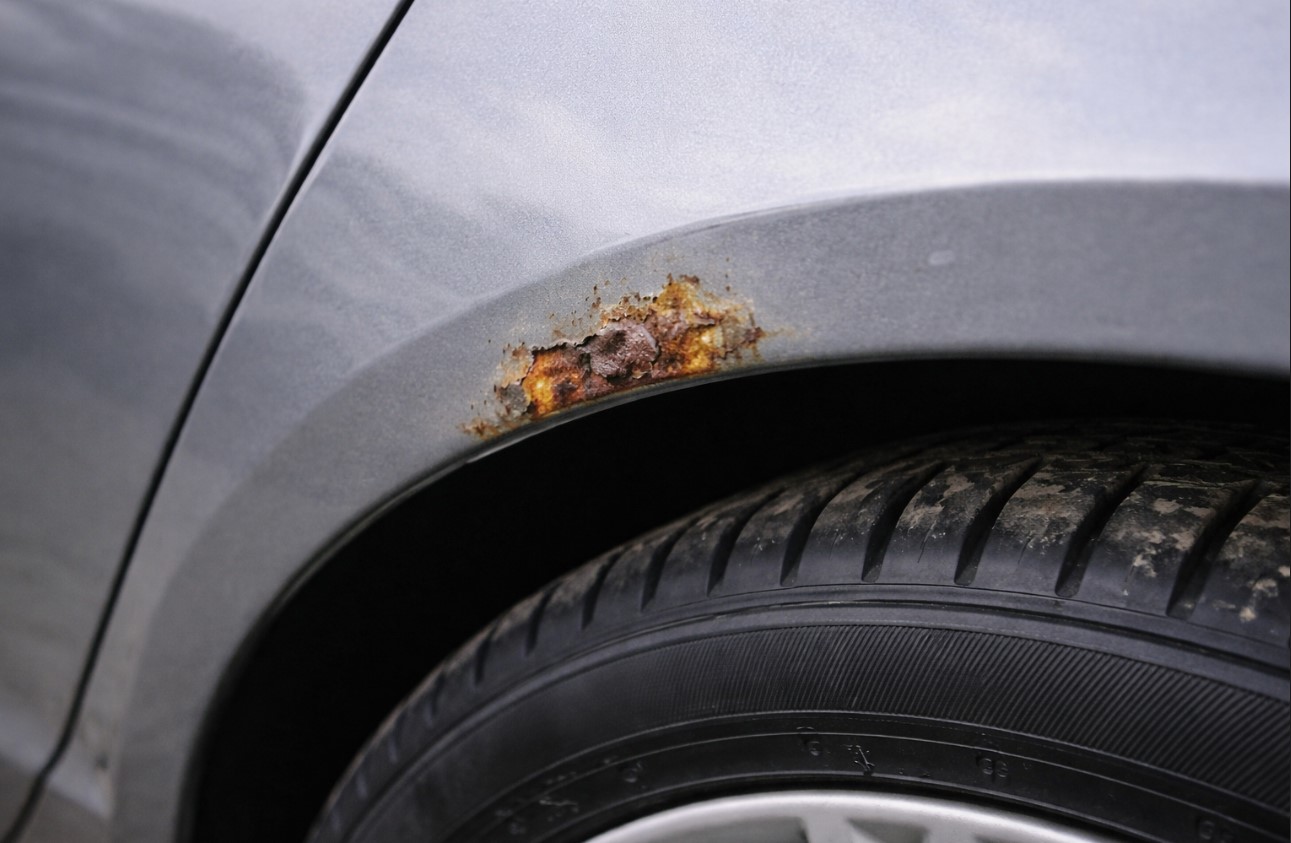
- wheel arch lips (especially rear), lower door edges, trunk edge;
- sills and areas around jacking points;
- places where chips/scratches exist and paint starts to bubble.
📌 Underneath (most important)
- structural zones in the sill/rail areas;
- subframe and suspension mount points (control arms, shocks/struts);
- exhaust elements and heat shields;
- brake lines and their mounting points (often fails HU/TÜV);
- plastic undertrays (they protect, but can also hide problems — it’s important to look behind/under them).
Psychological marker: if the seller repeats “the underside is perfect” but doesn’t let you inspect calmly, rushes you or distracts — be cautious.
Mini checklist “on a parking lot” (if there is no lift)
| Zone | What to look for | Practical conclusion |
|---|---|---|
| Wheel arches / edges | bubbles, “blisters”, crumbly lip, fresh touch-up paint | often indicates corrosion spreading under the paint layer |
| Sills / jacking points | bent lifting points, rusty seams, cracked underseal/anti-gravel coating | if it’s soft/crumbly — structural risk is possible |
| Underside (visual) | uneven “fresh black” layer, wet/sticky areas, fresh spray traces | could be treatment or masking — a lift check is needed |
| Brake lines (if visible) | heavy orange rust, flaking, moisture at joints | red flag for safety and HU/TÜV |
Corrosion red flags: when you should turn around and walk away
There are situations where “I’ll fix it later” turns into “I just bought a very expensive problem”:
- ⚠️ Perforation / holes on structural parts, sills, or jacking points.
- ⚠️ Heavy corrosion at suspension mounting areas (dangerous and costly).
- ⚠️ Brake lines with pronounced corrosion — direct safety and HU/TÜV risk.
- ⚠️ Fresh “black coating” underneath without “before” photos and invoices: sometimes preventive, sometimes a cover-up.
Remember: if the car has serious issues on load-bearing/structural areas, it may fail HU (no sticker) — which means immediate restrictions and expenses, not “sometime later”.
What to ask the seller if the underside has a fresh coating
- photos/videos “before” (especially sills/rails/jacking points);
- invoice / workshop documents (what exactly was done and with which materials);
- clear answers: “which zones were treated” and “why it was done”.
If answers are vague and the seller gets nervous — assume the worst-case scenario or walk away.
How to translate corrosion into money: a practical approach without illusions
Exact repair cost depends on diagnosis and scale. But for a buyer, the key is to classify the problem and manage risk.
Three classes of findings (A / B / C)
| Class | What it means | What to do |
|---|---|---|
| Class A |
rusty fasteners, light surface corrosion on non-critical parts, small chips | don’t panic; use for a small negotiation + plan preventive care |
| Class B |
local spots on arches/sills without holes, early-stage problem zones | get a body shop estimate and check what’s underneath (lift recommended) |
| Class C |
structural areas, suspension mounts, perforation, problematic brake lines | often walk away; otherwise only with hard negotiation and clear HU/repair plan |
Negotiation tip: document findings with фото/video and translate them into “time + money + HU risk”. The closer the corrosion is to structural zones and brake lines, the stronger your negotiation position.
Why a professional underside inspection in Germany pays off
Underneath you can see peeling protection, cracks, corrosion in hidden zones — and it’s hard to assess on a parking lot. That’s why a lift inspection often provides the key information for corrosion decisions.
If you order a pre-purchase inspection, the corrosion value is usually this:
- photo/video evidence of problem points underneath;
- a clear assessment: cosmetic vs safety/HU risk;
- strong arguments for negotiation — or a confident “do not buy” decision.
In a full inspection this is combined with diagnostics, test drive and document checks — so your decision is rational, not emotional.
Werbung / *Affiliate-Link
Links and banners marked with an asterisk (*) are affiliate links/banners. If you use such a link and subsequently request an offer, sign a contract or make a purchase, we receive a commission from the respective provider. For you, there are no disadvantages: the price and conditions remain the same.
FAQ — corrosion & underside in winter
Is it normal to see some “orange rust” on fasteners underneath?
Often yes: light surface rust on bolts/fasteners and some non-critical parts can be age-related. What matters is the location and depth: structural zones, jacking points, and suspension mounts are a different story.
What is the most dangerous finding when inspecting the underside?
Corrosion on structural/load-bearing parts and problematic brake lines. This is a safety risk, can be very expensive, and can cause HU/TÜV failure.
If there is a fresh underbody coating — can I relax?
No. Sometimes it’s correct preventive treatment, but a fresh layer can also hide defects. Ask for invoices and “before” photos, check seams/hidden zones, and if possible inspect on a lift.
Related posts
Driver assistance systems: functions, activation and checks (RU)
 Guarantees and buyer rights when buying a used car in Germany (DE)