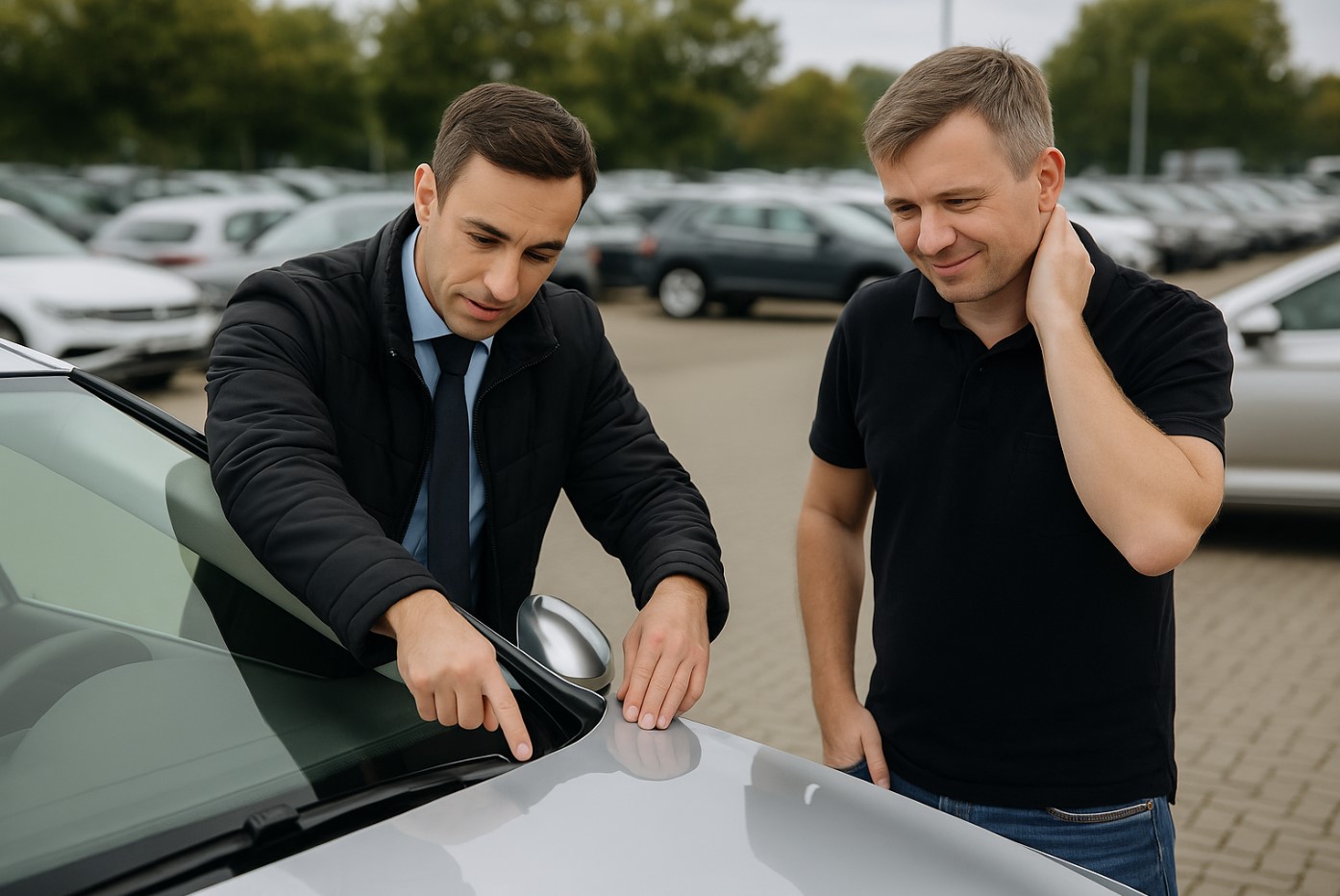
How to buy a car in Germany — step-by-step guide
A practical algorithm for buying a car in Germany and the key risks before the deal.
 Sicher-Check
Brakes are one of the few inspection points that are at the same time a direct safety issue, a frequent reason for HU remarks and a strong negotiation argument. After winter, the situation often gets worse: moisture, road salt, chemicals and long periods of standing still accelerate corrosion, while many cars in Germany are driven less during the cold season.
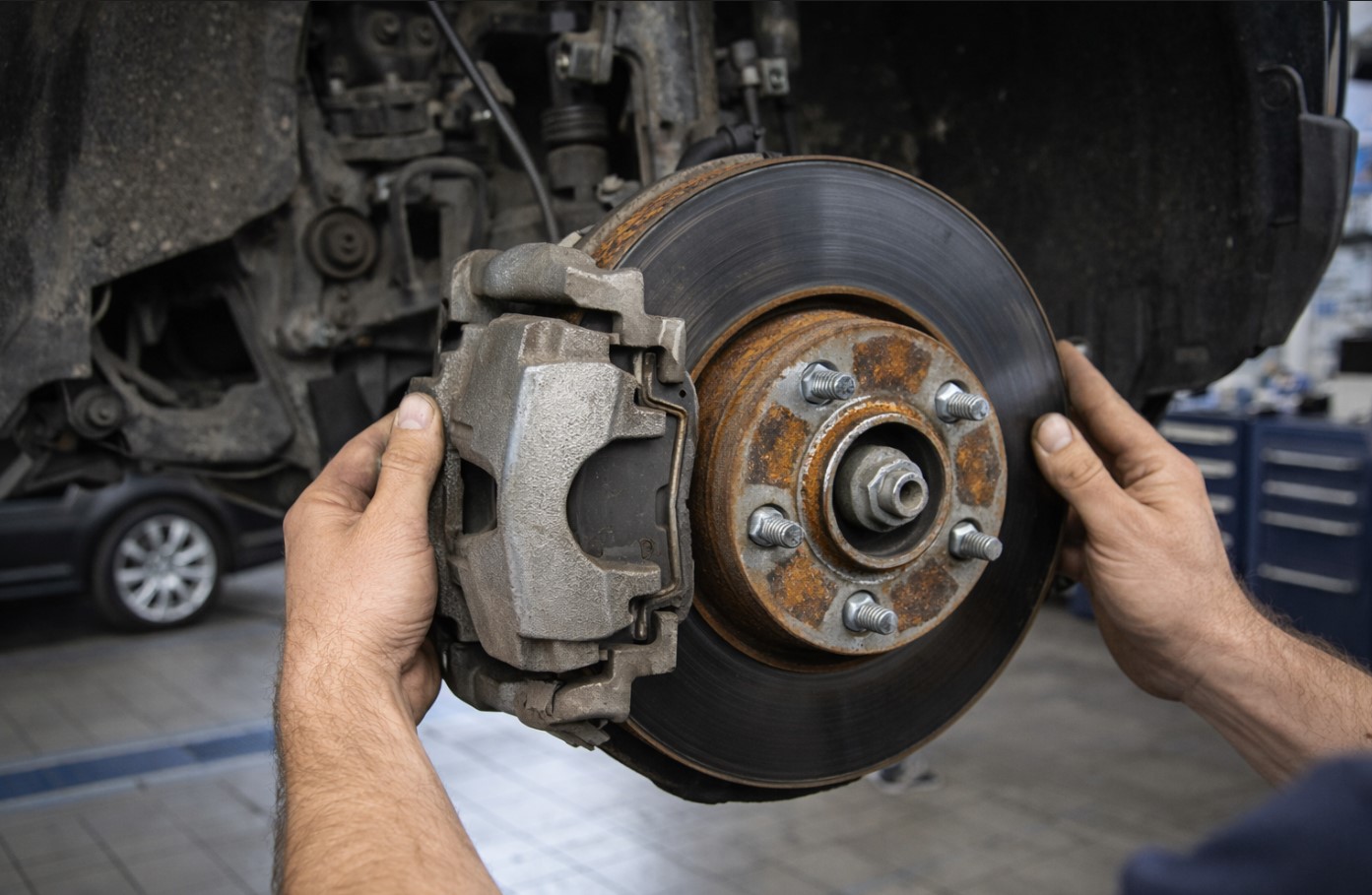
After winter, the brake system often reveals what was hidden during the milder season: rust on the discs, seized guide pins, sticking calipers, corroded brake lines and defects that the owner may not have noticed during short city trips.
Winter in Germany is especially hard on brakes for three reasons:
A light surface film of rust after rain, a car wash or a few days of standing still is common. What matters is not the fact that rust exists, but whether it disappears under normal braking and whether the working surface of the disc is even.
What to look for:
The basic rule is simple: brake discs should wear in a logical and reasonably even way across the axle. If one side looks much worse than the other, there is usually a deeper reason.
| Symptom | What it may mean | Risk |
|---|---|---|
| Light orange rust film | Normal moisture / standing still | Often not critical |
| Deep grooves | Disc or pad wear, trapped debris | Repair soon |
| Strong outer lip | Disc close to wear limit | Disc replacement |
| Blueish spots | Overheating | Judder, reduced braking quality |
| Persistent rust | Standing damage / poor brake operation | Negotiate or walk away |
Even if there is still pad material left, the real issue may not be thickness but sticking movement. After winter, calipers and guide pins often begin to seize because of salt, dirt and corrosion.
Suspicious signs include:
If you are looking at a car older than about 8–10 years, brake lines should already be treated as a higher-risk area. Corrosion on brake lines is not “cosmetic” — it can eventually mean pressure loss and is a direct safety issue.
What to look for from underneath:
Brake fluid is often underestimated because its condition is less visible than grooves on a disc. But brake fluid has a direct effect on braking stability when the system gets hot.
The practical question to ask the seller is very simple: “When was the brake fluid last changed?”
If the service history has no record of brake-fluid replacement for years, that is a bad sign not only for the brakes, but also for the general maintenance attitude toward the vehicle.
Many serious brake defects do not show themselves in a parking lot. They become obvious only under real driving conditions. That is why the test drive should not be a symbolic lap around the block, but a short and structured protocol.
Even if the dashboard looks clean, the control units can still contain active or stored faults related to:
In winter, these errors may appear only intermittently: something gets wet, loses connection, then dries out again. At the moment of inspection, the warning light may already be gone. Without diagnostics, you simply will not know.
Brakes are a strong negotiation area because you can argue from three directions at once: safety, HU risk and clearly understandable repair costs.
| Defect | What to tell the seller |
|---|---|
| Deep grooves / strong lip on discs | This is not just “normal for age”; it is predictable brake repair in the near future. |
| Corroded brake lines | This is not only about price — it is a safety issue and a potential HU problem. |
| Brake pull / sticking caliper | There is a real dynamic defect that must be repaired before normal use. |
| ABS/ESP faults | The problem is not subjective — it is already confirmed by electronic diagnostics. |
If you generally like the car but have doubts about the brakes — especially the brake lines, calipers, wear pattern or ABS/ESP behavior — a private visual check often no longer gives enough certainty.
In that situation, it is smarter to order a full pre-purchase inspection: lift inspection, test drive and OBD diagnostics give you a realistic answer: buy / negotiate / walk away.
A light surface rust film can be normal. But persistent corrosion, deep grooves and a large dull area are warning signs.
In many cases it points to uneven brake operation, a sticking caliper or another serious brake-system defect.
Yes. The control units may still store active or historical faults that are invisible without diagnostics.
A practical algorithm for buying a car in Germany and the key risks before the deal.
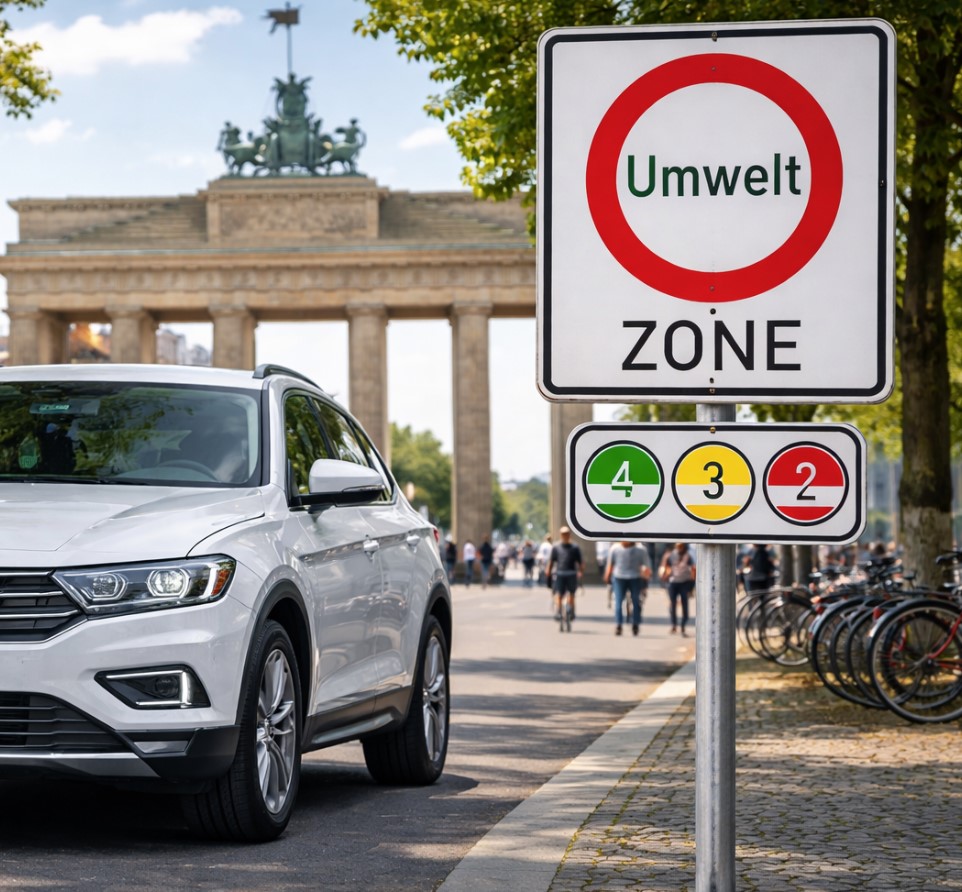
How to check the green sticker, documents and whether a car is really suitable for everyday life in Berlin.
Disclaimer:
The content on this page is provided for general informational purposes only
and does not replace an individual on-site inspection, computer diagnosis or professional advice.
Despite careful preparation, we do not guarantee the accuracy, completeness or timeliness of the information.
By using the materials on this website, you act at your own risk.