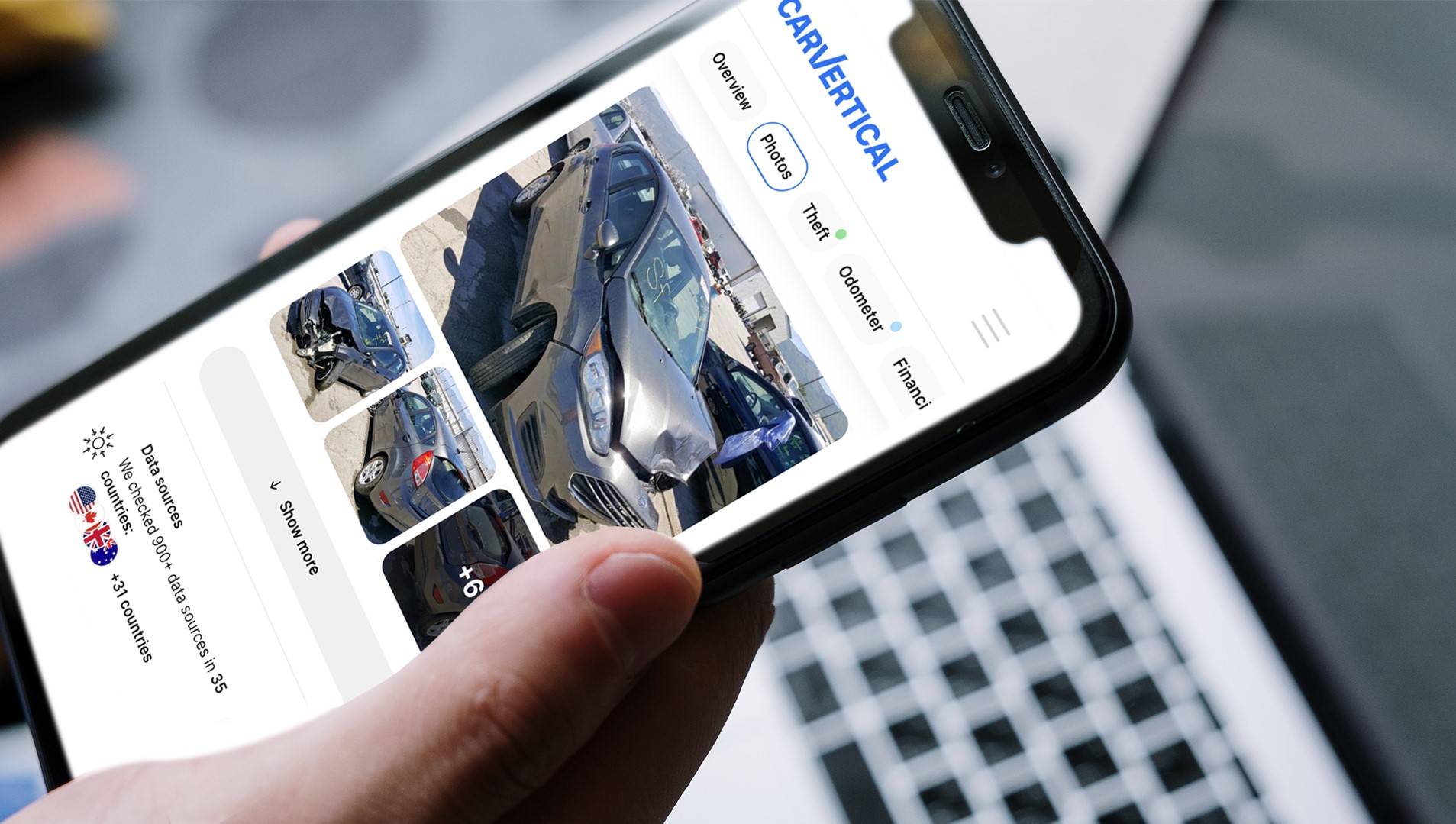
carVertical and vehicle history: what a VIN report shows before buying
Why a VIN report is useful, but cannot replace diagnostics, OBD, body inspection and a real vehicle check.
 Sicher-Check
A DPF, catalytic converter or EGR fault is not automatically a diagnosis of “replace everything immediately”. But it is also not something you should ignore before buying a used car. In Germany the issue is not only the repair bill: a faulty diesel particulate filter can make the car fail HU/AU, and deleting or manipulating the exhaust aftertreatment system can create a legal problem under §19 StVZO.
The key point for a buyer is simple: an exhaust-system warning is a signal to investigate deeper, not just to “clear the code”. The same warning light can hide very different costs — from a differential pressure sensor or EGR problem to professional DPF cleaning or complete catalytic converter replacement.
In Berlin this topic is especially relevant for diesels used mainly on short urban trips. City driving often prevents proper filter regeneration. That is why a phrase like “it is just a small fault” is not enough when buying a used car. You need OBD, live data, regeneration history and a diagnosis of the cause — not only the visible symptom.
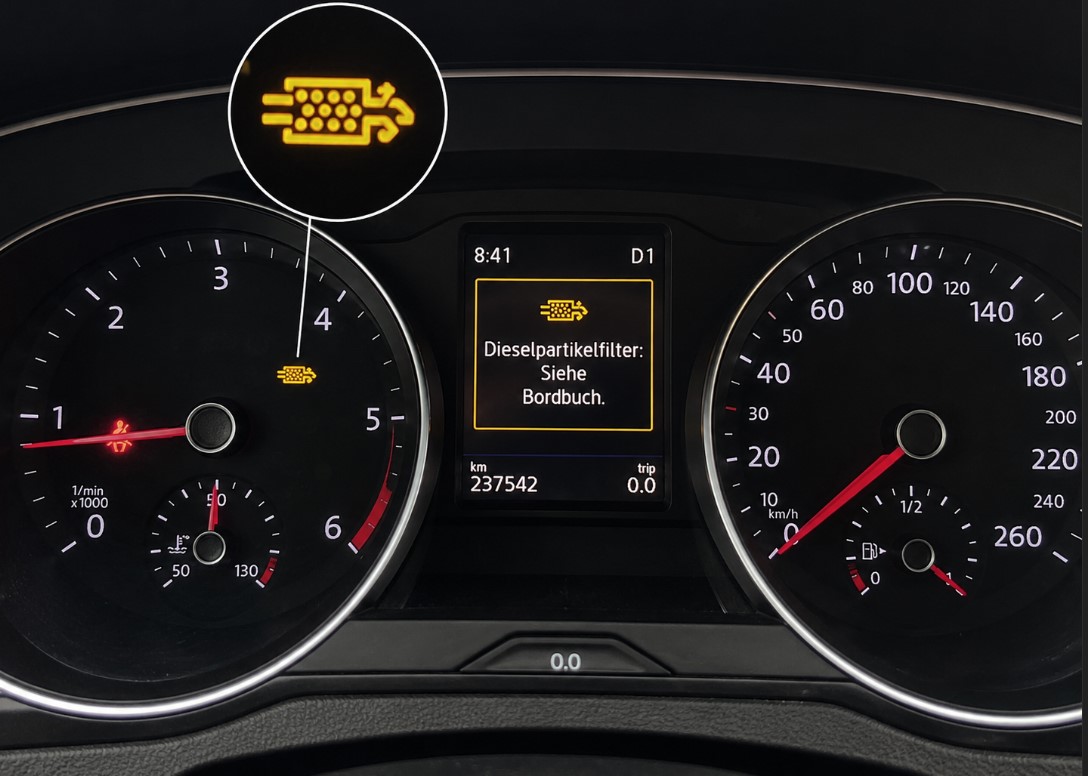
A DPF, catalytic converter or EGR fault is not automatically a diagnosis of “replace everything”. But it is also not something a buyer should ignore. In Germany, the problem is not only the repair invoice: a malfunctioning particulate filter can make the car fail HU/AU, and deleting or improvised manipulation of the exhaust system can remove the vehicle from legal roadworthiness under §19 StVZO.
When a particulate filter is saturated with ash, regeneration no longer helps and the filter must normally be replaced. For Euro 6 diesels, particle-number measurement has been part of the emissions test since 2023; failing AU is considered a significant defect and means failing HU as well. With catalytic converters, standard workshop practice usually means replacement, not “repairing the catalyst on the car”, because most of the cost is in the part itself and the precious metals inside it.
For the buyer, the practical conclusion is clear: an exhaust-system fault is a reason to diagnose deeper, not simply to clear the code. Behind the same warning light there may be a relatively inexpensive sensor, an EGR issue, professional DPF cleaning or complete replacement of the DPF or catalytic converter.
In Berlin, this issue is especially common on diesels used mainly for short trips. Urban driving may not allow normal regeneration to complete. This is why a used car with a DPF, catalytic converter or EGR warning needs proper OBD diagnostics, live parameters, regeneration history and a root-cause check before any purchase decision.
When a particulate-filter warning appears on the dashboard or the Check Engine light comes on, drivers usually want answers to three questions: what does it mean, can I continue driving and how much will it cost? Typical symptoms include a warning light, reduced power, limp mode, higher fuel consumption, frequent regeneration attempts and, in some cases, increased emissions or poor engine behavior.
This does not always mean that the filter has physically failed. But it almost always means that the system must be diagnosed as a chain: sensors, pressure hoses, temperature sensors, EGR/AGR, exhaust leaks and finally the DPF or catalytic converter itself.
The roles are different. A DPF is a diesel particulate filter that traps soot and burns it off during regeneration. A catalytic converter reduces harmful exhaust components and is often discussed in connection with petrol engines, although modern exhaust aftertreatment systems may combine several components.
EGR/AGR returns part of the exhaust gases to the intake to reduce NOx emissions. If the EGR system is clogged or works incorrectly, combustion and exhaust aftertreatment can suffer. That is why diagnostics should not stop at the filter alone; the related components and control logic must also be checked.
📌 In simple terms: the DPF catches soot, the catalytic converter reduces harmful emissions and EGR influences combustion temperature and exhaust composition. If one part works incorrectly, it can affect the whole system.
OBD codes provide useful direction, but they are not a complete diagnosis. Common code groups include P2002 for particulate-filter efficiency below threshold, P2463 for DPF soot-load or restriction issues, P0420 / P0430 for catalytic-converter efficiency below threshold and P0401 for insufficient EGR flow.
The exact trigger conditions and thresholds depend on the manufacturer and engine software. Still, these codes tell a technician where to start looking.
| Code / group | Typical meaning | What to check before buying |
|---|---|---|
| P2002 | DPF / particulate-trap efficiency below threshold | Soot load, differential pressure sensor, temperature sensors, regeneration history, EGR, leaks |
| P2463 | DPF restriction or soot-load issue | Load level, regeneration possibility, ash load, root cause of blockage |
| P0420 / P0430 | Catalytic-converter efficiency below threshold | Oxygen sensors, exhaust leaks, mixture control, catalytic converter condition |
| P0401 | Insufficient EGR flow | EGR/AGR, intake system, wiring, vacuum/electric actuator and related sensors |
⚠️ Important: the same OBD code does not always lead to the same repair on every brand. Thresholds, ECU logic and typical failure patterns depend on the engine.
This is where many buyers misunderstand the problem. A P2002 code does not always mean you need to buy a new DPF tomorrow. A P0420 code is not automatically proof that the catalytic converter is dead.
The fault may be caused by a genuinely worn component, but it may also be the result of false sensor data, leaks, incorrect mixture, clogged EGR, defective hoses, wiring issues or a control strategy that cannot complete regeneration.
This is an important diagnostic principle: the expensive part is not always the first part to replace. A differential pressure sensor, a hose, an EGR problem or an oxygen sensor may be part of the repair scenario and can cost far less than replacing the complete DPF or catalytic converter.
🔎 One fault can have very different causes
Short-term measures depend on the type of blockage and the condition of the system. If the filter is loaded with soot rather than ash and the system is physically intact, a workshop may sometimes initiate a forced regeneration.
This can be relevant for cars used mainly in the city, where normal regeneration does not finish. A defective EGR can also be part of the reason. But if the ash-load limit is already reached, regeneration will not solve the issue and the filter usually has to be replaced.
In other words, a longer motorway drive can sometimes help, but only within a narrow technical window. It is not a universal cure.
❗ Do not rely on this before buying: “we will just clear the code”, “it only needs a motorway run” or “all diesels do that”. First diagnostics, then a decision.
Chemical cleaners and miracle additives should also be treated carefully. They do not solve ash loading, may not be suitable for every filter design and may create warranty or manufacturer-support questions. The safer logic is: confirm the real load and condition first, identify the type of contamination and only then choose regeneration, professional cleaning or replacement.
The cost difference can be substantial. A new DPF can easily move into the range of roughly 1,000–3,000 euros depending on the model, while professional filter cleaning is often much cheaper. However, cleaning is only useful if the internal structure is intact and the problem is suitable for cleaning.
In Berlin and across Germany, DPF cleaning offers vary widely. Some services advertise lower net prices, others include different methods, removal/installation or on-car cleaning. The price difference often comes from the method, the work included and whether the filter is removed and sent away.
Catalytic converters follow a different logic. In normal workshop practice, a defective catalytic converter is usually replaced, not repaired on the vehicle. Labor time can be relatively short, but the final price is often dominated by the part itself.
Public examples show a very wide price range — from lower three-digit amounts for smaller cars to several thousand euros for some models. Exchange parts may reduce the bill in some cases. Therefore, a catalytic-converter fault is not “one price for every car”; it is strongly model-dependent.
For diesels, cost differences between models can be significant. The same type of repair may be much cheaper on one compact car than on another model with more expensive parts or more difficult access. Before buying a specific engine, it is sensible to estimate the rough cost range for its exhaust aftertreatment system.
The table below gives a practical overview. It is not a fixed quote for every VIN, but it helps a buyer understand the scale of the risk.
| System | What is actually done | Typical price range | Typical time | Comment |
|---|---|---|---|---|
| Diesel, DPF | Professional cleaning | 200–500 € | from 30–45 minutes / 1–2 hours to 1–3 days | Does not work in every scenario; ash overload or damaged substrate may require replacement |
| Diesel, DPF | Replacement | typically 1,000–3,000 €; some models higher | often 2–4 hours | Often the only solution for high ash load, damaged substrate or failed regeneration/cleaning |
| Petrol, catalytic converter | Specialized cleaning outside normal workshop practice | approx. 299–350 € plus removal/installation | often 1–2 days | Not standard for every workshop and not a guarantee if the root cause remains |
| Petrol, catalytic converter | Replacement | roughly 600–3,800 €+ | about 30–50 minutes labor plus part selection | In normal service practice, replacement is the main route when catalyst efficiency is confirmed as too low |
These numbers show the order of magnitude, not an exact offer. The final cost depends on the exact vehicle, engine, part type, access, additional sensors and whether other faults must be repaired first.
📊 Cost comparison: DPF cleaning vs DPF replacement vs catalytic converter replacement
The key legal point in Germany is simple: if the emissions behavior is worsened by modification or manipulation, the vehicle’s operating permit may be affected. The car may no longer be legally used on public roads until the issue is corrected or legally approved.
Modern emissions testing is designed to detect manipulation such as removed DPF systems, poor-quality repairs or excessive wear. For Euro 6 diesels, particle-number measurement is particularly relevant. For a buyer, this means that a “temporary DPF fault” is not an abstract risk. It can become a very concrete HU/AU failure and lead to immediate extra costs after registration.
❗ Important: a removed DPF, disabled catalytic converter, suspicious remap or software suppression of warning lights can be both a technical and a legal risk in Germany.
Before buying a used diesel in Berlin, pay close attention to the car’s usage history. If the car mostly did short trips and the seller says that “the DPF fault comes and goes”, that is not reassuring. It is a warning signal.
City use is exactly the scenario in which incomplete regeneration becomes common. A proper pre-purchase inspection should not only read the fault code. It should check how the system behaves: whether there are codes such as P2002, P2463 or P0401, what the live pressure and temperature values show, how often regeneration has been requested, whether there are signs of manipulation and whether another fault would quickly damage a newly cleaned or replaced filter again.
A practical decision process looks like this:
🧭 Decision chart: regeneration / cleaning / replacement
The algorithm matters because it protects you from the most expensive mistake: replacing an expensive component without fixing the real cause. If the original cause remains, a cleaned or new filter can become overloaded again.
For a used-car buyer, the conclusion is pragmatic. If the car already shows DPF, catalytic converter or EGR faults during the viewing, do not treat it as “a car with a small discount”. Treat it as a repair project that needs proper technical assessment.
In the best case, the repair may be a sensor or EGR issue. In the middle case, it may be professional cleaning. In the worst case, it may be DPF or catalytic converter replacement plus related sensors, oxygen sensors, sealing, wiring or software adaptation. This is why a pre-purchase inspection is especially valuable on diesels and on cars with an active Check Engine light: the goal is not to scare the buyer, but to separate a manageable repair from an expensive mistake before the contract is signed.
🚘 Buying a diesel or a car with Check Engine?
Sicher-Check checks OBD codes, live parameters, fault history, signs of manipulation and real purchase risks.
This is especially important when the seller says: “It is only a minor fault.”
DPF or Catalytic Converter Fault in Germany: Symptoms, OBD Codes, Repair and Costs in Berlin
What a DPF, catalytic converter or EGR fault means, when cleaning can help, when replacement is needed and how much repair may cost in Germany and Berlin.
blocked diesel particulate filter; DPF fault Germany; catalytic converter fault; DPF repair Germany; EGR fault used car; how to know if DPF is blocked; DPF replacement cost Germany; DPF cleaning Berlin price; catalytic converter replacement Germany cost; failed TÜV because of DPF; P2002 meaning; P2463 meaning; P0420 catalytic converter; buy a diesel in Germany and check DPF; pre-purchase diesel inspection Berlin
Dieselpartikelfilter verstopft; DPF Reinigung Berlin; Katalysator wechseln Kosten; Abgasuntersuchung; Gebrauchtwagencheck
Infographic: “DPF/catalytic converter fault: from warning light to invoice”. Four blocks: symptoms, fault codes, repair options, cost ranges. Icons: dashboard, OBD scanner, particulate filter, catalytic converter and TÜV/AU sticker.
Some technical conclusions in this article are diagnostic logic, not a promise that the same OBD code always means the same repair on every brand. OBD meanings are standardized in broad terms, but trigger thresholds, ECU logic and common repair scenarios depend on the manufacturer and engine.
DPF and catalytic-converter prices also vary depending on the exact vehicle version, part type, access to the component and the need to replace related components. For that reason, this article gives realistic cost ranges rather than false precision down to the euro for an unspecified engine.
No. A DPF fault does not always mean immediate filter replacement. First you need to read OBD codes and live data, check sensors, EGR, pressure, temperature and load values. Sometimes regeneration or professional cleaning helps, but if the ash load is too high or the filter is damaged, replacement may be necessary.
Clearing the code without fixing the cause does not solve the problem. If the cause remains, the fault will return and the vehicle may fail HU/AU. Before buying, this is a reason for deeper diagnostics, not a reason to trust the seller.
Professional DPF cleaning is often in the approximate range of 200–500 euros. Replacement may cost around 1,000–3,000 euros or more, depending on the model, part and labor.
The cost depends heavily on the model. Public examples range from roughly 600 euros to 3,800 euros and more. Labor can take less than an hour, but the main cost is usually the catalytic converter itself.
Yes. The fault may mean a relatively inexpensive sensor issue, but it may also mean expensive DPF, EGR or related component repairs. Before buying, you need OBD diagnostics, live parameters and a root-cause assessment — not just a cleared fault code.
Why a VIN report is useful, but cannot replace diagnostics, OBD, body inspection and a real vehicle check.
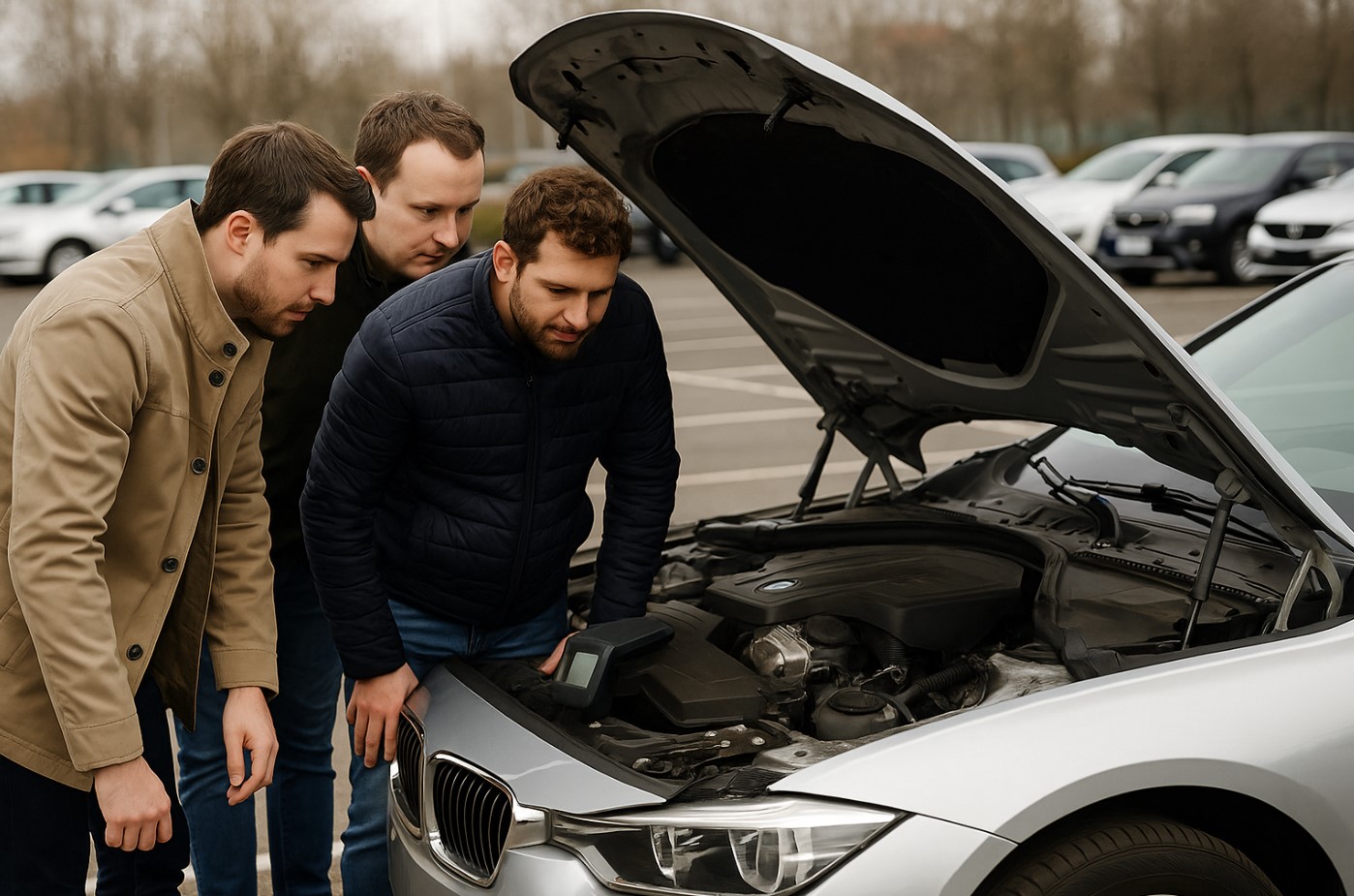
What to check on a diesel car: DPF, EGR, turbo, mileage, fault codes, TÜV and real costs after the deal.
Disclaimer / Haftungsausschluss:
The content of this article is for general information only and does not replace an individual on-site diagnosis,
workshop assessment or legal advice.
Despite careful preparation, we do not guarantee the accuracy, completeness or current validity of the information.
Vehicle condition, repair costs and legal consequences can vary depending on the exact model, engine, software status,
previous repairs and local workshop conditions. You use this information at your own responsibility.