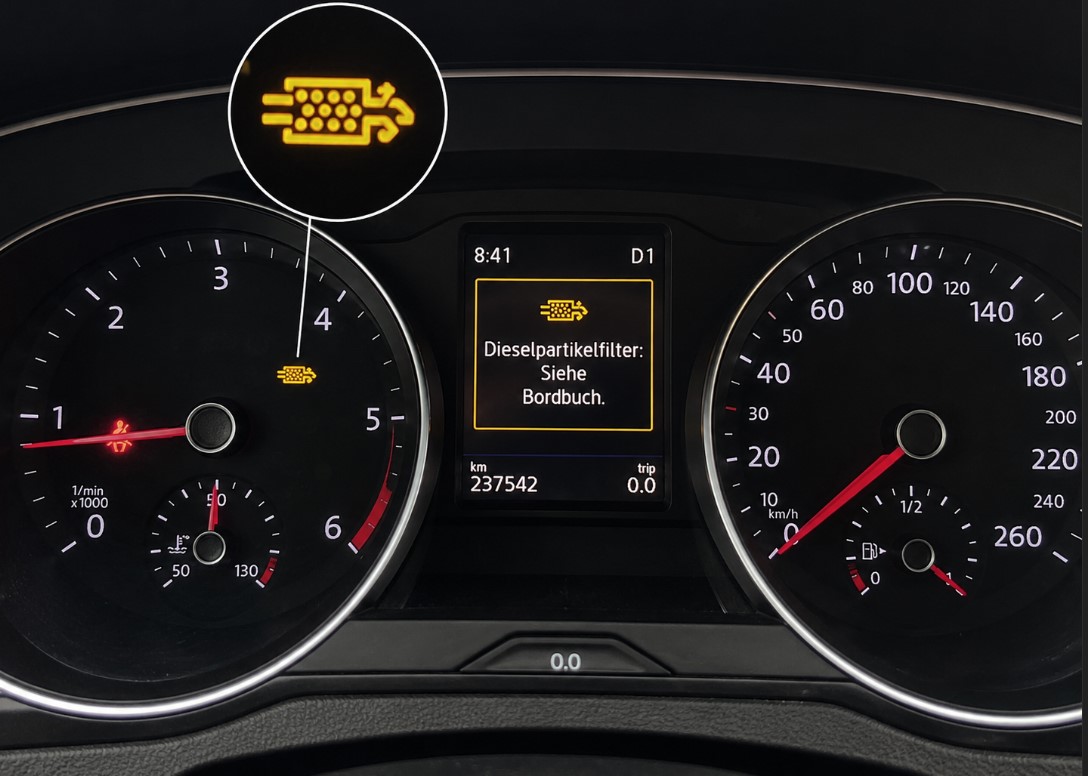
DPF or catalytic converter fault: symptoms, repair and costs
Why even a relatively young vehicle may have hidden technical risks in the exhaust aftertreatment system.
 Sicher-Check
The most expensive mistake when buying a new car is assuming that “new” automatically means “perfect”. In practice, it does not. Even after factory quality control and dealer preparation, a vehicle at handover can still have defects, missing items or documentation issues.
That is why it makes sense to inspect the car calmly before signing, take a short test drive, check the documents and record any issues in the Übergabeprotokoll. After you sign and drive away, arguing about when a scratch, chip, software issue or missing item appeared is usually much harder.
In this article we look at typical new-car handover issues, what to inspect step by step, what rights a buyer has in Germany and which documents are needed for vehicle registration — especially for Zulassung in Berlin, i-Kfz online registration or an EU re-import.

The most expensive mistake when buying a new car is assuming that new automatically means flawless. In reality, a new vehicle may still have visible or hidden issues at the moment of handover, even after factory checks and dealer preparation.
What can go wrong? First, simple transport damage: stone chips, marks, scratches on wheels, damaged glass or traces of paint correction. Second, equipment: the wrong option package, a missing cable or adapter, an unexpected wheel set, a missing second key or mistakes in the documents.
Third, the digital side: infotainment, driver-assistance systems, connectivity, updates, keyless access, charging and app activation. Modern vehicles increasingly depend on software, online services, accounts and correct activation of functions.
⚠️ Practical point: if a defect is found before signing the handover protocol, it is easier to record. Once the car has been handed over, registered and driven away, disputes about the origin of a scratch, chip or equipment error become much harder.
Proper new-car handover does not start with photos for social media. It starts with a quiet, systematic check. First compare the VIN, model, engine, trim level, color, equipment and everything promised in the purchase contract.
Then inspect the vehicle body all around: paintwork, bumpers, moldings, roof, pillars, door edges, lights and glass. Check panel gaps, door closing, hood, trunk and fuel/charging flap. Then inspect wheels and tires, including markings and obvious damage.
Then move to the interior: seats, plastics, screen, climate control, mirrors, camera, parking sensors, assistance systems and phone connection. For EV and PHEV models, add the charging cables, charging flap, charging indicator and whether the charging accessories match the contract.
A short test drive is also useful. Pay attention to engine behavior, brakes, unusual noises, vibrations and the electronics. A new car is still a complex technical product: sensor faults, interior rattles, unconfigured modules, incorrect assistant calibration and software glitches do not care whether the car is new or used.
📌 Recommended sequence: documents and equipment first, then exterior inspection, then interior and electronics, then a short test drive — and only after that the handover signature.
The checklist below can be used when collecting a new vehicle from a dealer. It helps you cover the main risk areas and avoid forgetting important points when the seller is pushing for a quick signature.
| Check area | What to check | What to record in the handover protocol |
|---|---|---|
| Documents and VIN | VIN, model, trim, engine, color, equipment, contract, invoice, COC, Zulassungsbescheinigung Teil II | wrong VIN, wrong equipment, missing documents, mismatch with the order |
| Body and paint | paint, chips, scratches, polishing traces, bumpers, roof, pillars, door edges, moldings | scratches, dents, repair traces, transport damage, paint defects |
| Glass and lights | windshield, side windows, headlights, taillights, cameras, sensors, washers | chips, cracks, condensation, damaged lights, non-working cameras or sensors |
| Wheels and tires | wheels, tires, markings, size, pressure, completeness, season | scratched wheels, wrong size, tire damage, missing caps or missing set |
| Interior | seats, plastics, steering wheel, mats, headliner, trunk, smell, key set | scratches, stains, damaged plastics, missing mats, one key instead of two |
| Electronics | infotainment, climate, Bluetooth, CarPlay/Android Auto, navigation, cameras, PDC, assistants | faults, inactive functions, screen glitches, non-working assistance systems |
| EV / PHEV | charging flap, cables, adapters, charging display, apps, charging port | missing cables, damaged port, charging fault, inactive app |
| Test drive | brakes, steering, vibrations, noises, assistance systems, dashboard warnings | noises, vibrations, faults, warnings, incorrect system behavior |
❗ Rule: everything found at handover should be recorded in writing. A verbal “come back later, we will look at it” without a written protocol protects the seller more than the buyer.
If you find defects at handover, do not accept vague promises. The correct approach is to record every issue in writing and keep a copy.
A buyer of a new car has the right to request free defect correction, and in certain cases also a price reduction or withdrawal from the contract. In practice, however, the most important point is proving that the defect was already present at handover, not created later during use.
Statutory liability for defects usually applies for two years after vehicle handover. During the first year after purchase, there is an important presumption in favor of the buyer: it is assumed that the defect already existed at handover unless the seller proves otherwise.
A crucial distinction: a manufacturer or dealer warranty is additional. It does not replace your statutory rights against the seller. If someone says “this is only a manufacturer-warranty issue”, that does not automatically remove your legal rights.
For defects, an important presumption works in favor of the buyer: the defect is presumed to have existed at handover unless the seller proves the opposite.
Statutory liability for defects for a new car usually lasts two years after handover. These are rights against the seller, not only against the manufacturer.
For goods with digital elements, necessary updates are a practical part of product quality. If important vehicle functions depend on software, updates become a real handover and ownership issue.
New cars should also be checked because recall and service-campaign activity has become more visible. This does not mean that every new car is problematic, but it is a strong argument for checking open recalls, service campaigns and software updates instead of assuming that the car’s age alone guarantees peace of mind.
📌 Also check: open recall or service campaigns, digital-update status, activation of online services, correct app pairing and the complete set of keys / access cards.
Now to registration in Germany. For Berlin, the first registration of a new vehicle normally requires identity documents, Zulassungsbescheinigung Teil II, COC or technical data, electronic insurance confirmation via eVB and a SEPA mandate for vehicle tax.
After successful registration you receive Zulassungsbescheinigung Teil I and Teil II and the right to use the vehicle on public roads. This local Berlin detail makes the article much more practical than generic “how to register a car” content.
| Document | Purpose | Comment |
|---|---|---|
| ID / passport | identification of the owner | with authorization, the representative’s documents are also required |
| Zulassungsbescheinigung Teil II | main vehicle document | formerly known as Fahrzeugbrief |
| COC / EC certificate of conformity | technical data and type conformity | especially important for new cars and EU re-imports |
| eVB number | electronic proof of insurance | obtained from the insurance company before registration |
| SEPA mandate for vehicle tax | direct debit for Kfz-Steuer | registration is normally not possible without it |
| License plates | plate production and sealing | a Wunschkennzeichen can often be reserved in advance |
For online registration through i-Kfz, you need suitable documents with security codes, access via BundID or guest access, and an ID document with activated eID function plus the AusweisApp.
A common practical problem: many buyers expect online registration to take “five minutes”, but then discover that the necessary security code is missing or the document is not suitable. The online process only works if the required documents and Sicherheitscodes are available.
If the vehicle is an EU re-import, you should expect additional document checks. For German registration you normally need the original invoice or purchase contract, foreign vehicle documents, COC, eVB and SEPA mandate.
If you buy through an intermediary, it is important to understand whether German law or the law of the seller’s country applies. Warranty documents should be issued correctly, and at handover you should receive either German registration documents or the original foreign documents and invoice if the car is delivered without registration.
| Scenario | Usually required | Risk / nuance |
|---|---|---|
| Standard registration | ID, Teil II, COC, eVB, SEPA, license plates | mistakes in VIN, eVB, SEPA or documents can delay registration |
| i-Kfz online | eID, AusweisApp, BundID, document security codes, eVB, SEPA | not all documents have suitable codes; the online procedure can fail |
| EU re-import | COC, foreign documents, invoice/contract, eVB, SEPA, sometimes translation or additional checks | seller law, warranty documents and a complete original document set are critical |
To avoid confusion, it is useful to think of the Berlin registration documents as a simple structure: owner identity, vehicle documents, insurance, tax, registration process and local add-ons.
🧾 Zulassung Berlin: from documents to license plates
In Berlin, remember one additional practical item: the Umweltplakette. In the environmental zone, most combustion-engine vehicles need a green emissions sticker. It is an easy step, but many people remember it only after registration.
For an EU re-import, an independent check is especially sensible. You are not only protecting yourself from technical details, but also from errors in the document package. EU re-imports may differ in equipment, warranty documents, service-book language, cable set, infotainment version, assistant systems and seller conditions.
Check in advance that the VIN in the documents matches the vehicle, that the COC is original and complete, that the invoice or purchase contract identifies the correct seller and that warranty documents are issued in a way that can be used with service partners in Germany.
⚠️ EU re-import: a low price may be a genuine advantage, but it can also hide equipment differences, documents from another country, an incomplete set, delayed registration or unclear warranty conditions.
Another useful point: a new car does not need immediate TÜV. For a normal new passenger car in Germany, the first Hauptuntersuchung is usually due 36 months after first registration, then every 24 months.
This removes one concern, but it does not make delivery inspection unnecessary. If a defect is already present at handover, waiting until the first TÜV makes no sense. It is better to deal with it where it legally and practically appears: at handover.
There is also a simple cost argument. When buying a new car, transport and dealer-preparation fees are often added to the vehicle price. They can easily be around 1,000 euros or more.
If you are already paying for delivery, preparation and handover, it is logical to spend a little attention on making sure you collect the car in the condition you paid for. An independent handover check is not “distrust of the dealer”; it is a normal control of contract performance.
🚘 Soft conclusion: even a new car should be accepted with a checklist. An independent view at handover helps identify and record issues before signing, instead of arguing about them after registration.
Yes. A new car can still have transport damage, wrong equipment, paint defects, incomplete documents, inactive functions or electronics issues. Inspection before signing the handover protocol protects the buyer.
VIN, model, equipment, color, documents, bodywork, glass, wheels, interior, keys, infotainment, assistants, climate control, cameras, parking sensors, EV/PHEV charging cables and a short test drive.
Usually you need ID, Zulassungsbescheinigung Teil II, COC or technical data, eVB number, SEPA mandate for vehicle tax and license plates. For online registration, eID, AusweisApp, BundID and document security codes are important.
Do not sign the protocol without remarks. Photograph the defect, record it in the handover protocol, obtain a copy and agree in writing on repair, compensation or the next steps.
For an EU re-import, original foreign documents, COC, a correct invoice or purchase contract, warranty documents and equipment conformity are especially important. Errors in the document package can delay registration.
Why even a relatively young vehicle may have hidden technical risks in the exhaust aftertreatment system.

How to check Rückruf, KBA, service campaigns and updates that may affect safety and vehicle value.
Disclaimer / Haftungsausschluss:
The content of this article is for general information only and does not replace an individual vehicle inspection,
legal advice or document check on site.
Despite careful preparation, we do not guarantee the accuracy, completeness or current validity of the information.
Registration requirements, fees, legal interpretation and vehicle-specific details may change or differ depending on the case.
You use this information at your own responsibility.