
How to Reduce the Risk When Buying a Used Car in Germany
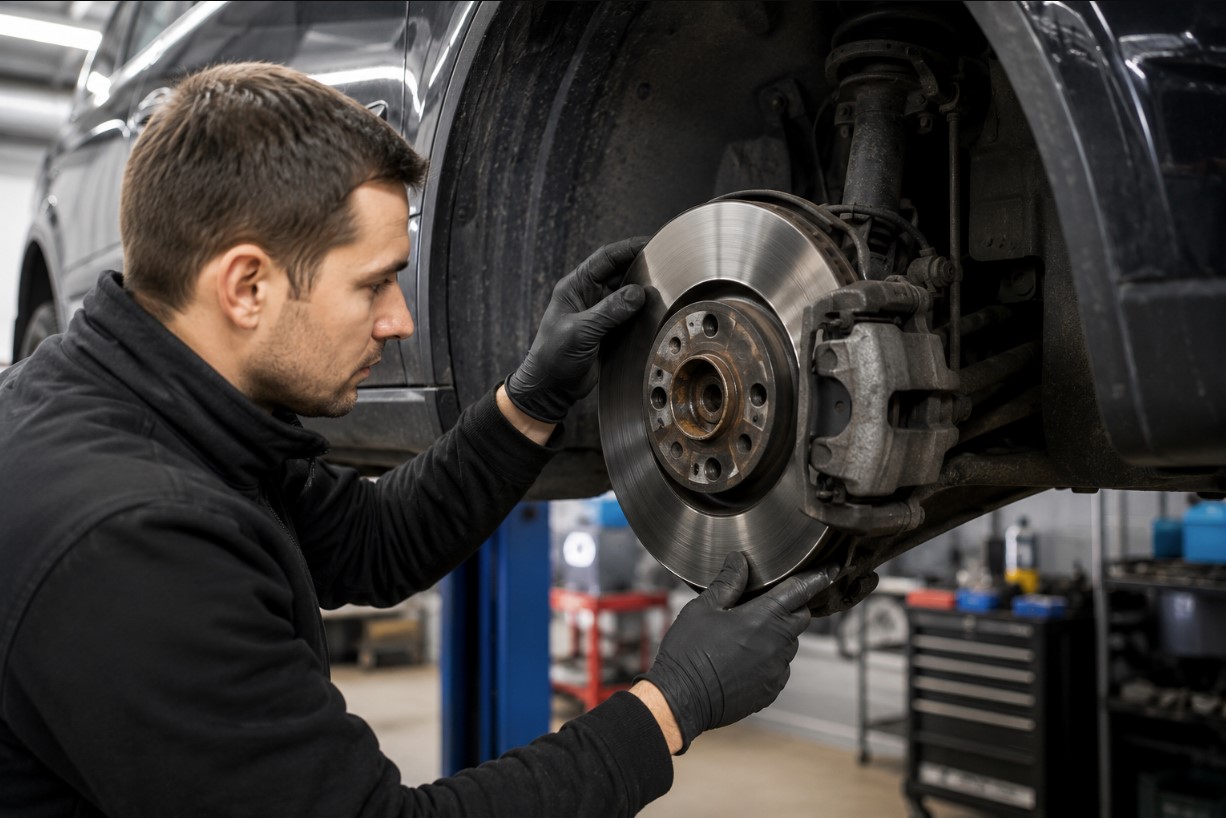
A complete step-by-step guide to inspecting a used vehicle before purchase.
When buyers search for a used car in Germany, they usually compare price, mileage, year of manufacture, engine and equipment. However, the identity and legal status of the seller can be almost as important as the specification of the vehicle itself.
Buying from a franchised dealership, an independent freier Händler or a private owner creates three different combinations of price, statutory rights, warranty protection, documentation and post-sale risk.
A dealership sign does not automatically guarantee a technically sound car. Likewise, a private sale is not automatically unsafe. The correct decision depends on the individual vehicle, the wording of the purchase agreement, the service history and the findings of an independent pre-purchase inspection.
❗ Key point: statutory liability and a used-car warranty may help after a defect has appeared. An independent inspection is intended to identify significant risks before you transfer the money and sign the purchase contract.

Germany is one of Europe's largest used-car markets. Every year millions of vehicles change ownership through franchised dealerships, independent dealers and private individuals. Although the same vehicle may appear on different platforms such as Mobile.de or Autoscout24, the legal protection for the buyer can differ dramatically depending on who actually sells the vehicle.
Many buyers assume that a dealership automatically guarantees a technically perfect car while a private seller always represents the highest risk. Reality is considerably more nuanced. There are excellent private vehicles with complete service histories and there are dealer vehicles with expensive hidden defects.
💡 The safest purchase is not determined by the seller's category. It is determined by the real technical condition of the vehicle, transparent documentation and an independent inspection before payment.
Almost every used-car purchase belongs to one of three legal categories. Understanding the difference is far more important than many buyers realise, because your statutory rights change immediately depending on the seller.
| Seller | Typical Advantages | Typical Risks | Legal Protection |
|---|---|---|---|
| 🏬 Franchised dealer |
|
|
Highest |
| 🚘 Independent dealer |
|
|
Usually good |
| 👤 Private seller |
|
|
Lowest |
⚠ Important: The logo above the showroom does not determine whether your rights exist. The purchase contract identifies who the legal seller actually is.
German consumer law generally offers significantly stronger protection when a consumer purchases a vehicle from a commercial seller.
However, this protection is often misunderstood. It does not mean every repair will automatically be paid for by the dealer.
When buying from a professional dealer, statutory liability usually applies. If a defect already existed at the moment of delivery, the buyer may have legal rights to request repair or other remedies under German law.
The exact legal situation depends on the individual contract, the age of the vehicle, consumer status and current legislation.
❗ A common misconception: Statutory liability is not identical to a free maintenance contract. Normal wear, damage caused after delivery or maintenance items are usually treated differently.
Many advertisements use the words Warranty, Guarantee, Approved Used or Certified. These terms are often confused although they describe different legal concepts.
| Concept | Meaning | Who Provides It |
|---|---|---|
| Statutory liability | Consumer protection required by law under qualifying sales. | The selling dealer. |
| Commercial warranty | Additional voluntary protection with its own conditions and exclusions. | Dealer, manufacturer or insurance provider. |
| Manufacturer warranty | Factory warranty that may continue for newer vehicles. | Vehicle manufacturer. |
Always read the warranty conditions carefully. Coverage may exclude electronic components, wear items, turbochargers, diesel particulate filters, batteries, clutches or automatic transmissions.
💡 Practical advice: Never assume a vehicle is "fully covered" simply because the advertisement mentions a warranty. Read exactly what is included.
Private sales remain extremely common in Germany. Many well-maintained vehicles are sold directly by long-term owners who can describe the complete ownership history and maintenance record.
However, German purchase contracts between private individuals often contain an effective exclusion of statutory liability for defects. This means the buyer accepts substantially greater responsibility.
❗ Never rely only on trust. Even an honest owner may be unaware of developing gearbox problems, timing-chain wear, DPF issues or electronic faults that become visible only during a proper diagnostic inspection.
An authorised brand dealer is usually the most expensive purchase channel, but the higher price may include benefits that are not immediately visible in the advertisement. Vehicles are often taken in as trade-ins, checked according to internal standards and sold with a structured contract, documented preparation and, in some cases, an approved-used programme.
This does not mean that every vehicle at an official dealership is mechanically perfect. Used cars may still have previous accident damage, repainting, worn brakes, ageing tyres, electronic faults or an incomplete service history. The difference is that documentation and complaint handling are usually more structured.
⚠ Important: An official dealership works for the seller, not for the buyer. Its inspection confirms that the vehicle meets the dealer's sales criteria. It does not necessarily assess whether the vehicle is the best option for your budget, driving profile or long-term ownership costs.
Independent dealers represent a very large part of the German used-car market. Their stock may include inexpensive city cars, family vehicles, premium models, imports, ex-company cars and vehicles sourced through auctions or trade-ins.
The category itself says very little about quality. Some independent dealers maintain excellent reputations, prepare vehicles professionally and provide transparent documentation. Others operate with minimal margins, limited preparation and contracts designed to reduce their responsibility as much as legally possible.
❗ Red flag: The vehicle is displayed on a dealer's premises, but the contract names a private individual as the seller. This may indicate a genuine consignment sale, but it can also be an attempt to reduce consumer protection. The legal seller must be clarified before any deposit is paid.
The phrase im Kundenauftrag means that the dealer claims to sell the vehicle on behalf of another person. Such arrangements are not automatically illegal, but the buyer should understand exactly who owns the vehicle, who receives the money and who is legally responsible for the contract.
Ask for the identity of the registered owner, proof of authority to sell, the original registration documents and a clear explanation of why the vehicle is not being sold directly by the dealership.
A genuine private owner may offer something that no dealership can easily reproduce: a detailed account of how the car was used, where it was stored, why it is being sold and what was repaired over several years. Service invoices, HU reports, tyre receipts and correspondence with workshops may provide a highly credible ownership history.
At the same time, private sales usually provide the weakest legal protection. A standard German private-sale contract often excludes liability for defects as far as legally permitted. Once the vehicle and money have changed hands, recovering repair costs can be difficult.
💡 Practical rule: A private purchase can be excellent when the seller, documents and technical condition all tell the same story. If one part of the story does not fit, investigate before signing.
The best sales channel depends on your priorities. Buyers who want maximum legal structure may prefer a dealer. Buyers looking for the lowest purchase price may consider a private sale. In every case, the decisive factor remains the actual condition of the individual vehicle.
| Criterion | Official Brand Dealer | Independent Dealer | Private Seller |
|---|---|---|---|
| Typical price | Highest | Medium | Often lowest |
| Consumer protection | Usually strongest | Usually strong if dealer is legal seller | Usually limited |
| Warranty options | Often available | Sometimes available | Rarely available |
| Vehicle history | Often documented | Varies significantly | Can be excellent if long-term owner |
| Negotiation potential | Often limited | Usually possible | Often possible |
| Risk of legal ambiguity | Low | Medium, especially with consignment sales | Higher if ownership is unclear |
| Need for independent inspection | High | Very high | Essential |
| Best suited for | Buyers who prioritise structure and support | Buyers seeking selection and price flexibility | Experienced buyers with strong inspection support |
🔎 The core conclusion: A carefully maintained private vehicle can be safer than a poorly prepared dealer vehicle. A reputable dealer can be safer than an unclear private transaction. The seller category is only the starting point.
The German purchase contract, or Kaufvertrag, is not a formality. It determines the legal seller, agreed condition, known defects, mileage information, accident history and any additional promises.
Verbal statements are difficult to prove later. Important representations should therefore be written into the contract or attached as a signed supplement.
German contracts may distinguish between the odometer reading and the guaranteed total mileage. Wording such as Kilometerstand abgelesen may merely state what the dashboard displayed. It does not necessarily guarantee that the mileage is authentic.
Stronger wording should be requested when the seller claims the mileage is genuine and known.
Terms such as unfallfrei, nach Angaben des Vorbesitzers unfallfrei and Unfallschäden unbekannt do not mean the same thing. The exact wording determines how confidently the seller is confirming the vehicle's history.
❗ Never sign a contract containing blank fields. Empty sections can later create disputes about mileage, defects, accessories or agreed conditions.
A visually attractive vehicle can still have documentary problems. Before transferring money, compare the vehicle, seller and registration documents carefully.
⚠ Do not pay in full before the original documents are physically verified. Photographs and scanned copies are useful for preparation, but the originals must be checked at handover.
The safest payment method depends on the transaction value, bank limits, seller type and timing. Cash remains legal for many vehicle transactions, but large cash payments carry security and evidential risks.
Bank transfer provides a clear payment trail, although the seller may wait until the funds are visibly credited before releasing the vehicle. Instant transfer can help, but transfer limits should be clarified with the bank before the appointment.
💡 Useful evidence: Photograph the vehicle, odometer, VIN, keys, documents and signed handover condition immediately before leaving with the car.
A professional inspection is not an expression of distrust. It is a structured way to separate the seller's description from the actual technical condition of the vehicle.
The same basic risks exist at an official dealership, an independent dealer and a private sale:
An independent inspection should ideally include body and paint assessment, OBD diagnostics, document review, visual mechanical inspection and a test drive. The result should answer three practical questions: buy, negotiate or walk away.
❗ The most expensive mistake is not paying slightly too much. It is buying a vehicle with faults that were already detectable before the contract was signed.
🎯 Best buying strategy: Compare vehicles across all three channels. Do not reject a good private car merely because it is private, and do not accept a poor dealer car merely because it comes with a showroom and warranty brochure.
| Step | What to Check | Why It Matters |
|---|---|---|
| 1️⃣ Seller | Identify the real legal seller | Determines your rights and contractual partner |
| 2️⃣ VIN | Compare VIN on vehicle and documents | Confirms vehicle identity |
| 3️⃣ History | Service records, invoices and HU reports | Builds a mileage and maintenance timeline |
| 4️⃣ Body | Paint thickness, gaps, welding and corrosion | Detects accident repairs and structural risk |
| 5️⃣ OBD | Read all relevant control units | Finds active, stored and recently cleared faults |
| 6️⃣ Test drive | Engine, transmission, steering, brakes and suspension | Reveals dynamic defects |
| 7️⃣ Contract | Record mileage, defects and promises in writing | Protects against later disputes |
| 8️⃣ Payment | Pay only after final verification | Reduces fraud and documentation risk |
✅ A safe purchase is a process, not a feeling. The seller's friendliness, a clean showroom or an attractive price should never replace technical and legal verification.
Choosing the right seller is only one part of a safe purchase. The decisive factor is the actual technical condition of the vehicle. Even a car with a complete service history, a reputable dealer and attractive photographs may hide expensive mechanical or structural problems.
Sicher-Check provides independent pre-purchase vehicle inspections throughout Berlin, Brandenburg and across Germany. Our inspection is performed solely in the buyer's interest and is designed to help you make an informed decision before signing the purchase contract.
| Inspection | Suitable for | Included |
|---|---|---|
| ⚡ Standard Inspection | Most used vehicles | VIN verification, body inspection, paint measurement, OBD diagnostics, road test, recommendation. |
| 🔎 Extended Inspection | Premium, luxury or higher-risk vehicles | Detailed documentation, comprehensive diagnostics, extended technical assessment and negotiation advice. |
| 🚘 Nationwide Inspection | Vehicles located anywhere in Germany | On-site inspection with photo report before you travel. |
❗ Spending a small amount on an independent inspection before buying is usually far less expensive than repairing a hidden transmission, accident damage, timing system or diesel emissions problem afterwards.
Advertisement / *Affiliate Link
Links marked with an asterisk (*) are affiliate links. If you purchase a product or service after following such a link, Sicher-Check may receive a commission from the provider. This does not increase your purchase price.
Not automatically. Dealers generally provide stronger consumer protection, but the actual condition of the vehicle is still the deciding factor. A well-maintained private vehicle can be a better purchase than a poorly prepared dealer vehicle.
No. Commercial warranties usually contain exclusions and limitations. They should never replace a proper technical inspection before purchase.
Yes. An authorised dealer prepares the vehicle according to its own standards. An independent inspection evaluates the vehicle solely from the buyer's perspective.
Verify the VIN, registration documents, service history, workshop invoices, HU reports and the purchase contract before making payment.
Yes. We perform pre-purchase inspections in Berlin, Brandenburg and throughout Germany, allowing buyers to make informed decisions before travelling.
Final Recommendation
The safest used-car purchase is not determined by whether the vehicle comes from an authorised dealer, an independent dealer or a private seller. It depends on three factors:
If any of these three elements are missing, the purchase risk increases significantly.
A complete step-by-step guide to inspecting a used vehicle before purchase.
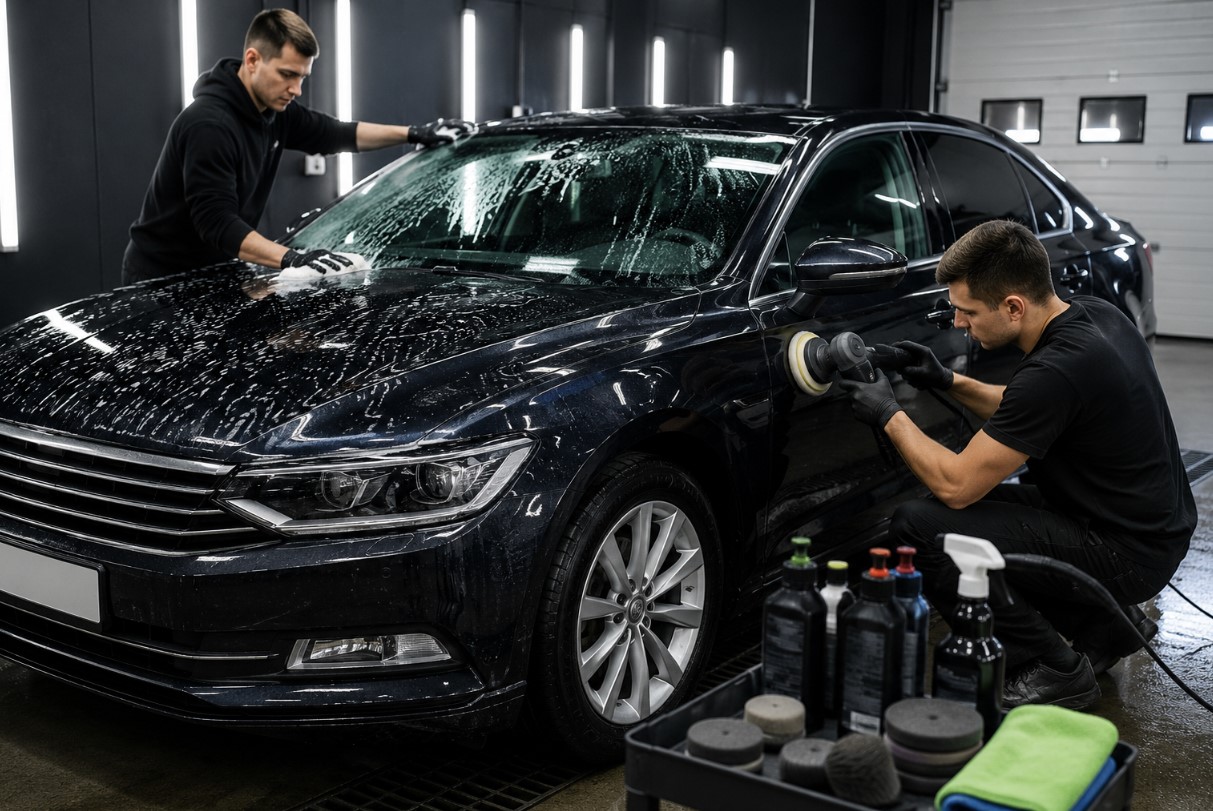
Learn how to detect mileage inconsistencies using documentation, diagnostics and visual inspection.
Disclaimer
The information published in this article is intended for general educational
purposes only and does not constitute legal, financial or technical advice.
Although every effort has been made to ensure accuracy,
Sicher-Check cannot guarantee that all information is complete,
current or applicable to every individual situation.
Vehicle condition, contractual rights and consumer protection may vary
depending on the specific circumstances of each purchase.
Professional inspection and individual legal advice should always be obtained
before making important purchasing decisions.