Car with Dutch, Danish, French or Italian Documents: What It Means for a Buyer in Germany
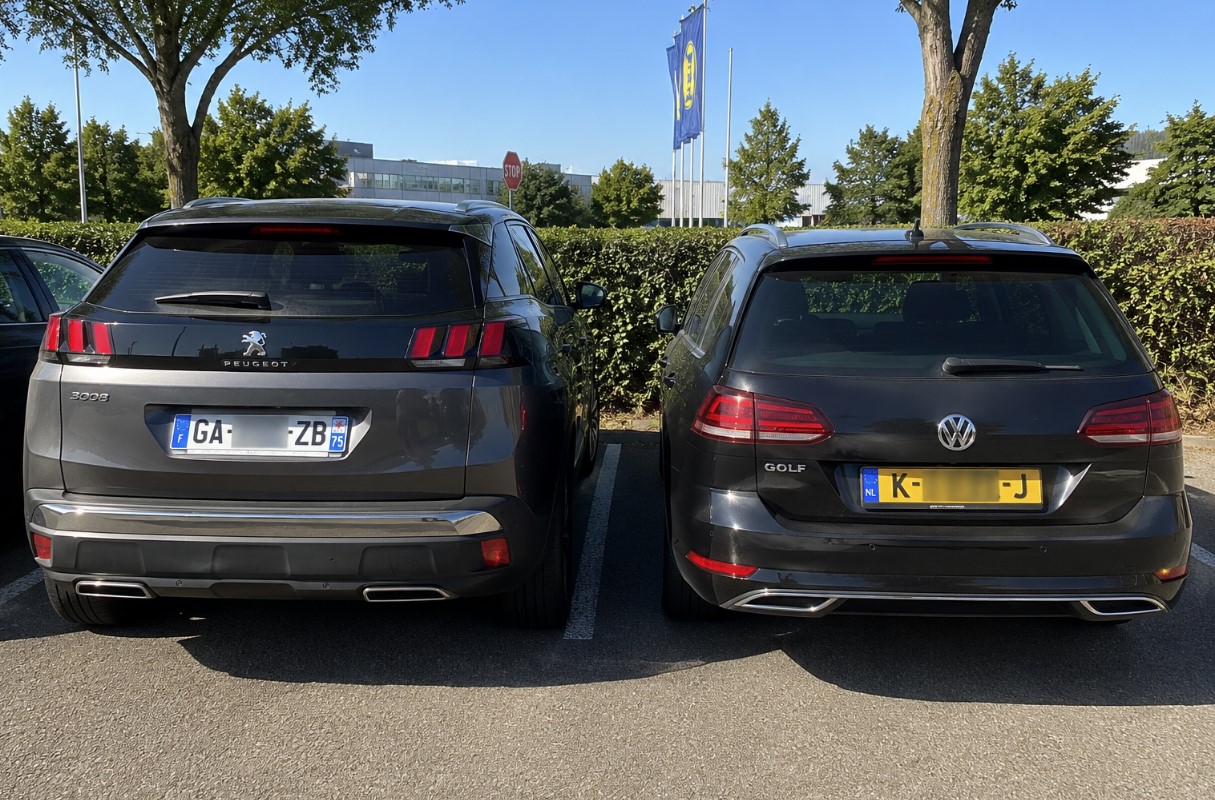
German vehicle marketplaces regularly contain phrases such as “niederländische Papiere”, “dänische Dokumente”, “französische Zulassung” or “italienische Papiere”. The car may already be standing at a dealer’s premises in Berlin, Hamburg or another German city, but it does not yet have German Zulassungsbescheinigung Teil I and Teil II registration documents.
A foreign registration certificate is not automatically evidence of fraud and does not make the car a bad purchase. It means that, before registering the vehicle in Germany, the buyer must verify more than its technical condition. The seller’s right to dispose of the vehicle, deregistration status, original documents, VAT treatment, European type approval and eligibility for registration at the relevant German Zulassungsstelle must also be checked.
It is especially important to establish whether the buyer is a private individual or a German business, whether the vehicle is considered “new” for EU VAT purposes, whether foreign VAT is included in the advertised price, whether any refund is conditional, and which costs will arise before German registration plates can be issued.
❗ The main rule: an attractive export price is not the vehicle’s final cost. Compare offers only after accounting for VAT, transport, technical approval, registration, number plates and any repairs required before the German HU.
🧭 Article Contents
- 🌍 What Does “Car with Foreign Documents” Mean?
- ⚡ Quick Answer for the Buyer
- 📄 Documents Required Regardless of the Country
- 🔗 How to Verify Ownership and the Seller
- 🇳🇱 Buying a Car in the Netherlands
- 🇫🇷 Buying a Car in France
- 🇩🇰 Buying a Car in Denmark
- 🇮🇹 Checking a Car with Italian Documents
- 🗺️ Country-by-Country Comparison
- 👤 Private Buyer vs German Business
- 💶 VAT and the Six-Month/6,000-Kilometre Rule
- 🛃 Is Customs Clearance Required Within the EU?
- 🏛️ Registering the Vehicle in Germany
- 🧮 Calculating the Additional Costs
- 🚚 Buying a Vehicle for Further Export
- 🧾 German Motor Vehicle Tax
- 📊 Practical Cost Examples
- 🚩 Warning Signs Before Payment
- ✅ Final Buyer’s Checklist
- 🔍 How an Independent Inspection Helps
- ❓ Frequently Asked Questions
🌍 What Does “Car with Foreign Documents” Mean?
In practice, this usually means that the vehicle is physically located in Germany but is still documented under the registration system of another country. It may previously have been registered in the Netherlands, France, Denmark, Italy or another EU member state.
The car may already have been deregistered abroad, transported to Germany and offered by a German dealer. Alternatively, it may still be registered in the previous owner’s name or be offered by an intermediary who has not yet registered the vehicle in Germany.
These situations are legally and financially different. The buyer should therefore establish the vehicle’s exact status before signing a contract or paying a deposit.
✅ Normal Situation
The seller can show the complete original foreign documents, a logical chain of purchase contracts or invoices, evidence of deregistration and a valid CoC. The VIN matches throughout.
⚠️ Additional Costs Likely
The vehicle has legitimate documents, but requires a German technical inspection, new data sheet, individual approval, transport or tax clarification before it can be registered.
❌ High-Risk Situation
Original documents are missing, the seller is not linked to the registered owner, VIN data conflict or the purchase price depends on an unclear VAT refund.
🌍 Further Export
The car may be intended for export outside Germany. Separate transport, customs, tax and registration rules can then apply in the destination country.
💡 A foreign registration certificate confirms a registration history. It does not by itself prove that the person offering the vehicle currently owns it or is authorised to sell it.
⚡ Quick Answer for a Buyer in Germany
A vehicle with documents from another EU country can usually be purchased and registered in Germany. Within the European Union, a conventional import customs duty is normally not charged merely because the vehicle is moved from one member state to another.
Nevertheless, the buyer must clarify five separate areas:
- 🔗 Ownership: does the seller own the vehicle or have documented authority to sell it?
- 📄 Documents: are all original registration, deregistration and approval documents available?
- 💶 Tax: which VAT treatment applies to this specific transaction?
- 🔧 Technical approval: are CoC, German HU/AU or additional technical assessment required?
- 🏛️ Registration: will the competent German registration authority accept the available documentation?
| Buyer’s Question | Short Answer |
|---|---|
| Can an EU vehicle be registered in Germany? | Generally yes, provided that ownership, original documents, technical approval, insurance and tax requirements are satisfied. |
| Is customs duty payable? | Normally no conventional customs duty applies to a vehicle already in free circulation within the EU. Special cases still require individual verification. |
| Is German VAT always payable? | No. It depends on whether the vehicle is new for EU VAT purposes, who sells it, who buys it and which invoicing method is used. |
| Is a foreign technical inspection sufficient? | Not automatically. The German registration authority may require valid proof recognised in Germany, a new HU/AU or additional technical documentation. |
| Is a CoC always required? | A CoC is highly useful for an EU type-approved vehicle. If it is missing or insufficient, a data sheet or individual approval may be necessary. |
| Can the vehicle be driven home? | Only with valid registration, insurance and number plates that legally cover the journey. Otherwise it should be transported. |
❗ Do not transfer the full purchase price merely because the seller promises that “German registration will not be a problem.” The decisive factor is whether the complete document package is acceptable for the specific vehicle and registration authority.
📄 Documents to Request Regardless of the Country of Origin
The names and formats of vehicle documents differ between countries. However, the underlying questions remain the same: which vehicle is involved, who is entitled to sell it, is it deregistered, does it have European type approval and which taxes apply?
📁 Basic Document Package
- 🪪 original foreign registration certificate or all required parts of it;
- 📄 evidence of deregistration or export status, where issued separately;
- 🤝 purchase contract or commercial invoice;
- 🔗 previous contracts or invoices if the current seller is not named in the registration documents;
- 🚗 Certificate of Conformity (CoC), where available;
- 🔧 technical-inspection report and emissions-related documents;
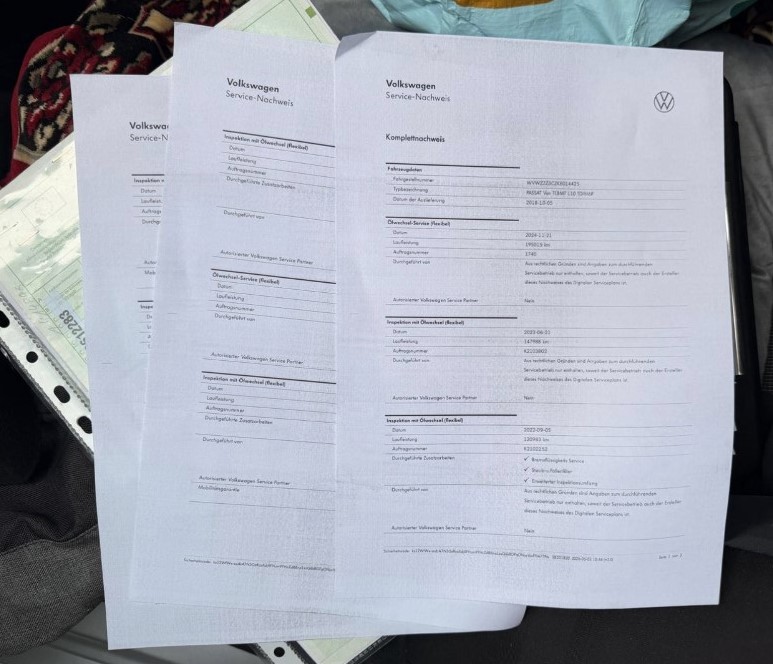
- 📘 service history and repair invoices;
- 🪪 seller’s identity or current company details;
- 💶 clear invoice information showing the applicable VAT treatment;
- 🔑 all available keys;
- 🛡️ evidence of any finance release if the vehicle was financed or leased;
- 📦 proof of transport or vehicle movement where relevant for tax or export purposes.
🔍 Details That Must Match
| Detail | Where to Check It | Possible Problem |
|---|---|---|
| 🔢 VIN | Vehicle body, registration documents, CoC, invoices and purchase contract. | Typing error, documents from another vehicle, altered VIN or unclear vehicle identity. |
| 👤 Owner or holder | Registration certificate, seller’s identification, contracts and invoices. | The seller cannot demonstrate a lawful chain from the registered holder to the current sale. |
| 🚗 Make, model and variant | Vehicle, foreign documents and CoC. | Incorrect variant, engine, body or type-approval data. |
| 📅 First registration | Foreign registration document, CoC and history records. | Incorrect age calculation or conflicting VAT status. |
| 📈 Mileage | Odometer, inspection reports, service history and invoices. | Inconsistent chronology or possible mileage manipulation. |
| 🌱 Emissions and approval data | CoC, foreign registration certificate and technical data sheet. | Registration difficulties, additional assessment or unexpected German vehicle tax. |
| 💶 VAT wording | Advertisement, order, invoice and payment conditions. | The advertised net price is not available to the buyer or a foreign VAT deposit is refunded only after additional evidence is provided. |
⚠️ A scan or photograph is useful for preliminary review, but the original documents should be inspected before final payment and vehicle handover.
🔗 How to Verify the Seller’s Right to Sell the Vehicle
One of the most important questions is whether the person or company receiving the money has the legal right to dispose of the vehicle.
In Germany, a vehicle registration document is not a definitive ownership certificate in the same sense as a land register entry. Nevertheless, a mismatch between the named holder and the seller requires a clear and documented explanation.
👤 If the Seller Is a Private Individual
- compare the seller’s identity with the available vehicle documents;
- ask why another person is shown as the registered holder;
- request the previous purchase contract or a written power of attorney where applicable;
- ensure that all vehicle keys and original documents can be handed over;
- verify that the vehicle is not subject to unresolved finance or leasing;
- record the seller’s full details in the purchase contract.
🏢 If the Seller Is a Dealer or Company
- verify the company name, address and registration details;
- ensure that the invoice is issued by the party receiving the payment;
- ask how and from whom the company acquired the vehicle;
- check whether the VAT wording matches the advertised price;
- clarify whether the dealer acts as owner, commission seller or intermediary;
- request written confirmation of any registration promises.
🔄 When Several Intermediaries Are Involved
Imported vehicles sometimes pass through several traders without being registered in each trader’s name. This is not automatically unlawful, but the documentary chain should remain understandable.
📄 Registered holder → purchase contract or invoice → intermediary → invoice to German dealer → purchase contract or invoice to the final buyer.
If one link is missing, ask for a written explanation before paying. A promise that “the registration office always accepts these documents” is not a substitute for a complete ownership chain.
🛡️ Additional Checks Before Payment
- 🔢 compare the stamped VIN on the vehicle with every document;
- 🧾 verify that bank-account details correspond to the contractual seller;
- 🏢 check whether the company shown on the invoice actually exists at the stated address;
- 🪪 avoid unexplained payment to an unrelated third party;
- 🔐 ask whether replacement documents were issued and why;
- 🚔 clarify any indication that the vehicle or documents may have been reported stolen;
- ✍️ ensure that all important promises appear in the written contract.
❗ Stop the transaction if the VIN does not match, original documents are deliberately withheld, the seller refuses to identify the ownership chain or payment is requested to an unrelated person without a credible written basis.
🇳🇱 Buying a Car in the Netherlands for Registration in Germany
Vehicles from the Netherlands frequently appear on the German market. The Netherlands has a relatively structured vehicle registration and mileage-recording system, but the buyer must still verify the export status, original documents, ownership chain and advertised price.
Particular attention should be paid to the kentekencard, the export or deregistration documents, the RDW registration information and the way Dutch taxes—especially BPM—are reflected in the price.
📄 Typical Dutch Vehicle Documents
| Dutch Term | Meaning | What the Buyer Should Check |
|---|---|---|
| Kentekencard | Credit-card-sized Dutch registration certificate. | VIN, registration number, holder information and whether the original card is available. |
| Tenaamstellingscode | Registration code used for certain changes relating to the registered vehicle. | Whether the required parts of the code or export procedure were properly handled by the seller. |
| Exportbewijs | Evidence connected with the vehicle’s export or deregistration from the Netherlands. | Whether the vehicle has genuinely been prepared for export and whether the VIN and registration number match. |
| RDW vehicle data | Registration and technical information maintained through the Dutch vehicle authority. | Identity, approval data, inspection status and available mileage indicators. |
| APK report | Dutch periodic roadworthiness inspection record. | Inspection date, mileage and defects identified at the time. |
| CoC | European Certificate of Conformity. | VIN, EU type approval, emissions data and technical details needed for German registration. |
💡 Older Dutch vehicles may have registration documents in a different format. Do not reject a document solely because it does not look like the current kentekencard; instead, verify which document format applied when it was issued.
📈 Mileage and the Dutch Registration History
Dutch records can provide useful mileage reference points. However, a positive or plausible mileage indication should not be interpreted as an unconditional guarantee.
Compare the available Dutch information with:
- 📘 the paper or digital service history;
- 🧾 maintenance and repair invoices;
- 🔧 APK inspection records;
- 📈 the current odometer reading;
- 🪑 wear to the steering wheel, driver’s seat and pedals;
- 💻 mileage or operating data available in electronic control units;
- 🛞 tyre and brake replacement history.
⚠️ Mileage information may become incomplete when a vehicle has previously been imported into the Netherlands or when earlier readings were recorded outside the Dutch system.
💶 What Is BPM and Why Does It Matter?
BPM is a Dutch tax connected with the registration of passenger cars and certain other vehicles. Its calculation and any possible export-related refund are primarily matters for the Dutch seller or exporter.
For the German buyer, the essential question is not how the seller internally calculates BPM, but which price is actually payable and under what conditions.
| Price Description | Question to Ask |
|---|---|
| Exportprijs | Is this the final price for the buyer, and which documents or export evidence are required? |
| Prijs incl. BTW | Is Dutch VAT included, and can any part of it be refunded? |
| Prijs excl. BTW | Is the net price available only to qualifying businesses with a valid EU VAT number? |
| Marge-auto | Is the vehicle sold under a margin scheme with no separately deductible VAT? |
| BPM refundable | Is the advertised price conditional on the seller receiving an export-related BPM refund? |
❗ Never assume that a Dutch “export price” is automatically the final amount payable by a private buyer in Germany. Request a written quotation or draft invoice showing VAT, BPM-related conditions, deposits, export fees and the final gross payment.
🚚 Driving or Transporting the Car from the Netherlands
Before driving the vehicle to Germany, confirm that the registration, export plates and insurance are valid for the entire route and period of use.
If this cannot be established clearly, transport by trailer or vehicle transporter is usually the safer option.
- 🪪 check the validity of the export registration;
- 🛡️ obtain written proof of insurance coverage;
- 📅 check the exact expiry date and time;
- 🌍 confirm that coverage applies in Germany;
- 🛣️ check whether the vehicle is technically roadworthy;
- 📄 carry the purchase contract and original documents;
- 🚚 use professional transport if legal road use is unclear.
✅ Netherlands Checklist
- ☐ original Dutch registration documents are available;
- ☐ export or deregistration status has been clarified;
- ☐ the VIN matches the vehicle and every document;
- ☐ RDW and APK information has been reviewed;
- ☐ the mileage chronology is plausible;
- ☐ the final price and VAT treatment are confirmed in writing;
- ☐ any BPM-related price condition is understood;
- ☐ the CoC or alternative technical data is available;
- ☐ transport, plates and insurance have been arranged;
- ☐ German registration requirements have been checked.
🇫🇷 Buying a Car in France for Registration in Germany
A French vehicle can generally be purchased and registered in Germany if the ownership transfer, original registration document, administrative status, European approval and tax treatment are properly documented.
French paperwork uses terms that may be unfamiliar to a German buyer. It is important to understand which documents are mandatory, which are supporting evidence and which information must appear on the registration certificate when the vehicle is sold.
📄 Important French Vehicle Documents
| French Term | Meaning | What to Check |
|---|---|---|
| Certificat d’immatriculation or Carte Grise | French vehicle registration certificate. | Original document, VIN, holder information, vehicle data and sale-related entries. |
| Certificat de cession | Document recording the transfer of the vehicle between seller and buyer. | Seller and buyer details, date and time of transfer, VIN and signatures. |
| Certificat de situation administrative | Administrative-status certificate, often referred to as a certificate of non-encumbrance. | Whether administrative restrictions or recorded opposition may prevent the transfer. |
| Contrôle technique | French periodic roadworthiness inspection. | Inspection date, mileage, defects and whether a follow-up inspection was required. |
| Certificat de conformité européen | European Certificate of Conformity. | VIN, EU type approval and technical data for German registration. |
| Factures d’entretien | Maintenance and repair invoices. | Mileage chronology, service work, workshop details and expensive replacements. |
✍️ What Should Appear on the French Registration Certificate?
When a vehicle is sold in France, the registration certificate is normally marked to indicate that it has been sold or transferred. The relevant entry may include wording such as Vendu le or Cédé le, together with the date, time and seller’s signature.
The German buyer should check:
- 📄 whether the original Carte Grise is available;
- ✍️ whether the transfer notation is complete and legible;
- 📅 whether the date corresponds to the purchase contract;
- 👤 whether the seller is connected to the named holder;
- 🔢 whether the VIN corresponds to the vehicle;
- 🧩 whether all parts or sections of the document are present;
- 🔗 whether any intermediary purchase chain is documented.
⚠️ Corrections, crossed-out names, contradictory dates or missing signatures can create difficulties during German registration. Have unclear entries corrected before paying the full purchase price.
🔒 Certificat de situation administrative
This document helps show whether an administrative restriction or formal opposition affects the vehicle’s transfer. It is an important part of the French transaction documentation.
Check that it is recent, refers to the correct vehicle and does not contain a restriction that the seller has failed to explain.
❗ Do not rely solely on a screenshot supplied by an unknown intermediary. Vehicle data, document date and source should be checked carefully before payment.
🔧 French Contrôle Technique
A French roadworthiness inspection provides useful information about the vehicle’s condition and mileage at the inspection date. However, it does not automatically replace every document or technical inspection required for German registration.
Review:
- 📅 the inspection date;
- 📈 the recorded mileage;
- 🚩 identified defects;
- 🔁 whether a follow-up inspection was required;
- ✅ whether the inspection remained valid at the time of sale;
- 🏛️ whether the German registration authority will accept the available evidence or require a German HU/AU.
💶 VAT When Buying in France
The applicable treatment depends on the seller, buyer and vehicle status. A private sale of an ordinary used vehicle differs from a commercial sale with separately stated VAT or the sale of a vehicle regarded as new for EU VAT purposes.
Ask the seller for a draft invoice or contract showing:
- 💰 the final gross amount payable;
- 🧾 whether French VAT is included or separately stated;
- 🏷️ whether a margin scheme is being used;
- 🏢 whether a net intra-Community supply is proposed;
- 🔐 whether a VAT deposit will be retained;
- 📦 which evidence is required before any deposit is refunded.
🚚 Transport from France to Germany
Do not assume that the French plates and the previous owner’s insurance remain valid for your journey to Germany. The registration, plates and insurance situation must be clarified before the car is driven.
🚛 Transporter or Trailer
Often the clearest solution when export registration and insurance cannot be confirmed reliably.
🪪 Temporary Registration
Must be valid for the vehicle, route, dates and countries through which it will be driven.
🛡️ Insurance Evidence
Obtain written confirmation rather than relying solely on the seller’s verbal assurance.
🛣️ Technical Roadworthiness
A vehicle with serious defects should not be driven even if registration documents appear valid.
✅ France Checklist
- ☐ original Carte Grise has been inspected;
- ☐ transfer notation, date, time and signature are complete;
- ☐ Certificat de cession corresponds to the transaction;
- ☐ administrative-status certificate has been checked;
- ☐ VIN and holder information are consistent;
- ☐ Contrôle technique and mileage have been reviewed;
- ☐ CoC or alternative technical data is available;
- ☐ VAT treatment and final price are confirmed in writing;
- ☐ legal transport to Germany has been arranged;
- ☐ likely German registration requirements are understood.
🇩🇰 Buying a Car in Denmark for Registration in Germany
Danish vehicles can appear attractively priced in export advertisements. However, it is essential to understand whether the displayed amount is a domestic price, an export price or a price that assumes a later refund of part of the Danish registration tax.
A low advertised figure may not be the amount that a private buyer can simply pay and drive away with the car. Request a written calculation showing the final payment, taxes, deposits, deregistration, export documents and transport.
📄 Typical Danish Vehicle Documents
| Danish Term | Meaning | What the Buyer Should Check |
|---|---|---|
| Registreringsattest | Danish vehicle registration certificate. | Original document, VIN, registered holder, technical data and completeness of all required sections. |
| Afmelding | Deregistration of the vehicle. | Whether the vehicle has been properly deregistered and whether the seller can document its current status. |
| Synsrapport | Danish roadworthiness-inspection report. | Inspection date, mileage, defects and any requirement for a repeat inspection. |
| Registreringsafgift | Danish vehicle-registration tax. | Whether the advertised export price depends on a tax refund and who bears the timing and documentation risk. |
| CoC | European Certificate of Conformity. | VIN, EU type approval, emissions and other technical data required in Germany. |
| Servicebog | Paper or digital service history. | Dates, mileage, workshops, maintenance intervals and supporting invoices. |
💶 Danish Registration Tax and the Export Price
Denmark has a substantial registration-tax system. When a vehicle is permanently exported, a tax-related refund may be possible under the applicable conditions.
For the buyer, the key questions are:
- 💰 What amount must be paid before taking the vehicle?
- 🧾 Is the advertised price gross, net or conditional?
- 🔐 Must the buyer initially pay a deposit?
- 📦 Which evidence of export is required?
- 👤 Who applies for the Danish tax refund?
- ⏳ When will any retained amount be repaid?
- ⚠️ Who bears the risk if the refund is reduced or refused?
| Possible Price Model | What It May Mean | Buyer’s Action |
|---|---|---|
| Domestic Danish price | Price may include Danish tax applicable to domestic registration. | Request a separate written export calculation. |
| Export price | Price may already anticipate tax-related adjustments. | Confirm that the amount is available to this specific buyer without hidden conditions. |
| Price after refund | Buyer may first have to pay more and wait for a later refund. | Clarify the deposit, required evidence, deadline and refund recipient. |
| Net business price | May be offered only for a qualifying B2B transaction. | Check VAT status and the requirements for an intra-Community supply. |
❗ Compare the amount that must actually leave your bank account—not only the price shown in the headline of the advertisement.
🔧 Technical Condition of a Danish Vehicle
Denmark’s climate and road conditions make a thorough underbody inspection especially important. This does not mean that every Danish vehicle is corroded, but corrosion risk should be assessed individually.
Pay particular attention to:
- 🧱 subframes and structural underbody areas;
- 🔩 suspension mountings, bolts and brackets;
- 🛑 brake lines, hoses, discs and backing plates;
- 🛡️ sills, jacking points and underbody protection;
- 🔗 driveshaft and steering boots;
- 🚪 lower edges of doors and the tailgate;
- 🎨 signs of repaired corrosion or recently applied coating;
- 💧 fluid leaks hidden by underbody panels.
⚠️ A freshly coated underbody is not automatically evidence of concealment, but it can make the assessment more difficult. Ask when, why and by whom the coating was applied.
🚚 Transport from Denmark to Germany
Confirm whether the vehicle may legally be driven after deregistration and whether temporary plates and insurance cover the complete journey through Denmark and Germany.
Where this is unclear, transport on a trailer or transporter avoids the risk of driving an unregistered or uninsured vehicle.
✅ Denmark Checklist
- ☐ original Registreringsattest is available;
- ☐ deregistration and export status are documented;
- ☐ VIN and ownership chain are consistent;
- ☐ the final amount payable is confirmed in writing;
- ☐ registration-tax refund conditions are understood;
- ☐ VAT treatment has been clarified;
- ☐ Synsrapport and mileage history have been reviewed;
- ☐ CoC or equivalent technical data is available;
- ☐ the underbody has been inspected for corrosion;
- ☐ legal transport and insurance have been arranged.
🇮🇹 What to Check on a Car with Italian Documents
Italian vehicles are also frequently offered in Germany before German registration. They may be attractive because of equipment, body condition or regional market prices, but the document package and deregistration status must be checked carefully.
Document formats and procedures may depend on when the documents were issued. A vehicle can have older separate documents or a newer combined document.
📄 Typical Italian Vehicle Documents
| Italian Term | Meaning | What the Buyer Should Check |
|---|---|---|
| Carta di Circolazione | Traditional Italian vehicle-registration and technical document. | VIN, vehicle data, registered holder and original document. |
| Certificato di Proprietà | Traditional ownership-related certificate. | Ownership details and consistency with the seller and purchase chain. |
| Documento Unico | Newer combined vehicle-circulation and ownership document. | Completeness, VIN, holder information and any recorded restrictions. |
| Radiazione per esportazione | Deregistration for permanent export. | Whether the export deregistration was completed and documented correctly. |
| Revisione | Italian periodic roadworthiness inspection. | Date, recorded mileage, result and consistency with the service history. |
| CoC | European Certificate of Conformity. | EU type approval and technical information required for German registration. |
💡 The exact Italian document package depends partly on the vehicle’s age and when the documents were issued. Ask the German registration authority which originals it expects for the specific vehicle.
🔗 Ownership and Export Deregistration
Check whether the person or company selling the vehicle can demonstrate an uninterrupted legal chain from the registered holder to the current transaction.
The buyer should understand:
- 👤 who is shown as the holder or owner;
- 🏢 whether the German seller bought the vehicle directly;
- 🔗 whether all intermediary invoices or contracts exist;
- 📄 whether the vehicle was deregistered for export;
- 🪪 which original Italian documents remain after deregistration;
- 🚫 whether any finance, seizure or administrative restriction has been recorded;
- ✍️ whether names, dates and signatures are consistent.
❗ Do not pay for a vehicle when the seller offers only a copy of an Italian document and promises to deliver the originals later. Missing originals may prevent German registration.
📈 Mileage and Service History
The mileage should be reconstructed using as many independent sources as possible:
- 🔧 Italian Revisione records;
- 📘 service-book entries;
- 🧾 workshop invoices;
- 💻 digital manufacturer history;
- 🏷️ service and timing-belt stickers;
- 📈 the current odometer;
- 🪑 visible interior wear;
- 💾 available diagnostic data.
A low odometer reading may be plausible, but it should not be accepted solely because the vehicle comes from a particular region or because the seller describes it as “used only occasionally.”
🎨 Body and Environmental Wear
Italian vehicles may sometimes show less underbody corrosion than cars from colder regions, but climate alone does not guarantee good condition.
Check for:
- ☀️ faded paint, clear-coat damage and sun-damaged trim;
- 🌡️ cracked rubber seals and aged plastic components;
- 🎨 repainted panels and previous accident repairs;
- 🧂 corrosion on vehicles used near coastal regions;
- 🌊 water or flood-related damage;
- 🚪 wear from intensive urban use;
- 🛞 kerb damage to wheels and tyres;
- ❄️ correct function of the air-conditioning system.
💶 Price and VAT
As with vehicles from other EU countries, the VAT result depends on the type of seller, buyer, invoice and whether the vehicle qualifies as new for EU VAT purposes.
Before payment, obtain a contract or draft invoice showing:
- the seller’s full details;
- vehicle VIN and agreed price;
- whether VAT is included or separately stated;
- whether a margin scheme applies;
- whether the transaction is intended as an intra-Community supply;
- whether any deposit will be retained pending export evidence.
✅ Italy Checklist
- ☐ all original Italian vehicle documents are present;
- ☐ the correct document format for the vehicle’s age has been identified;
- ☐ export deregistration has been verified;
- ☐ ownership chain and seller authority are documented;
- ☐ VIN matches the vehicle and every document;
- ☐ Revisione and mileage history have been reviewed;
- ☐ CoC or alternative technical data is available;
- ☐ VAT treatment and final price are clear;
- ☐ body, underside and signs of environmental damage have been inspected;
- ☐ transport and German registration requirements are understood.
🗺️ Netherlands, France, Denmark and Italy: Quick Comparison
The following comparison provides orientation. The exact document set can depend on the vehicle’s age, registration history, document format and individual registration office.
| Country | Important Documents | Special Point | Typical Buyer Risk |
|---|---|---|---|
| 🇳🇱 Netherlands | Kentekencard, export evidence, RDW data, APK report and CoC. | Export price, BPM and possible margin-scheme sale. | Mistaking a conditional export or net price for the final price payable by a private buyer. |
| 🇫🇷 France | Carte Grise, Certificat de cession, administrative- status certificate, Contrôle technique and CoC. | Correct transfer entries and administrative status. | Incomplete transfer notation, unclear signatures or an unresolved restriction. |
| 🇩🇰 Denmark | Registreringsattest, deregistration evidence, Synsrapport and CoC. | Danish registration tax and conditional export-price calculation. | Paying more than expected while waiting for a tax- related refund. |
| 🇮🇹 Italy | Carta di Circolazione or Documento Unico, ownership documentation, export deregistration, Revisione and CoC. | Document format depends on issue date and vehicle history. | Missing originals, incomplete ownership chain or unclear export deregistration. |
✅ Requirements Common to All Four Countries
🔢 Vehicle Identity
The VIN on the vehicle must match every registration, contract, invoice and approval document.
🔗 Ownership Chain
It must be clear why the seller is entitled to sell the vehicle and receive payment.
📄 Original Documents
Copies are useful for preliminary checks, but the originals are normally essential for registration.
💶 Final Price
VAT, deposits, tax-refund conditions and export fees must be confirmed in writing.
🔧 Technical Approval
CoC, inspection status and possible German HU or individual approval must be clarified.
🚚 Legal Transport
Registration, temporary plates, insurance and route validity must be clear before the car is driven.
✅ The country printed on the registration document is less important than the completeness and consistency of the ownership, tax, technical and registration evidence.
👤 Private Buyer or German Business: What Is the Difference?
The tax and contractual consequences depend not only on the vehicle but also on who sells it and who buys it. A private individual purchasing a used car is treated differently from a VAT-registered German business making an intra-Community acquisition.
Before comparing prices, identify the exact transaction type.
| Seller | Buyer | Typical Situation | Main Question |
|---|---|---|---|
| Private individual in another EU country | Private buyer in Germany | Private sale of an ordinary used vehicle. | Is the vehicle genuinely used for EU VAT purposes, and are ownership and documents complete? |
| Foreign dealer | Private buyer in Germany | B2C sale with foreign VAT, margin taxation or another stated commercial treatment. | What is the final gross price, and is any refund conditional? |
| Foreign VAT-registered business | German VAT-registered business | A net intra-Community supply may be possible if all legal conditions are met. | Is the German buyer entitled to provide a valid VAT identification number and account for the acquisition? |
| Foreign dealer using a margin scheme | Private buyer or German business | VAT is not separately deductible from the full purchase price. | Does the invoice clearly identify the applicable margin-taxation scheme? |
| Any seller | Private buyer or business | Vehicle qualifies as “new” for EU VAT purposes. | In which member state is acquisition VAT payable and which documentation is required? |
👤 Private Buyer Purchasing an Ordinary Used Vehicle
If a private person in Germany buys an ordinary used car from a private seller in another EU country, the transaction normally does not operate like a conventional commercial purchase with separately stated VAT.
However, this simplified description applies only when the vehicle is genuinely “used” for EU VAT purposes. The special rules for a new means of transport must always be checked.
💡 For a private buyer, the contract should clearly state the parties, VIN, mileage, purchase price, known damage, document package and date of handover.
🏢 German Business Purchasing from an EU Business
A German business may be offered a net price without foreign VAT as an intra-Community supply. This is not simply a discount. The transaction creates documentation and tax obligations for both parties.
The seller may request:
- 🏢 the German company’s legal name and address;
- 🧾 a valid German VAT identification number (USt-IdNr.);
- 🔍 verification of the VAT number;
- 📦 evidence that the vehicle was moved from the seller’s member state to Germany;
- ✍️ confirmation of receipt or transport documentation;
- 🔐 a VAT deposit until the movement evidence is complete.
The German business may then have to account for the intra-Community acquisition in Germany. Whether and to what extent input VAT can be deducted depends on the buyer’s tax position and the vehicle’s business use.
⚠️ A German small business using the Kleinunternehmerregelung should not assume that every EU vehicle purchase can be made at a net price without further tax consequences. The acquisition rules and applicable thresholds require individual tax review.
🧾 Example of a B2B Purchase
Illustrative Example
- Foreign seller’s net price: €20,000
- Invoice intended as an intra-Community supply: €20,000 without foreign VAT
- German acquisition VAT at 19%: €3,800
- Potential input-VAT deduction: depends on the German buyer’s entitlement.
If the buyer is fully entitled to deduct input VAT, the German acquisition VAT may be offset through the tax return. If there is no or only partial deduction entitlement, the economic result is different.
❗ A net invoice does not mean that VAT disappears. It generally means that the tax treatment moves to the buyer’s member state under the applicable acquisition rules.
🔐 Why Dealers Sometimes Retain a VAT Deposit
A foreign dealer may initially charge an amount equal to the local VAT and promise to refund it once the buyer proves that the vehicle has left the country.
Before agreeing, clarify in writing:
- the exact deposit amount;
- the documents required for repayment;
- the deadline for submitting those documents;
- the repayment period;
- the bank account to which the refund will be made;
- any administrative charge;
- what happens if the registration or transport evidence is delayed.
💶 EU VAT and the Six-Month/6,000-Kilometre Rule
For EU VAT purposes, the decisive distinction is not simply whether an advertisement calls the vehicle “new” or “used.” A special definition applies to a new means of transport.
❗ A motor vehicle may be treated as new for EU VAT purposes if it was supplied within six months of its first entry into service or has travelled no more than 6,000 kilometres.
The word or is crucial. A vehicle can be older than six months but still qualify as new because its mileage does not exceed 6,000 kilometres. Conversely, it can have covered more than 6,000 kilometres but still qualify as new because it was first put into service less than six months ago.
| Vehicle Age | Mileage | Possible EU VAT Classification |
|---|---|---|
| 4 months | 12,000 km | New means of transport because the six-month threshold has not been exceeded. |
| 10 months | 4,500 km | New means of transport because the mileage does not exceed 6,000 km. |
| 10 months | 12,000 km | Generally no longer new under this special two-part definition. |
| 3 years | 45,000 km | Used vehicle for the purposes of this specific rule. |
🧮 Example: Nearly New Car from Denmark
Illustrative Calculation
A vehicle was first put into service four months ago and has covered 8,500 kilometres. Even though the mileage is above 6,000 kilometres, the six-month period has not yet expired.
It may therefore still be treated as a new means of transport for EU VAT purposes, with acquisition VAT generally due in the member state of destination.
👤 New Vehicle Purchased by a Private Individual
The special rules for new means of transport can apply even when the buyer and seller are private individuals. A private buyer should not assume that VAT has been fully dealt with merely because the purchase contract does not separately state tax.
Before payment, confirm:
- 📅 the exact date of first entry into service;
- 📈 the mileage at the time of supply;
- 💶 whether foreign VAT is included;
- 🇩🇪 whether German acquisition VAT is payable;
- 📄 which evidence the German tax or registration authority requires;
- 🔁 whether and how any foreign VAT can be refunded.
🧾 Margin Taxation: Differenzbesteuerung
Used vehicles sold by dealers may be subject to a margin scheme. Under this system, VAT is calculated on the dealer’s margin and is not normally shown separately as deductible VAT on the full vehicle price.
Typical wording may include:
⚠️ A German business cannot assume that 19% input VAT can be deducted from a margin-taxed vehicle merely by recalculating the gross purchase price.
🔍 Questions to Ask About VAT Before Signing
- Is the advertised amount a gross, net, margin or export price?
- Is VAT shown separately on the invoice?
- Does a margin scheme apply?
- Does the vehicle qualify as new under the six-month or 6,000-kilometre rule?
- Is the buyer purchasing privately or through a business?
- Is a valid VAT identification number required?
- Will the seller retain a VAT deposit?
- Which documents are required for a refund?
- Who bears the tax risk if the planned treatment is rejected?
🛃 Is Customs Clearance Required Within the European Union?
When a vehicle already in free circulation is moved from one EU member state to another, conventional import customs duty is generally not charged merely because it crosses an internal EU border.
This does not mean that the transaction is free from all formalities or taxes. VAT treatment, vehicle registration, transport evidence and national vehicle taxes must still be considered.
| Situation | Customs Duty | Other Issues |
|---|---|---|
| Used EU vehicle moved from France to Germany | Normally no conventional import customs duty. | Ownership, VAT treatment, CoC, HU and German registration. |
| Used EU vehicle moved from Denmark to Germany | Normally no conventional import customs duty. | Danish registration-tax treatment, VAT, transport and registration. |
| Vehicle qualifies as new for EU VAT purposes | No conventional customs duty merely for internal EU movement. | Acquisition VAT may be due in the destination member state. |
| Vehicle originating outside the EU without proof of customs status | Customs questions may arise. | Evidence of prior import, duties, import VAT and free- circulation status may be required. |
| Vehicle exported from Germany to a non-EU country | Destination-country import rules apply. | Export evidence, customs declaration, import duty, VAT, registration and technical requirements. |
⚠️ Vehicles That Originally Came from Outside the EU
A vehicle may have Dutch, French, Danish or Italian documents but originally have been manufactured for a non-EU market. This can affect technical approval, equipment, emissions data, lighting and the availability of an EU CoC.
Check:
- 🌍 the vehicle’s original market specification;
- 📄 whether an EU CoC exists;
- 🛃 evidence of lawful import into the EU;
- 💡 lighting and equipment compliance;
- 🌱 emissions and noise data;
- 🔧 whether individual approval will be required in Germany;
- 🧩 availability of suitable parts and software;
- 🛡️ whether manufacturer warranty or recall support applies.
❗ An EU registration history does not necessarily mean that the vehicle was originally built to EU specification or that a German registration will be straightforward.
🏛️ Registering a Vehicle with Foreign EU Documents in Germany
Registration requirements can vary depending on the vehicle’s age, previous country of registration, technical approval, document format and the competent local Zulassungsstelle.
Before purchasing the vehicle, it is sensible to send copies of the available documents to the registration authority or ask which originals and technical reports will be required.
📄 Typical Documents for German Registration
| Document or Requirement | Purpose | Important Note |
|---|---|---|
| 🪪 Foreign registration documents | Prove the vehicle’s previous registration and identify its technical and holder data. | The registration office will normally expect the required originals, not only scans. |
| 🤝 Purchase contract or invoice | Documents the transfer to the current applicant. | VIN, parties, date and price should be clear and consistent. |
| 🔗 Ownership chain | Explains intermediate transfers where the seller is not named in the foreign documents. | Missing links may delay or prevent registration. |
| 🚗 CoC | Supplies European type-approval and technical data. | A replacement may sometimes be obtained from the manufacturer, usually for a fee. |
| 🔧 HU/AU evidence | Confirms the required German roadworthiness and emissions inspection status. | A foreign inspection is not automatically accepted in every situation. |
| 💻 Technical data sheet or expert report | Provides data missing from the CoC or foreign documents. | May be needed for unusual, modified or non-EU-spec vehicles. |
| 🛡️ eVB number | Electronic confirmation of German motor insurance. | Obtain it from the selected insurer before the registration appointment. |
| 🧾 SEPA direct-debit mandate | Authorises collection of German motor vehicle tax. | Account and account-holder details must be entered correctly. |
| 🪪 Identity document | Identifies the applicant. | Additional proof of address or residence may be required. |
| 🏢 Company documents | Identify a business applicant and authorised representative. | Requirements depend on the legal form and local registration office. |
| 💶 VAT-related evidence | May be relevant for a new means of transport or an intra-Community acquisition. | Clarify tax obligations before the registration appointment. |
| 🪪 Existing foreign plates | May have to be presented or surrendered. | The requirement depends on the previous registration status and authority. |
🚗 CoC: Certificate of Conformity
The Certificate of Conformity confirms that a vehicle type complies with an applicable European approval. It contains technical information that can be used to create German registration documents.
A useful CoC should correspond to the vehicle’s VIN and usually contains information such as:
- manufacturer and commercial designation;
- vehicle type, variant and version;
- EU type-approval number;
- engine power and displacement;
- fuel type and emissions standard;
- CO₂ information;
- permissible masses and axle loads;
- approved wheel and tyre combinations;
- noise values;
- seating capacity and body classification.
⚠️ A CoC does not prove ownership, accident-free history or good technical condition. It is a type-approval document, not a complete vehicle-history certificate.
🔧 HU/AU and Recognition of a Foreign Inspection
A roadworthiness inspection completed in another EU country may provide useful evidence, but the German registration authority decides whether the submitted documents satisfy the applicable registration requirements.
A German HU/AU may be required when:
- the foreign inspection has expired;
- the report is missing or incomplete;
- the inspection cannot be clearly assigned to the vehicle;
- required information is not available in a suitable form;
- the vehicle has been modified;
- an individual approval is required;
- the competent registration office does not accept the available evidence for the intended registration.
🧰 When Is an Assessment Under §21 StVZO Relevant?
An individual technical assessment may be necessary when the vehicle does not have usable European type approval, the CoC is unavailable or insufficient, the vehicle was built for a non-EU market or substantial modifications have been made.
Possible additional work can include:
- 📊 obtaining a technical data sheet;
- 💡 converting lights or signalling equipment;
- 🌫️ proving emissions and noise data;
- ⚖️ verifying permissible masses and axle loads;
- 🛞 checking non-standard wheels or tyres;
- 🔧 documenting modifications;
- 🧪 carrying out additional measurements or tests;
- 📄 producing an individual expert report.
❗ The absence of a usable CoC can turn an apparently cheap vehicle into an expensive registration project. Obtain an estimate for the technical approval before purchase.
🧭 Registration Process Step by Step
① 🔢 Verify the VIN
Compare the stamped vehicle identification number with every document and invoice.
② 📁 Check the Document Package
Confirm that the foreign originals, ownership chain, contract, CoC and inspection reports are complete.
③ 💶 Determine the VAT Treatment
Clarify whether the vehicle is used or new for EU VAT purposes and whether additional tax evidence is required.
④ 🚚 Transport the Vehicle Legally
Use valid export registration and insurance or arrange transport by trailer or vehicle transporter.
⑤ 🔧 Complete the Technical Inspection
Obtain HU/AU, technical data or individual approval where required.
⑥ 🛡️ Obtain an eVB Number
Request electronic insurance confirmation from a German insurer.
⑦ 🏛️ Submit the Registration Application
Present all required originals, identification, tax mandate and technical evidence.
⑧ 🪪 Obtain and Seal the Plates
Have the German plates produced and officially sealed after approval.
🧮 Additional Costs Before German Registration
The final cost depends on the country, distance, technical condition, available documents and registration route. The following figures are orientation ranges rather than binding quotations.
| Cost Item | Possible Range | What Influences the Amount? |
|---|---|---|
| 🚚 Transport to Germany | Approximately €300–€1,500+ | Distance, vehicle size, collection conditions and individual or shared transport. |
| 🪪 Export or temporary plates | Approximately €100–€400+ | Country, validity period, administration and insurance. |
| 📄 Replacement CoC | Approximately €100–€350+ | Manufacturer, brand, model and availability. |
| 🔧 German HU/AU | Approximately €150–€200+ | Vehicle category, region and inspection organisation. |
| 🧰 Data sheet or individual approval | Approximately €200–€1,500+ | Missing data, vehicle specification, modifications and required testing. |
| 🔩 Technical conversion | From a small adjustment to several thousand euros | Lighting, emissions equipment, tyres, glass, instruments and non-EU specification. |
| 🏛️ Registration fee | Approximately €30–€100+ | Local authority, document complexity and requested registration services. |
| 🪪 German number plates | Approximately €20–€50+ | Local supplier, plate type and optional preferred registration number. |
| 🛡️ Insurance | Individual | Driver, region, vehicle, annual mileage, no-claims history and coverage. |
| 🧾 German motor vehicle tax | Individual annual amount | Fuel type, engine size, CO₂ value, first registration and applicable tax rules. |
| 💻 Registration service or document assistance | Individual | Scope, translations, technical clarification and local service provider. |
| 🔧 Repairs before HU | From €0 to several thousand euros | Brakes, tyres, suspension, lights, corrosion, emissions system and other defects. |
➕ Formula for the Real Purchase Cost
Final on-road cost in Germany =
purchase price + VAT not already included + foreign fees + transport + technical approval + repairs + German registration + plates + insurance + vehicle tax.
🧠 Keep a Contingency Reserve
When the documents or technical condition are not completely clear, include a reserve for additional expenditure. The cheaper the headline price appears, the more carefully the missing items should be calculated.
⚠️ Costs can change. Obtain current quotations from the seller, transport company, inspection organisation, registration authority, insurer and tax adviser before making the final decision.
🚚 Buying the Vehicle for Further Export
A vehicle with Dutch, French, Danish or Italian documents may be bought in Germany not for German registration but for further export to another EU or non-EU country.
In that case, distinguish between:
🇪🇺 Export to Another EU Country
Customs duty will normally not arise merely because the vehicle moves within the EU, but VAT and destination- country registration rules still matter.
🌍 Export Outside the EU
Customs declaration, export evidence, destination-country duties, VAT and technical requirements may apply.
🏢 Commercial Export
The invoice, VAT status, EORI or other business and customs requirements may need to be clarified.
👤 Private Export
The buyer still needs a complete ownership chain, original documents, legal transport and import information for the destination country.
📄 Documents Commonly Relevant to Export
- purchase contract or commercial invoice;
- complete original foreign registration documents;
- evidence of deregistration;
- export declaration where required;
- proof that the vehicle left the relevant tax territory;
- transport documents;
- temporary or export registration and insurance;
- CoC or technical data;
- evidence of customs status;
- destination-country import and registration documents.
🪪 German Export Plates
German export plates (Ausfuhrkennzeichen) may be an option when a vehicle is exported from Germany. Their availability depends on the document package, insurance, roadworthiness status and registration requirements.
A foreign-document vehicle that has never been registered in Germany may require additional checks before German export plates can be issued.
❗ Do not assume that German export plates will automatically be issued for every vehicle standing on German territory. Confirm eligibility with the competent authority before purchase.
🌍 Export to a Non-EU Country
The buyer should calculate not only the purchase and transport costs but also:
- 🛃 customs duty in the destination country;
- 💶 import VAT and other national taxes;
- 🌱 emissions or environmental charges;
- 🔧 technical conversion and certification;
- 🚢 port, terminal or customs-agent fees;
- 📄 translation and document-certification costs;
- 🪪 local registration and number plates;
- 🛡️ transit and local insurance.
🧾 German Motor Vehicle Tax After Registration
After German registration, recurring Kraftfahrzeugsteuer may apply. The amount is not determined by the foreign registration country but by the vehicle’s characteristics and the tax rules applicable to it.
🧮 Which Data Can Affect Kfz-Steuer?
- ⛽ fuel type;
- ⚙️ engine displacement;
- 🌫️ CO₂ emissions;
- 📅 date of first registration;
- 🌱 emissions category;
- 🚗 vehicle category;
- 🔋 powertrain type;
- 📄 the technical data entered in the German registration documents.
💡 Use the technical data from the CoC or reliable official documents for a preliminary calculation. Do not estimate tax solely from the engine’s commercial name.
⚡ Electric and Plug-In Hybrid Vehicles
Electric and plug-in hybrid vehicles may be subject to different rules, exemptions or calculation methods depending on their date of registration and applicable legislation.
Also verify:
- 🔋 traction-battery condition;
- 🔌 charging cables and charging standards;
- 📄 battery certificate or diagnostic report;
- 🧾 warranty conditions and transferability;
- 💻 software and recall status;
- 🌍 compatibility with German charging infrastructure;
- 🚗 whether the technical data are complete for registration.
⚠️ Tax rules, exemptions and registration fees may change. Check the current amount using the official vehicle data before purchase.
📊 Practical Examples of the Final Cost
The examples below are simplified illustrations. Actual taxes, fees, transport prices and technical costs must be calculated for the specific transaction and vehicle.
🇳🇱 Example 1: Used Car from the Netherlands for a Private Buyer
| Cost Item | Illustrative Amount |
|---|---|
| Vehicle purchase price | €14,500 |
| Export documents and temporary registration | €250 |
| Travel or transport to Germany | €550 |
| German HU/AU | €170 |
| Repairs required before HU | €650 |
| German registration and plates | €100 |
| Illustrative total before insurance and annual tax | €16,220 |
💡 The €14,500 advertisement price is not directly comparable with a German-registered car costing €16,000. The imported vehicle’s realistic on-road cost is already approximately €16,220 before insurance and annual tax.
🇩🇰 Example 2: Danish Vehicle with a Conditional Export Price
| Cost or Payment | Illustrative Amount |
|---|---|
| Advertised export price | €20,000 |
| Amount initially payable to the seller | €23,000 |
| Conditional tax-related refund | −€3,000 |
| Transport to Germany | €800 |
| HU/AU and document costs | €420 |
| Registration and plates | €100 |
| Expected final amount after refund | €21,320 |
| Temporary cash requirement before refund | €24,320 |
⚠️ The buyer must understand both figures: the expected final cost and the amount that must initially be financed. The refund conditions should be written into the contract or invoice.
🇫🇷 Example 3: Nearly New Car Classified as New for EU VAT Purposes
| Transaction Detail | Illustrative Value |
|---|---|
| Vehicle age | 4 months |
| Mileage | 9,500 km |
| Net vehicle price | €30,000 |
| Illustrative German acquisition VAT at 19% | €5,700 |
| Transport | €900 |
| Registration, plates and documents | €200 |
| Illustrative total | €36,800 |
Although this vehicle has travelled more than 6,000 km, it may still qualify as new for EU VAT purposes because fewer than six months have passed since its first entry into service.
🇮🇹 Example 4: Cheap Italian Car Without a CoC
| Cost Item | Illustrative Amount |
|---|---|
| Vehicle purchase price | €8,900 |
| Transport to Germany | €950 |
| Technical data and individual approval | €850 |
| Lighting conversion and repairs | €1,100 |
| HU/AU | €180 |
| Registration and plates | €100 |
| Illustrative final cost | €12,080 |
❗ The cheapest advertisement can become the more expensive purchase once missing documents, approval and repairs are included.
🚩 Warning Signs Before Paying for the Vehicle
📄 Missing Originals
The seller has only scans and promises to provide the original registration documents later.
🔢 VIN Inconsistency
The VIN differs between the vehicle, CoC, registration certificate, invoice or advertisement.
🔗 Unclear Ownership Chain
The contractual seller cannot explain how the vehicle passed from the registered holder to the current sale.
💶 Unclear Price
It is uncertain whether the amount is gross, net, margin-taxed, conditional or available only after a tax refund.
🏦 Third-Party Bank Account
Payment is requested to an unrelated person or company without a clear contractual explanation.
🚫 Registration Promise Without Evidence
The seller promises problem-free German registration but refuses to confirm it in writing.
📉 Contradictory Mileage
Inspection reports, invoices and the current odometer do not form a logical chronology.
🧰 Missing CoC and Technical Data
No one can explain how the vehicle will obtain German technical approval.
🛡️ Uninsured Test Drive
The seller invites the buyer to drive using questionable plates or without written insurance confirmation.
⏳ Artificial Time Pressure
The seller demands immediate payment before documents or tax conditions can be checked.
⛔ Reasons to Pause or Reject the Transaction
- original registration documents cannot be produced;
- VIN markings appear altered or inconsistent;
- the seller’s identity cannot be verified;
- the ownership chain contains unexplained gaps;
- finance, leasing or administrative restrictions remain unresolved;
- the advertised price changes after the buyer’s status becomes known;
- the VAT treatment cannot be explained in writing;
- German registration depends on undocumented promises;
- substantial accident damage or technical defects were not disclosed;
- the combined financial risk is disproportionate to the possible saving.
✅ Final Checklist for the Buyer
| Check | What Must Be Confirmed? | Status |
|---|---|---|
| 🔢 VIN | VIN matches the vehicle, registration documents, CoC, invoices and purchase contract. | ☐ Yes ☐ No |
| 📄 Original documents | All documents required from the previous country are available as originals. | ☐ Yes ☐ No ☐ Unclear |
| 🔗 Ownership chain | The seller’s right to dispose of the vehicle is documented without unexplained gaps. | ☐ Yes ☐ No |
| 🚫 Restrictions | Finance, leasing, seizure and administrative restrictions have been clarified. | ☐ Yes ☐ No ☐ Unclear |
| 📉 Mileage | Mileage chronology has been compared with inspections, service records and invoices. | ☐ Plausible ☐ Unclear |
| 💶 Final price | Gross, net, margin, export and deposit conditions are understood in writing. | ☐ Yes ☐ No |
| 🧾 VAT status | Seller, buyer, invoice method and six-month/6,000-km rule have been considered. | ☐ Yes ☐ Advice needed |
| 🚗 CoC | A valid CoC or suitable alternative technical data is available. | ☐ Yes ☐ No ☐ Alternative |
| 🔧 HU/AU | The required German technical-inspection route is known. | ☐ Yes ☐ No |
| 🧰 §21 StVZO | The need and likely cost of individual approval have been clarified. | ☐ Not needed ☐ Required ☐ Unclear |
| 🚚 Transport | Plates, insurance and legal transport to Germany are arranged. | ☐ Yes ☐ No |
| 🎨 Body | Paintwork, accident repairs and structural areas have been inspected. | ☐ Yes ☐ No |
| 💻 Diagnostics | Available electronic control units have been scanned and findings interpreted. | ☐ Yes ☐ No |
| 🛣️ Test drive | Engine, transmission, brakes, steering and suspension have been assessed in operation. | ☐ Yes ☐ Restricted |
| 🧮 Total cost | Purchase, tax, transport, approval, repair and registration costs have been combined. | ☐ Calculated ☐ Incomplete |
| ✍️ Contract | Important statements and promises are recorded in writing. | ☐ Yes ☐ No |
🔍 Independent Inspection of an EU Vehicle Before Purchase
A car with foreign documents should be checked on two parallel levels: the physical vehicle and the documentation required for the intended purchase, transport and registration.
Sicher-Check helps buyers assess vehicles in Berlin, Brandenburg and throughout Germany before they commit to the purchase.
📄 Document Review
Comparison of VIN, foreign registration documents, CoC, invoices, inspection reports and seller information.
🎨 Paint Measurement
Assessment of accessible body panels, repainting and visible accident-repair evidence.
💻 Computer Diagnostics
Reading and interpreting faults from accessible electronic control units.
⚙️ Technical Inspection
Accessible engine, transmission, brakes, tyres, suspension, lights and electrical functions are checked.
🛣️ Test Drive
Where permitted, engine response, shifting, steering, braking, vibration and unusual noises are assessed.
📷 Remote Buyer Support
Findings can be documented with photographs, video and direct communication with the customer.
✅ The goal is to establish whether the vehicle, documents, final cost and registration risk form a reasonable purchase package.
⚠️ Sicher-Check provides an independent vehicle and document-oriented assessment. Binding decisions on tax, customs, approval and registration remain with the competent authorities and should be confirmed with them for the individual transaction.
🏁 Conclusion
A car with Dutch, French, Danish or Italian documents is not automatically problematic. Such vehicles can represent a good purchase when their identity, ownership chain, tax treatment, technical approval and actual condition are clear.
The central questions are:
- Who has the right to sell the car?
- Are all required original documents available?
- Does the VIN match throughout?
- Is the advertised amount the real final price?
- Which VAT treatment applies?
- Is the car regarded as new under the six-month/6,000-km rule?
- Can it obtain German technical approval?
- What will transport, repairs and registration cost?
- Does the vehicle’s actual condition justify the total expenditure?
✅ The main principle: compare the vehicle’s complete on-road cost and registration risk—not only its advertised export price.
If the originals are missing, the ownership chain is unclear or the VAT and registration route cannot be explained, resolve those issues before paying.
❓ Frequently Asked Questions
Can a car with foreign EU documents be registered in Germany?
Generally yes, provided that the ownership chain, original foreign documents, technical approval, insurance, tax requirements and German registration conditions are satisfied.
Is customs duty payable on a used car purchased in another EU country?
Conventional import customs duty is normally not charged merely because a vehicle already in free circulation is moved between EU member states. VAT, registration and national tax issues may still apply.
When is a vehicle considered new for EU VAT purposes?
A vehicle may qualify as a new means of transport if it is supplied within six months of first entry into service or has travelled no more than 6,000 kilometres. Meeting either condition may be sufficient.
What is the most important document for German registration?
There is no single document that replaces all others. The registration authority typically needs the original foreign registration documents, proof of acquisition, technical approval data, insurance confirmation and other transaction-specific evidence.
Can a foreign roadworthiness inspection replace the German HU?
Not automatically. Acceptance depends on the available report, its validity, the vehicle and the competent registration authority. A German HU/AU may still be required.
What happens if the CoC is missing?
A replacement CoC may sometimes be obtained from the manufacturer. Otherwise, a technical data sheet, additional assessment or individual approval may be necessary, increasing cost and uncertainty.
Can a private buyer purchase at the advertised net price?
Not necessarily. A net price may be available only for a qualifying B2B transaction. A private buyer should request a written final gross price including all taxes, deposits and export fees.
Should I pay before seeing the original documents?
Full payment before inspecting the original documents creates substantial risk. Scans may be reviewed in advance, but the originals and VIN should normally be checked before final payment and handover.
📚 Related Articles

⚠️ Legal, Tax and Technical Disclaimer
This article provides general information and does not constitute individual legal, tax, customs, registration or technical advice.
VAT treatment, customs status, registration requirements, technical approval and required documents depend on the parties, vehicle, invoice, country, competent authority and circumstances of the transaction.
Rules, fees and administrative practices may change. Before purchasing a vehicle, confirm the specific requirements with the competent registration authority, tax adviser, tax office, customs authority, technical inspection organisation and insurer.
A standard vehicle inspection is a non-destructive visual, functional and computer-assisted assessment at the time of inspection. Components are not dismantled. Hidden, internal, intermittent or later-arising defects cannot be completely excluded.