
A letter containing the words Rückrufaktion or Sicherheitsrückruf can sound alarming. Owners may immediately think of expensive repairs, while used-car buyers may assume there is a hidden defect that will make the vehicle difficult to own or resell. In reality, the existence of a manufacturer recall alone does not mean that a car is unreliable, unsafe or unsuitable for purchase.
A used car that was previously affected by a recall can often be a perfectly reasonable purchase if the campaign applies to that exact VIN, the manufacturer-specified repair has been completed, and the completion can be confirmed through documents or the manufacturer's system.
The more concerning situation is an open recall with an unclear status, especially when the seller cannot explain what the campaign concerns or is unwilling to let an authorised dealer verify the VIN.
Regulation (EU) 2018/858 provides the European framework for vehicle type approval and market surveillance. Where vehicles, systems or components already placed on the market present non-compliance or a serious risk, corrective measures may be required. In Germany, the Kraftfahrt-Bundesamt (KBA) plays a central role in vehicle-market surveillance and recall procedures.
For a used-car buyer, the key question is not simply “Has this model ever been recalled?” but rather: “Was this exact VIN affected, and has the required work been completed?”
🔎 What does a car recall mean in Germany?
A Rückruf is a coordinated measure carried out by a manufacturer, importer or competent authority to correct a systematic defect affecting a defined group of vehicles. The issue may be identified through warranty claims, accident investigations, technical testing, dealer reports, internal quality control or market-surveillance activities.
A recall may cover vehicles from a particular production period, factory, engine version, trim level or component batch. This is why two apparently identical vehicles of the same model year can have different recall statuses.
German vehicle records and dealer systems may use terms such as Rückrufaktion, Serviceaktion, Qualitätsmaßnahme, Feldmaßnahme or Produktoptimierung. These terms do not necessarily indicate the same level of risk.
Safety recall and service campaign are not the same
A formal safety-related recall is generally associated with a defect that may affect road safety, human health, environmental compliance or mandatory technical requirements.
A service or quality campaign may instead address comfort, software, noise, durability or an improvement to a component. Some such measures are performed during routine servicing and the owner may not even receive a separate recall letter.
| Type of measure | Typical reason | Urgency | What the buyer should check |
|---|---|---|---|
| Official recall | Safety, emissions or mandatory regulatory requirements | Usually should not be postponed | VIN applicability, instructions and completion status |
| Service campaign | Reliability issue, premature failure or repeated customer complaints | Depends on manufacturer instructions | Campaign details and whether the required work is complete |
| Internal field measure | Software, noise, comfort or durability improvement | Often completed during a workshop visit | Ask whether all open Feldmaßnahmen have been completed |
For a buyer, the label itself matters less than the underlying technical issue. A multimedia software update and a potential brake failure should never be treated as equivalent simply because a seller describes both as “just a service campaign”.
🏛 What role does the Kraftfahrt-Bundesamt play?
The Kraftfahrt-Bundesamt (KBA) is Germany's Federal Motor Transport Authority. Among its responsibilities, it participates in vehicle market surveillance and the handling of recall measures. Its recall database provides public information about recall campaigns falling within the KBA's remit.
Regulation (EU) 2018/858 establishes the EU framework for the approval and market surveillance of motor vehicles, their systems, components and separate technical units. Where vehicles already in circulation present serious risks or fail to comply with applicable requirements, corrective measures may include repair, modification, software updates, restrictions or recall procedures.
How a recall campaign generally develops
- A defect is identified The manufacturer or authority receives evidence of a systematic problem.
- Affected vehicles are defined Production periods, versions, components and VIN ranges are identified.
- The risk is assessed The potential impact on safety, compliance or the environment is evaluated.
- A remedy is developed The manufacturer specifies inspection, repair, replacement or software measures.
- Owners are contacted Registered keepers may receive recall notifications and workshop instructions.
- Completion is monitored The manufacturer and competent authorities track campaign progress.
KBA recall procedures can make use of keeper-address data from the German Zentrales Fahrzeugregister (ZFZR). This is important for used cars because a recall may be announced many years after the car was first registered and after ownership has already changed several times.
A recall does not disappear simply because a car was sold to a new owner. A vehicle may change hands several times before a campaign is announced, and the current registered keeper can still be affected.
✉ How do vehicle owners find out about a recall?
For formal recall campaigns, a written notification remains one of the main ways owners are informed. Depending on the procedure, the communication may come from the manufacturer, importer, authorised representative or the KBA process itself. An authorised dealership may also contact the owner.
Some manufacturers additionally use email, apps, customer portals, SMS or telephone calls. However, digital notifications should not be treated as a substitute for keeping vehicle registration details up to date.
- Check that the VIN in the letter matches your vehicle.
- Note the KBA reference number and manufacturer campaign code.
- Read any instructions concerning continued use of the vehicle.
- Contact an authorised workshop and arrange the required work.
- Keep both the recall letter and proof that the campaign was completed.
For particularly serious defects, a manufacturer may instruct owners to stop using the vehicle immediately. This can occur in campaigns involving airbags, braking systems, fuel leaks or high-voltage battery risks.
A clear Stop Drive instruction should never be ignored simply because the car still starts normally and no warning light is currently displayed.
🔢 How to check a car recall by VIN in Germany
As a first step, you can search the official KBA recall database to see whether recall campaigns have been published for the relevant manufacturer, model or vehicle group.
But a public model-level search and confirmation of the exact status of one specific vehicle are not the same thing. The KBA itself directs questions about whether a particular vehicle is affected to the vehicle manufacturer or importer. The final open/closed campaign status for one VIN may therefore need to be confirmed through an authorised dealer or the manufacturer's internal system.
The public recall database can help identify relevant campaigns. It does not necessarily replace a manufacturer-level VIN check for the specific vehicle you are considering.
Where to find the VIN
The VIN — called FIN (Fahrzeug-Identifizierungsnummer) in German documents — normally consists of 17 characters. In the German Zulassungsbescheinigung Teil I it is listed in field E.
Before relying on any recall information, compare the VIN:
- in the vehicle listing and purchase contract;
- in Zulassungsbescheinigung Teil I and Teil II;
- on the body or VIN plate;
- under the windscreen where applicable;
- in service invoices and manufacturer documentation.
Ask the seller for the full VIN in advance and request any documentation proving that recall and service campaigns have been completed. A seller who refuses to provide the VIN even after an inspection appointment has been agreed gives you an additional reason to be cautious.
What to ask an authorised dealer
The following German wording is useful when contacting a dealership:
Sind für diese FIN offene Rückruf-, Service- oder Feldmaßnahmen
hinterlegt? Können Sie bestätigen, welche Maßnahmen bereits
durchgeführt wurden?
In English: “Are there any open recall, service or field measures recorded for this VIN? Can you confirm which measures have already been completed?”
It is worth asking not only about formal Rückrufaktionen, but also about Serviceaktionen and Feldmaßnahmen. Not every internal manufacturer measure necessarily appears in the public KBA recall database.
⚙ What can trigger a vehicle recall?
Vehicle recalls are not limited to engines or braking systems. Modern cars combine mechanical components, electronic control units, software, sensors, restraint systems and — in electrified vehicles — high-voltage components. A recall may therefore be triggered by something as simple as an incorrectly specified fastener or as complex as a software defect affecting several safety systems.
The level of risk varies significantly. In one case, an owner may only need a short software update. In another, the manufacturer may restrict vehicle use or issue an explicit instruction not to drive the car until the defect has been repaired.
| System or component | Example defect | Possible consequences | What the buyer should verify |
|---|---|---|---|
| Airbags | Defective inflator, incorrect deployment behaviour or structural failure of individual components | Injury during an accident or reduced occupant protection | Campaign code, affected seating positions and proof of replacement |
| Braking system | Fluid leakage, defective booster, brake line, caliper or electronic control unit | Increased stopping distance or partial loss of braking performance | Repair urgency and whether continued driving was permitted |
| Steering system | Loose mounting, damaged tie rod, steering shaft, rack or power-steering software fault | Reduced steering control or potential loss of control | Whether components were replaced and fasteners rechecked |
| Fuel system | Leaking hose, connector, pump or fuel rail | Fuel smell, leakage and increased fire risk | Evidence of leakage, replaced parts and repair date |
| Engine | Lubrication issue, bearing defect, connecting rod, timing system, fastening or cooling-system problem | Loss of power, engine shutdown, oil leakage or serious internal damage | Exactly what was repaired and whether consequential damage occurred |
| Electrical and electronic systems | Overheated connector, short circuit, control-module defect or wiring problem | System failure, battery drain, smoke or fire | Signs of overheating and evidence of completed modifications |
| High-voltage battery | Cell defect, sealing problem, overheating or battery-management fault | Reduced power, charging failure or elevated thermal-event risk | Battery diagnostics, charging restrictions and repair history |
| Body structure and seat belts | Welding defect, seat-belt buckle issue, seat mounting or child-seat anchorage problem | Reduced occupant protection in a collision | Which parts were inspected, reinforced or replaced |
| Tyres and wheels | Incorrect specification, defective tyre batch or insufficient wheel strength | Pressure loss, wheel damage or reduced stability | Tyre markings, production date and replacement-wheel specification |
| Software | Instrument cluster, driver-assistance, charging, engine-management or emergency-call software fault | Incorrect warnings, unavailable functions or regulatory non-compliance | Software version and proof that the update was completed successfully |
💻 A software recall is not automatically a minor issue
Buyers sometimes assume that a recall requiring only a software update must be unimportant. That is not necessarily true. Software now controls or influences braking assistance, airbags, the high-voltage battery, charging, engine management, lighting, the instrument cluster and emergency-call systems.
A campaign should therefore be assessed according to what the affected system does and what could happen if the software fails, not simply according to whether a physical part had to be replaced.
If the defect remained unresolved for a long period, it may already have affected surrounding components. Replacing a leaking fuel-system component, for example, removes the source of the leak but does not automatically prove that wiring, insulation or adjacent components were never contaminated or damaged.
When buying a used car, it is therefore worth asking not only when the campaign was closed, but also whether the vehicle had already shown symptoms before the repair.
💶 Who pays for a recall repair in Germany?
If a vehicle is genuinely included in an official recall campaign, the work specified by the manufacturer is normally carried out without charging the vehicle owner. This generally includes the required parts, manufacturer-specified software and workshop labour necessary to complete the campaign.
The age of the vehicle, expiry of the normal warranty, the number of previous owners or the fact that the car was purchased second-hand do not normally cancel a recall campaign by themselves. The important questions are whether the exact VIN belongs to the affected vehicle population and whether the campaign remains open.
Imagine a 2014 vehicle that has already changed owners several times. If the manufacturer announces a recall in 2026 that includes this VIN range, the current owner can generally still contact an authorised workshop to have the specified recall work performed.
✅ What is usually included in an official recall repair?
- verification that the VIN belongs to the campaign;
- the manufacturer-specified inspection or diagnostic procedure;
- replacement or repair of the affected component;
- required software updates;
- necessary materials directly related to the recall operation;
- registration of the completed work in the manufacturer's system.
💳 Which costs may still remain with the owner?
Free recall repair does not automatically mean that every related expense must be reimbursed by the manufacturer. Separate arrangements may be required for:
- travelling to and from the authorised workshop;
- towing or vehicle transport;
- a replacement vehicle;
- rental-car costs during the repair;
- lost working time or business income;
- additional repairs not covered by the recall campaign;
- diagnostics for an unrelated fault.
When booking the appointment, ask how long the repair is expected to take, whether you may safely drive the car to the workshop, whether towing is required, whether the necessary parts are already available and whether a replacement vehicle can be provided.
If a free replacement car is promised, having that arrangement confirmed in writing is preferable to relying solely on a verbal statement.
🚙 Is a replacement vehicle — Ersatzwagen — always provided?
There is no universal rule under which every recall automatically entitles the owner to a free replacement vehicle. Availability may depend on the campaign itself, the expected repair duration, the manufacturer's mobility programme, workshop capacity and the individual circumstances.
If the recall notification states that the car should not be driven, towing and mobility arrangements should be clarified with the dealer or manufacturer before ordering paid third-party services. Otherwise, reimbursement may later become disputed.
🧾 What if the workshop asks you to pay?
- Recheck the VIN Ask the workshop to verify once more that the car belongs to the campaign.
- Clarify the campaign scope Ask exactly which work and parts are covered by the manufacturer.
- Separate recall work from extra work Additional diagnostics should be clearly distinguished from recall work.
- Request a written estimate Do not authorise chargeable work without understanding the cost.
- Contact the importer or manufacturer If there is a dispute, contact the brand's customer-service department.
- Keep all documents Save correspondence, repair orders, invoices and diagnostic findings.
A normal vehicle warranty is usually limited by time, mileage or contractual conditions. A recall is linked to a defined systematic defect and may remain relevant long after the ordinary warranty has expired.
However, the manufacturer generally covers only the measures included in the recall campaign — not an unlimited restoration of unrelated faults elsewhere on the vehicle.
🚫 What happens if you ignore an official recall?
The consequences depend on the nature of the defect and the status of the campaign. Not every service action creates an immediate restriction on vehicle use. However, an official instruction to correct a serious safety defect should not be treated as an optional recommendation.
Where a recall is being monitored within the KBA process, the keeper may receive further notifications. If a safety-related campaign remains unresolved, the matter can in certain circumstances progress further and involve the competent vehicle-registration authority.
- the defect may occur while the vehicle is being driven;
- the probability of consequential damage may increase;
- the vehicle may no longer meet relevant safety or emissions requirements;
- problems may arise during the Hauptuntersuchung;
- selling the vehicle may become more difficult;
- a later buyer may raise questions about undisclosed known defects;
- in serious cases, administrative measures concerning continued vehicle use may become possible.
🔧 Can an open recall affect HU / TÜV?
The existence of any open service campaign does not automatically mean that a vehicle will fail the German Hauptuntersuchung (HU). The significance depends on the defect, the instructions associated with the campaign and the technical condition of the vehicle at the time of inspection.
However, an unresolved defect that is relevant to safety or mandatory regulatory requirements can become important if the problem itself is identified during the HU or if the vehicle is already subject to restrictions concerning continued operation.
A current HU sticker confirms the result of a periodic roadworthiness inspection at a particular point in time. It does not replace a manufacturer-level VIN check for open recall, service or field measures.
A vehicle can therefore have a valid HU and still have an open manufacturer campaign.
🛡 Insurance and liability after an accident
An open recall does not automatically mean that an insurer will refuse to handle an accident claim. The legal and insurance significance will depend on the individual facts, including whether the recalled defect contributed to the accident, whether the owner knew about the risk and whether explicit usage restrictions had been ignored.
If a vehicle was driven despite an unambiguous Stop Drive instruction, the situation may require separate legal assessment. It is therefore sensible to keep the recall letter, correspondence with the workshop, appointment confirmation and proof of completed repairs.
💼 Can a car with an open recall be sold?
In practice, a vehicle with an open campaign can still appear on the used-car market. But an open safety-related campaign may be highly relevant information for a prospective buyer — especially if it affects safety, emissions compliance or permitted vehicle use.
A seller should therefore clearly communicate the known status of the campaign, provide the campaign code where available and hand over the relevant documents. Simply saying “any dealer can fix it for free” is not the same as transparently documenting the actual situation.
Complete the campaign first, obtain confirmation from an authorised workshop and only then hand the vehicle over to the buyer. This reduces technical uncertainty and makes negotiations much easier for both sides.
🚗 Buying a used car with an open recall: deal-breaker or bargaining point?
An open recall does not automatically mean that the car is a bad purchase. What matters is the type of campaign, the level of risk, whether the vehicle may still be driven, how quickly the repair can be completed and whether the seller is transparent about the situation.
For a buyer in Germany, the key distinction is between a minor unresolved service measure and a serious safety-related recall affecting components such as airbags, steering, brakes, fuel supply or a high-voltage battery.
An open recall can be acceptable if the campaign is clearly identified, the repair is available free of charge and the vehicle can legally and safely be driven. But if the manufacturer has issued a Stop Drive instruction, the car should not be treated as a normal ready-to-use purchase.
✅ When an open recall may be manageable
- the campaign is clearly identified by VIN;
- the manufacturer or authorised dealer confirms that the repair is free;
- the required parts are available;
- there is no instruction prohibiting continued driving;
- the vehicle shows no symptoms connected with the recalled defect;
- the seller provides complete documentation;
- the unresolved campaign is reflected in the purchase decision and price.
🚩 When an open recall becomes a serious red flag
- the seller does not know which campaign is open;
- the VIN cannot be checked reliably;
- the car has been driven for a long time despite a safety warning;
- the seller refuses to contact an authorised workshop;
- the vehicle shows symptoms related to the recall;
- there are multiple unresolved campaigns;
- the repair requires unavailable parts with an unclear delivery date;
- the manufacturer has instructed owners not to drive the vehicle.
A seller may say that the recall is free and therefore irrelevant. But the buyer still inherits the inconvenience, appointment scheduling, possible downtime and uncertainty about whether the defect has already caused secondary damage.
For an expensive used car, that is a legitimate factor in the purchase decision.
🔢 How to check recall status by VIN before buying
The most reliable way to investigate a recall is to work with the exact VIN / FIN of the vehicle. Model name, engine type and production year are not enough because recall campaigns are usually defined by specific production ranges and technical configurations.
📋 Ask the seller for the following before travelling
- full 17-character VIN / FIN;
- registration document showing the same VIN;
- any recall letters or manufacturer notifications;
- workshop invoices confirming completed campaigns;
- digital service-history printouts if available;
- the latest HU / TÜV report.
If the seller already knows about an open recall, ask for the campaign code or reference number. This makes it much easier to confirm the scope of the work with an authorised workshop.
Two visually identical cars of the same year may have different recall status. One may have been produced before the affected batch, another during it, and a third may already have had the campaign completed.
🧾 What proof should you ask for after a recall has been completed?
A verbal statement that the recall “was done” is weaker than documentary evidence. Ideally, you should see:
- repair order or workshop invoice;
- campaign number or recall code;
- VIN of the vehicle;
- date of repair;
- recorded mileage;
- description of replaced or updated components;
- authorised workshop details.
Some campaigns are registered digitally in the manufacturer's system. Others may appear on a separate repair order. If the recall is important to your purchase decision, ask the authorised dealer to confirm that the campaign is shown as completed / geschlossen for the VIN.
💬 Can an open recall be used as a price-negotiation argument?
Yes — but the argument should be realistic. If the manufacturer repairs the defect free of charge, the recall itself does not automatically justify deducting the full theoretical repair cost from the vehicle price.
However, an unresolved campaign may still create measurable disadvantages for the buyer: time, additional appointments, mobility costs, uncertainty about parts availability, possible restrictions on vehicle use and the risk that a long-standing defect has already caused secondary damage.
💶 Stronger reasons for negotiating the price
- the recall has been open for a long time;
- the defect concerns safety-critical components;
- parts are currently unavailable;
- the vehicle cannot legally or safely be driven until repaired;
- the seller knew about the campaign but did not arrange the repair;
- diagnostic symptoms suggest consequential damage;
- several campaigns remain unresolved.
“The recall itself may be repaired free of charge, but I am taking over the appointment, downtime and uncertainty. Before buying, I also need to confirm that the defect has not already caused additional damage. The price should reflect that.”
❌ Weak negotiation argument
Simply saying “there is a recall, so I want €2,000 off” is usually not persuasive if the repair is free and can be completed immediately. The strongest price argument is always based on documented consequences, waiting time, risk or actual secondary defects.
🧩 Typical recall scenarios seen on the used-car market
Recall campaigns vary greatly. The following examples illustrate why buyers should not treat every open campaign in the same way.
| Recall type | Typical risk | Buyer priority |
|---|---|---|
| 🛡 Airbag campaign | Incorrect deployment or failure of an inflator | High — verify that affected modules were replaced before regular use |
| 🛑 Brake-system recall | Reduced braking performance or fluid leakage | Very high — confirm repair and test braking behaviour |
| ⛽ Fuel-system recall | Fuel leakage or elevated fire risk | Very high — inspect for smell, leakage and consequential contamination |
| 🔋 High-voltage battery recall | Thermal event, charging restriction or loss of power | Very high — battery diagnostics and campaign completion are essential |
| 💻 Software recall | Incorrect system logic, missing warnings or unavailable functions | Depends on affected function — never assume software means harmless |
| 🔧 Fastener / structural campaign | Loose or insufficiently secured component | Confirm inspection or replacement and check for related wear |
| 🌫 Emissions campaign | Regulatory non-compliance or emissions-control malfunction | Verify campaign status and any effect on registration or HU |
🛡 Takata-type airbag campaigns
Large airbag recalls demonstrate why vehicle age should never be used as an excuse to ignore a campaign. A car may be ten, fifteen or even more years old and still require replacement of a safety-critical component.
For a used-car buyer, the most important question is not whether a famous recall existed for the model, but whether the exact VIN was affected and whether the work has already been completed.
🔋 EV and plug-in hybrid battery recalls
Recalls involving high-voltage batteries deserve special attention because the repair may involve more than a simple workshop visit. Depending on the campaign, manufacturers may impose temporary charging limits, recommend avoiding certain state-of-charge levels, request outdoor parking or replace individual battery modules or complete battery packs.
Even where the recall repair itself is free, temporary limits on charging, parking or use can materially reduce the convenience of the vehicle. That matters when comparing two otherwise similar used cars.
💻 Software and OTA campaigns
Some newer vehicles can receive updates over the air. But not every safety-relevant campaign can be completed remotely. Certain recalls still require workshop verification, diagnostic confirmation, component replacement or a software installation using dealer equipment.
Therefore, the existence of OTA functionality should not be taken as proof that all outstanding campaigns have already been completed.
✅ Recall checklist before buying a used car in Germany
Before signing a purchase contract, use the recall check as part of the normal pre-purchase inspection process rather than as a separate afterthought.
| Step | What to do | Why it matters |
|---|---|---|
| 1️⃣ VIN | Obtain the full VIN before travelling | Recall status cannot be assessed reliably without the exact vehicle identity |
| 2️⃣ Campaign check | Ask manufacturer or authorised dealer about open campaigns | Model-level recall information is not enough |
| 3️⃣ Documents | Request letters, repair orders and completion records | Seller statements should be supported by evidence |
| 4️⃣ Safety status | Clarify whether continued driving is permitted | Some campaigns involve explicit Stop Drive instructions |
| 5️⃣ Parts availability | Ask whether the required replacement parts are currently available | A free repair is less useful if the car cannot be used for weeks |
| 6️⃣ Physical inspection | Check for symptoms and possible secondary damage | Completing the recall later does not undo damage that already occurred |
| 7️⃣ OBD diagnostics | Scan control modules and compare stored faults with the campaign | Helps reveal whether related systems have already logged problems |
| 8️⃣ Price decision | Buy, negotiate or walk away | The recall must be assessed together with the entire condition of the car |
The seller discloses the campaign, provides the VIN and recall letter, the authorised workshop confirms the remedy, parts are available, the vehicle has no related symptoms and the seller agrees either to complete the recall before handover or to reflect the inconvenience in the deal.
The seller hides the campaign, refuses to provide the VIN, the vehicle shows relevant symptoms, the repair status cannot be confirmed and the buyer is pressured to sign the contract immediately.
In such a case, walking away is often cheaper than trying to resolve uncertainty after the purchase.
📬 What to do if you receive a recall letter after buying the car
- Read the entire notice Do not focus only on the campaign headline. Check usage restrictions, risk description and required action.
- Verify VIN and registration details Confirm that the notice refers to your exact vehicle.
- Contact an authorised workshop Quote the campaign code and VIN.
- Ask about parts availability Clarify whether the repair can be completed immediately.
- Clarify whether the vehicle may still be driven This is especially important for safety-critical campaigns.
- Ask about mobility arrangements Replacement vehicle, towing or transport should be discussed in advance.
- Keep proof of completion Store the repair order and campaign confirmation with the vehicle documents.
A clean file showing that all campaigns were completed makes the vehicle easier to sell later and reduces questions during the next pre-purchase inspection.
🔍 Why recall status should be part of a professional pre-purchase inspection
A recall check is useful, but it is only one part of the decision. A car can have no open campaigns and still be a poor purchase because of accident damage, mileage inconsistencies, neglected servicing, transmission problems, DPF faults, battery degradation, corrosion or hidden electronic errors.
Conversely, a technically strong car with one clearly documented and easily resolvable recall may still be a perfectly reasonable purchase.
That is why the right question is not: “Does this car have a recall?” but rather: “What does the recall mean in the context of the entire vehicle?”
🧰 What we check before you buy
- VIN / FIN and vehicle documents;
- recall and service-campaign status where available;
- service history and invoices;
- paint thickness and signs of accident repair;
- complete OBD diagnostic scan;
- engine, transmission and emissions systems;
- suspension, brakes, tyres and underbody;
- test drive and operational behaviour;
- practical recommendation: buy, negotiate or walk away.
An open recall is not automatically a reason to reject a car. But it is information that must be understood before the contract is signed. The safest purchase is the one where the recall status, technical condition, service history and actual repair risks all tell the same consistent story.
❓ FAQ: Vehicle recalls in Germany
Below are practical answers to the questions that used-car buyers and vehicle owners in Germany most often have when they discover an open recall, manufacturer campaign or safety-related repair action.
Is a vehicle recall repair free in Germany?
In an official recall campaign, the repair specified by the manufacturer is generally carried out free of charge for the vehicle owner. This normally includes the required parts, software and workshop labour directly connected with the recall. Additional work that is not part of the campaign may still be chargeable.
Does a recall still apply if the manufacturer's warranty has expired?
Yes, potentially. A recall is different from an ordinary warranty claim. If the exact VIN is included in an active recall campaign, the age of the vehicle or expiry of the normal warranty does not automatically remove the manufacturer's recall obligation.
Can I check a vehicle recall using the VIN?
The VIN / FIN is the most important identifier when checking whether a particular vehicle is affected. General information about a model or production year is not sufficient because recall campaigns can apply only to specific production periods, components or vehicle configurations. For a purchase decision, the exact VIN should be checked with the manufacturer or an authorised dealer.
Can I continue driving a car with an open recall?
It depends on the campaign. Some recalls allow normal vehicle use until the workshop appointment. Others may include restrictions or an explicit instruction not to drive the vehicle. Always follow the instructions in the official recall notice and clarify uncertain points with the manufacturer or authorised workshop.
What does “Stop Drive” mean?
A Stop Drive instruction means that the manufacturer considers continued vehicle use potentially unsafe under the conditions described in the campaign. Such a notice should be treated seriously. Contact an authorised workshop and clarify transport or towing arrangements before driving the vehicle.
Can a car pass TÜV / HU with an open recall?
An open manufacturer campaign does not automatically mean that every vehicle will fail the Hauptuntersuchung. However, if the underlying defect affects roadworthiness, safety or regulatory compliance, it may become relevant during the inspection. A valid HU sticker should therefore not be treated as proof that all recall campaigns have been completed.
Can I buy a used car with an open recall?
Yes, but the campaign should be identified and assessed before signing the contract. Check whether the repair is available, whether the car may still be driven, whether parts are available and whether the defect may already have caused consequential damage. Ideally, the seller should complete the campaign before handover.
Does a completed recall mean the car is technically problem-free?
No. Completion confirms that the specified recall measure was performed. It does not prove that the vehicle has no accident damage, transmission problems, mileage inconsistencies, corrosion, neglected servicing or unrelated electronic faults. It also does not automatically exclude consequential damage that may have occurred before the recall repair.
Should I ask for proof that a recall was completed?
Yes. Ideally, keep a workshop order, invoice or manufacturer confirmation showing the VIN, campaign number, date, mileage and work performed. Documentary evidence is particularly useful when buying or later selling the vehicle.
Does Sicher-Check inspect used cars with open recalls?
Yes. Recall status can be considered together with the vehicle documents, service history, body condition, OBD diagnostics, engine, transmission, brakes, tyres, underbody and test drive. The purpose is to understand what the campaign means for the specific vehicle rather than looking at the recall in isolation.
A recall letter should neither be ignored nor automatically interpreted as proof that the vehicle is a bad purchase. The correct response is to identify the campaign, verify the exact VIN, understand the safety risk, check whether the repair is still open and determine whether the defect could already have caused additional damage.
When buying a used vehicle in Germany, recall status should be checked before signing the purchase contract — together with the service history, mileage, accident history, OBD data and actual technical condition of the vehicle.
🔍 Buying a used car in Germany? Check it before you sign
An advertisement can look convincing, the seller can provide a fresh HU / TÜV report and the service history can appear complete — yet the car may still have open manufacturer campaigns, stored electronic faults, previous accident repairs or expensive technical problems.
Sicher-Check provides independent pre-purchase vehicle inspections in Berlin, Brandenburg and, by arrangement, throughout Germany. We can inspect the vehicle before you travel or before you commit to the purchase.
| 🔎 Inspection area | What we look for |
|---|---|
| VIN & documents | Vehicle identity, registration documents and plausibility of the available history |
| Recall status | Known recall or manufacturer campaign information where available, plus supporting documents supplied with the vehicle |
| Service history | Service records, invoices, mileage chronology and maintenance plausibility |
| Body & paint | Paint-thickness measurements, accident-repair indications, panel alignment and visible body damage |
| OBD diagnostics | Stored and current faults, relevant control-unit information and electronic warning signs |
| Technical condition | Engine, transmission, brakes, tyres, suspension, visible underbody condition and operating functions |
| Test drive | Starting behaviour, transmission operation, braking, steering, noises, vibration and general driving behaviour |
| Purchase decision | A practical assessment of the identified risks and useful arguments for negotiation |
Send us the advertisement before you buy. Depending on the location and assignment, we can inspect the vehicle, document its condition and help you understand the risks before money changes hands.
📄 Vehicle-history check before purchase
A commercial vehicle-history report can be used as an additional source when evaluating a used car. Depending on the vehicle and available data, such reports may contain mileage records, previous damage information, registration data or other historical entries.
However, a database report should be treated as an additional information source rather than proof that a vehicle has never been damaged or repaired. Not every accident, repair or mileage event is necessarily recorded in external databases.
Advertisement / *Affiliate link
Links and banners marked with an asterisk (*) are affiliate links. If you follow such a link and, for example, purchase a report or enter into a contract, we may receive a commission from the provider. There is no additional cost to you; the price and conditions offered to you remain unchanged.
The strongest approach is to combine available digital history with the actual vehicle: VIN, service documents, HU reports, paint measurements, OBD diagnostics and a physical inspection.
📚 Related articles
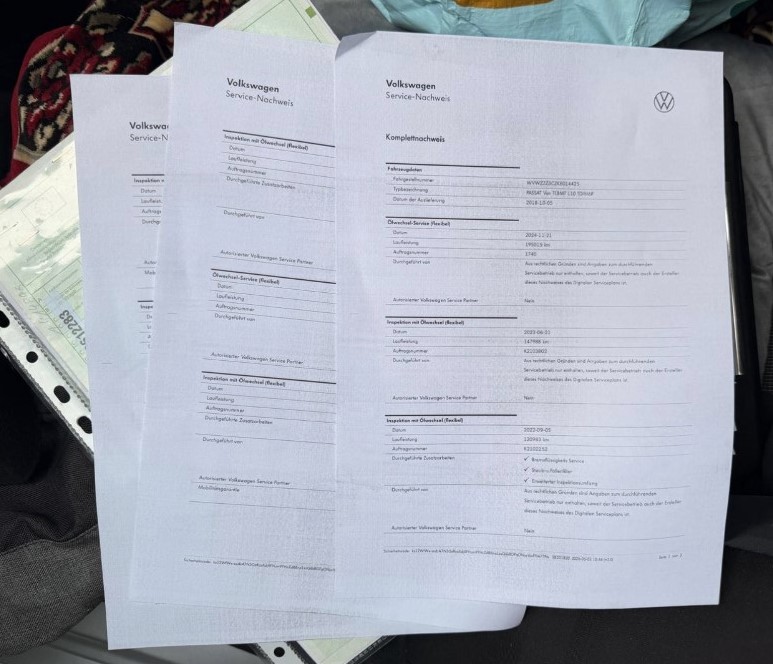
Article 101: “Full Service History” without illusions — how to verify a used car's maintenance history
How to compare digital service records, invoices, mileage and the vehicle's actual condition before buying in Germany.
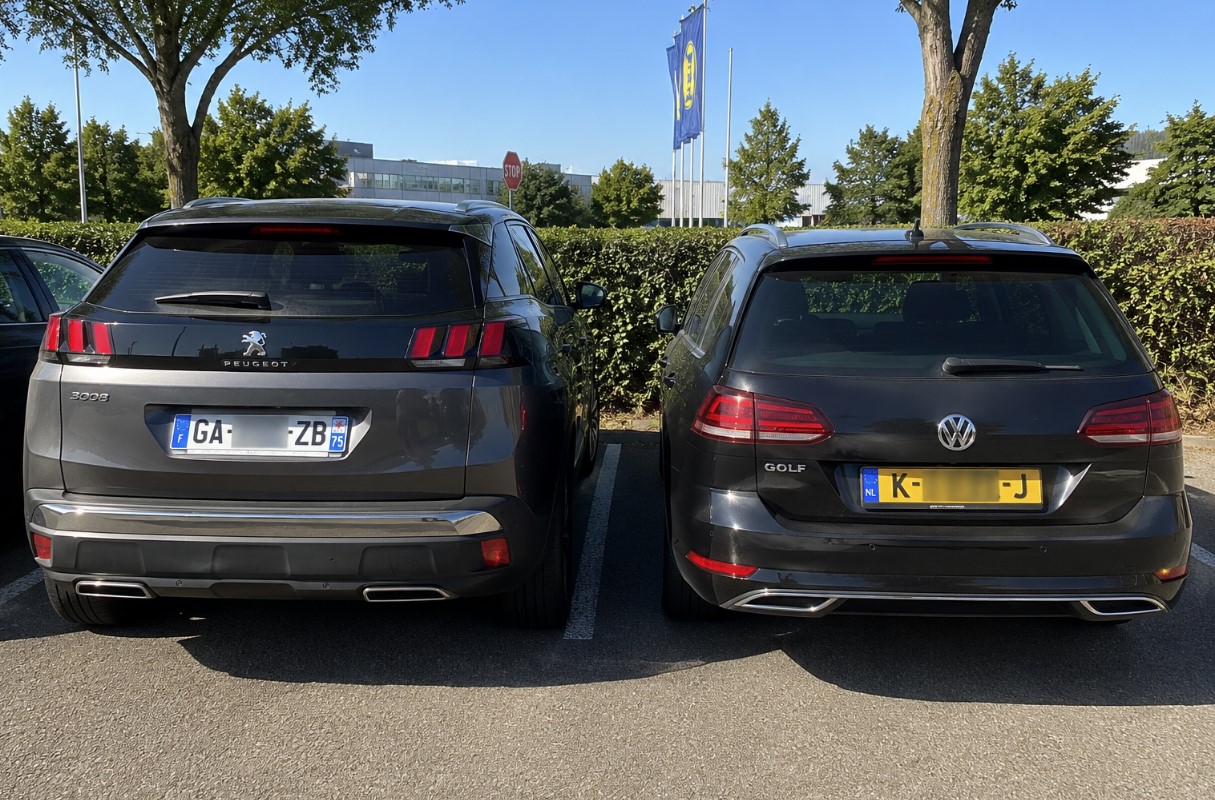
Article 102: Foreign documents on a used car — what buyers in Germany should check
What Dutch, French, Danish, Italian or other foreign documents can mean for registration, taxation and the purchase process.
⚖️ Legal and technical disclaimer
Disclaimer:
The information in this article is provided for general informational
purposes only. It is intended to help vehicle owners and used-car buyers
understand the general principles of vehicle recalls, manufacturer campaigns
and pre-purchase checks in Germany.
Recall status, campaign scope, repair procedures, eligibility, parts availability, vehicle-use restrictions and possible costs can differ according to manufacturer, VIN, campaign, workshop and individual circumstances. Information can also change after publication.
For binding and vehicle-specific information, always check the exact VIN with the vehicle manufacturer, an authorised workshop and, where applicable, the competent German authorities. Instructions contained in an official recall notice — particularly a warning not to drive or use the vehicle — take precedence over general information on this website.
A pre-purchase vehicle inspection is a non-destructive visual, functional and diagnostic assessment of the vehicle at the time of inspection. Hidden defects, faults requiring dismantling and defects that arise only later cannot be completely excluded.
No guarantee is given for the future durability of individual components or for the completeness of information held in third-party databases, manufacturer systems or documents supplied by sellers.
This article does not constitute legal advice, tax advice, an official manufacturer's statement or a substitute for an individual technical assessment. If a specific legal dispute, insurance issue or administrative question arises, qualified professional advice should be obtained.