
Used Volkswagen Multivan T4, T5 & T6 in Germany: reliable family van or an expensive repair project?
A Volkswagen Transporter, Caravelle or Multivan can cover enormous mileages, carry a large family, work every day and even become a compact home on wheels. But this versatility comes with substantial weight, increasingly complex technology and components that can be very expensive when maintenance has been neglected.
One T5 with 300,000 kilometres can still be a sensible purchase, while another apparently similar van showing only 150,000 kilometres may already need major engine work, DSG repairs, a DPF replacement and suspension work.
That is why the most useful question when buying a used Volkswagen Bus in Germany is not simply “Which Multivan is the most reliable?” The better question is: “What is the actual technical condition of this particular vehicle?”
⚡ Quick answer: which used Multivan should you buy?
There is no single “best” engine for every buyer. With the T4, body condition and maintenance history are now crucial. With the T5, the exact diesel engine code and the quality of previous repairs can make an enormous difference. With the T6, the emissions systems, DSG, electronics and service record deserve particular attention.
If your budget is limited, a simpler Transporter or Caravelle with transparent history can be a much safer purchase than a fully equipped Multivan Highline facing engine, DSG, 4Motion, electric-door or auxiliary-heater repairs.
📑 Contents
- Why the VW Bulli remains so popular
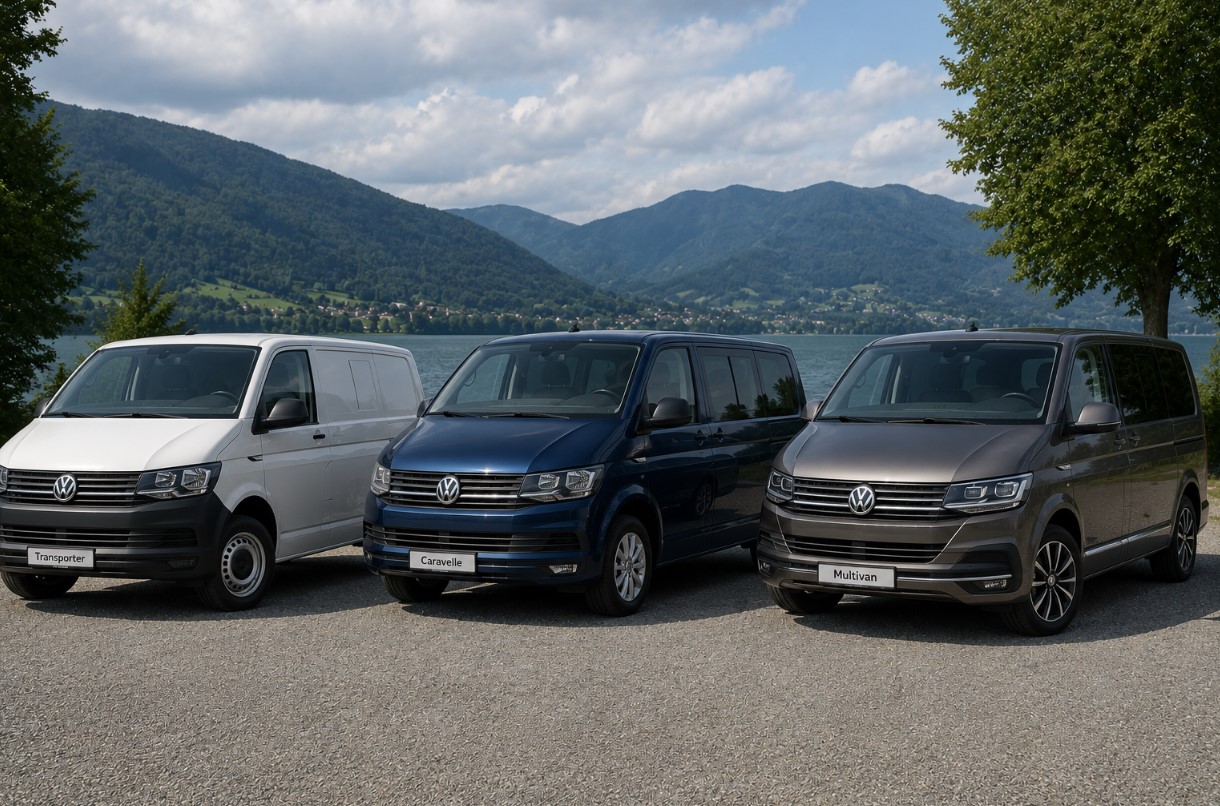
- Transporter, Caravelle and Multivan
- Transporter: commercial-use risks
- Caravelle: passenger and shuttle use
- Multivan: comfort and complexity
- California and camper vans
- Why old Multivans still cost so much
- Volkswagen T4
- T4 engines
- T4's biggest risk: the body
- Volkswagen T5
- T5 1.9 TDI
- T5 2.5 TDI
- T5 GP 2.0 TDI
- CFCA BiTDI 180 PS
- Manual, automatic and DSG
- 4Motion all-wheel drive
- Volkswagen T6
- T6 diesel engines
- Volkswagen T6.1
- Mileage and real engine life
- Checking mileage plausibility
- Body and interior problems
- Alternatives to the Multivan
- Which VW Bus should you choose?
- How we inspect a Multivan
- Vehicle inspection in Germany
- FAQ
🚐 Volkswagen Bulli: why these vans are so difficult to replace
Volkswagen Transporter, Caravelle and Multivan models stopped being “just commercial vans” a long time ago. The same basic vehicle concept can serve completely different owners and very different use cases.
🔧 Work
A van for tradespeople, construction companies, deliveries, mobile workshops or equipment transport.
👨👩👧👦 Family
Up to seven occupants, child seats, bicycles, pushchairs and substantial luggage.
🌍 Travel
Long Autobahn journeys, holidays, road trips and occasional overnight stays.
⛺ Camper
Factory-built California versions or individually converted camper vans.
🚖 Shuttle
Airport transfers, hotel transport, taxi work and commercial passenger services.
🛻 Trailer
Towing a caravan, boat trailer, vehicle trailer or work equipment.
This versatility is one of the main reasons why the T4, T5 and T6 remain highly desirable on the German used-car market even at advanced age and with substantial mileage.
❗ Two visually identical Multivans may have lived completely different lives. One may have covered long Autobahn distances with a private family, while another spent years on airport-transfer duty with frequent cold starts, long periods of idling and constant passenger loading. The odometer alone does not show this difference.
🧩 Transporter vs Caravelle vs Multivan: what does the difference mean for a used-car buyer?
| Version | Typical use | What deserves extra attention |
|---|---|---|
| Transporter | Work, cargo and commercial use | Overloading, body damage, clutch, suspension and load floor |
| Caravelle | Passenger transport | Sliding doors, seats, climate control, brakes and extensive idling |
| Multivan | Family, business and long-distance travel | Interior equipment, electric doors, climate system, auxiliary heater, DSG and 4Motion |
| California | Factory-built camper | Pop-up roof, moisture, auxiliary batteries, heater, water system and camping module |
🔧 Volkswagen Transporter: inspect a working van as a working tool
The Transporter was designed first and foremost for commercial work. It may appear as a panel van, Kombi, dropside, double-cab vehicle or as the base for specialist equipment.
When buying a used Transporter, knowing the mileage is not enough. You need to understand how those kilometres were accumulated.
🚩 What a former commercial van may be hiding
- ⚖ repeated overloading;
- 🛻 regular heavy-trailer use;
- 🚦 dozens of engine starts during every working day;
- 🏗 operation on construction sites;
- 🕐 long periods of idling;
- 🛞 tired rear suspension components;
- ⚙ clutch and dual-mass flywheel wear;
- 🌫 DPF problems caused by short urban routes;
- 🧱 deformation of the load floor or door openings;
- 🔨 damage caused by heavy tools or cargo.
✅ A Transporter with high motorway mileage can sometimes be mechanically more attractive than a lower-mileage van that spent its whole life doing short-distance city deliveries.
👥 Volkswagen Caravelle: a passenger van can also have a very demanding history
The Caravelle is generally more passenger-focused and comfortable than a basic Transporter Kombi. That makes it attractive for families, but it also means that many used examples have been employed as airport shuttles, hotel transport, taxis or tourism vehicles.
A vehicle used in this way may show moderate mileage but still have a very high number of engine, climate-control and auxiliary-heater operating hours.
🔍 Areas that often reveal intensive passenger use
- 🚪 sliding-door rollers and rails;
- 🪜 entrance steps;
- 💺 seats and seat mechanisms;
- 🪢 seat belts;
- ❄ front and rear climate systems;
- 🛑 brakes;
- ⚙ automatic transmission;
- 🛞 rear suspension.
🛋 Volkswagen Multivan: maximum versatility also means more potential failure points
The Multivan is especially attractive because of its flexible interior. Individual seats can move along floor rails, the rear bench can create a sleeping area and the integrated table can make the vehicle remarkably useful for family trips, business travel and camping.
🚪 Electric sliding doors
Check the drives, rollers, locks, sensors and wiring.
❄ Climate control
Check both front and rear systems, blower operation and actual temperatures.
🔥 Auxiliary heater
An auxiliary or parking heater should be tested separately.
💺 Seat rails
Seats should move correctly and lock securely into position.
⚙ DSG
Well suited to a heavy passenger van, but maintenance history is essential.
🛞 4Motion
Useful for winter driving and towing, but it introduces additional serviceable components.
⚠ A high-specification Multivan is more comfortable, but every additional feature on an ageing vehicle should be physically tested during the inspection. “Fully loaded” is only an advantage if the equipment actually works.
⛺ Volkswagen California: inspect the vehicle and the camper module as two systems
A California is not simply a Multivan with a bed. It is a factory camper with additional electrical, heating, water and living systems. A normal used-car inspection therefore covers only part of the potential risk.
| System | What should be checked |
|---|---|
| ⬆ Pop-up roof | Roof mechanism, canvas, seals and possible deformation |
| 💧 Moisture | Roof, windows, cabinets and floor |
| 🔋 Auxiliary battery | Voltage, charging behaviour and condition |
| ❄ Refrigerator | Start-up and ability to maintain temperature |
| 🔥 Parking heater | Start-up, fault memory and operation under load |
| 🚰 Water system | Pump, tank, hoses and leaks |
| 🔥 Gas system | Documentation, installation and overall safety |
| 🪑 Camper furniture | Locks, hinges, table and mounting points |
❗ A high asking price does not automatically mean a well-preserved California. Moisture damage, roof problems and poorly repaired camper equipment can matter much more than an attractive interior.
💶 Why can an old Volkswagen Multivan still cost €20,000–€30,000?
Used Bulli prices remain high because genuinely good vehicles are difficult to find and demand stays strong. A Multivan combines several roles in one vehicle, which supports resale values even when age and mileage are substantial.
👨👩👧👦 Versatility
One vehicle can replace a large estate car, MPV and small van.
🌍 Export demand
T4, T5 and T6 models remain desirable well beyond the German market.
🔍 Good examples are rare
Many vehicles already have commercial history or very high mileage.
💰 New vans are expensive
Buyers are therefore prepared to pay for an older but well-maintained vehicle.
❗ A high market value for the body and interior says nothing about the remaining life of the engine. A Multivan can still be expensive to buy and at the same time need major mechanical work.
Volkswagen T4: simple engineering has now become old engineering
The T4 remains popular because of its comparatively straightforward construction, repairability and the classic feel of an older VW Bus. But these vehicles are now old enough that the engine is only one part of the purchase decision.
Rubber components, wiring, fuel hoses, cooling-system parts, seals, body seams and previous repairs all age independently of mileage.
🔎 What matters most on a T4 today?
For many T4s, body condition and the quality of previous repairs are now more important than choosing between two theoretically “reliable” diesel engines.
⚙ Volkswagen T4 engines: from the simple 1.9 D to the popular 2.5 TDI
| Engine | Main advantage | What to inspect |
|---|---|---|
| 1.9 D / TD | Mechanical simplicity | Overheating history, TD turbo, leaks and timing belt |
| 2.4 D | Simple naturally aspirated design | Cylinder head, cooling system, injection pump and compression |
| 2.5 TDI | Good balance of torque and long-distance capability | Timing system, injection, turbocharger and flywheel |
| Petrol engines | No diesel DPF, more suitable for short journeys | Ignition, cooling system, fuel consumption and VR6 chains |
🐢 T4 1.9 D and 1.9 TD
The naturally aspirated 1.9 D is mechanically simple, but it offers limited performance in a heavy van. The turbocharged version is noticeably more usable while still retaining a relatively straightforward layout.
Important inspection points include:
- 🌡 cooling-system condition;
- 🛢 oil leaks;
- 🌀 turbocharger on TD versions;
- ⛽ fuel-injection equipment;
- 🧴 aged hoses;
- ⛓ timing belt history;
- 🧊 cold-start behaviour.
🐘 T4 2.4 D AAB / AJA
The five-cylinder naturally aspirated diesel is known for its uncomplicated layout and its ability to cover large distances when maintained correctly.
On an older example, however, the following points matter:
- 🌡 any history of overheating;
- 🧱 cylinder-head condition;
- 🧴 head-gasket condition;
- ⛽ injection pump;
- 💉 injectors;
- ⛓ timing belt;
- 🌬 vacuum pump;
- 🧊 cold-start quality;
- 📉 compression.
⚠ The common statement that “a 2.4 D will do 500,000 km” is not an assessment of a particular engine. The unit may already be more than 25 years old and its earlier maintenance history may be incomplete.
⭐ T4 2.5 TDI: ACV, AJT, AHY, AXG and other versions
The five-cylinder 2.5 TDI is one of the most sought-after T4 engines. It is much better suited to Autobahn driving, long journeys and full passenger or cargo loads.
During inspection, check:
- ⛓ timing belts, rollers and documented replacement history;
- 💧 water pump;
- ⛽ injection timing;
- 💉 injectors;
- 🌀 turbocharger;
- 🌬 vacuum hoses;
- 📈 air-mass meter;
- ❄ intercooler;
- 🔩 boost hoses;
- 🧊 cold start;
- 🌫 exhaust smoke;
- ⚙ dual-mass flywheel;
- 🛠 gearbox condition.
✅ A well-preserved 2.5 TDI with documented maintenance can still be one of the most attractive T4 configurations on the used market.
⛽ Petrol-powered T4
Petrol versions are less common, but they may make sense for buyers with lower annual mileage and frequent short journeys.
Their main characteristics include:
- 🔇 quieter operation;
- 🌫 no diesel DPF;
- 🚦 better suitability for short journeys;
- ⛽ high fuel consumption;
- ⚡ ageing ignition components;
- ⛓ VR6 chain-drive considerations;
- 🔥 possible consequences of past overheating;
- ⛽ the need to inspect LPG systems if fitted.
🧱 The biggest Volkswagen T4 risk today: body corrosion
An engine can be repaired or replaced. A badly rusted body can turn an otherwise attractive T4 into an endless restoration project.
| Area | What to look for |
|---|---|
| 🚪 Sills | Rust, welding and filler |
| 🛞 Wheel arches | Blistering paint and previous repairs |
| 🪟 Windscreen frame | Corrosion beneath seals |
| 🧱 Body seams | Cracked seam sealer and rust |
| 🔧 Jacking points | Metal deformation or corrosion |
| ⬇ Underbody | Rust and signs of welding |
| 🚪 Sliding door | Lower edge and rail condition |
| ⛽ Fuel-filler area | Hidden corrosion |
❗ Fresh, thick underbody protection should not automatically be treated as an advantage. The important question is what lies underneath it.
Volkswagen T5: far more comfortable than the T4, but much more complex
The T5 was a major step forward in comfort, sound insulation, equipment and interior usability. It is the generation that transformed the Multivan into a genuine alternative to a large family car or executive shuttle.
The trade-off is higher technical complexity. Different production years received very different diesel engines, and maintenance history became much more important.
⚡ The most important point about a used T5
It makes little sense to call the T5 simply “reliable” or “unreliable” without knowing the engine code, gearbox, drivetrain and previous use. The same basic body could be fitted with a 1.9 TDI, five-cylinder 2.5 TDI or Common Rail 2.0 TDI, and these create very different ownership risks.
| Engine / version | General character | Main risks | Who it may suit |
|---|---|---|---|
| 1.9 TDI | Straightforward and rational | Camshaft, unit injectors, tandem pump, turbo | Work use and relaxed family driving |
| 2.5 TDI R5 | Strong torque and distinctive character | Cylinder wear, camshaft, unit injectors, turbo | Buyers prepared for a deeper inspection |
| 2.0 TDI 102–140 PS | More modern Common Rail diesel | EGR, DPF, injectors, turbo and timing belt | A sensible compromise with good history |
| 2.0 BiTDI CFCA 180 PS | Strong performance | Oil consumption, cylinders, EGR, turbochargers and DPF | Only after detailed technical assessment |
🟢 T5 1.9 TDI: one of the more rational early T5 engine choices
The 1.9 TDI with unit injectors is generally regarded as one of the more straightforward and repairable diesel options in the early T5 range. It does not make a heavy Multivan particularly fast, but it can suit relaxed, practical use very well.
✅ Main strengths
- moderate fuel consumption;
- comparatively simple turbocharging system;
- good parts availability;
- well-understood diagnostics;
- good potential lifespan with correct maintenance.
⚠ What should be checked
- ⛓ timing belt;
- 🧠 camshaft condition;
- 💉 unit injectors;
- 🔌 injector wiring harness;
- ⛽ tandem pump;
- 🌀 turbocharger;
- 🌫 EGR system;
- 🌬 vacuum system;
- 🔩 boost hoses;
- ⚙ dual-mass flywheel;
- 🛠 clutch;
- 🧊 cold-start behaviour;
- 🌫 exhaust smoke.
✅ If high power is not a priority, a healthy 1.9 TDI can be a more rational purchase than a more powerful but mechanically tired T5.
⚠ Under full load, while towing or driving regularly in the mountains, this engine may spend a lot of time working hard. Lower power does not automatically guarantee a larger remaining lifespan.
🟡 T5 2.5 TDI R5: powerful and characterful, but expensive when major repairs are needed
The five-cylinder 2.5 TDI is valued for its torque, distinctive character and its unusual gear-driven camshaft arrangement instead of a conventional timing belt.
On paper this looks like an ideal concept for a commercial vehicle, but the engine is technically sophisticated and can be expensive when neglected or poorly repaired.
⚙ Common engine codes
🚩 Potential problem areas
- cylinder-surface wear;
- excessive oil consumption;
- camshaft wear;
- hydraulic-lifter wear;
- unit-injector faults;
- wear around injector seating areas;
- turbocharger problems;
- exhaust-manifold issues;
- EGR faults;
- water-pump problems;
- tandem-pump issues;
- fuel contamination of the engine oil;
- coolant contamination;
- incorrect engine oil specification;
- poor-quality previous repairs.
❗ With the 2.5 TDI, the seller's statement “the oil was always changed on time” is not enough. Ideally, invoices should show what oil was actually used and whether it met the correct specification.
🔍 How to inspect the 2.5 TDI
| Inspection point | What it may reveal |
|---|---|
| 🧊 Cold start | Compression, injection quality and general condition |
| 👂 Engine sound | Camshaft, lifter or ancillary wear |
| 💉 Injector correction values | Potential injection-system imbalance |
| 📈 Boost pressure | Turbocharger, vacuum control and hose leaks |
| 🛢 Engine oil | Fuel, coolant or abnormal contamination |
| 🌡 Cooling system | Temperature stability and possible leaks |
| 🌫 Exhaust smoke | Injection, turbo, compression or oil-burning issues |
| 🛣 Extended road test | Behaviour after full operating temperature is reached |
💡 A healthy 2.5 TDI can indeed cover very high mileages. But buying one simply because “it has no timing belt” is far too simplistic.
🔵 T5 GP 2.0 TDI Common Rail: quieter, more modern and cleaner
After the T5 facelift, Volkswagen introduced 2.0 TDI Common Rail engines. They operate more quietly than the earlier unit-injector diesels and meet newer emissions standards more effectively.
The trade-off is a more complicated emissions system.
🌫 DPF
Requires the correct operating conditions for successful regeneration.
♻ EGR
The valve and cooler become important inspection points.
💉 Common Rail
Injectors and fuel pressure should be assessed through diagnostics.
🌀 Turbocharger
Check boost behaviour, oil traces and intake-system integrity.
⚙ Single-turbo 102–140 PS versions
The single-turbo variants often make more sense than the BiTDI for a family vehicle, long-distance travel or relaxed everyday use.
The inspection should cover:
- 🌫 EGR valve;
- ❄ EGR cooler;
- 🌫 DPF condition;
- 🌀 turbocharger;
- 💉 injectors;
- ⛽ fuel pressure;
- ⛓ timing belt;
- 💧 water pump;
- 🛢 engine-oil consumption;
- 🌬 intake-system leaks;
- ⚙ dual-mass flywheel;
- ♻ DPF regeneration history.
⚠ A lower-mileage urban shuttle can be less attractive than a high-mileage Autobahn vehicle. Frequent short journeys and long idling periods are particularly unfavourable for the DPF and EGR system.
🔴 T5 2.0 BiTDI CFCA 180 PS: excellent performance, but one of the engines that deserves the deepest inspection
The 180 PS CFCA 2.0 BiTDI is one of the most controversial engines in the T5 range. On paper it suits the Multivan perfectly: strong torque, good Autobahn performance and enough power for a fully loaded vehicle, 4Motion or trailer use.
In the used-car market, however, this engine needs particularly careful assessment. The problem is not that every CFCA is automatically bad. The problem is that a poorly maintained or already damaged engine can generate repair costs that are completely disproportionate to the apparent bargain price of the vehicle.
⚠ Typical areas of concern
- 🛢 increased engine-oil consumption;
- 🧱 cylinder and piston wear;
- ♻ EGR-cooler related issues;
- 🌀 wear or failure of one or both turbochargers;
- 🌫 DPF loading and repeated regeneration;
- 💉 injector condition;
- 🌡 cooling-system problems;
- 🛢 oil contamination in the intake or intercooler;
- 🔧 consequences of earlier engine repairs;
- 📉 reduced compression;
- 💨 smoke under load or after warm-up;
- 🧾 incomplete or contradictory repair history.
❗ A CFCA should never be judged by a short idle test alone. A vehicle may start cleanly, idle smoothly and still develop smoke, oil-consumption or boost-related problems only after reaching full operating temperature and being driven under load.
🔍 What should be checked before buying a CFCA Multivan?
| Inspection | Why it matters |
|---|---|
| 🧊 Cold start | Helps assess combustion quality, compression and initial smoke behaviour |
| 🌡 Fully warm engine | Some problems only become visible after the engine reaches operating temperature |
| 🛣 Road test under load | Allows assessment of boost pressure, smoke and actual performance |
| 🛢 Oil-consumption history | Important indicator of internal engine wear |
| 🌫 DPF data | Helps identify excessive regeneration, soot or ash-related issues |
| ♻ EGR system | EGR and cooler condition can influence both engine and DPF behaviour |
| 🌀 Turbochargers | BiTDI architecture makes turbo-related repairs considerably more expensive |
| 💨 Intake / intercooler | Excessive oil can indicate turbo, crankcase-ventilation or engine wear |
| 📟 OBD diagnostics | Necessary to evaluate DPF, boost control, injectors and stored faults |
⚠ The existence of a previous engine, turbocharger, EGR or DPF repair is not automatically a reason to reject the vehicle. What matters is what exactly was repaired, why it failed, which parts were used and whether the repair can be documented.
⚙ Manual, automatic and DSG: the transmission matters almost as much as the engine
A Multivan is a heavy vehicle. It is frequently driven with passengers, luggage, bicycles, camping equipment or a trailer. That makes the gearbox and clutch system especially important when buying used.
🕹 Manual gearbox
The manual gearbox is mechanically straightforward, but the clutch and dual-mass flywheel can suffer heavily from city use, trailer work and repeated full-load starts.
Check:
- clutch take-up point;
- slipping under load;
- vibration during take-off;
- dual-mass flywheel noise;
- gear-selection quality;
- oil leaks;
- driveshaft and CV-joint condition.
🔄 Conventional automatic transmission
Older T4 and T5 automatic transmissions can be comfortable, but age, heat and neglected oil changes must be considered.
During inspection, the gearbox should be evaluated both cold and fully warm. Delayed engagement, harsh shifts, slipping or unusual noises are warning signs.
⚙ DSG DQ500
The seven-speed wet-clutch DQ500 DSG is widely used in later T5 and T6 models. Its design is well suited to a heavy van, but the gearbox depends heavily on correct maintenance.
✅ On a well-maintained vehicle, the DQ500 can be a very good transmission. But “DSG oil changed regularly” should ideally be supported by invoices or service records.
🔍 What to inspect on DSG
- 🧾 proof of oil and filter servicing;
- 🧊 behaviour when cold;
- 🌡 behaviour after full warm-up;
- ↔ engagement from R to D and D to R;
- 🚦 low-speed creeping behaviour;
- 🛣 acceleration under full load;
- ⚙ clutch adaptation data where available;
- 📟 transmission fault memory;
- 🧠 mechatronics behaviour;
- 🔊 unusual mechanical noises.
❗ A gearbox that feels acceptable during a five-minute test drive may behave very differently once fully warm. For an expensive Multivan, a proper road test is more informative than simply moving the vehicle around a dealership forecourt.
🛞 4Motion: useful in winter and when towing, but another system to inspect
Volkswagen 4Motion can be a real advantage for buyers who travel in winter, use campsites, tow trailers or regularly drive on wet and slippery surfaces.
But an all-wheel-drive Multivan is mechanically more complicated than a front-wheel-drive version. The additional components also need maintenance.
🔍 What to check on 4Motion
- 🛢 Haldex oil-service history;
- ⚙ Haldex pump operation;
- 🔄 rear differential;
- 🪛 propshaft and support bearings;
- 🔩 CV joints;
- 📟 AWD fault codes;
- 🛞 matching tyres with similar wear;
- 🔊 drivetrain noises under load.
⚠ Four-wheel drive is valuable only when you actually need it. If the vehicle will spend almost all its life on normal roads, a simpler front-wheel-drive Multivan can be cheaper and easier to maintain.
Volkswagen T6: more refined than the T5, but emissions systems matter even more
The T6 continued the basic architecture of the T5, but improved comfort, electronics, refinement and emissions technology.
On the German used-car market, the majority of T6 Multivans are equipped with 2.0 TDI diesel engines. They are economical and well suited to long-distance travel, but Euro 6 technology introduced additional systems that must be checked before purchase.
🌫 DPF
Soot load, ash load, regeneration frequency and pressure values matter.
♻ EGR
EGR valve and cooler faults remain relevant on used diesels.
💧 AdBlue / SCR
Pump, heater, injector and NOx sensors require attention.
⚙ DSG
Service history remains essential, particularly on heavily used vans.
🚪 Electronics
Electric doors, climate systems, infotainment and assistance systems add complexity.
🛞 Chassis
The vehicle's weight makes brakes, suspension and tyres important cost items.
⚙ Volkswagen T6 diesel engines: 102, 114, 150, 199 and 204 PS
The T6 was offered with several power outputs of the 2.0 TDI. For a used-car buyer, power alone should not determine the choice.
| Power level | Character | Used-car perspective |
|---|---|---|
| 102 PS | Basic and economical | Adequate for light use, but limited when fully loaded |
| 114 PS | Moderate power | Can suit relaxed driving, depending on body and equipment |
| 150 PS | Balanced all-rounder | Often one of the most rational choices for a family Multivan |
| 199 / 204 PS | Strong performance | Attractive to drive, but technically more demanding |
✅ Why the 150 PS TDI often makes sense
For many buyers, the 150 PS diesel offers a sensible compromise between performance, fuel economy and technical complexity.
It has enough power for a family Multivan, Autobahn use and normal trailer duties without chasing the highest-output specification.
⚠ High-output BiTDI versions
The 199 and 204 PS versions provide noticeably stronger performance, but a high-output diesel in a heavy van should be assessed carefully.
The inspection should include:
- turbocharging system;
- intake-system integrity;
- oil consumption;
- injector data;
- DPF condition;
- EGR system;
- AdBlue / SCR faults;
- DSG behaviour;
- cooling system;
- service history.
💡 The best T6 is not automatically the most powerful one. A technically clean 150 PS vehicle with transparent history can be a better buy than a poorly maintained 204 PS Highline.
Volkswagen T6.1: more electronics, more assistance systems and a more modern cabin
The T6.1 is a major facelift rather than an entirely new generation. It introduced a more modern dashboard, updated infotainment, electromechanical steering and expanded driver-assistance systems.
For the buyer, this creates two opposing effects. The vehicle feels newer and more modern, but it also contains more electronic systems that need to be tested.
🔍 What to inspect on a T6.1
- 📟 complete control-unit scan;
- 🖥 infotainment;
- 🧭 digital cockpit where fitted;
- 📷 cameras and parking systems;
- 🚘 Lane Assist;
- 🚨 Front Assist;
- 🛞 steering system;
- 💧 AdBlue / SCR;
- 🌫 DPF;
- ♻ EGR;
- ⚙ DSG;
- 🚪 electric sliding doors.
⚠ A vehicle can drive perfectly normally while still storing a long list of intermittent or historical faults in assistance, comfort and emissions-control modules. A full diagnostic scan is especially useful on a T6.1.
⏱ How long can a Volkswagen Multivan engine last?
This is one of the most common questions asked before buying a T4, T5 or T6. Unfortunately, there is no honest single kilometre figure that can answer it.
Engine lifespan depends on:
- engine design;
- oil specification;
- oil-change interval;
- cold-start frequency;
- short-distance use;
- Autobahn use;
- trailer use;
- overloading;
- cooling-system condition;
- DPF regeneration behaviour;
- quality of previous repairs.
🛣 300,000 km on Autobahn
Can sometimes mean relatively low thermal and mechanical stress per kilometre.
🚦 150,000 km in city shuttle use
Can mean thousands of cold starts, idling hours and DPF regeneration cycles.
❗ Do not buy a Multivan because someone on the internet says “these engines always do 400,000 km”. Buy the vehicle only after assessing how this specific engine behaves today.
🔢 How to check whether Multivan mileage is plausible
High resale values make mileage plausibility particularly important on the Volkswagen Bus market. The odometer should therefore be compared with several independent sources.
| Source | What to compare |
|---|---|
| 📘 Digital service history | Dates and recorded kilometre readings |
| 🧾 Service invoices | Mileage at repairs and maintenance |
| 🧪 HU / TÜV reports | Historical odometer readings |
| 📟 Control units | Mileage or operating-hour data where available |
| 💺 Interior wear | Steering wheel, pedals, seats, floor rails and switches |
| 🚪 Sliding doors | Rails, rollers and entry-step wear |
| 🛞 Chassis | Overall wear compared with claimed mileage |
💡 Mileage should be treated as a chain of evidence, not a single number on the dashboard. When several independent sources support one another, the history becomes much more credible.
🧱 Body and interior: where an expensive Multivan can still hide very expensive problems
Compared with the T4, later T5 and T6 models generally offer better corrosion protection, but that does not mean the body can be ignored. A large van accumulates wear differently from a normal passenger car, especially when it has spent years carrying passengers, luggage, tools or camping equipment.
🔍 Exterior areas that deserve attention
- 🚪 lower edges of sliding doors;
- 🧱 sills and jacking points;
- 🛞 wheel arches;
- ⬇ underbody and suspension mounting areas;
- 🚘 tailgate or rear doors;
- 🪟 windscreen frame and roof edges;
- 🔩 panel fasteners and repair traces;
- 🎨 repainting and filler;
- 🚪 sliding-door alignment;
- 🛻 signs of rear-impact repairs.
💺 Interior wear can reveal the vehicle's real past
The interior of a Multivan often contains valuable clues about how the vehicle was used. A clean dashboard alone tells very little. More important are the areas that are difficult and expensive to renew.
| Area | What it may reveal |
|---|---|
| 💺 Driver's seat | Long-term use and entry/exit frequency |
| 🛞 Steering wheel | Intensity of daily use |
| 🦶 Pedals | Possible mismatch with stated mileage |
| 🚪 Entry steps | Passenger or shuttle use |
| 🛤 Floor rails | Frequent seat movement and passenger loading |
| 🪑 Rear seats | Family, shuttle or commercial use |
| 🧼 Headlining | Smoking, moisture or intensive use |
| 🎛 Switches | Real operating intensity |
⚠ A polished exterior and professionally cleaned interior can make a heavily used Multivan look much younger than it really is. The most informative areas are often the rails, steps, seat mechanisms, pedals and underside.
🚖 Former shuttle, taxi or commercial vehicle: why the previous use matters so much
One of the most underestimated risks on the German Multivan market is previous commercial operation. A passenger van can have been used by a hotel, airport-transfer company, rental operator, taxi business or corporate fleet.
This does not automatically make the vehicle bad. Some commercial operators maintain their vehicles very carefully. But the type of wear is often different from that of a private family car.
🚩 Typical signs of intensive commercial use
- frequent wear on sliding-door mechanisms;
- strong wear on entry steps;
- tired rear-seat mechanisms;
- high brake wear;
- heavy suspension wear;
- many operating hours relative to mileage;
- evidence of frequent idling;
- repeated cosmetic repairs;
- unusually clean or recently renewed interior elements;
- multiple ownership changes within short periods.
❗ A 180,000 km airport shuttle may have experienced more engine hours and more mechanical cycles than a privately owned 300,000 km Autobahn vehicle.
🔄 Alternatives to the Volkswagen Multivan: when another van may be the smarter choice
The Multivan is highly desirable, but that popularity keeps used prices high. Depending on your real needs, another large MPV or passenger van may provide better value for money.
| Alternative | Main strength | What to consider |
|---|---|---|
| Mercedes V-Class / Viano | Comfort, premium interior, strong long-distance ability | Higher repair costs, diesel systems, automatic gearbox |
| Ford Tourneo Custom | Space and attractive value | Diesel emissions systems, service history |
| Renault Trafic / Opel Vivaro | Lower purchase price | More commercial character, condition varies strongly |
| Peugeot Traveller / Citroën SpaceTourer | Modern interior and efficient diesel engines | AdBlue, emissions systems, electronics |
| Toyota Proace Verso | Practical passenger layout | Shares much technology with Stellantis vans |
| Hyundai Staria | Modern design and equipment | Younger used-car market and lower supply |
💡 If your budget is limited, a good Caravelle or Tourneo Custom can sometimes be more rational than paying a premium simply for the Multivan name and interior configuration.
🧭 Which Volkswagen Bus should you choose?
There is no single version that is best for everyone. The rational choice depends on how you plan to use the vehicle, how much you drive and how much complexity you are willing to accept.
🔧 For work
A simpler Transporter, preferably with transparent history and without unnecessary luxury equipment, is often the most sensible choice.
👨👩👧👦 For a family
A Caravelle or Multivan with a healthy 2.0 TDI, documented maintenance and moderate equipment can provide the best balance.
🌍 For long-distance travel
A 150 PS TDI with DSG can be very comfortable, provided both engine and gearbox have been maintained correctly.
🛞 For winter or towing
4Motion can be worthwhile, but Haldex, differential and driveline condition must be included in the inspection.
⛺ For camping
A California is highly attractive, but the camper systems must be inspected separately from the vehicle itself.
💶 On a limited budget
Buy condition before specification. A simpler Caravelle can be much safer than a cheap Highline with hidden repair backlog.
✅ For most private buyers looking for a later T5 or T6, a healthy single-turbo 2.0 TDI with documented service history is often easier to recommend than a neglected high-output version.
🔍 How we inspect a Volkswagen Multivan before purchase
A proper Multivan inspection must go beyond a visual walk-around and a short diagnostic scan. The vehicle combines commercial-vehicle engineering, passenger-car comfort equipment and, in some versions, complex emissions, DSG and all-wheel-drive systems.
1️⃣ Before the appointment
- analyse the advertisement;
- compare price with similar vehicles;
- request VIN / FIN;
- review service history;
- review TÜV / HU documents where available;
- identify the exact engine and gearbox version;
- note likely model-specific risks.
2️⃣ Body and accident history
- paint-depth measurement;
- panel-gap inspection;
- check fasteners and welds;
- inspect sills and underbody;
- check sliding-door alignment;
- look for hidden corrosion;
- assess previous body repairs.
3️⃣ Engine and fluids
- cold start where possible;
- engine noise;
- oil leaks;
- coolant condition;
- intake-system condition;
- turbocharger behaviour;
- exhaust smoke;
- evidence of oil consumption.
4️⃣ OBD diagnostics
Depending on the vehicle and available control-unit data, we look at:
- stored and active fault codes;
- DPF values;
- regeneration-related information;
- injector correction values;
- boost-pressure data;
- EGR-related faults;
- AdBlue / SCR faults;
- DSG fault memory;
- AWD-related faults;
- comfort-system and door faults.
5️⃣ Suspension, brakes and tyres
- brake discs and pads;
- shock absorbers;
- bushings and ball joints;
- wheel bearings;
- tyre age and condition;
- uneven tyre wear;
- suspension noises.
6️⃣ Interior and comfort systems
- seat rails;
- electric sliding doors;
- climate control;
- auxiliary heater;
- infotainment;
- parking sensors and cameras;
- windows and locks;
- interior lighting.
7️⃣ Road test
The road test is used to evaluate:
- engine response;
- DSG or manual gearbox behaviour;
- clutch behaviour;
- steering;
- braking;
- vibrations;
- wheel-bearing noise;
- drivetrain noises;
- smoke under load;
- temperature behaviour.
❗ The goal of the inspection is not to prove that the vehicle is perfect. The goal is to understand what condition it is in, which repairs are likely, and whether the asking price still makes sense.
🧰 Used Multivan inspection in Berlin, Brandenburg and throughout Germany
A Volkswagen Multivan can be one of the most practical vehicles you can buy — but only if you choose the right example. Because these vans remain valuable even when old, one bad purchase can lead to repair costs of several thousand euros.
Sicher-Check can inspect the vehicle before purchase and help you understand whether the particular T4, T5, T6 or T6.1 is worth the asking price.
✅ Our inspection can include
- VIN and document review;
- service-history analysis;
- mileage plausibility check;
- paint-depth measurement;
- body and corrosion inspection;
- engine and gearbox assessment;
- OBD diagnostics;
- DPF, EGR and AdBlue assessment where applicable;
- DSG and 4Motion checks;
- suspension and brake inspection;
- test drive;
- photo and video documentation;
- practical purchase recommendation;
- negotiation arguments.
📑 Vehicle-history report as an additional filter
A history report cannot replace a physical inspection, but it can be useful as one additional source when checking mileage, previous damage or registration history before travelling to see the vehicle.
The safest approach is to compare several sources: service history, invoices, HU/TÜV reports, digital data and the actual condition of the van.
Advertising / *Affiliate link
Links or banners marked with an asterisk (*) are affiliate links. If you use such a link and make a purchase, we may receive a commission from the provider. This does not increase the price for you.
❓ FAQ — Buying a Used VW Multivan in Germany
Which Volkswagen Multivan engine is the most reliable?
There is no universal answer. On the T4, the 2.5 TDI is highly regarded if body and maintenance are good. On the T5, the 1.9 TDI can be a rational option, while the 2.5 TDI and CFCA BiTDI require deeper inspection. On later T5 and T6 models, a well-maintained single-turbo 2.0 TDI can be a very sensible choice.
Is the T5 2.5 TDI a bad engine?
No. A healthy 2.5 TDI can cover very high mileages. The problem is that major repairs can be expensive, and the exact service history matters greatly. Oil specification, injection system, camshaft, turbo and cylinder condition should be checked carefully.
Should I avoid every CFCA 180 PS BiTDI?
No, but it should be purchased only after a detailed assessment. Oil consumption, EGR history, turbochargers, DPF behaviour, smoke, compression and previous repair documentation are particularly important.
Is DSG DQ500 reliable on a Multivan?
The DQ500 is generally well suited to this type of vehicle, but it depends on correct servicing. Oil and filter changes, fault memory, clutch behaviour and a proper road test are important before purchase.
Is 300,000 km too much for a Volkswagen Multivan?
Not automatically. A well-maintained Autobahn vehicle with 300,000 km can sometimes be a better purchase than a 150,000 km shuttle van with heavy city use, frequent cold starts and poor maintenance.
What is more important: mileage or service history?
Both matter, but service history and actual condition usually tell more than mileage alone. The displayed kilometre reading should be compared with TÜV reports, invoices, digital records, control-unit data and physical wear.
Is 4Motion worth buying?
It can be useful for winter driving, towing and campsites. But the Haldex system, propshaft and rear drivetrain add service and repair costs. If you do not need all-wheel drive, front-wheel drive may be the more economical choice.
What is the difference between Transporter, Caravelle and Multivan?
The Transporter is primarily work-oriented, the Caravelle is focused on passenger transport, and the Multivan adds more flexible seating, comfort and equipment. This also means a Multivan contains more systems that may require repair as the vehicle ages.
Can Sicher-Check inspect a Multivan outside Berlin?
Yes. Inspections are available in Berlin and Brandenburg, and by arrangement we can travel to vehicles in other parts of Germany.
🏁 Final verdict: buy the condition, not the reputation
Volkswagen T4, T5 and T6 vans remain popular for a reason. Few vehicles combine family use, work, travel, towing and camping so effectively.
But that versatility also means these vans can accumulate very different kinds of wear. A low odometer reading, an expensive Highline specification or a reputation for a “reliable engine” is not enough to justify the purchase.
The best used Multivan is the one with a transparent history, credible mileage, sound bodywork, healthy drivetrain and future repair costs that still fit your budget.
✅ If you are considering a T4, T5, T6 or T6.1 in Germany, inspect the specific vehicle before committing. One good inspection can save far more than trying to repair the wrong Multivan after purchase.
📚 Related Articles
Legal and technical disclaimer:
The information in this article is provided for general informational
and educational purposes only and does not replace an individual
vehicle inspection, manufacturer documentation or specialist diagnosis.
Used Volkswagen T4, T5, T6, T6.1, Transporter, Caravelle,
Multivan and California vehicles can differ significantly
depending on engine code, model year, gearbox, drivetrain,
equipment, service history, previous repairs and operating conditions.
References to typical faults, mileage, engine life
or common repair risks are general observations
and must not be interpreted as a diagnosis
of any specific vehicle.
A Sicher-Check vehicle inspection represents
a non-destructive visual, functional and diagnostic assessment
at the time of inspection.
Hidden defects, internal wear,
defects requiring dismantling and future failures
cannot be completely excluded.
No guarantee is provided regarding the future durability
of individual components or assemblies.
The final decision to purchase or reject a vehicle
remains the responsibility of the buyer.