
 Inspecting a diesel car before buying in Germany: DPF, AdBlue, OBD and real risks
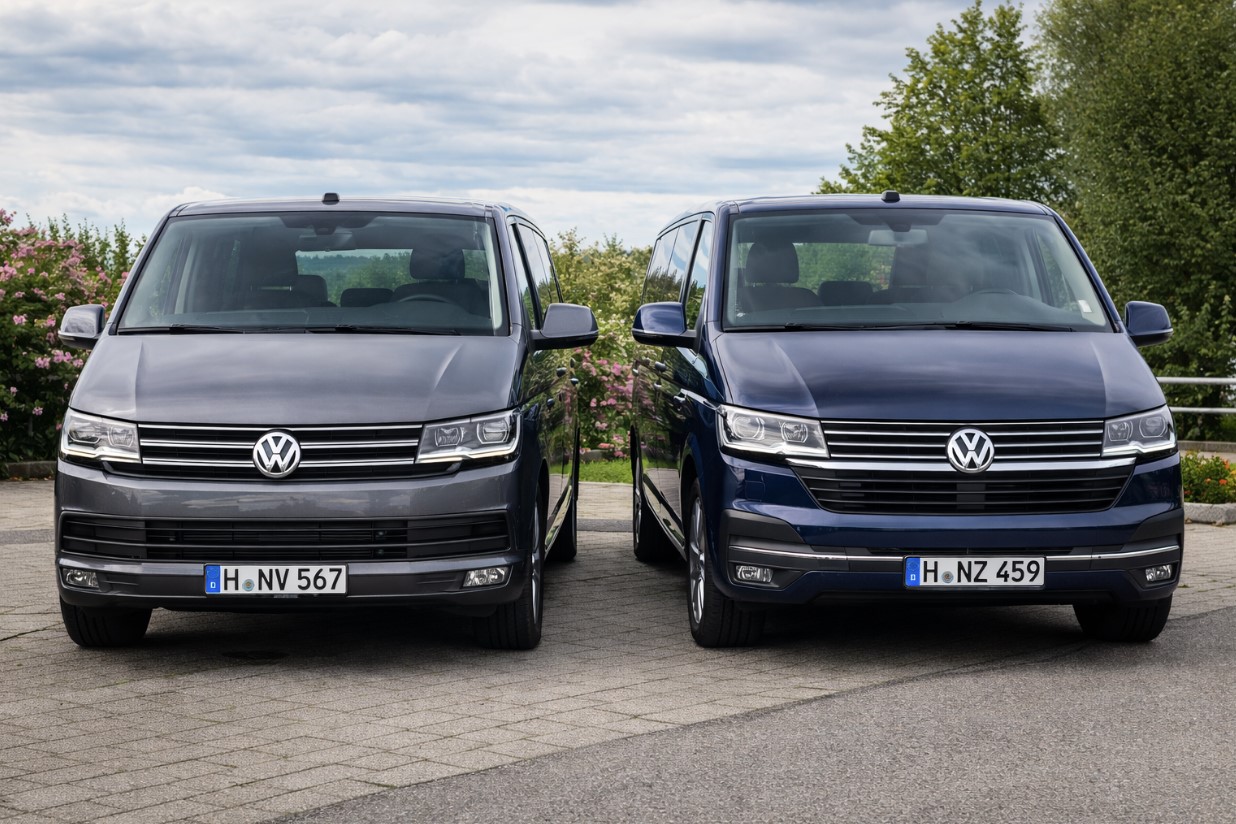
💡 The first important point is this: T6.1 is not a completely new model. It is a deep facelift of the T6. The core concept remains the same: a spacious cabin, flexible seating layout, strong brand reputation, very good resale value and one of the most practical family and business vehicles on the German market.
But once you look closer at electronics, steering, driver assistance, cabin architecture and used-market pricing, the difference becomes noticeable. That is why choosing between them should never be based on photos alone.
🔧 Which engines were offered
The main engine in both the Volkswagen Multivan T6 and T6.1 on the German market is the 2.0 TDI. Most listings in the €32,000–€45,000 range are built around this drivetrain.
Main power outputs
- 84 hp
- 102 hp
- 150 hp
- 204 hp
Available configurations
- front-wheel drive
- 4Motion
- manual gearbox
- 7-speed DSG
Petrol versions exist, but on the German used market they are much less common and are not the mainstream choice for a Multivan.
✅ Main strengths and typical owner feedback
Main strengths
- spacious interior;
- flexible cabin layout;
- strong resale value;
- works well for both family and business use;
- strong Volkswagen brand appeal.
What owners usually praise
- very good long-distance comfort;
- decent refinement for the class;
- good driving feel for such a large vehicle;
- but also expensive genuine parts and strong sensitivity to maintenance quality.
Practical takeaway: the Multivan traditionally holds its price better than most MPVs. That is exactly why the used market contains so many visually attractive cars whose real condition does not always match the asking price.
⚠ Common weak points of both T6 and T6.1
1️⃣ EGR and cooling-system issues
On the 2.0 TDI, EGR-related problems are common enough to deserve serious attention. Typical scenarios include EGR cooler leaks, fault codes related to recirculation and overheating under load. This matters even more in a Multivan because it is a heavy vehicle and is often used intensively.
2️⃣ DSG DQ500
Overall, the DQ500 is considered a good gearbox for this class, but only when serviced correctly. If the oil was not changed approximately every 60,000 km, the risk of mechatronic and clutch-related expenses goes up noticeably. In a heavy Multivan, missed DSG service matters more than in an ordinary passenger car.
3️⃣ AdBlue and Euro 6 diesel hardware
On Euro 6 diesel versions, AdBlue-related problems are common bargaining points and sometimes deal-breakers. Typical examples include NOx sensor issues, SCR errors, pump-related faults and the well-known “no engine start in X km” type warnings.
4️⃣ Suspension and brakes
The Multivan is heavy, which means suspension components, dampers, bushings and brakes wear faster than on a standard car. This is especially true when the vehicle was often loaded heavily or used in semi-commercial or shuttle service.
Key point: both T6 and T6.1 should be evaluated not just as big family cars, but as heavy machines with expensive components and a high cost of purchase mistakes.
⏱ 2.0 TDI durability and service life
With proper maintenance, the 2.0 TDI in a Multivan can achieve a genuinely strong lifespan. In practice, however, durability depends less on brochures and more on oil quality, change intervals, cooling-system condition and whether EGR, DPF and temperature-related issues were handled early rather than ignored.
If the van was maintained sensibly, with oil changes roughly every 10,000–15,000 km, decent fuel and no lazy attitude toward diesel-system faults, the long-term outlook can be very good.
Important: on a Multivan, service history is not a formality. Skipped maintenance intervals and “saving money on servicing” tend to cost much more than they would on a normal passenger car.
🆚 The real differences between T6 and T6.1
1️⃣ Electronics and architecture
Feature
T6
T6.1
Instrument cluster
Classic analogue layout
Digital cockpit / more modern interface
Infotainment
Older-generation system
Newer multimedia platform
Electronic architecture
Simpler
More modern and more complex
Driver-assistance features
Basic level
More advanced package
This is the biggest practical difference between the two. The T6.1 feels clearly more modern in terms of interface, control logic and electronics.
2️⃣ Steering system
The T6 uses hydraulic steering, while the T6.1 uses electromechanical steering. That affects not only steering feel, but also the way modern assistance systems work. The T6.1 supports them better, but the price is greater electronic complexity.
3️⃣ Driver assistance and safety systems
The T6.1 received a more modern assistance package, including features such as Lane Assist, Side Assist and a more developed Front Assist setup. The T6 is simpler in this regard and, for some buyers, more attractive precisely because it has fewer electronic risk zones.
4️⃣ Interior and user experience
The T6.1 looks newer inside: digital instruments, newer steering wheel, newer multimedia and more modern touch-based control logic. But the jump is not a revolution in material quality. It is more about the feeling of freshness than about a completely different class of cabin.
5️⃣ Reliability perspective
This is where the real buying logic starts. The T6 is generally easier to diagnose and less dependent on software updates. The T6.1 is more advanced, but can be more sensitive to software behavior, sensors and the logic of its electronic platform.
6️⃣ Resale value
The T6 remains highly desirable and well understood on the market. The T6.1 costs more and may lose more in absolute numbers, but also remains strongly wanted because of its newer cabin and assistance features.
📌 A practical comparison case
The real difference becomes clearest when you compare two actual vehicles rather than model years in theory.
Multivan T6 (2018)
150 hp, DSG, 120,000 km
Price: €34,500
Pros:
- transparent history;
- documented DSG service;
- no meaningful fault codes in the main control units.
Cons:
- brake wear;
- minor corrosion on some suspension components.
Multivan T6.1 (2021)
150 hp, DSG, 95,000 km
Price: €43,900
Pros:
- more modern cabin;
- digital instruments;
- driver-assistance systems.
Cons:
- NOx sensor fault present;
- noticeable DSG clutch wear;
- signs of previous commercial use.
Practical takeaway: the newer T6.1 is not automatically the better choice. In real inspections, an older T6 often turns out to be technically cleaner, more logical and more sensible from a budget perspective.
🤔 Which one should you choose: T6 or T6.1?
If your priorities are:
- simplicity;
- less electronic complexity;
- a stronger balance between price and technical clarity;
- lower exposure to modern electronic architecture risks,
— then the T6 is often the more rational choice.
If your priorities are:
- newer electronics;
- driver-assistance systems;
- a more modern-looking interior;
- the feeling of a fresher vehicle,
— then the T6.1 makes sense, provided the specific example is actually good.
The most important rule: do not choose a generation in the abstract. Compare real cars against each other by condition, history and future repair risk.
🔍 What to inspect before buying a Multivan
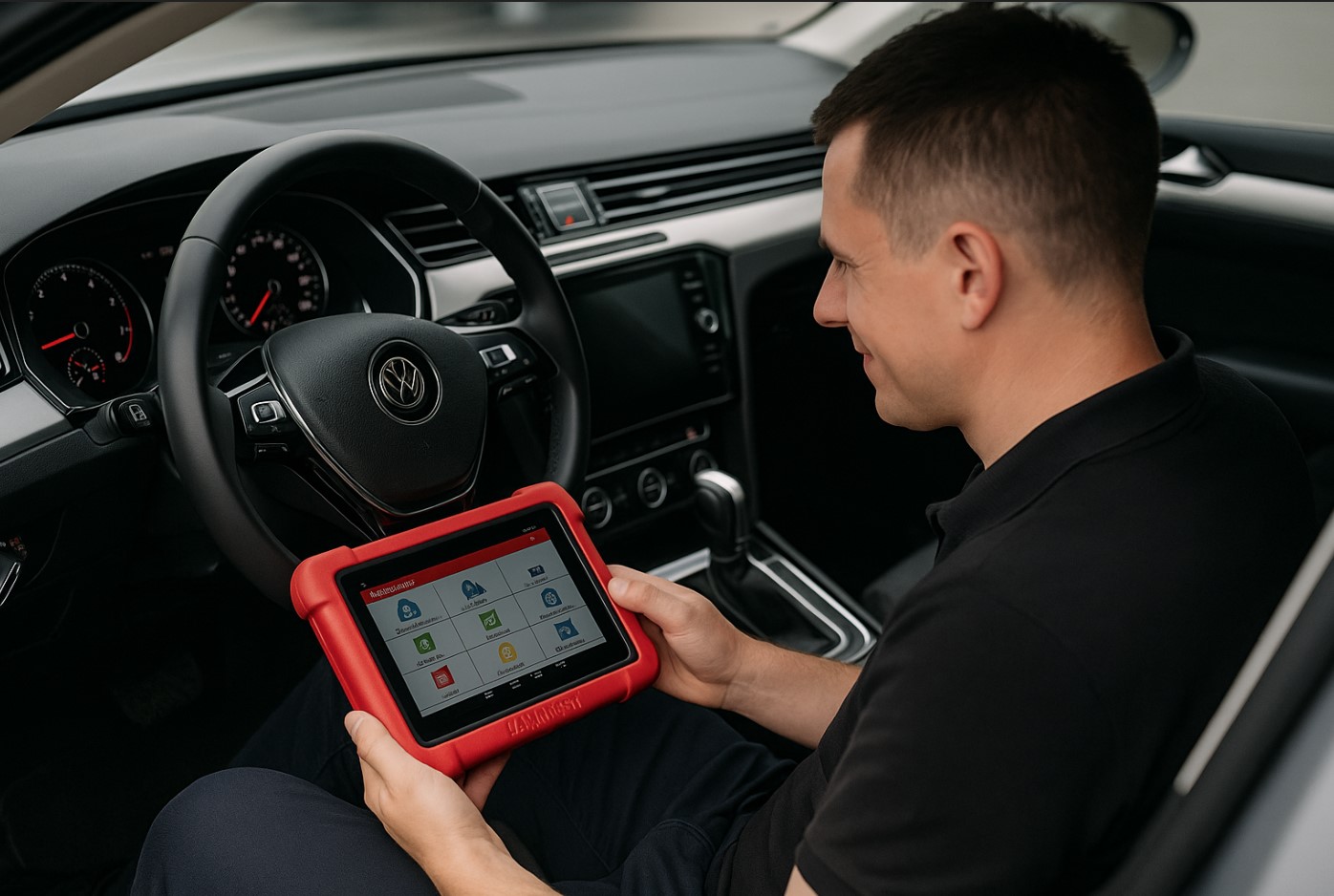
For a pre-purchase inspection in Germany, a Multivan should never be judged only by paint, mileage and a short test drive. The technical picture of the diesel system and gearbox matters just as much as the bodywork.
What should be checked first
- fault codes in all major control units;
- DPF regeneration history;
- DSG condition and gearbox service history;
- suspension and brakes;
- signs of previous commercial use;
- interior rail wear and seat-transform mechanism condition.
| System | What to check | Why it matters |
|---|---|---|
| 2.0 TDI | EGR, cooling system, DPF, emission-related faults | These are the main expensive Euro 6 diesel risks |
| DSG DQ500 | oil-change history, driving behavior, fault codes, clutch condition | The gearbox is strong, but highly service-sensitive |
| AdBlue / NOx | sensors, pump, SCR-related faults | Can easily lead to expensive repairs and strong bargaining arguments |
| Interior / body | seat wear, rail wear, floor wear, traces of shuttle use | Helps reveal the real previous life of the vehicle |
| Suspension / brakes | play, dampers, discs, pads | A heavy Multivan accumulates wear quickly |
🚐 A special risk: commercial past use
This is one of the most underestimated points when buying a Multivan. Even when the van looks clean, has a tidy cabin and shiny paint, its previous life may have been much harder than a family buyer assumes.
Many Multivans were used:
- as airport or hotel shuttles;
- as business transport;
- as transfer vehicles;
- sometimes in intensive hotel or corporate service.
Why this matters: with commercial use, wear often does not match the attractive appearance. The cabin, seat rails, brakes, suspension, DSG and the general “fatigue level” of the vehicle can all be significantly worse than the listing photos suggest.
💶 Real ownership costs
When buying a Multivan, it is important to look not only at the purchase price, but also at the average yearly running costs. Even a good example is not a cheap vehicle to maintain.
Expense
Typical range
Comment
Servicing
€800–€1,500
Depends on mileage, DSG service and diesel-system condition
Insurance
€800–€1,200
Depends on region, insurance class and driver profile
Tax
€300–€450
Depends on engine version and registration details
Brakes
€700–€1,200
A heavy Multivan wears braking components faster than a normal car
That is why the real buying question is not only “Can I afford to buy it?” but also “Can I afford to own it calmly and properly?”
🏁 Final verdict
Both the Volkswagen Multivan T6 and T6.1 are good vehicles. The main difference is electronics, cabin architecture and budget. But in real life, the most decisive factor is still not the generation — it is the condition of the specific example in front of you.
In real pre-purchase work in Germany, it is very common to see an older T6 that is technically better, more honest and more sensible for the budget than a visually attractive T6.1 with AdBlue faults, traces of commercial use and a tired DSG.
Why inspection before buying is essential: the Multivan is an expensive vehicle, and a wrong purchase can easily turn into €3,000–€8,000 of extra spending within the first months of ownership.
If you are choosing between a T6 and a T6.1, a professional inspection before purchase helps you:
- compare real cars objectively;
- find hidden defects;
- evaluate resale logic;
- understand the real cost of ownership;
- make a rational instead of emotional decision.
FAQ
Is it worth paying more for the T6.1 compared with the T6?
Yes, if digital instruments, newer infotainment and more driver-assistance features matter to you. If you want a simpler and more rational package, a good T6 is often the better buy.
What tends to go wrong most often on the Multivan T6 and T6.1?
The most common attention areas are the Euro 6 diesel systems: EGR, AdBlue, NOx sensors, plus suspension and DSG issues where maintenance was neglected. On the T6.1, electronics and software architecture play a larger role.
Is the DSG DQ500 reliable in the Multivan?
Yes, overall it is regarded as a strong gearbox for this class. But it needs regular oil changes and sensible use. When service has been skipped, the risk of expensive repair rises sharply.
How can you tell whether a Multivan had a commercial past?
Clues include unusually heavy wear in the cabin, rails, floor and seats, plus brake, suspension and gearbox fatigue that does not match the nice exterior appearance. This is a very important inspection point.
What matters more when buying: generation or condition?
Condition matters more. On the used market, a well-kept T6 is often more rational and safer for the budget than a more attractive-looking but technically tired T6.1.
Related posts
Inspecting a diesel car before buying in Germany: DPF, AdBlue, OBD and real risks
 Checking a DSG gearbox before buying: what to inspect to avoid an expensive repair