
 How to spot mileage fraud and recognise a “young” odometer
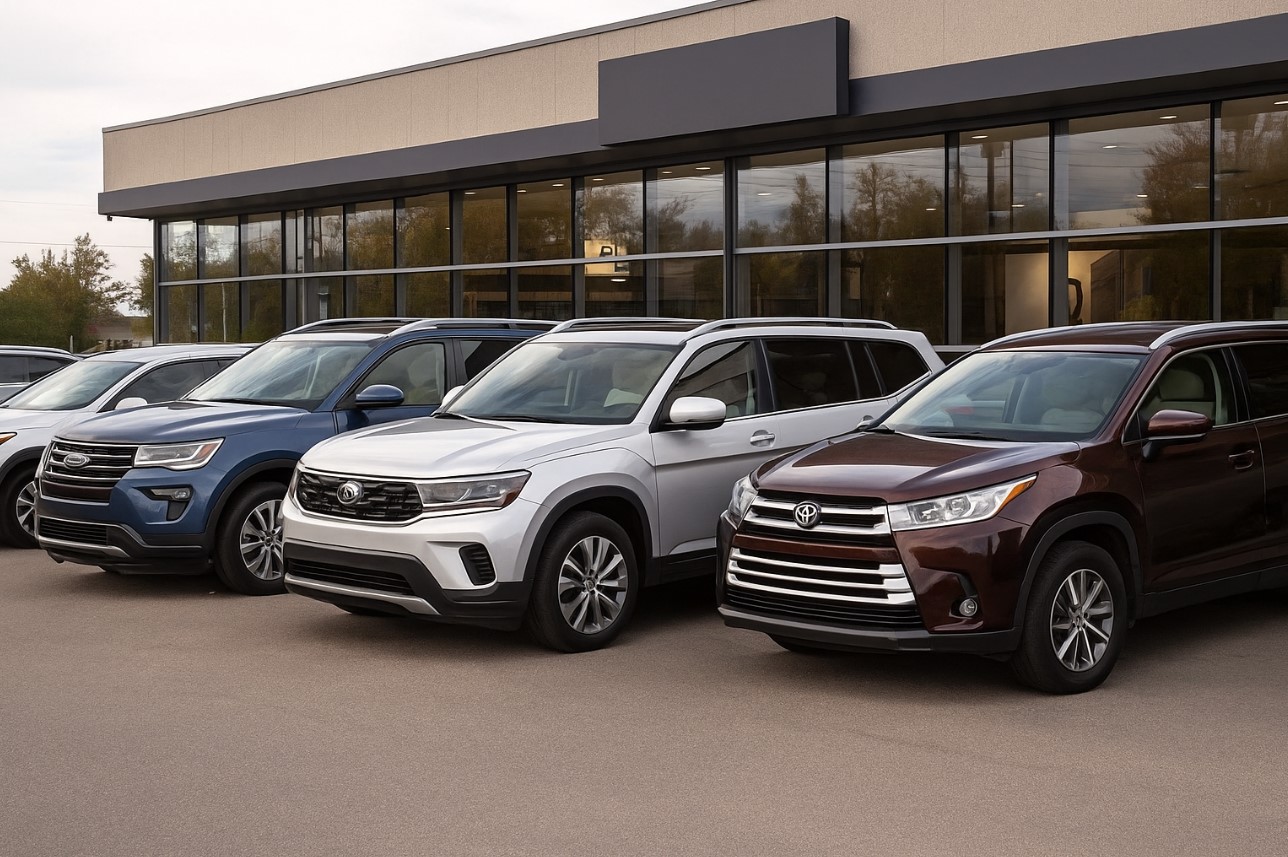
Space without too many compromises. Seven-seater cars are a great solution for larger families and for anyone who regularly travels with friends or relatives. On the German market between 2015 and 2025 you’ll find a wide range of 7-seat models that combine the driving feel of a car with the space of a small van. We’ve analysed the most interesting options and picked those that stand out. The list includes European bestsellers as well as some lesser-known but very sensible choices – including models that are often imported. All cars here have a solid reputation for reliability, practicality and resale value.
What we looked at: technical reliability, results in independent rankings and owner surveys, seat comfort and flexibility, real-world fuel consumption and indicative running costs. At the end of the article you’ll find a comparison table with key parameters – pros and cons, space, consumption and average annual costs for each model. Whatever you end up choosing, remember that even the most reliable model on paper still needs a proper, professional pre-purchase inspection.
In short: we focused on cars that offer a good balance of reliability, everyday practicality, fuel economy and resale value. We evaluated the cabin and seat flexibility, consumption and approximate running costs.
Whichever model you like, make sure you invest in a professional inspection and document check before you buy.
Volkswagen Touran (2015–2020)
The Volkswagen Touran is a textbook example of a rational family car. The second generation (2015–2020) is a compact MPV that you’ll see everywhere on German roads. Despite its modest footprint, the Touran offers 7 seats and, with the rear rows folded flat, up to around 1,900 litres of cargo space. Inside, everything is laid out in classic VW style: intuitive seat folding, loads of storage and materials that stand up well to daily family abuse.
Engines: the most common units are the 1.4 TSI petrol (150 hp) and 2.0 TDI diesel (110–190 hp). They have enough power to move a fully loaded Touran confidently, while staying surprisingly economical. In real conditions, diesel versions use about 5–6 l/100 km, petrols around 7 l/100 km – very attractive figures for a family on a budget.
Reliability and servicing: with regular oil changes and sensible warm-up/cool-down, TSI/TDI engines last a long time. The DSG dual-clutch gearbox, which used to have a questionable reputation, has become more robust in these model years. Yes, DSG has a particular feel and needs timely oil changes, but if serviced correctly it rarely causes major drama. Strengths of the Touran: precise handling, low consumption, strong demand on the used market (easy to sell later). Weaknesses: a relatively firm ride (especially on poor roads) and a third row that is tight for taller adults.
- 🔥 Engines: 1.4 TSI 150 hp; 2.0 TDI 110–190 hp.
- 💲 Real-world consumption: diesel ~5–6 l/100 km; petrol ~7 l/100 km.
- 👓 Pros: economy, flexible interior, strong resale value.
- ❗ Cons: firm suspension; tight third row for adults.
Ford S-Max (2015–…)
The second-generation Ford S-Max (from 2015) combines the space of an MPV with the driving dynamics of a car. It has built a reputation as a “sporty” family car: sharp steering and a well-sorted suspension give it arguably the best handling in its class. On the motorway or a twisty road, the S-Max feels planted and reassuring – which many drivers appreciate.
Interior and comfort: the 7-seat layout is family-friendly. The second row consists of three separate seats, the third row folds flat into the floor to create a large boot. Equipment levels are generous for this segment – dual-zone climate control, modern infotainment and driver-assistance systems are common.
Tech: the most popular versions use the 2.0 TDCi diesel (150–190 hp), which offers plenty of torque and a real-world consumption of around 6 l/100 km. There is also a 2.0 EcoBoost petrol (240 hp) for those who prioritise performance. The automatic gearboxes on newer S-Max models are generally reliable. Strengths: strong performance and stability at speed, spacious cabin, good ergonomics. Weaknesses: its size can make city parking more challenging, and the turbo engines are sensitive to neglected servicing (oil quality, EGR system cleanliness, etc.).
- 🔥 Engines: 2.0 TDCi 150–190 hp; 2.0 EcoBoost 240 hp.
- 💲 Real-world consumption: diesel ~6 l/100 km.
- 👓 Pros: best-in-class handling, high equipment levels, comfortable seating.
- ❗ Cons: big footprint for city use; engines demand proper servicing.
Škoda Kodiaq (2016–2025)
The Škoda Kodiaq shows that a seven-seater can also be an all-wheel-drive SUV. Produced since 2016 and refreshed during its lifecycle, it remains one of the most popular family SUVs in 2025. In many reliability rankings the Kodiaq scores high among 7-seat models, and in owner surveys it is often described as one of the less problematic mid-size SUVs. Sister models from VW Group – SEAT Tarraco and VW Tiguan Allspace – also receive good reviews, but the Kodiaq tends to be the default choice thanks to its value and clever details.
Engines and driving: early cars came with the 1.4 TSI petrol (150 hp), later replaced by the 1.5 TSI EVO (150 hp) with better efficiency. Popular diesels include the 2.0 TDI (150 or 190 hp), praised for torque and a realistic ~6 l/100 km consumption. You can have front-wheel drive or all-wheel drive (4×4 with an on-demand clutch). Ground clearance of around 190 mm plus 4×4 makes Kodiaq confident on rough roads and light off-road. Handling is safe and predictable; this is a comfort-oriented car rather than a sporty one.
Interior: Škoda’s “simply clever” philosophy is on full display. There is plenty of room; the third row suits children or average-height adults on shorter trips. In five-seat mode, the boot is enormous (700+ litres). Materials are robust and practical. High-spec versions feature a digital instrument cluster, adaptive cruise control and a broad set of assistance systems – on equipment, Kodiaq is on par with many passenger cars. Strengths: solid reliability, excellent practicality, generous ground clearance. Weaknesses: some drivers find the suspension on the firm side, and strong demand keeps used prices relatively high compared with similar-age saloons/estates.
- 🔥 Engines: 1.4/1.5 TSI 150 hp; 2.0 TDI 150/190 hp.
- 💲 Real-world consumption: around 6 l/100 km for 2.0 TDI.
- 👓 Pros: space, ~190 mm ground clearance, modern driver assists, robust drivetrains.
- ❗ Cons: suspension may feel firm; used prices hold up strongly.
Dacia Lodgy / Jogger (2012–2025)
For budget-conscious buyers, the Dacia Lodgy is worth a serious look – it’s one of the most affordable 7-seat MPVs on the market. Built from 2012, this Romanian-French workhorse won customers with its simplicity and low price. In 2022 it was replaced by the Dacia Jogger, which is also available as a 7-seater. Both cars are simple in design but give you seven seats for money that competitors can’t really match.
Practicality: the Lodgy’s styling and interior are modest, but its packaging is impressive. At roughly 4.5 m in length it still accommodates a usable third row and offers around 200 litres of boot space with all seats up. Remove the third row and you get around 600 litres; fold the second row as well and you’re looking at over 2,000 litres. In terms of pure practicality per euro, it’s hard to beat.
Tech: the most common engine is Renault’s 1.5 dCi diesel (90 or 110 hp). It is very economical (~5 l/100 km in real use) and not particularly picky, as long as servicing is up to date. There are also petrol options (naturally aspirated 1.6 and turbo TCe units). Most cars come with a 5- or 6-speed manual gearbox; the Jogger can be found with a CVT. Reliability: the engines are simple and durable if you look after them, and the body is decently protected against rust. Weak points include suspension and steering components – they wear out faster, but parts are inexpensive. Strengths: extremely low fuel and service costs, huge space for the money. Weaknesses: noisy, basic interior with very little sound insulation and a pared-back safety/comfort spec.
- 🔥 Engines: diesel 1.5 dCi 90/110 hp; petrol 1.6/TCe; Jogger also with newer petrol options.
- 💲 Real-world consumption: ~5 l/100 km (1.5 dCi).
- 👓 Pros: lowest cost of ownership, huge practicality.
- ❗ Cons: noisy cabin, basic comfort and safety spec.
You’ll also occasionally see US-imported minivans such as the Toyota Sienna or Honda Odyssey on German roads. They offer a massive cabin (7–8 seats) and strong engines, but keep in mind: they tend to use more fuel and may require more effort to service due to parts availability.
Comparison table of 7-seater models (2015–2025)
To wrap up, one key message: whatever you choose, the real secret to a successful purchase is a thorough pre-purchase inspection in Germany. Our team can inspect cars in Berlin or elsewhere in the country. We offer car-sourcing and inspection services across Germany, focusing on speed, transparency and expertise: we’ll check the vehicle’s history and provide a detailed report. With our help you can buy a reliable 7-seater without hidden issues.
| Model | Reliability (rating) | Main pros | Main cons | Space (seats/boot) | Consumption (l/100 km) | Average running costs* |
|---|---|---|---|---|---|---|
| VW Touran (II) | Above average | Economy; flexible interior; resale value | Firm ride; tight third row | 7 seats; boot up to ~1,900 l (seats folded) | 5–6 diesel / ~7 petrol | ~€1,500/year |
| Ford S-Max (II) | Average | Class-leading handling; good equipment | Size in city traffic; needs proper servicing | 7 seats; ~285 l (7 seats) / ~965 l (5 seats) | ~6 diesel / ~8 petrol | ~€1,700/year |
| VW Sharan / Alhambra | Above average | Space; sliding doors; quiet on the motorway | Higher consumption; pricier OEM parts | 7 seats; ~300 l (7 seats) / up to ~2,430 l (folded) | 6–7 diesel / 8–9 petrol | ~€1,800/year |
| Škoda Kodiaq (I) | High | Versatility; 4×4; ~190 mm ground clearance | Ride can feel firm; strong used prices | 7 seats; ~270 l (7 seats) / ~765 l (5 seats) | ~6 diesel / 7–8 petrol | ~€1,600/year |
| Dacia Lodgy/Jogger | Average | Lowest cost of ownership; utility | Noise; basic safety/comfort level | 7 seats; ~200 l (7 seats) / up to ~2,600 l (folded) | ~5 diesel / 6–7 petrol | ~€1,200/year |
*Estimated annual costs include routine servicing, insurance and taxes at ~15,000 km/year, excluding fuel. Actual costs depend on your region, driving history, trim level and the specific car’s condition.
Buying a 7-seater in Germany? We’ll inspect it and give you a clear report
Our experts perform a thorough OBD diagnostics, check the body and interior, carry out a test drive and review the documents and VIN history. You’ll receive a written “buy / don’t buy” verdict plus arguments you can use when negotiating the price.
- ⚡ Often available on the same day (Berlin / all of Germany).
- 💬 We speak Russian / German / Polish / Ukrainian.
- 💶 Transparent tariffs · online request via form.
Werbung / *Affiliate-Link
Links and banners marked with an asterisk (*) are affiliate links/banners. If you use such a link and subsequently request an offer, sign a contract or make a purchase, we receive a commission from the respective provider. For you, there are no disadvantages: the price and conditions remain the same.
FAQ – frequently asked questions
What should I choose: MPV or 7-seater SUV?
MPVs (Touran, Sharan) offer easier access, better seat flexibility and a quieter ride on the motorway. 7-seat SUVs (like Kodiaq) add ground clearance and available 4×4. Decide based on your typical use: city/motorway/rough roads/winter trips.
Is a 7-seater really suitable for long road trips?
Yes – but pay attention to the boot with all 7 seats in use. In many models the luggage area is small in this configuration, so you may need a roof box or to fold part of the third row for longer journeys.
Related posts
How to spot mileage fraud and recognise a “young” odometer
 Car sourcing in Leipzig – expert pre-purchase inspection | Sicher-Check