
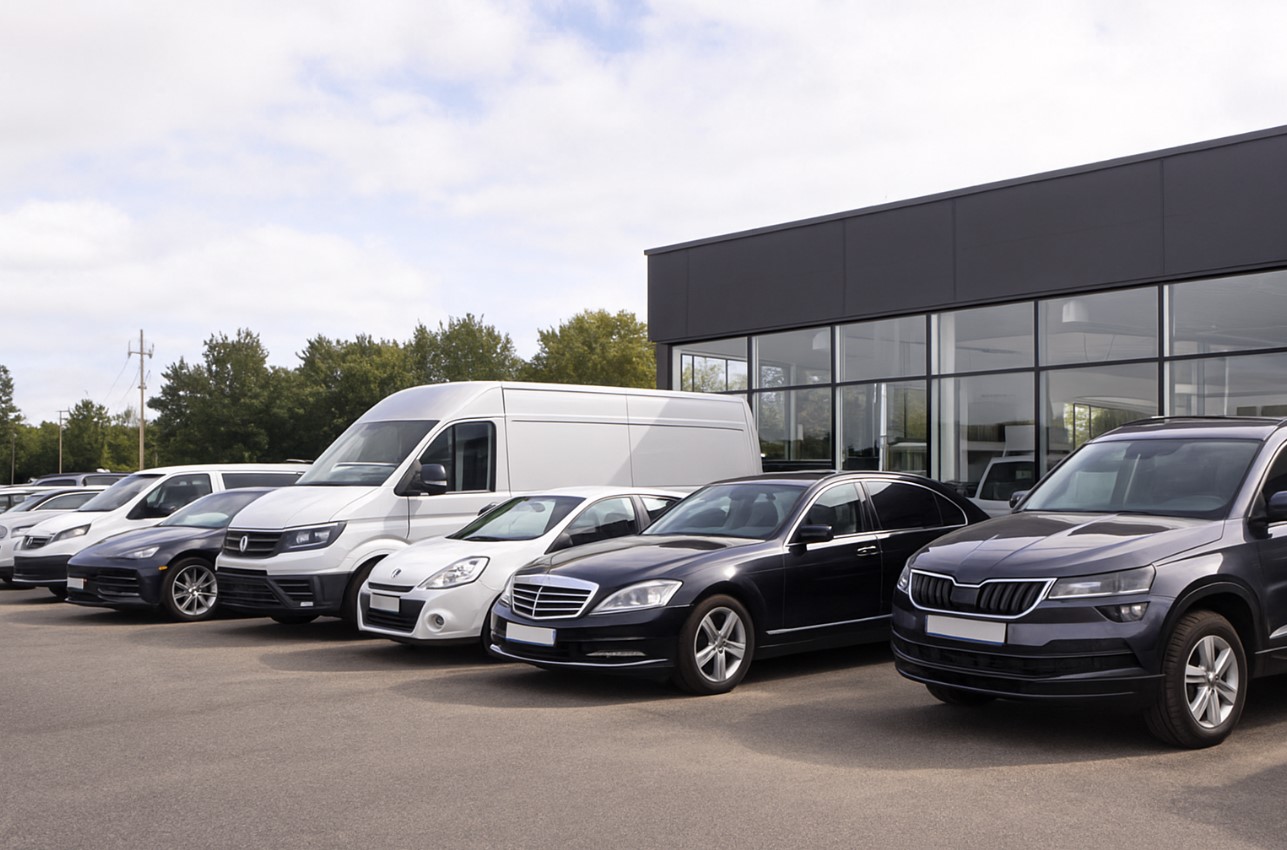
 Car sourcing in Germany – inspection and diagnostics before purchase
In short: we search on Mobile.de, AutoScout24 and dealer websites, we do an online pre-check via VIN and documents, then a proper on-site inspection, OBD diagnostics and test drive. After that – correct contract, plates and, if needed, export.
Thinking about buying a car in Germany? The German used-car market is attractive thanks to a huge choice and generally good vehicle condition, but buying used abroad requires a structured approach. In this article we walk through every step: where to search, how to check a car before purchase and how to make sure your “bargain” doesn’t turn into a financial disaster. We’ll factor in expert experience: in many cases, working with professionals actually saves money and time. And the more expensive the car, the higher the potential risk – making a mistake on a premium model can be particularly painful.
Where to search for a car in Germany
Modern online tools make searching for a car abroad surprisingly easy and transparent. The most popular platforms are:
- 👓 Mobile.de – the largest portal with hundreds of thousands of listings from private sellers and dealers across Germany.
- 👓 AutoScout24.de – another leading platform with a wide selection and powerful filters.
- 👓 Additional sites: also have a look at hey.car, PKW.de, eBay Kleinanzeigen and official dealer websites (Autohaus). They often offer used vehicles with some form of warranty.
These platforms let you select cars by budget, model year, mileage and many other criteria. Listings usually include detailed descriptions, photos, the VIN number and information about service history. Germany has a strong car-maintenance culture: most vehicles come with full service records, TÜV (technical inspection) reports and often just one or two owners. This makes used cars in Germany not only attractive financially but also relatively safe – as long as you follow a few basic rules.
Language is usually not a barrier. Most ads are in German, but Mobile.de and others offer automatic translation into English. When contacting the seller, you can use simple English or an online translator. Many dealers speak English, and private sellers are often happy to reply in English or simple phrases. The main thing is to prepare your questions clearly and ask for as much information as possible in advance.
What these platforms allow you to do:
- ✔️ filter cars by key parameters (year, mileage, price, make, model);
- ✔️ decide between private sellers and dealers;
- ✔️ check photos, VIN numbers and presence of service history;
- ✔️ spot good offers in specific regions;
- ✔️ plan your purchase remotely and then arrange an inspection.
If you are wondering where to find used cars in Germany, this is your starting point – the most popular and reliable platforms. Our goal is to help you avoid typical mistakes, save time and money, and find a car that truly matches your expectations. And if you would like hands-on support with the whole process, from online search to full inspection, our team is happy to help.
Online pre-check
Before you travel to see any car, collect as much information as possible. Ask the seller for the VIN and any history reports (for example, Carfax for US imports, TÜV reports in Germany). Check if the car is listed as stolen or subject to finance. Clarify whether the seller can refund VAT on export (for non-EU residents this is roughly 19% of the price). Some less honest dealers will promise VAT refund and never actually do it. At this stage your goal is to filter out obviously bad candidates so you don’t waste time and money on inspecting them.
- 📜 Ask for the VIN, past TÜV (HU/AU) reports and service book / invoices.
- 📜 Check the history in available databases (Carfax for US imports, local TÜV reports, etc.). A “clean” report does not replace a real inspection.
- 📜 Clarify VAT status and possible VAT refund conditions for export (for non-EU residents).
- 📜 Eliminate obvious risks: missing documents, shady photos, unrealistically low price.
What to look at during inspection and diagnostics
Once you’ve found a promising car, the most important part begins – the technical inspection before purchase. Key points you must not skip:
- 💯 Mileage & history: make sure the stated mileage is credible. Unfortunately, mileage tampering still happens even in Germany. Study the service book: regular services every ~15,000 km and TÜV stamps every two years are good signs.
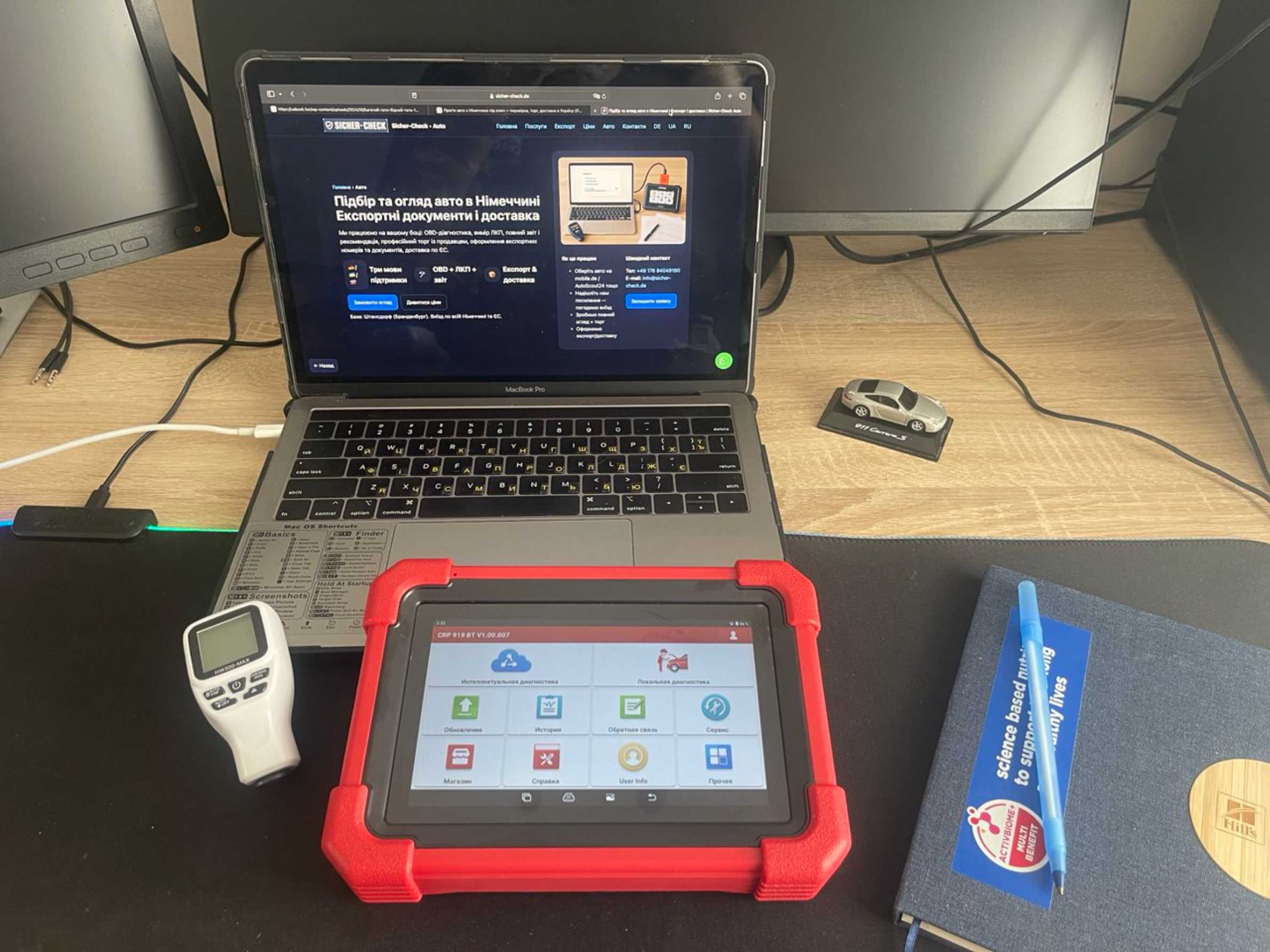
- 💯 Bodywork: look for repainted panels and inconsistent panel gaps. Accident damage can be repaired and hidden very well. A paint thickness gauge helps reveal filler. Check glass and lights – matching date codes usually indicate original parts.
- 💯 Paperwork: Zulassungsbescheinigung Teil I & II (registration documents) and the service book must be present. Missing papers or inconsistencies are red flags. A car with incomplete documents or outstanding finance can cause serious registration problems.
- 💯 Electronics / OBD: plug in an OBD scanner to check for fault codes in engine, gearbox and safety systems. Without proper equipment and experience it’s almost impossible to spot all hidden issues. Diagnostics will show “check engine” and other errors the seller may have tried to clear.
- 💯 Test drive: always drive the car. Listen for unusual noises, check gearbox behaviour and braking performance. The car should not pull to one side or feel unstable. Test the climate control, electronics and all options – repairs on complex systems can get very expensive.
- Whenever possible, carry out the inspection on a lift or pit so you can check the underside for rust and leaks. Ideally, involve an independent expert. A professional will check the car systematically: paint thickness, glass and lights, interior, full diagnostics, test drive, photos and video. At the end you get a written report and a clear recommendation – buy, negotiate hard or walk away.
Why working with professionals pays off
Even experienced car enthusiasts can overlook important details when buying abroad. A professional car inspection / sourcing service in Germany eliminates many of these risks. Local experts know typical model issues, can spot flood or accident damage from subtle clues and check legal status. Without specialist tools and know-how, uncovering hidden defects is very difficult.
The relatively small cost of such a service often pays for itself many times over: you avoid buying a “pig in a poke” and prevent repair bills in the thousands. The price of a thorough inspection is modest compared with the car’s value – a full expert check usually costs around €250–400 depending on class and scope.
One real-world example: a client once bought a “bargain” crossover in Germany without a full inspection. A few months later serious engine and transmission issues appeared – repair cost several thousand euros. At the time, a professional inspection would have cost around €300 and would have revealed the problems before purchase, allowing him to walk away. The conclusion is obvious: better spend hundreds on expertise than thousands on repairs.
Professional support is especially sensible for premium models. If you’re buying a €30,000 sedan, investing in a deep inspection is a no-brainer – otherwise you may discover hidden defects worth a five-figure sum later on. Experts not only protect you from bad cars, they also give you strong arguments for negotiating the price.
- 💲 Typical cost of a full inspection: about €250–400 (depends on class / scope).
- 💲 Savings from avoiding a bad car – hundreds or thousands of euros, plus time and nerves.
How the purchase and paperwork work
If the car passes inspection and you’re ready to proceed, the next step is to structure the deal correctly. In Germany, a standard purchase contract (Kaufvertrag) is used. It lists the seller and buyer data, VIN, price and conditions (for example, that the car is sold without known hidden defects). Note that, especially in private sales, the contract almost always includes a “no warranty” clause (gekauft wie gesehen) – this is normal for used cars in Germany.
Payment: ideally via bank transfer (SEPA) – this is safer than carrying large amounts of cash. Many dealers accept SEPA transfers or offer secure escrow-style options. If you pay in cash, insist on a written receipt.
Documents: the seller must hand over the Fahrzeugbrief (Teil II) and Fahrzeugschein (Teil I) (registration documents). You should also receive the service book, TÜV report (if available) and both keys. If the car is going to be exported, it usually needs to be deregistered (Abmeldung) – often done by the seller.
- ⚠️ Contract (Kaufvertrag): personal details, VIN, price, date & time of handover, statements (e.g. Unfallfrei), actual mileage. In private sales – the usual “gekauft wie gesehen” clause.
- ⚠️ Payment: preferably SEPA transfer / escrow; cash only with a proper receipt and, ideally, some documentation.
- ⚠️ Documents from seller: Teil I/II, TÜV report, service book, two keys, deregistration (Abmeldung) for export.
Plates, export and transport
To move your newly purchased car legally, you’ll need temporary plates. There are yellow short-term plates (Kurzzeitkennzeichen) for up to 5 days within Germany, and red export plates (Ausfuhrkennzeichen) with insurance for 15–30 days for driving out of Germany / EU. You can obtain them at the local registration office (Zulassungsstelle) by presenting insurance (eVB number) and the vehicle documents. Many companies, including ours, can help you organise plates and insurance on site.
- 🚗 Kurzzeitkennzeichen (yellow) – up to 5 days within Germany.
- 🚗 Ausfuhrkennzeichen (red) – 15–30 days for export beyond Germany / EU.
- 🚗 Issued by the Zulassungsstelle: requires eVB, insurance, documents and fees.
- 🚗 For export outside the EU – customs formalities; consider using a car transporter / logistics company.
For export beyond the EU you’ll also need to clear customs at the border of your destination country. Check import duties and requirements in advance. In many situations using a professional transport service or car carrier is safer and sometimes even cheaper than a long self-drive.
Once all formalities are completed, you’re the legal owner of a German car. With the careful search and inspection described above, your chances of getting a genuinely good vehicle are high – all that’s left is to enjoy driving it.
Saving money, time and nerves
To sum up: buying a used car in Germany can be a great deal – but only if you approach it correctly. Use reputable platforms, thoroughly check the car’s history and technical condition. If you don’t have the time or confidence to do this yourself, let professionals handle it. In practice, independent inspections in Germany are not an expense, but an investment in your own peace of mind.
Our company can be your reliable partner in this process. We organise fast pre-purchase inspections across Germany – checking more than 100 points from bodywork and diagnostics to test drive. You receive a detailed photo/video report and our expert opinion. With our help, car sourcing in Germany becomes fast, transparent and safe. You avoid costly mistakes and save more than you spend on the service – and your “car from Germany” brings only positive emotions.
Werbung / *Affiliate-Link
Links and banners marked with an asterisk (*) are affiliate links/banners. If you use such a link and subsequently request an offer, sign a contract or make a purchase, we receive a commission from the respective provider. For you, there are no disadvantages: the price and conditions remain the same.
Related posts
Car sourcing in Germany – inspection and diagnostics before purchase
 Best minibuses 2015–2025 on the German market: family vans overview