
 Best seven-seater cars 2015–2025 on the German market: expert pick
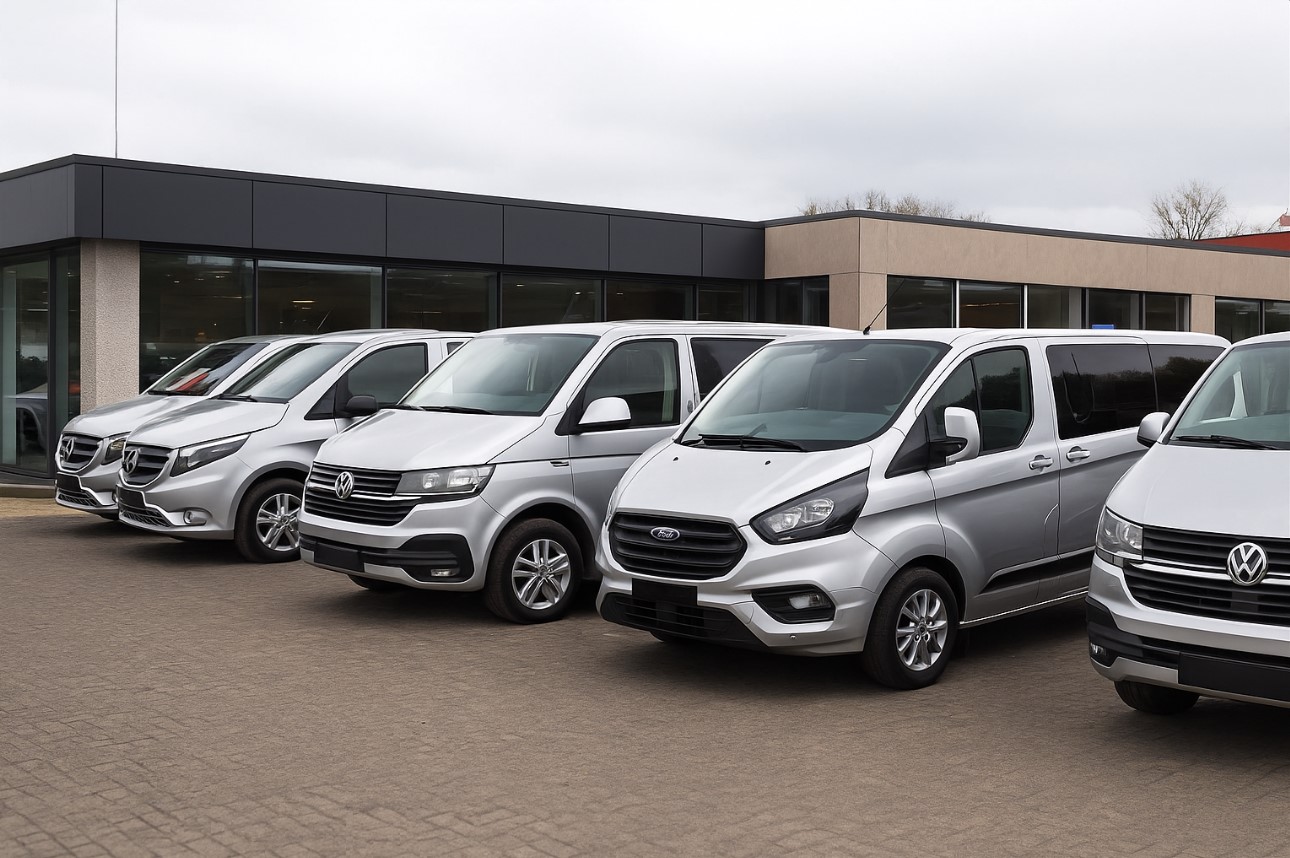
In short: when you really need space. If a 7-seat SUV already feels tight, a proper minibus is the next step – large family vans that can comfortably carry 7–9 people plus a mountain of luggage. On the German market between 2015 and 2025 the choice is broad: from iconic Volkswagen and Mercedes vans to very sensible French and Korean options. We analysed the main candidates and picked the strongest ones in terms of reliability, comfort and owner feedback.
Each of these vehicles is a little “house on wheels”: a flexible lounge-like cabin, high seating position and engines designed for long-distance touring. At the end of the article you’ll find a summary table comparing the key parameters: reliability, pros and cons, space, fuel consumption and approximate annual running costs. Keep in mind that these vehicles are usually heavily used – which makes a thorough professional inspection before purchase absolutely critical if you want to avoid expensive hidden issues.
Volkswagen Multivan (Transporter T6, 2015–2020)
The benchmark in this segment is the Volkswagen Multivan T6. The sixth generation of the legendary Transporter (2015–2019, facelift T6.1 in 2019) is a reference point for balancing comfort and practicality. Space and versatility are its strongest sides. The cabin can be configured for up to 7 seats while still leaving room for luggage. Second-row seats often swivel 180°, so passengers can sit face-to-face around a table. Numerous storage compartments and clever details turn the interior into a mobile office or living room.
The Multivan T6 comes with tried-and-tested 2.0 TDI engines with different outputs (102–204 hp). The 150 hp diesel is particularly popular, offering enough torque for a fully loaded van and a realistic consumption of around 7–8 l/100 km. Optional 4Motion all-wheel drive is available on higher trims – useful in winter or on rough roads. Gearboxes include a 6-speed manual and a 7-speed DSG. Reliability: with regular servicing the drivetrain can cover very high mileages – it’s common to see examples with 200–300,000 km without major engine work. Many long-term tests mention that over 120,000 km the Multivan T6 proved completely dependable. Strengths: huge, flexible interior, surprisingly good handling for such a big vehicle, and a truly universal character (family, work, travel). Weaknesses: rather firm suspension on poor roads (ride comfort is not its strongest point) and high costs – both for buying and maintaining the vehicle.
- 🔥 Engines: 2.0 TDI diesels 102–204 hp; optional 4Motion.
- 🚗 Transmissions: 6-speed manual or 7-speed DSG.
- 🛠 Real-world consumption: ~7–8 l/100 km (diesel).
- ✔️ Pros: huge cabin, very versatile, secure handling.
- ❗ Cons: firm over sharp bumps; expensive to buy and service.
Mercedes-Benz V-Class (W447, 2014–2025)
The premium choice here is the second-generation Mercedes V-Class (W447, from 2014). It’s one of the most luxurious MPVs ever built: inside you’ll find leather, wood trim and tech trickled down from the S-Class. It is available in three lengths (standard, long, extra-long). The cabin seats 5–8 people with individual “captain’s chairs” that can be arranged face-to-face. Boot volume ranges from around 610 to 1,410 litres depending on wheelbase; remove the rear seats and you effectively have a small van.
Comfort and tech: even base V-Class models are well equipped; top trims come with advanced safety systems such as adaptive cruise control, automatic emergency braking and blind-spot monitoring. Passengers can enjoy multi-zone climate control, heated/ventilated seats and, in some versions, a panoramic roof. Engines: the range includes 2.1/2.2 CDI diesels (136–239 hp) and a 2.0 turbo petrol (211 hp), but most used vehicles in Germany are diesels. Realistic fuel consumption is around 7–8 l/100 km (diesel) in mixed driving. Reliability: Mercedes diesels are known for their longevity, and many V-Class examples exceed 300–400,000 km. On the used market, however, it is rare to find low-mileage vans – they usually have 100–150,000 km or more. Wear of suspension components (bushes, dampers) after 200,000 km is to be expected, and it’s also worth checking the body: some owners report rust spots on seams and lower body sections. Pros: class-leading comfort, strong image, robust body and suspension designed to handle high loads. Cons: servicing is very expensive (parts and labour costs often rival those of Mercedes business saloons), and there is a real risk of buying a tired high-mileage example – so a thorough inspection is essential.
- 🔥 Engines: 2.1/2.2 CDI diesels 136–239 hp; 2.0 petrol.
- 🛠️ Real-world consumption: ~7–8 l/100 km (diesel).
- ✔️ Pros: superb comfort and refinement, durable drivetrains.
- ❗ Cons: very expensive servicing; most used vans have high mileage – detailed diagnostics are a must.
Ford Tourneo Custom (2013–2023)
The Ford Tourneo Custom is a practical and relatively affordable minibus. The 2013 generation (facelift in 2018) is available with short and long wheelbases (L1/L2). It’s essentially the passenger version of the Ford Transit Custom. Family use: the 8-seat interior (2-3-3) can be folded, removed and reconfigured in many ways. In the long L2 version, even with all 8 seats in use, there is still a respectable boot of around 1,200 litres.
Engines: early models use the 2.2 TDCi diesel (125–155 hp), later replaced by the 2.0 EcoBlue (130–185 hp) after 2018. Typical real-world consumption is 7–8 l/100 km. Unlike rear-wheel-drive Transits, the Tourneo Custom is front-wheel drive, which gives it more car-like handling. Gearboxes: 6-speed manual as standard, with automatic gearboxes available from 2016 onwards. Reliability: the Tourneo Custom has earned a reputation as a solid workhorse. The diesels cover high mileages if you use quality oil and shorten the oil-change interval to around 10,000 km. The electrical system is simple and generally trouble-free. Pros: more affordable than German rivals, relatively low servicing costs, decent manoeuvrability for its size. Cons: more basic cabin and sound insulation, no 4×4 version and performance that feels modest when fully loaded.
- 🔥 Engines: 2.2 TDCi 125–155 hp; 2.0 EcoBlue 130–185 hp (facelift).
- 🛠️ Real-world consumption: ~7–8 l/100 km.
- ✔️ Pros: reasonable purchase price, cheap servicing, manoeuvrable.
- ❗ Cons: simpler interior and sound insulation; no 4×4; performance is modest when fully loaded.
Peugeot Traveller / Citroën SpaceTourer / Opel Zafira Life (2016–2025)
This Franco-German-Japanese alliance is represented by the Traveller/SpaceTourer/Zafira Life/ProAce Verso family. Four badges, but essentially one model developed by PSA and launched in 2016. The vans come in three lengths (Compact ~4.6 m, Standard ~4.96 m, Long ~5.3 m) and various seating layouts (from 5 to 9 seats). Eight-seat (2-3-3) versions are particularly popular.
Practicality: in their long-wheelbase versions these vans offer some of the biggest boots in the class – for example, an 8-seat SpaceTourer Long has around 980 litres of boot space even with all seats fitted. Sliding doors on both sides (often with electric operation) make access easy. Top trims such as Traveller Business VIP come remarkably close to the V-Class in terms of comfort: leather seats, tablet holders, separate climate zones and more.
Tech: the most common engines are 1.6 and 2.0 BlueHDi diesels (95–180 hp). The 2.0 HDi with around 150 hp is considered the sweet spot for performance and reliability – it can push the van to well over 170 km/h and returns around 6–7 l/100 km in mixed driving. Gearboxes include 6-speed manuals and Aisin automatics (from 2018 an 8-speed). Reliability: these are relatively new models and no widespread issues have emerged so far. BlueHDi engines need good-quality fuel and proper AdBlue system maintenance, but with sensible servicing they routinely run well beyond 200,000 km. Pros: arguably the best price-to-equipment ratio in the class, broad choice of lengths and trims, and the lowest fuel consumption among minibuses here. Cons: less “premium” feel compared with VW/Mercedes and a simpler suspension setup – on the road they feel a bit firmer and noisier than a Multivan or V-Class.
- 🔥 Engines: 1.6/2.0 BlueHDi 95–180 hp (2.0 ~150 hp is the sweet spot).
- 🚗 Transmissions: 6-speed manual or 8-speed Aisin automatic.
- 🛠 Real-world consumption: ~6–7 l/100 km (diesel).
- ✔️ Pros: excellent price/equipment balance, lots of sizes and configurations.
- ❗ Cons: less “premium” driving feel; AdBlue system needs proper fuel and maintenance.
Hyundai H-1 (Starex, 2007–2020)
The Korean Hyundai H-1 (Grand Starex) second generation is a solid choice if you want a tough, relatively inexpensive “workhorse” with a very spacious cabin. It’s not very common as an official model in Germany, but you will find imported used vehicles on the market. The Grand Starex has built a reputation as a durable minibus. Depending on seating layout it can carry 7 to 9–12 people (commercial versions). In passenger-spec 8-seat configurations, comfort is reasonable and there is still a large boot.
On the road: the 2.5 CRDi diesel (around 170 hp) provides enough torque even when fully loaded, with typical consumption in the 8–10 l/100 km range. Some versions have selectable all-wheel drive, which is valuable in poor weather or on rough roads. Transmission choices include 5- or 6-speed manual and automatic gearboxes. Reliability: engine and gearbox are generally long-lived if serviced on time. The bodywork holds up well, but after 5–7 years rust can appear on wheel arches – something to check carefully. Pros: very high seating and cargo capacity (boot can be extended to around 3,000 litres) and robust mechanicals, plus affordable parts and labour. Cons: weak sound insulation and a firm ride – in terms of comfort it cannot match European rivals, and the cabin feels more utilitarian.
- 🔥 Engines: 2.5 CRDi ~170 hp.
- 🛠️ Real-world consumption: ~8–10 l/100 km.
- ✔️ Pros: durable drivetrain, cheap parts and repairs.
- ❗ Cons: noticeable noise and firm suspension; watch for arch corrosion with age.
Comparison table: minibuses (2015–2025)
In the end, your choice of minibus comes down to priorities: if you want maximum comfort, VW and Mercedes are hard to beat; if you care more about fuel economy, the French models shine; if you want budget-friendly robustness, the Korean option makes sense. In any case, we strongly advise against saving money on the inspection. High mileages and hidden defects can be found even in the best model lines. Before buying, book a professional inspection in Germany. Our team can quickly check a vehicle for you – from bodywork to electronics – and provide a clear written report. With our car-sourcing service in Germany you get expert support and a safer deal: you end up with a vetted minibus instead of a risky gamble.
| Model | Reliability | Pros | Cons | Capacity | Consumption (l/100 km) | Est. yearly running* |
|---|---|---|---|---|---|---|
| VW Multivan T6 (2015–2019) | Above average | Spacious cabin; versatility; handling | Firm suspension; high purchase/servicing costs | 7 seats (flexible layout) | 7–8 (diesel) | ~€2,500 |
| MB V-Class (W447) | Above average | Comfort and tech; long-lasting diesels | Very expensive servicing; usually high mileage | 6–8 seats (various wheelbases) | 7–9 (diesel) | ~€3,000 |
| Ford Tourneo Custom | Average | More affordable; cheap servicing | Simpler cabin/noise; no 4×4 | 8 seats (2-3-3) | 7–8 (diesel) | ~€1,800 |
| Peugeot/Citroën/Opel (Traveller/SpaceTourer/Zafira Life) | Average | Low consumption; wide range of sizes/trims | Less premium feel; AdBlue care needed | 7–9 seats | 6–7 (diesel) | ~€1,700 |
| Hyundai H-1 (Starex) | Average | Rugged; cheap parts; big boot | Firm/noisy ride; watch for rust | 8 seats (up to 11 in commercial trims) | 8–10 (diesel) | ~€1,500 |
*Estimated annual costs include routine servicing, insurance and tax at ~20,000 km/year, excluding fuel. Real figures depend on region, driver profile, trim level and vehicle condition.
Buying a minibus in Germany? We’ll inspect it and send you a report
We carry out a detailed OBD diagnostics, check the body and interior, perform a test drive, review the documents and VIN history and prepare a written “buy / don’t buy” verdict with arguments for price negotiation.
- ⚡ Often available on the same day (Berlin / all of Germany).
- 💬 We speak Russian / German / Polish / Ukrainian – no language barrier.
- 💶 Transparent tariffs · online request via form.
Werbung / *Affiliate-Link
Links and banners marked with an asterisk (*) are affiliate links/banners. If you use such a link and subsequently request an offer, sign a contract or make a purchase, we receive a commission from the respective provider. For you, there are no disadvantages: the price and conditions remain the same.
Related posts
Best seven-seater cars 2015–2025 on the German market: expert pick
 Test drive before buying a used car in Germany: step-by-step guide and tips