
 Car sourcing in Germany: age and the choice of used car (article 45)
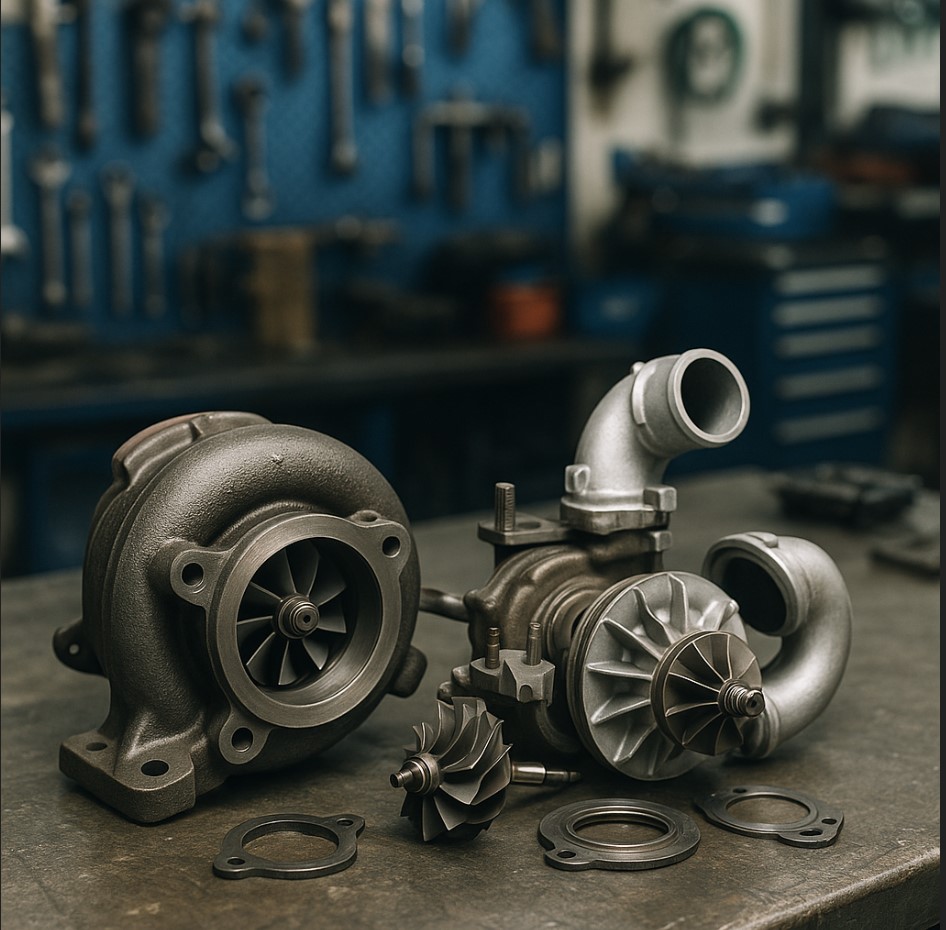
Computer diagnostics of the turbocharger is a key step when checking the engine before buying a used car – or when the car already shows suspicious symptoms. The turbocharger is responsible for forcing more air into the engine, increasing power and efficiency. With mileage and poor maintenance the turbo wears out and can fail, which hurts performance, increases fuel consumption and shortens engine life.
Within our professional car sourcing in Germany we treat the turbo as one of the main components to check. In this article we explain how diagnostics is carried out with a modern LAUNCH scanner, which live parameters we look at, which values are considered normal and which warning signs you can sometimes feel on a test drive. We’ll also cover why you need proper equipment and experience for this job and how our team inspects turbos on used cars across Germany – especially in the Berlin/Brandenburg region.
How computer turbo diagnostics works (using LAUNCH as an example)
Computer diagnostics of the boost system lets you assess the turbo without dismantling the engine. The idea is simple: we connect a professional scanner to the car’s OBD-II socket (in our case a diagnostic tablet from LAUNCH). The scanner communicates with the engine control unit and other modules and shows how the boost system is actually working.
For example, the Launch X-431 is a modern multi-brand scanner running on Android, with wide support for Audi, Volkswagen, BMW, Mercedes-Benz and many more, plus powerful test functions. Once we’ve connected LAUNCH to the car, the typical workflow looks like this:
✔️ 1. Reading fault codes (DTCs)
First we read DTCs – diagnostic trouble codes stored in the ECU. If the turbo or its control system is unhappy, we often see faults such as:
- P0299 – underboost (boost pressure too low);
- P0234 – overboost (boost pressure too high);
- related codes for the boost pressure sensor, MAF sensor or boost control system.
These codes give us a starting point: even at this stage it’s often clear whether the car has issues with the turbo or boost control.
✔️ 2. Analysing live data
After reading codes we switch to live data. The LAUNCH scanner can show dozens of real-time parameters: engine speed, load, ignition timing, temperatures – and of course the ones related to boost. While driving (ideally under load) we monitor:
- boost / MAP pressure;
- actuator position or variable geometry position;
- mass air flow (MAF);
- intake air temperature after the intercooler;
- oil pressure and other key values.
When you press the accelerator, the scanner shows how boost builds and whether the actual pressure follows the target value for that engine. If actual boost is slow and never reaches the target, or overshoots it, we know something is wrong.
✔️ 3. Comparing with reference values
Interpreting the numbers is the most important part. You have to know what “healthy” looks like for a specific engine. An experienced diagnostician compares actual figures with reference values for that engine type, often using LAUNCH data, OEM manuals and other documentation.
Boost pressure gets special attention. Deviations can mean:
- underboost – leaks in the charge-air system, worn turbo, actuator or geometry problems;
- overboost – sticking variable geometry, faulty wastegate or boost control issues.
Computer diagnostics with a LAUNCH X-431 gives us a detailed picture of how the turbo and the entire boost system are working – without taking anything apart. This dramatically speeds up decision-making during car sourcing: we quickly see whether a car is worth considering or should be crossed off the list.
✔️ 4. Special tests and active functions
Modern scanners like LAUNCH offer actuation tests and special functions, for example:
- forcibly moving the variable geometry vanes;
- controlling the wastegate valve;
- checking boost system tightness indirectly via sensor readings.
We can tell the ECU to move the actuator repeatedly and watch how boost pressure and sensor readings react. If nothing changes or the reaction is illogical, it’s a strong hint of sticking vanes or actuator failure.
✔️ 5. Conclusion and recommendations
After collecting all the data, we give a verdict on the condition of the turbo. If needed, we complement computer diagnostics with simple mechanical checks:
- measuring boost pressure with a gauge;
- inspecting the compressor wheel via borescope where access allows;
- checking shaft play if it’s safely accessible.
In many cases, live data and fault codes are enough to understand whether the turbo is healthy or already close to the end of its life – and whether it makes sense to continue with this car or move on to the next listing.
Live turbo diagnostics: key parameters and what’s “normal”
When judging the condition of a turbo in real time we focus on several key parameters. Live data from the ECU shows current sensor readings and calculated values related to boost.
⚠️ Absolute pressure in the intake manifold (MAP)
The MAP sensor measures pressure after the turbo:
- on turbo petrol engines at idle the throttle is mostly closed, so you normally see vacuum – pressure below atmospheric;
- on most turbo diesels at idle there is little to no vacuum, so the reading is closer to ambient pressure (~1 bar absolute);
- under load a healthy turbo raises boost to around 0.5–1.0 bar above atmospheric (1.5–2.0 bar absolute) on many cars, and even up to 1.5–2 bar extra on some modern diesels.
The ECU calculates a target boost pressure. We compare this with the actual reading: in a healthy system they are close, with only small deviations. If actual pressure stays far below target, the turbo is underboosting (leaks, wear, geometry issues). If it’s regularly above target, we may be dealing with overboost due to control problems. In both cases the ECU often logs DTCs such as P0299 or P0234.
⚠️ Actuator / variable geometry position
Many turbos (especially on diesels) use variable geometry (VGT/VNT) or an electronically controlled wastegate. LAUNCH shows the percentage of opening for these mechanisms. A typical pattern:
- under strong acceleration the actuator moves towards 80–90% (maximum boost);
- at idle it may stay around 5–10% (turbo “resting”);
- values change smoothly with engine load.
If the vanes are coked up and sticking, you often see strange behaviour – for example, the position stuck at 0% or 100%, or values jumping instead of moving smoothly. Together with the boost curve this paints a clear picture: sticking geometry usually shows up as constant underboost or wild pressure spikes.
⚠️ Mass air flow (MAF)
The MAF sensor measures how much air the engine is actually swallowing. This is directly linked to turbo operation: more boost means more air through the sensor. The scanner shows mass flow in g/s or kg/h. As a rough guide:
- at idle a small engine may draw around 2–4 g/s;
- under full load we see tens of grams per second or more, depending on engine size and boost.
If the turbo is not building proper boost, air flow under load will be noticeably lower than expected. If the MAF is under-reading (or there are leaks before it), the ECU may deliberately limit boost based on wrong data. That’s why we always look at MAF together with MAP and engine load.
⚠️ Intake air temperature
The turbo heats the air while compressing it, so an intercooler is used. Live data in LAUNCH shows intake air temperature after the intercooler:
- under moderate load it should only rise a little (for example from 20°C to 30–40°C);
- very high temperatures (60–80°C and more) under load can indicate high thermal stress or an ineffective intercooler;
- hot intake air reduces power and increases the risk of knock on petrol engines.
Temperature analysis helps us judge the cooling efficiency of the charge-air system and indirectly understand how hard the turbo is working.
⚠️ Oil pressure
The turbo runs on engine oil. At the same time we monitor oil pressure (where data is available):
- on a warm engine around ~2 bar at idle is typical;
- 3–5 bar at higher rpm depending on engine design.
If oil pressure is low, the turbo may be starved of lubrication, wearing out bearings and seals much faster. A severely worn turbo can then start pushing oil into the exhaust, which shows up as oil consumption, smoke and a characteristic smell.
These are only some of the values we check in live mode. What matters is not just individual numbers but how the whole system behaves over time: how quickly boost rises and drops, how the actuator reacts, how boost, air flow and temperature correlate. That’s why interpretation should be left to a specialist who knows which patterns are normal for a given engine and which mean “walk away from this car”.
Why professional tools and experience matter ❓
It’s worth stressing: for turbo diagnostics both the equipment and the person using it are critical. We use only original LAUNCH diagnostic equipment. These scanners provide accurate data and support all popular brands. During car sourcing in Germany we see many turbocharged Audi, Volkswagen, BMW and Mercedes models (both diesel and petrol) – LAUNCH can talk to all of them at near dealer level and read a lot of detailed information.
But hardware alone is not enough. You also need context:
- which values are completely fine for this exact engine and which already point to a problem;
- how different generations of turbos behave in practice (VGT, twin-turbo, biturbo, simple wastegate systems);
- what is acceptable for a used car with realistic mileage vs what is a red flag when buying.
For some engines a slight lack of boost at the top end can be normal given age and kilometres; for others it’s an early sign of serious trouble. An experienced diagnostician takes the whole picture into account – live data, fault codes, test-drive impressions and visual checks – and then answers the main question: is this a healthy turbo with natural wear, or a component that will soon require an expensive replacement?
How we check turbos during car sourcing in Germany
As part of our car sourcing service in Germany we always include computer diagnostics of the turbo and related systems in the standard checklist. We pay special attention to turbo diesels and powerful petrol turbos, long-distance estate cars and SUVs that have lived most of their life on the Autobahn.
On almost every trip we:
- 👓 connect an original LAUNCH X-431 scanner to the car;
- 👓 read engine and turbo-related fault codes and evaluate any P0299, P0234 and related DTCs;
- 👓 run live diagnostics under load (ideally on the road);
- 👓 analyse boost pressure, actuator operation, MAF readings, intake air temperature and oil pressure;
- 👓 document the results in a written report with clear comments for the client.
If all values are logical and within expected ranges, we say so openly in the report: the turbo is working well for its age and mileage and the car can be considered. If live data and codes raise questions, we:
- explain the risks and likely repair scenarios (costs and timeframe);
- recommend either walking away or negotiating a serious discount to cover future work;
- where necessary, continue the search and propose alternative cars with healthier engines.
This approach helps our clients avoid “pig in a poke” situations and base their decision on hard facts. Combining a VIN report (we break this down in detail in “How to read a VIN report in Germany”) with proper turbo diagnostics gives a much more complete picture of the car’s condition.
Conclusion: don’t skip computer turbo diagnostics
The turbocharger is one of the most expensive and heavily loaded components of a modern engine. Its condition has a direct impact on performance, fuel consumption and overall reliability. Trying to save money by skipping diagnostics during car sourcing in Germany can easily lead to a costly chain reaction later – a turbo replacement, intercooler issues, catalytic converter damage or even a full engine rebuild.
Computer turbo diagnostics with a professional LAUNCH scanner and competent interpretation of live data allow you to spot problems early – and either walk away from a risky car or negotiate hard with the seller. This is especially important when buying turbocharged Audi, Volkswagen, BMW, Mercedes and other popular models on the German market.
If you are planning to buy a car in Germany and want to be confident in the condition of the turbo and the engine, talk to professionals. We can handle the entire car sourcing process in Germany for you: from screening ads and VIN checks to in-depth computer diagnostics of all key systems, including the boost and turbo.
Werbung / *Affiliate-Link
Links and banners marked with an asterisk (*) are affiliate links/banners. If you use such a link and subsequently request an offer, sign a contract or make a purchase, we receive a commission from the respective provider. For you, there are no disadvantages: the price and conditions remain the same.
FAQ – common questions about turbo diagnostics during car sourcing in Germany
Can I judge turbo condition just from a test drive without a scanner?
A test drive is important but only shows part of the story. Sometimes turbo issues don’t yet cause obvious lag or whistling, but are already visible in live data – boost deviations, strange actuator behaviour, abnormal MAF readings. For a reliable verdict you need both a proper test drive and computer diagnostics.
How long does computer turbo diagnostics take as part of an inspection?
In most cases basic turbo diagnostics within a full inspection takes around 15–30 minutes. During this time we read fault codes, run live data at different loads, analyse the most important parameters and document our findings. Extra mechanical checks, if needed, can add more time.
If the turbo is “on the edge”, does it still make sense to buy the car?
It depends on your budget and plans. Sometimes it’s reasonable to buy a car with mild turbo wear if the seller offers a realistic discount and you are ready to factor in repairs. In other cases it’s smarter to walk away and look for a car with a healthier engine. We always explain options honestly and never push a deal at any cost.
Can I order only turbo and engine diagnostics without full car sourcing?
Yes. If you have already found a car and want to specifically check the engine and turbo before buying, we can travel to the car, connect LAUNCH, run diagnostics and prepare a written conclusion. If you wish, we can combine turbo diagnostics with a VIN report and a full visual inspection.
Related posts
Car sourcing in Germany: age and the choice of used car (article 45)
 How to read a VIN report in Germany – carVertical