

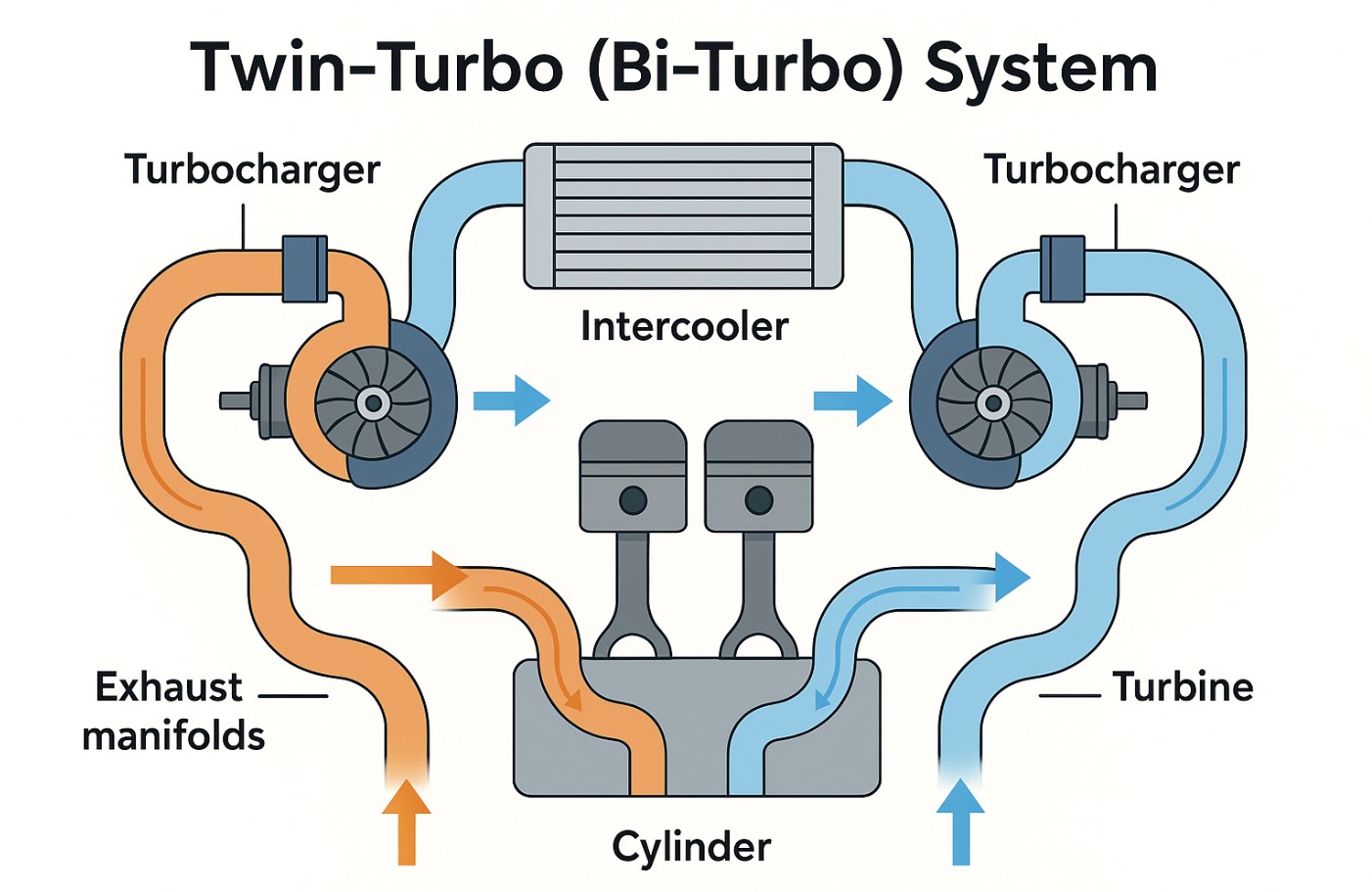
 Pre-purchase inspection in Germany: diagnostics on bi-turbo cars
Does high mileage automatically mean low reliability? Many buyers are skeptical about used cars with around 200,000 km or more. The odometer is an easy, visible indicator — but it is not an absolute measure. What matters is the combination of age, usage and maintenance quality.
A “too good to be true” mileage can also be suspicious: it may indicate long periods of standing still or odometer manipulation. Below we explain what longevity really depends on — and when you should not reject a good deal just because of a big number.
Myths about “critical mileage”
People often say that after ~100–150k km “any” engine is finished. There is no universal limit. Some engines can reach 300–500k km (and more) with proper care.
- Well-maintained petrol engines often reach 300–350k km without major overhauls.
- Diesels can reach 400–500k km, but they tend to be more sensitive to oil and fuel quality.
- In small cars weak points may appear earlier; in premium cars later — but in every class, maintenance and usage decide.
So why does 200,000 km scare buyers? Because from this range, wear on certain systems becomes more likely: suspension components, ancillaries, turbo/injectors (especially on diesels), water pump, etc. A good owner may have already replaced much of it — then the car can still run a long time. But if only “minimum servicing” was done, expensive repairs may follow. That’s exactly why a professional pre-purchase inspection is valuable: it shows what has been done and what is realistically due soon.
More important than the number: maintenance and usage profile
Usage profile and service discipline often influence wear more than mileage itself. A 200,000 km motorway car with regular oil changes and a transparent history can be a very solid buy. By contrast, a “low-mileage” car with many short trips and poor documentation can be riskier.
For a realistic evaluation, consider:
- ✔️ Age and route profile (city/motorway/mountains);
- ✔️ Oil-change discipline and regular servicing;
- ✔️ Evidence: invoices, stamps, HU/TÜV reports;
- ✔️ Accident history and repair quality;
- ✔️ Condition of transmission, suspension and electronics.
“Too few” kilometers can be a red flag as well — for example 10,000 km in 3 years. That can mean manipulation or long periods of storage. Storage is not automatically good: seals dry out, fluids age, brakes corrode, batteries degrade. Therefore: low mileage without proof = inspect more strictly (including OBD). At Sicher-Check we always assess the full picture: documents, usage, visible wear and diagnostic data.
How to spot mileage manipulation
Odometer rollback is a real topic in the used-car market. Both older and modern digital odometers can be manipulated. But it’s rarely completely invisible: mileage appears in service documents, HU/TÜV reports, workshop invoices and sometimes in control units.
What we check in practice
- ☝Cross-check service history: service book, invoices, dates and mileage must be logical.
- ☝Check HU/TÜV entries: in Germany, mileage is recorded during the inspection.
- ☝OBD diagnostics: we look for indicators (events/faults with higher mileage than the cluster, ECU inconsistencies).
- ☝VIN/history checks: we plausibilize mileage from available sources where possible.
- ☝Wear pattern: steering wheel, pedals, seat bolsters, belt webbing, buttons — often do not match “too low” mileage.
Werbung / *Affiliate-Link
Links and banners marked with an asterisk (*) are affiliate links/banners. If you use such a link and subsequently request an offer, sign a contract or make a purchase, we receive a commission from the respective provider. For you, there are no disadvantages: the price and conditions remain the same.
A Sicher-Check pre-purchase inspection includes mileage plausibility checks: OBD scan, document/VIN cross-check and comparing visible wear with the displayed mileage.
How common is rollback: “up to 30%” or “under 5%”?
In media and industry discussions you may see figures like “up to 30%” when describing odometer manipulation on the used-car market. It’s important to understand that, depending on the source, these can be estimates, assessments or outcomes of surveys and case analyses — not necessarily a continuously maintained official nationwide statistic. We mention such figures to frame the risk and explain why individual verification (documents, HU/TÜV, diagnostics) is practical.
📜 TÜV Rheinland (publications around 2015)
TÜV Rheinland published materials on odometer tampering (often referenced under titles such as “Das Problem Tachomanipulation”). In broader reporting on the topic, you may encounter the claim that a meaningful share of vehicles may be affected, sometimes expressed as “around one third” in certain press narratives.
Such texts also frequently refer to law-enforcement-related estimates (including derived damage figures). We present these statements as contextual references, not as guaranteed official statistics applicable to every segment.
Note: methodology and definitions can differ by publication and market segment, so figures should not be applied mechanically.
📜 ADAC / police-related references (risk framing)
ADAC has repeatedly warned consumers about mileage manipulation, often emphasizing that it is technically easy and financially attractive. Depending on the publication, estimates and risk statements may vary. For buyers, the practical message is stable: rollback exists as a market risk and should be checked with documents and diagnostics.
📜 DEKRA / further viewpoints
Technical inspection and evaluation organizations are also frequently cited in media coverage as highlighting the problem, and Europe-wide reporting sometimes provides broad ranges that vary by country and segment. Even if percentages differ, the topic remains practically relevant for buyers.
📜 Counter-position (BVfK)
There are also lower estimates. The Bundesverband freier Kfz-Händler (BVfK) has criticized the frequently cited “30%” as too high and argued that within more structured/serious trade environments the real share may be significantly lower (sometimes “under 5%” is mentioned). The association also notes that risk may be higher in private sales or vehicles with unclear origin.
What does this mean for buyers?
Practical takeaway: whether it’s 30% or 5%, the buyer’s job is to verify the specific car. At Sicher-Check we assess mileage plausibility case-by-case using service documents, HU/TÜV entries, logical timeline checks, VIN history where available and — as far as possible — diagnostic data from control units.
Transparency note: the above is a high-level summary of publicly discussed viewpoints and is not a guarantee of accuracy, completeness or applicability to any individual vehicle or market segment.
Condition over mileage: a practical inspection checklist
Yes, mileage influences wear. But a used car should always be judged as a complete package. These points matter most:
📌 Bodywork & underbody
- Corrosion in typical areas (sills, structural rails, jacking points);
- Signs of repairs, welding, fresh underseal “only in one spot”;
- Paint thickness readings — indicators of filler or resprays.
📌 Accident damage & repair quality
- Uneven panel gaps, “crooked” headlights, different glass year stamps;
- Clues of work on structural parts;
- Important: a serious accident with “low mileage” can be worse than an honest motorway car with 200,000 km.
📌 Engine, transmission, suspension
- Cold start, noises, leaks, smoke, pressure behaviour;
- Automatic/DSG shift quality, jerks, slip, vibrations, adaptation behaviour;
- Suspension: play/knocks, dampers, tyre wear pattern as a hint for alignment and usage.
📌 Interior and “real” wear
- Steering wheel, pedals, driver’s seat bolsters, seat belt webbing;
- Buttons, plastics, cluster hood, door hinges/locks;
- “Like new” at 200,000 km is possible — but then document/diagnostic checks must be stricter.
Sicher-Check combines these checks with paint measurements, OBD diagnostics, a road test, and plausibility checks against documents.
Sicher-Check: buying with confidence
If you found a car in Germany and the mileage makes you unsure, an independent pre-purchase inspection is a sensible step. Sicher-Check specializes in used-car inspections and typical weak points on vehicles with 100–200k km (and more).
Why Sicher-Check?
- Fast & local: Berlin/Brandenburg plus nationwide travel on request.
- Independent: we work in the buyer’s interest and document facts.
- Full check: body/interior, engine/transmission, OBD scan, test drive, VIN/documents.
- Saves money: you avoid problem cars — or get strong negotiation arguments.
Remember: mileage is a number. Condition is the result of care. A well-maintained 200,000 km car can be a great buy — a “low-mileage” car without proof can be an expensive surprise.
FAQ — common questions
Is 200,000 km a reason to immediately reject a car?
No. You should walk away if there is severe structural corrosion, questionable service history, serious accident damage, critical drivetrain faults, or contradictions in mileage evidence. With a transparent history and clean diagnostics, 200,000 km can be normal.
Why can “low mileage” also be problematic?
Because it can be manipulated or indicate long storage. Storage can harm seals, battery, brakes and fluids. Low mileage without proof = stricter inspection.
Can you spot rollback only by interior wear?
Sometimes steering wheel/pedals/seat provide hints, but interiors can be refurbished. Safer are documents, HU/TÜV, invoices, VIN history and OBD cross-checks.
What matters most on high-mileage cars?
Bodywork/corrosion, accident repairs, engine/transmission/suspension condition, electronics, plus diagnostics and a proper test drive. High mileage means: inspect more thoroughly — not panic.
Related posts
Pre-purchase inspection in Germany: diagnostics on bi-turbo cars
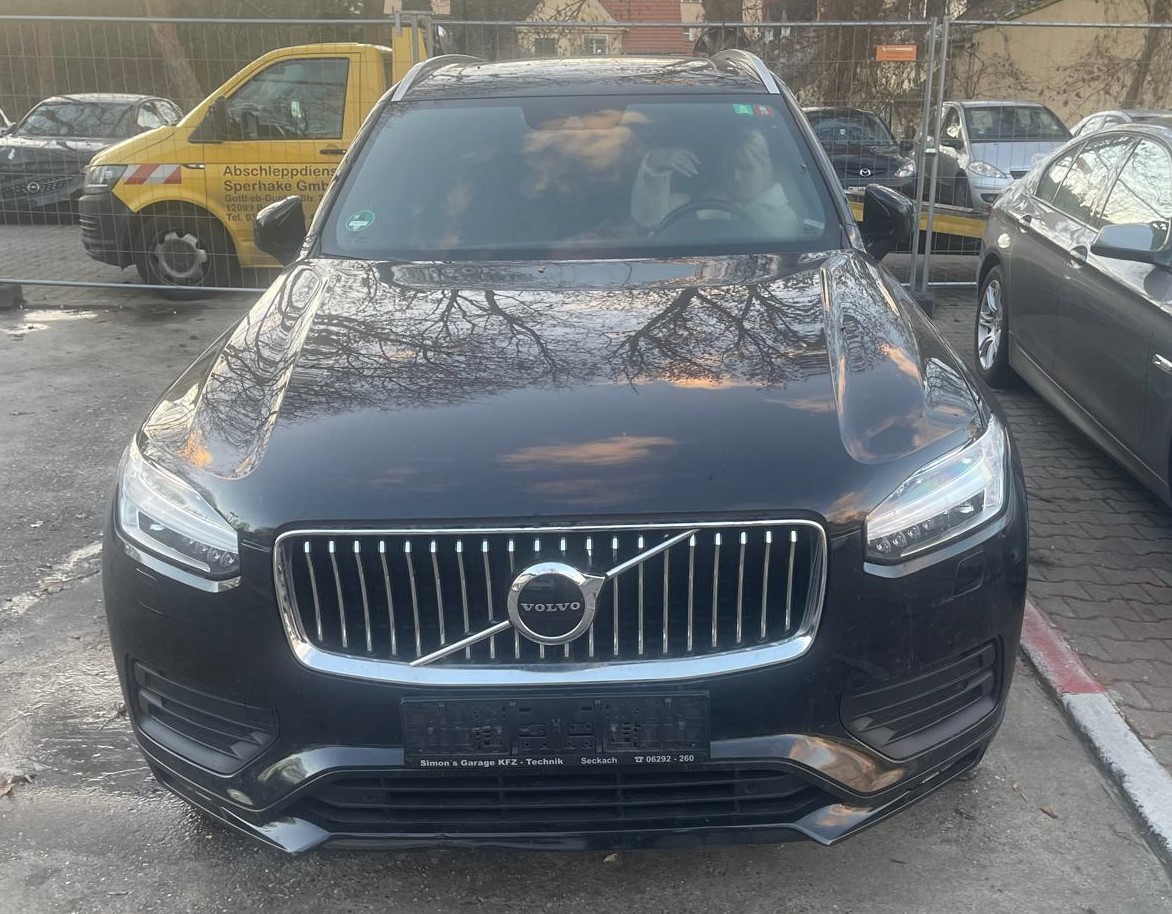 Volvo XC90 B5 (2020): weak points & pre-purchase checklist