
 How to read a VIN report in Germany
Service ТО-0, ТО-1 and beyond: what’s included and how to keep your warranty
Timely maintenance is one of the most underrated “risk controls” in car ownership. It impacts reliability, long-term cost, and how easy it is to defend warranty claims. In German listings you may see ТО-0, ТО-1, ТО-2 terminology (often used by Russian-speaking sellers), while local brands may use “Inspection”, “Service A/B”, or CBS-style reminders.
In this guide we explain what these service steps typically include, why prices vary, whether you must go to the official dealer to keep warranty coverage in the EU, and what to do when a used-car seller says: “there is no service book—everything is online.”
What ТО-0 is and whether you need it
ТО-0 (“zero service”) is commonly described as an early post-purchase check after the first break-in period—often after ~1,000–3,000 km or within the first 1–3 months. Some dealers promote it as an “adaptation” inspection to catch early issues.
Typical ТО-0 operations may include:
- 📌Checking fluid levels (engine oil, coolant, brake fluid) and topping up if needed.
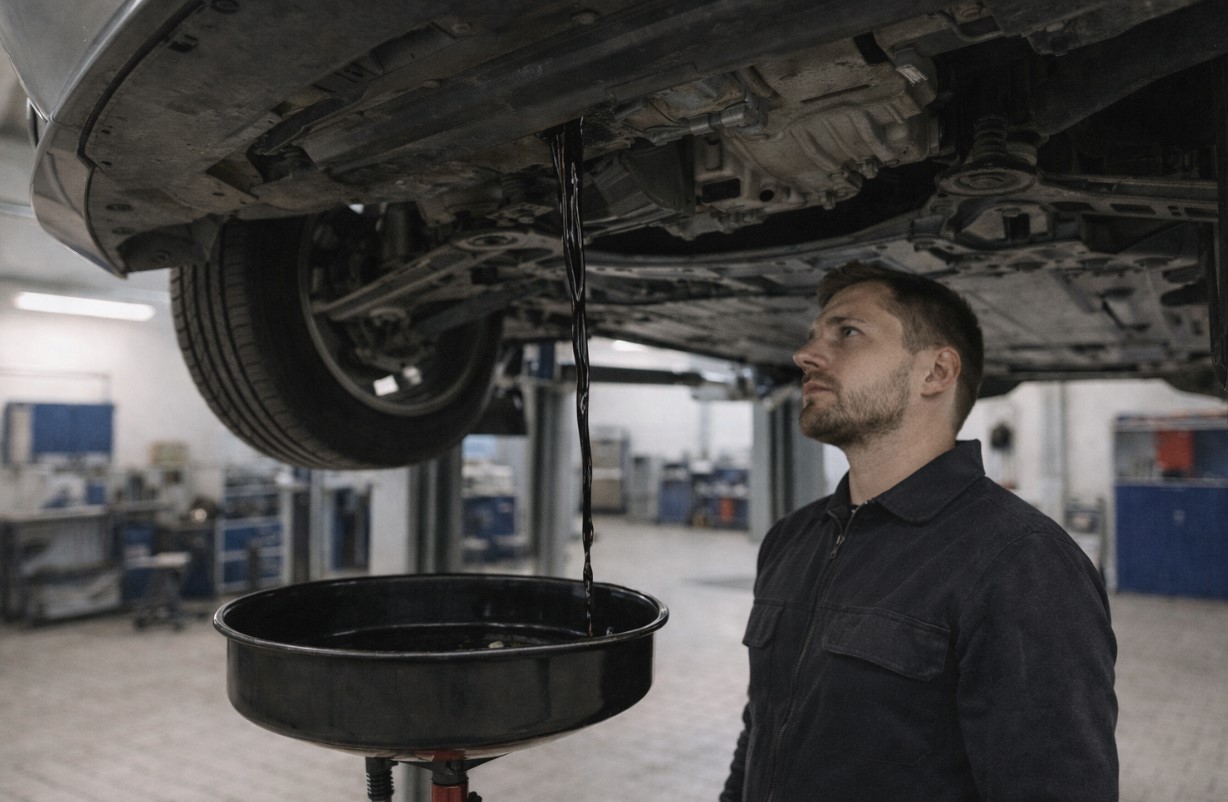
- 📌In some cases: early oil and oil filter change to remove break-in byproducts (varies by brand; not always required).
- 📌Basic underbody and suspension check; tightening inspections where applicable.
- 📌Tyre pressure check, battery condition check, lighting check.
- 📌OBD scan for fault codes and software/recall checks if offered.
Is ТО-0 mandatory? In many cases it is not a manufacturer-required step and is not mandatory to keep warranty coverage—unless your service booklet explicitly lists it for your exact model/engine. It is often a dealer initiative.
That said, ТО-0 can still be useful: fresh oil after break-in can be beneficial, and early checks may reveal minor issues that can be fixed under warranty (seepage, clamps, software updates). If the dealer offers it free of charge, it can be sensible. If it is expensive and not listed in the official schedule, decide based on your risk appetite and driving conditions.
ТО-1, ТО-2, ТО-3…: schedule and typical work
ТО-1 is the first planned maintenance service. It usually occurs after 1 year or a mileage interval (often 10–15k km; some long-interval systems go higher). The exact interval is defined by the manufacturer for your model/engine and may be displayed in the car’s service reminder system.
What ТО-1 typically includes
- ❗Engine oil and oil filter change (oil must meet the manufacturer specification).
- ❗Cabin/pollen filter replacement (often already at the first service).
- ❗Basic inspection: brakes (pads/discs/hoses), engine bay check for leaks, visible suspension components, steering, tyres, lights, wipers.
- ❗Diagnostics and service reset; software updates where applicable.
Sometimes the engine air filter is changed at ТО-1, but often it is scheduled for the next service depending on driving conditions and the official plan.
ТО-2
ТО-2 is usually a more comprehensive service (often ~2 years or ~20–30k km depending on brand and interval logic). In addition to ТО-1 items, it often includes:
- 📜Engine air filter replacement.
- 📜Brake fluid replacement (commonly every 2 years due to moisture absorption).
- 📜Spark plugs for petrol engines (interval depends on plug type and engine).
- 📜Fuel filter on some diesels/older systems (varies by design).
- 📜More detailed brake and suspension inspection.
ТО-3, ТО-4 and later services
Later services are often cyclical, but major items appear at specific mileage/time milestones:
- ☝~60,000 km: spark plugs (if not already replaced), accessory belt checks/replacement by schedule, and often (as good practice) automatic transmission fluid service where applicable.
- ☝~90–120,000 km: timing belt replacement (if belt-driven). This is a high-impact item: neglect can lead to severe engine damage.
- ☝Coolant often around 4–5 years depending on brand/specification (even “lifetime” fluids have practical limits).
- ☝AWD: differential/transfer case fluids (often recommended around ~40–60k km depending on system/use).
Brand terminology differs: Mercedes uses A-Service / B-Service logic, BMW uses CBS (Condition Based Service), Volvo often relies on interval reminders and dealer-based digital history—but the core idea is the same: critical fluids and wear parts have defined intervals.
Quick guide: what is done and when (typical)
Use this as a practical “skeleton”. Always verify your exact model/engine schedule (service booklet / manufacturer data).
| Service item | Typical interval | Risk if delayed |
|---|---|---|
| Engine oil + oil filter | Often 1 year or 10–20k km (per manufacturer) | Accelerated engine wear, higher oil consumption, risk of costly repairs. |
| Cabin/pollen filter | Often at ТО-1 and then regularly | Fogging, smells, higher load on HVAC, worse cabin air quality. |
| Engine air filter | Commonly at ТО-2, sooner in dusty conditions | Lower power, higher fuel consumption, increased wear. |
| Brake fluid | Often every 2 years | Reduced braking performance under heat, corrosion in the system. |
| Spark plugs (petrol) | Per schedule: ~30–100k km (depends on type) | Misfires, higher consumption, stress on coils/catalyst. |
| Fuel filter (often relevant for diesel) | ~20–30k km or per schedule | Fuel delivery issues, loss of power, risk to pump/injectors. |
| Automatic transmission fluid (if applicable) | Often ~60k km as best practice (or per schedule) | Accelerated gearbox wear, harsh shifts, overheating, expensive repairs. |
| Timing belt (if belt-driven) | ~60–120k km depending on engine | Critical risk: belt failure may destroy the engine. |
Used-car buyer tip: if there is no proof for “expensive” items (timing belt/gearbox fluid/brake fluid), budget for immediate service and use it as a strong negotiation point.
Service cost: what drives the price?
Service pricing varies significantly by brand, engine, and where the work is done (dealer vs independent workshop). Typical cost components:
- ✔️1) Parts and consumables. Engine oil (correct spec), filters, brake fluid, plugs and other scheduled items. Dealers often use OEM parts; equivalents can be cheaper but must meet quality/spec requirements.
- ✔️2) Labour (book time). Dealers usually have higher hourly rates; independent workshops are often more cost-effective.
- ✔️3) Extras. Vehicle wash, test drive, lock lubrication, navigation updates—sometimes included, sometimes billed separately.
- ✔️4) Environmental/handling fees. Disposal of oil/filters may be listed separately.
For a used-car buyer, the key is not the cheapest quote—it’s verified compliance: correct oil spec, correct work scope, and proper documentation.
Warranty and service choice: do you have to use the dealer?
A common fear is: “If I don’t service at the dealer, I lose warranty.” In practice, within the EU, you can generally service your car at a qualified independent workshop without losing the manufacturer warranty—provided you follow the official schedule and can prove it.
To keep warranty defensible, make sure:
- ⚠️the workshop follows the manufacturer service schedule (no skipped mandatory items);
- ⚠️approved fluids are used (oil specification matters);
- ⚠️parts are OEM or equivalent quality (and documented);
- ⚠️you keep invoices/work orders with date, mileage, scope of work and part numbers/specs.
Important nuances
- ⚠️Disputes can be stricter. For complex claims, the manufacturer may scrutinize documentation more closely if services were not done at the dealer network. This is why paperwork quality is crucial.
- ⚠️Extended warranty contracts. Third-party/extended coverage may include their own conditions (sometimes dealer-only). Read contract terms.
- ⚠️Recall campaigns and software updates. Dealer networks often perform recalls and updates; independent workshops may not automatically detect them. You can still check recalls at the dealer separately.
Bottom line: You usually do not have to pay dealer prices to keep warranty—if you service correctly and document everything.
Quick checklist before calling the seller (or workshop): maintenance, warranty and service history
- 🛠️1) When was the last service? Date and mileage. Are there Rechnungen (invoices) / work orders?
- 🛠️2) What exactly was replaced? Oil/filters, brake fluid (often every ~2 years), plugs, timing belt/chain service (engine-dependent), transmission fluid (if done).
- 🛠️3) Where was it serviced? Dealer or independent workshop? If independent—ask for oil spec and parts documentation.
- 🛠️4) Is there digital service history? Can the seller provide a VIN printout from the dealer network or show records in the app/vehicle menu?
- 🛠️5) Any warranty repairs or campaigns? What was done and is there paperwork?
- 🛠️6) Any gaps in the history? Long periods without records are a risk and a negotiation point.
- 🛠️7) Is the seller transparent? Willingness to show records correlates strongly with the overall risk profile.
Vague answers (“everything was done but I have no documents”) are not always fraud—but risk is higher. In such cases, budget for “service from scratch” and strengthen your pre-purchase inspection.
Digital service book: how to verify records without paper
A very common scenario in Germany: the seller says “there is no paper service book—everything is digital.” For many modern cars, this is normal. Typical examples:
- 🎁Volkswagen Group (VW/Audi/Skoda/Seat): digital service history is stored in the group system; a dealer can usually print a VIN-based history summary.
- 🎁Mercedes-Benz: Digital Service Booklet (DSB) within the official network; owners may see parts via apps, but a dealer printout is often the most reliable.
- 🎁BMW: service entries are stored electronically; some are visible in iDrive, others are accessible via dealer systems and can be printed.
- 🎁Volvo: service visits are stored digitally; paper booklets are increasingly rare; VIN verification at a dealer is common practice.
How to verify digital service history (practical steps)
- 💎Ask the seller for a VIN printout. Dealers can typically provide dates/mileage/work type entries. A transparent seller is usually willing.
- 💎Go to the dealer together. Data access may depend on privacy rules; joint verification is often easiest.
- 💎Check in-car menus. Some brands show service history in the infotainment (e.g., BMW iDrive: Vehicle Status → Service History).
- 💎Cross-check with invoices. Digital entries should match paper invoices by date and mileage.
- 💎Use VIN reports as a supplement. They can sometimes show maintenance-related events, but coverage varies and should not replace official records.
If the seller claims “full dealer history” but refuses to provide any proof or cooperate with verification, treat it as a red flag. In that case, you should budget for immediate service and increase your pre-purchase inspection depth.
Example: Volkswagen without a paper service book
You are buying a 2018 VW Tiguan and hear “the service book is digital.” Ask for the Digital Service Schedule printout. Ideally you’ll see a consistent chain of Inspektion entries with dates and mileage. If the last service was long ago and mileage jumped significantly, that is a strong risk indicator.
Example: Mercedes “online history”
With Mercedes, the seller may show some records via Mercedes me (if connected). Still, for a buyer, a dealer printout is typically the most reliable confirmation.
Conclusion: digital service history is convenient and hard to “lose,” but sometimes harder for buyers to access. Do not rely on words—verify dates, mileage and work scope.
At Sicher-Check, when we inspect a car for a client, we always review service history: paper booklets and invoices or digital records. If there are gaps or inconsistencies, we highlight the risk (including potential warranty and maintenance cost implications).
Conclusion
Scheduled maintenance is not “dealer marketing”—it is the cheapest way to protect the expensive parts of your car. Key takeaways:
- 🕑ТО-0 can be useful but is often not mandatory unless explicitly stated for your model.
- 🕑ТО-1/ТО-2 and beyond should follow the manufacturer schedule: correct oil spec, filters, and time-based items like brake fluid.
- 🕑Costs depend on parts, labour rates and scope; savings are possible outside the dealer—but documentation must be perfect.
- 🕑Warranty is usually maintained in the EU with qualified independent service, if you follow schedule and keep proof.
- 🕑Digital service history is common—verify via VIN printouts, apps and cross-checks, not by trust.
If you are buying a used car in Germany, Sicher-Check can help you verify service history, assess maintenance risk, and inspect the vehicle so your decision is based on facts—not promises.
Negotiation: what service gaps and missing documents reduce the price
The logic is simple: fewer verifiable services and closer “expensive milestones” mean higher risk for you—and a stronger negotiation position.
| Missing proof / upcoming item | Why it reduces the price | How to ask for a discount (politely) |
|---|---|---|
| No invoices/work orders for regular oil changes | Higher engine wear risk; unknown oil spec and intervals | “Without proof I must budget for service from scratch and factor engine risk—please reflect this in the price.” |
| No proof of brake fluid change (often every ~2 years) | Safety + possible corrosion in the brake system | “Brake fluid service is due and affects safety—please account for this cost.” |
| Timing belt due soon / no proof of replacement (if belt-driven) | Critical item: failure can cause severe engine damage | “Timing belt is a mandatory expense with high risk—let’s adjust the price accordingly.” |
| No proof of transmission service at higher mileage | Increased risk of gearbox wear and costly repairs | “To reduce gearbox risk, fluid service/diagnostics are needed—please consider this in the price.” |
| Gaps in service history (long intervals with no records) | High uncertainty; lower resale value later | “Due to gaps, I value the car below market—please adjust the price.” |
| “Service is online” but seller refuses VIN printout | No verifiable history = higher risk | “If history cannot be verified, the price must reflect that uncertainty.” |
| No proof for major scheduled items (plugs, filters, coolant) | Immediate post-purchase expenses | “I will need to complete the schedule right away—please discount the next service.” |
| No proof of recalls/software campaigns | Sometimes important for safety/reliability; may require dealer visit | “We need to check campaigns at the dealer—please account for time/cost.” |
Practical approach: ask for a discount for a specific, measurable risk. If the seller refuses to reduce the price, propose an alternative: seller completes the missing service or agreement is confirmed in writing.
Signal: if the seller refuses proof and refuses negotiation, it is often better to move on to the next option.
Werbung / *Affiliate-Link
Links and banners marked with an asterisk (*) are affiliate links/banners. If you use such a link and subsequently request an offer, sign a contract or make a purchase, we receive a commission from the respective provider. For you, there are no disadvantages: the price and conditions remain the same.
FAQ — frequently asked questions
Is ТО-0 required to keep the warranty?
In most cases, no. ТО-0 is usually not a mandatory manufacturer requirement unless it is explicitly listed in your service schedule. It can still be useful as an early check after break-in.
Can I service the car outside the dealer and keep the warranty?
Generally yes in the EU, as long as the service follows the manufacturer schedule, approved fluids are used, parts are OEM or equivalent quality, and you keep invoices/work orders as proof.
What documents should I keep after a service to avoid warranty issues?
Invoices and work orders with date/mileage, list of performed work, part numbers and oil specification. Good paperwork is your best protection in a dispute.
If the service book is digital, how can I verify the history?
Ask for a VIN printout from the dealer network, review app/in-car entries where available, and cross-check dates and mileage with invoices. If the seller refuses proof, increase caution and inspection depth.
Related articles
How to read a VIN report in Germany
 How to buy a car in Germany: step-by-step guide