
 Service intervals in Germany: what is included and how to keep warranty
Mileage rollback in Germany: the 2025–2026 reality
The used car market is driven by one number: the odometer. That’s exactly why mileage rollback in Germany still exists. A “clean” report can happen when manipulation takes place between recorded events.
Buyer warning: even one rollback case can create a 3,000–10,000 € pricing error—plus unexpected repairs. If you’re buying in Berlin, a used car inspection with module comparison is often cheaper than the first “surprise” invoice.
Why “clean history” can still be misleading
Even if the seller shows:
- 🔥TÜV (HU/AU) papers
- 🔥service book / invoices
- 🔥a VIN report
- 🔥“one owner” story
none of that is a technical proof of real mileage. Databases only reflect what was recorded. Rollback done “between milestones” may leave no obvious trace.
Simple rule: paper history is supportive evidence. Control-unit data is the technical evidence. Use both, but never rely on just one.
Where mileage is stored in modern cars
Mileage can be stored across multiple modules:
- 👓Instrument cluster (Kombiinstrument)
- 👓Engine ECU
- 👓Gearbox control unit (DSG/TCU)
- 👓ABS / ESP module
- 👓Key memory (model-dependent)
- 👓Telematics / online services (model-dependent)
Why module comparison is the key step
If the cluster shows “nice” 120,000 km but DSG/ABS stores much more, it’s either manipulation or module replacement. In both cases, it’s a risk—and you need clear evidence for negotiation or walking away.
Mileage check method (Used car inspection Berlin)
1)💎 Full OBD2 scan (all modules)
- DTCs and hidden codes
- Freeze Frame snapshots
- adaptation counters / operational hours (model-dependent)
- mileage-related values from different ECUs
2)💎 Control-unit mileage comparison
Example: cluster = 120,000 km, DSG = 210,000 km → strong mismatch.
Important nuance: a mismatch is not always “rollback” (some cars had cluster/module replacement). But for a buyer it is still a red flag: you must understand the reason, workmanship quality and legal implications.
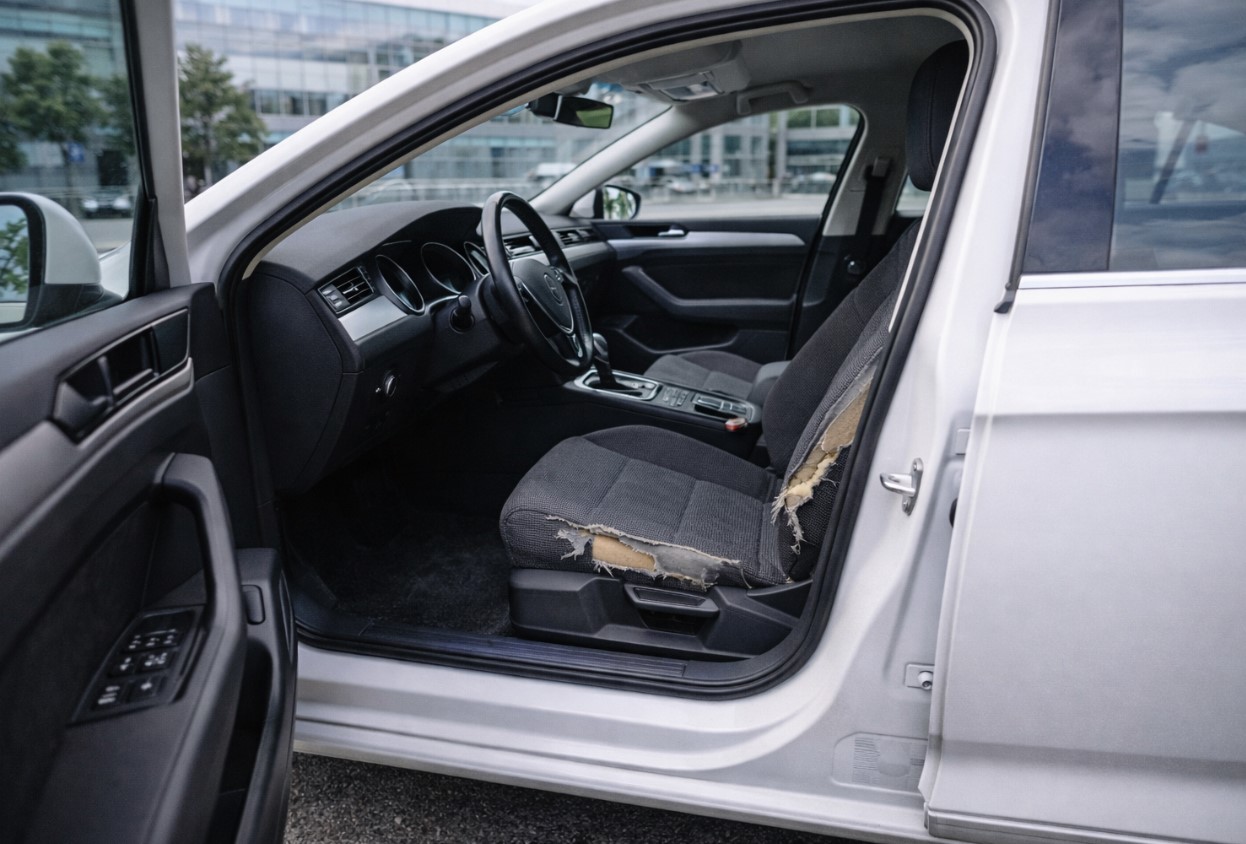
Interior wear vs claimed mileage
Typical mismatch indicators:
- shiny/worn steering wheel
- collapsed seat bolsters
- worn pedals
- faded buttons/switches
Correct approach: interior wear is a behavioral indicator. It doesn’t prove rollback by itself, but it helps validate whether the claimed mileage matches the overall condition.
Service & TÜV logic: what to verify
- ☝interval consistency and mileage progression
- ☝VIN matching on invoices
- ☝digital records (dealer system, if available)
- ☝does the story match technical wear and OBD data?
Werbung / *Affiliate-Link
Links and banners marked with an asterisk (*) are affiliate links/banners. If you use such a link and subsequently request an offer, sign a contract or make a purchase, we receive a commission from the respective provider. For you, there are no disadvantages: the price and conditions remain the same.
Why TÜV alone is not enough
TÜV entries can help you check logical mileage growth, but rollback can happen between inspections. That’s why an OBD-based module comparison is so effective in practice.
Common odometer fraud schemes
| Scheme | What it looks like |
|---|---|
| OBD correction | Fast cluster adjustment; other modules may still keep higher values |
| Cluster replacement | Used cluster with “better” mileage installed |
| ECU/module replacement | Donor unit swap; coding history may look suspicious |
| Export manipulation | Rollback before exporting/selling abroad |
Risks: money, repairs, legal issues
- 🛠️engine and turbo repairs much earlier than expected
- 🛠️DSG/automatic gearbox issues
- 🛠️reduced resale value (you can’t “unsee” discrepancies)
- 🛠️potential disputes and legal complications
Main risk: you pay for “low mileage”, but maintain the car as a high-mileage vehicle. That gap is where buyers lose the most money.
Quick checklist before buying (Berlin / Germany)
- ✔Do a full OBD2 scan (not just a cheap “engine only” scan).
- ✔Compare mileage across modules (cluster/ECU/DSG/ABS/key if possible).
- ✔Check service & TÜV logic (progression must make sense).
- ✔Match interior wear to the claimed mileage.
- ✔If discrepancies appear—pause. Ask for evidence of module replacement or walk away.
Advertisement / *Affiliate link
Links and banners marked with an asterisk (*) are affiliate links. If you use them to make a purchase (e.g., order a report), we may receive a commission from the provider. There is no extra cost for you: the price and terms remain the same.
FAQ
Is mileage rollback possible in Germany?
Yes. Even in Germany, odometer manipulation is technically possible. The safest way is to compare mileage stored in multiple modules (cluster, ECU, DSG/TCU, ABS, key where available) and validate it against service/TÜV logic.
Does TÜV (HU/AU) guarantee the real mileage?
No. TÜV records are useful for checking mileage progression, but rollback can happen between inspections. A full OBD2 scan with control-unit comparison is the key step.
How much does a mileage check cost in Berlin?
It depends on the package and scope (full module scan, mileage comparison, service history review, test drive). Check current pricing on the Tariffs page or request a quote via WhatsApp.
What “evidence” can you use to negotiate with the seller?
Documented discrepancies between control units, Freeze Frame snapshots, service interval logic mismatch and condition assessment. A written inspection report provides leverage for negotiation—or a clear reason to walk away.
Conclusion
Odometer fraud is one of the most expensive buying mistakes. If you need a mileage check in Germany or a used car inspection in Berlin, we can perform a full diagnostic scan, compare mileage across modules and provide a clear written report for your decision.
Related posts
Service intervals in Germany: what is included and how to keep warranty
 VIN check before buying: why it matters and how to get a full report (promo code -20%)