
 Why a CarVertical report does not replace an expert on-site inspection
Why Berlin is a major EV market hub
Berlin has a high concentration of:
- Tesla
- VW ID.
- BMW i
- Mercedes EQ
- Toyota Hybrid
Practical takeaway: Berlin offers many good deals, but also a lot of heavily used cars (car sharing fleets, corporate vehicles, frequent DC fast charging). That’s why an E-Auto Kaufcheck must be deeper than a typical ICE check.
The main value driver: the high-voltage battery
In an EV and in many PHEVs, the largest part of the vehicle’s value is the high-voltage battery. Any HV fault or real degradation can quickly translate into significant costs.
Battery replacement cost
Typical range: €8,000–€20,000
Key parameters
SOH, cycles, cell balance, BMS faults
What we look at
- 💎State of Health (SOH) — remaining “health” of the battery.
- 💎Charge cycles — a proxy for load and charging patterns.
- 💎Cell balancing — imbalance can be an early risk marker.
- 💎BMS fault history — faults, power limitations, overheating events, charging behavior logs (model-dependent).
Battery degradation: normal vs risky
A common rule of thumb:
- around 2–3% per year on average
- often faster with frequent DC fast charging
- strongly dependent on climate and thermal management
Important: SOH alone is not a verdict. We also check thermal history, cell balance and any power derating/limitations. Two cars with the same SOH can have very different risk profiles.
BMS diagnostics: what we check
The BMS is the battery’s “passport” and “diary”. In a standard inspection it’s often not read deeply—yet for EVs it’s the key.
BMS items that matter
- ✔️overheating events / thermal history
- ✔️cell imbalance indicators
- ✔️stored faults and HV-system warnings
- ✔️power derating/limitations (where available)
- ✔️indirect signs of frequent DC fast charging (model-dependent)
Codes can be cleared—history often remains. That’s why “no active faults” is not the same as a healthy battery. You need BMS data and correct interpretation.
Hybrid inspection (HEV & PHEV)
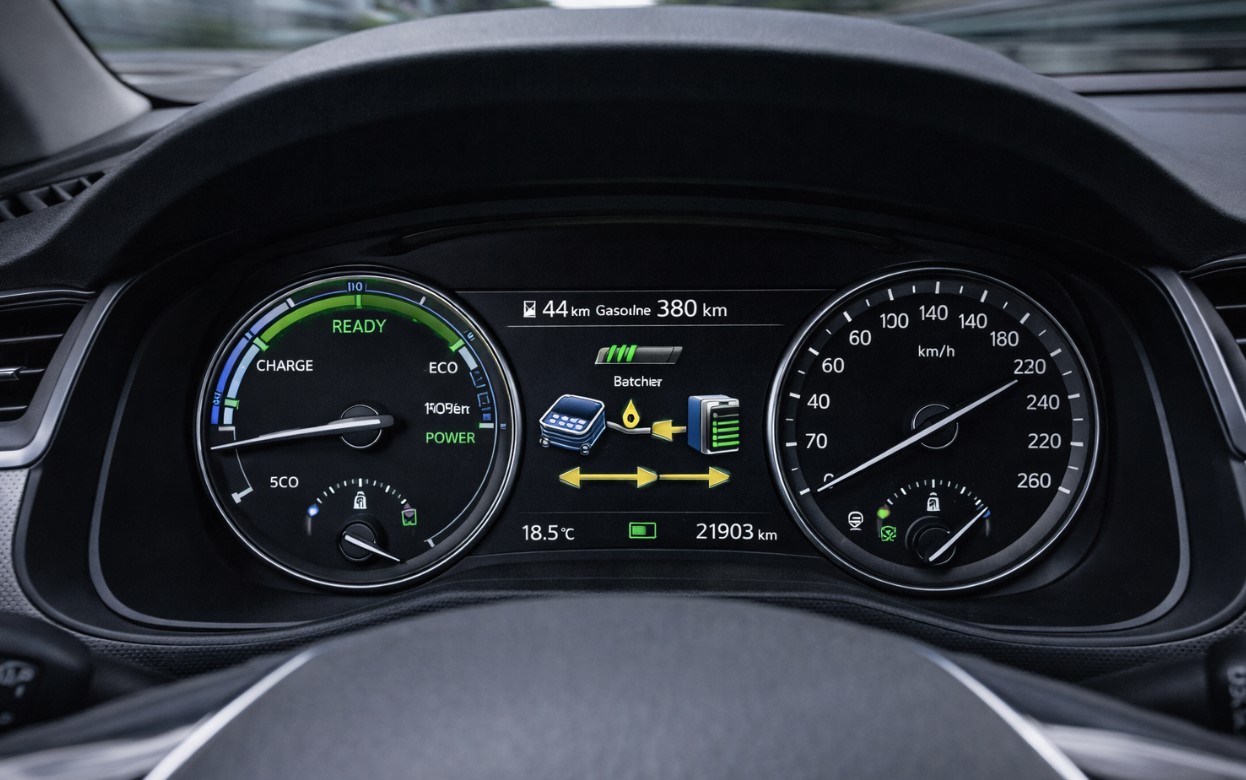
A hybrid is effectively two cars in one: ICE + electric drivetrain. Inspection must be two-layer.
What we check in addition
- ICE condition (cold start behavior, faults, fuel trims / corrections)
- e-CVT / transmission logic and faults
- hybrid battery health (SOH / cell balance / temperatures)
- inverter and power electronics condition
Common trap: the seller highlights “no engine faults” while HV-side issues are hidden. On hybrids, expensive surprises are often in the inverter, battery or cooling.
Real post-purchase costs
| Component | Typical cost range |
|---|---|
| Battery replacement | €8,000–€20,000 |
| Inverter | €2,000–€5,000 |
| On-board charger (OBC / charging module) | €1,000–€3,000 |
Bottom line: a car can look perfect outside, but 1–2 hidden HV issues can turn the purchase into a multi-thousand-euro repair. Battery + BMS diagnostics are not optional—they’re the minimum.
EV-specific diagnostics (what must be included)
What a proper EV check should include❓
- ☝BMS data readout and interpretation
- ☝SOH evaluation in context (thermal history + cell balance)
- ☝Software/updates overview (where relevant)
- ☝DC fast-charge test (where feasible) / charging behavior check
- ☝Battery cooling system check
Why this matters: small deviations (cooling performance, temperature sensors, power derating) may not show on a short test drive—but appear during longer trips and fast charging.
Real cases (Berlin)
Tesla Model 3 (2021).
Seller claimed 92% SOH. Diagnostics indicated 84%.
VW ID.3 (2020).
Hidden inverter-related issue detected.
Note: even an “excellent looking” car may have power limits, thermal events or HV faults that you won’t see without EV-capable diagnostics.
Why a standard inspection is not enough
A typical used-car check often does not include:
- deep BMS analysis
- proper HV battery health assessment
- charging/cooling tests
What Sicher-Check does in an EV/Hybrid Kaufcheck
- ✔️read and interpret battery/BMS data (SOH, balance, events, faults)
- ✔️check power electronics (inverter, onboard charger, cooling signals)
- ✔️compare findings with documents and battery warranty status (where available)
- ✔️provide a clear report with risks and negotiation points
Checklist before buying an EV in Germany
- 📜Check SOH with proper diagnostics (not guesses).
- 📜Review charging patterns and signs of heavy DC fast charging (if available).
- 📜Check BMS faults/history and any power limitations.
- 📜Verify battery warranty terms and remaining coverage.
- 📜Test charging and battery cooling behavior (where feasible).
Advertisement / *Affiliate link
Links and banners marked with an asterisk (*) are affiliate links. If you use them to make a purchase (e.g., order a report), we may receive a commission from the provider. There is no extra cost for you: the price and terms remain the same.
FAQ
Can you check an EV battery without tools?
Not reliably. You need BMS data (SOH, cycles, cell balancing, fault history, thermal events and power limitations) and EV-capable diagnostics.
How fast does an EV battery degrade?
A common rule of thumb is around 2–3% per year on average, but it depends on use. Frequent DC fast charging and high temperatures can accelerate degradation.
Do I really need an EV inspection before buying in Berlin?
Yes. The main risks are the HV battery and power electronics. Without BMS analysis and charging/cooling checks, a “good looking” car can become a costly repair.
Conclusion
A hybrid or electric car is a technically complex vehicle. Without a professional inspection before buying in Germany, you risk multi-thousand-euro expenses. If you need an EV inspection in Berlin, we will perform battery + BMS diagnostics, check power electronics and provide a clear report with risks and negotiation points.
Related posts
Why a CarVertical report does not replace an expert on-site inspection
 Used car inspection in Germany: diagnosing twin-turbo setups