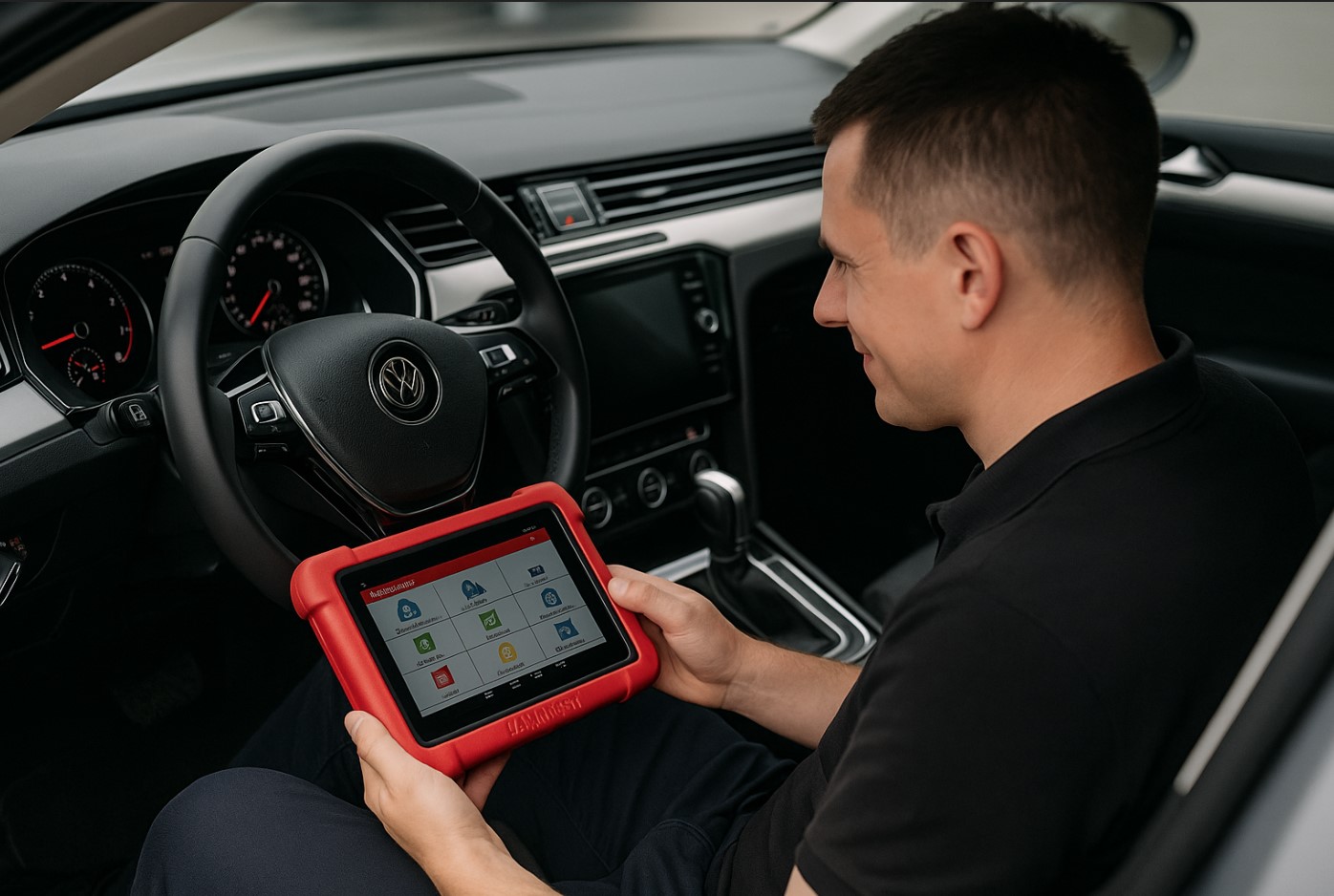
Computer diagnostics of Audi, Volkswagen, BMW and Mercedes engines with LAUNCH
Why OBD and multi-brand diagnostics help reveal hidden problems before purchase.
 Sicher-Check
In Germany’s dark and wet season, “slightly imperfect lighting” quickly stops being a minor inconvenience and becomes a real safety issue. Checking headlights before buying a used car is one of the most underrated parts of the inspection, even though lighting directly affects safety, HU results and future repair costs.
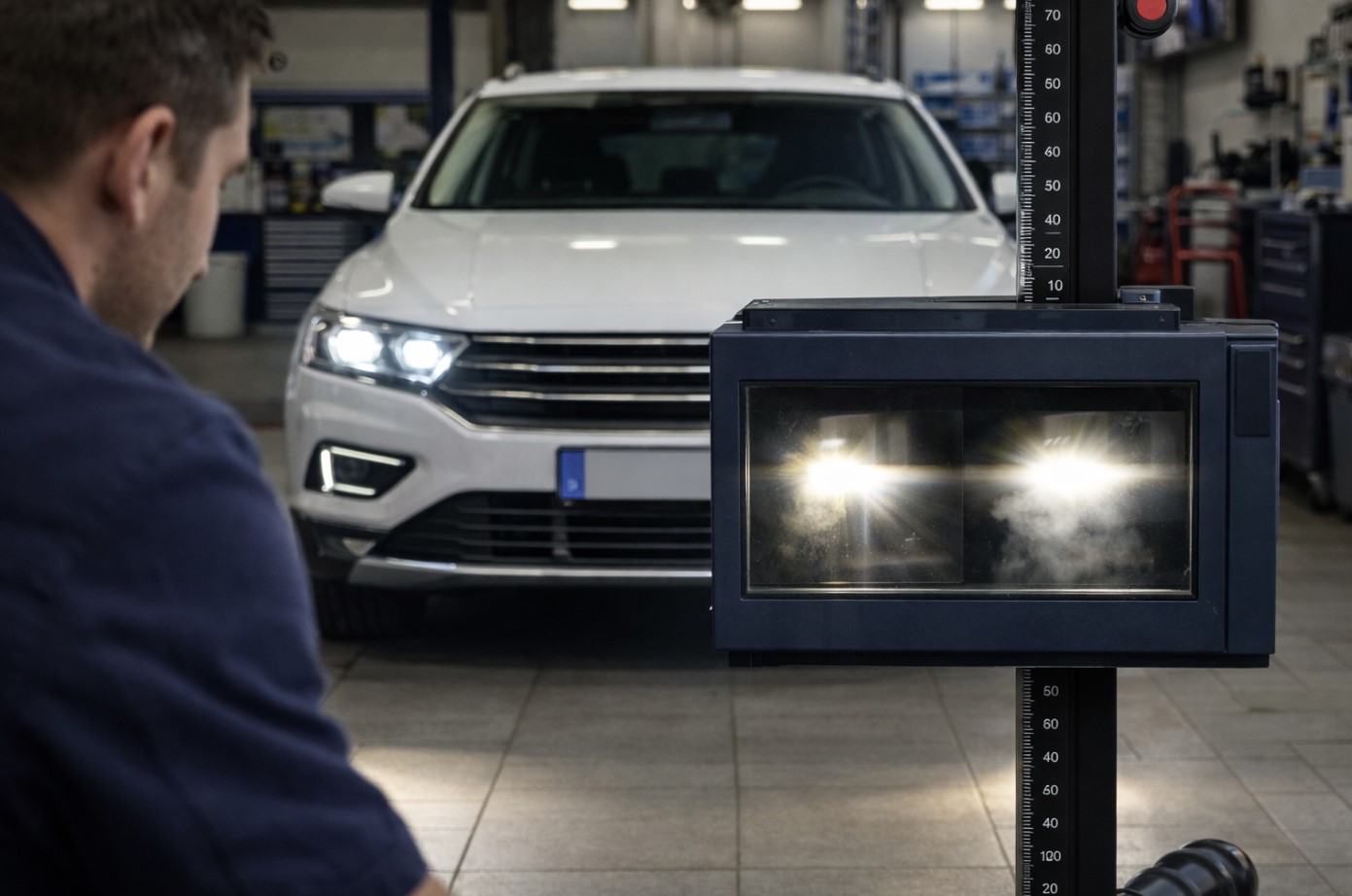
In Germany’s darker months there are two realities: it gets dark early, and roads are often wet. Under these conditions, even a small lighting problem can quickly become a serious safety factor. Poor low-beam performance means either weak visibility for you or glare for oncoming drivers.
Lighting should never be treated as “cosmetic” for three reasons:
During an inspection, you are not checking “one headlight” — you are checking the entire lighting system:
A common buyer mistake is to look only at whether “something lights up”. For safe driving and for HU, what matters is not just the presence of light, but its correct operation, intensity, height, symmetry and optical condition.
Even without special tools, you can understand within 10 minutes whether it is worth continuing the inspection.
Look for:
If the optics are cloudy, the light output will already be weaker even if the bulbs or internal modules still work.
Light temporary condensation can happen, but drops, streaks or pooled water inside the headlight are a warning sign. This may indicate:
Wrong bulbs, uncertified LED replacements or amateur electrical modifications are a separate risk zone. “Looks bright” does not mean “legal, correct and safe.”
One of the most useful quick tests is checking the beam cutoff line against a wall or garage door at dusk, in a yard or in a parking structure.
If one side is clearly too high or too low, or if the beam pattern looks broken or strange, that is already a reason for further diagnosis.
The more advanced and powerful the lighting system is, the more support functions surround it: auto-leveling, headlight washers, adaptive light, automatic high beam, cornering light and camera calibration.
In practice, these support systems are often what make lighting repairs expensive: not only the headlight itself may need work, but also related modules, sensors and recalibration procedures.
Years ago, lighting problems were often solved by replacing a bulb. Today, repairs are increasingly modular. With LED, Matrix and Laser systems, costs can be very high even after relatively small damage.
For the buyer, this means something simple: if the front end of the car shows repair signs, suspicious headlights or sealing problems, you must evaluate not only the bodywork but also the possible future bill for lighting equipment.
| Symptom | Likely cause | Risk / consequence |
|---|---|---|
| Cloudy optics | Age, road abrasion, surface degradation | Weak light output, possible HU remarks |
| Water drops inside the headlight | Crack, venting problem, bad seals, repair traces | Corrosion, fogging, module faults |
| One headlight points higher or lower than the other | Bad adjustment, repair history, auto-leveling fault | Glare, short visibility distance, HU problems |
| Adaptive light does not work | Control-unit, sensor or calibration error | Expensive diagnostics and repair |
| Matrix / LED headlight after an impact | Module damage | Very high replacement cost |
Lighting is a strong negotiation point because it combines safety, HU relevance and potentially high repair cost. If you document the facts, negotiation becomes practical and evidence-based.
Lighting is a classic example of a system where a small defect can turn into a large bill. This is especially true for LED, Matrix and Laser systems, where complete units are replaced instead of small cheap components.
If you are buying a car in Berlin or anywhere else in Germany and want to understand the risks before the deal, order a mobile pre-purchase inspection: we check the operation of the full lighting system, look for signs of repair or interference, assess sealing condition, run an OBD scan and give a clear conclusion: buy / negotiate / walk away.
Advertisement / *Affiliate link
Links and banners marked with an asterisk (*) are affiliate links or affiliate banners. If you use such a link and later request an offer, sign a contract or make a purchase, we may receive a commission from the provider. For you, there are no disadvantages: the price and conditions remain the same.
Yes. Headlights and lighting are a common reason for remarks, especially when beam adjustment is wrong, the optics are cloudy or the modules are defective.
Light temporary condensation can happen, but water drops, streaks and moisture inside the housing are warning signs and a reason to look for the root cause.
Because modern headlights are complex modules with electronics, control units and calibration requirements — not just simple bulbs.
Why OBD and multi-brand diagnostics help reveal hidden problems before purchase.
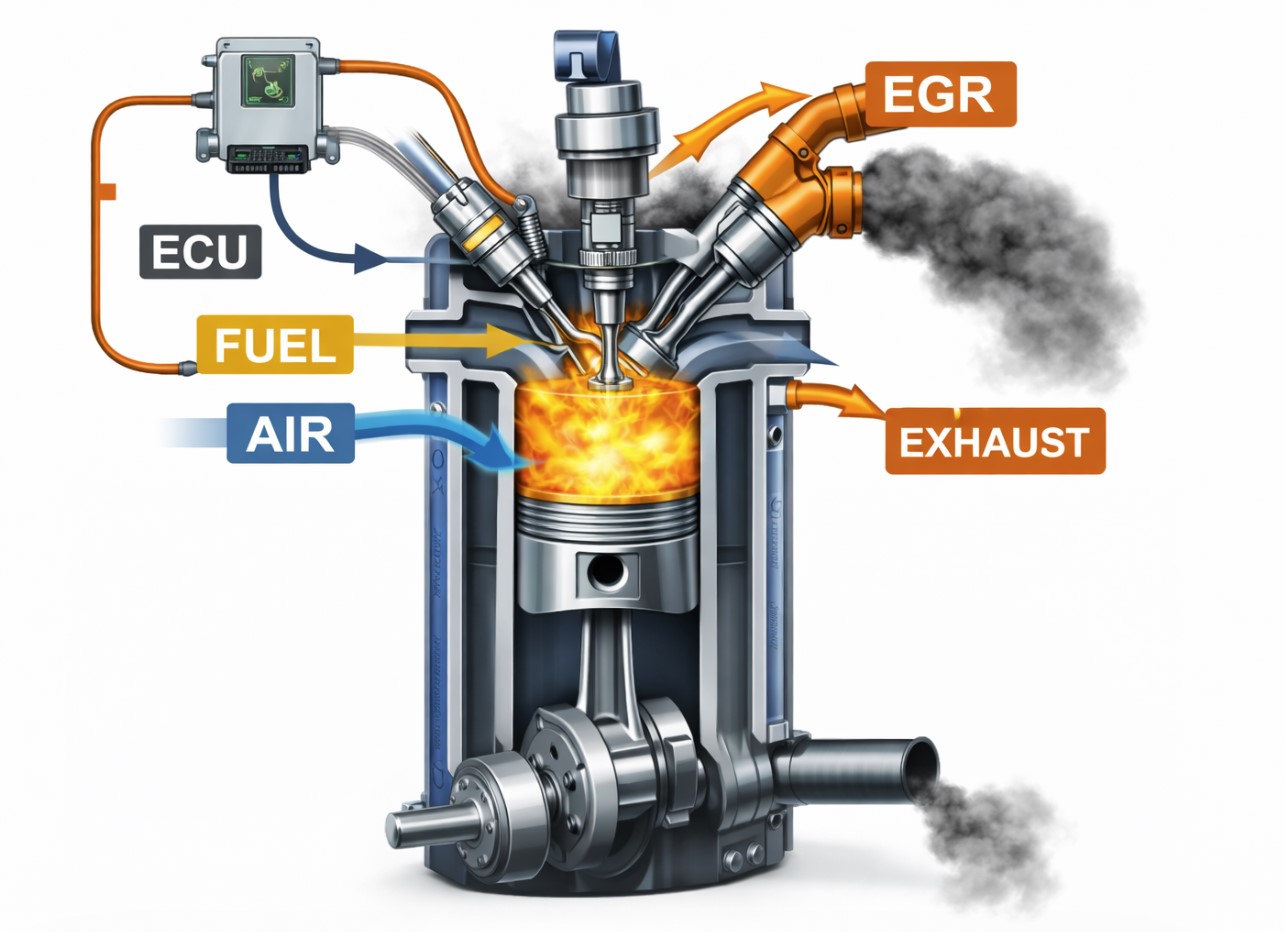
Are there diesel restrictions, which standards are safer and how to inspect DPF, EGR and AdBlue systems.
Disclaimer:
The content on this page is provided for general informational purposes only
and does not replace an individual on-site inspection, computer diagnosis or professional advice.
Despite careful preparation, we do not guarantee the accuracy, completeness or timeliness of the information.
By using the materials on this website, you act at your own risk.