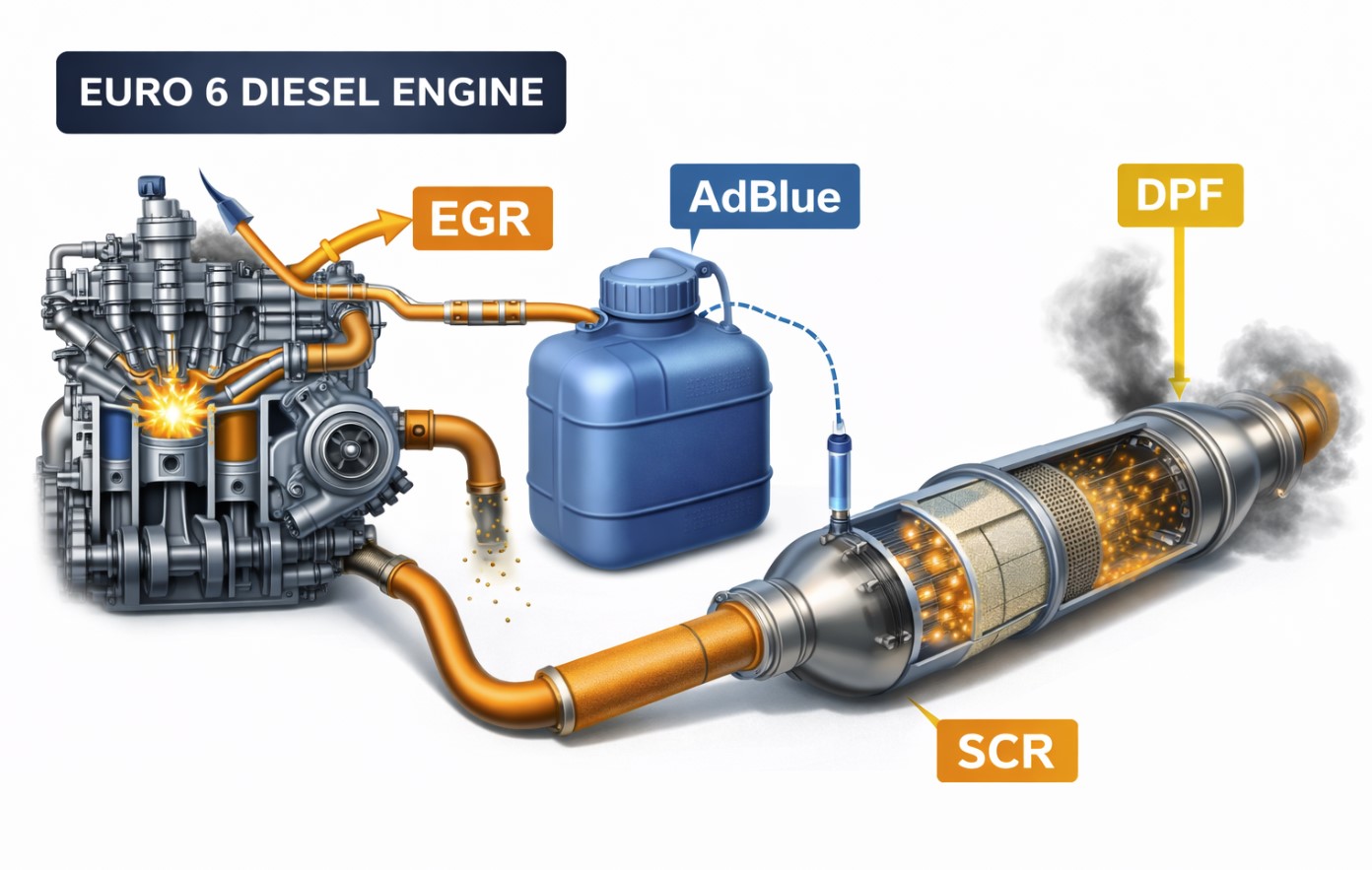
Euro 6 Diesel: DPF, EGR and AdBlue risks before buying
How to detect expensive diesel-emission problems before purchase.
 Sicher-Check
Chinese cars are no longer a curiosity on the German market. A few years ago many buyers viewed them with suspicion. Today, models from BYD, MG, NIO, XPeng, Aiways and other brands increasingly appear in listings, company fleets and private buying decisions.
The promise sounds tempting: modern design, rich equipment, electric drive, large screens and a lower price than many European competitors. But the real question is not only: “Is the car good today?” The more important question is: “Will it still be a good decision in three to five years?”
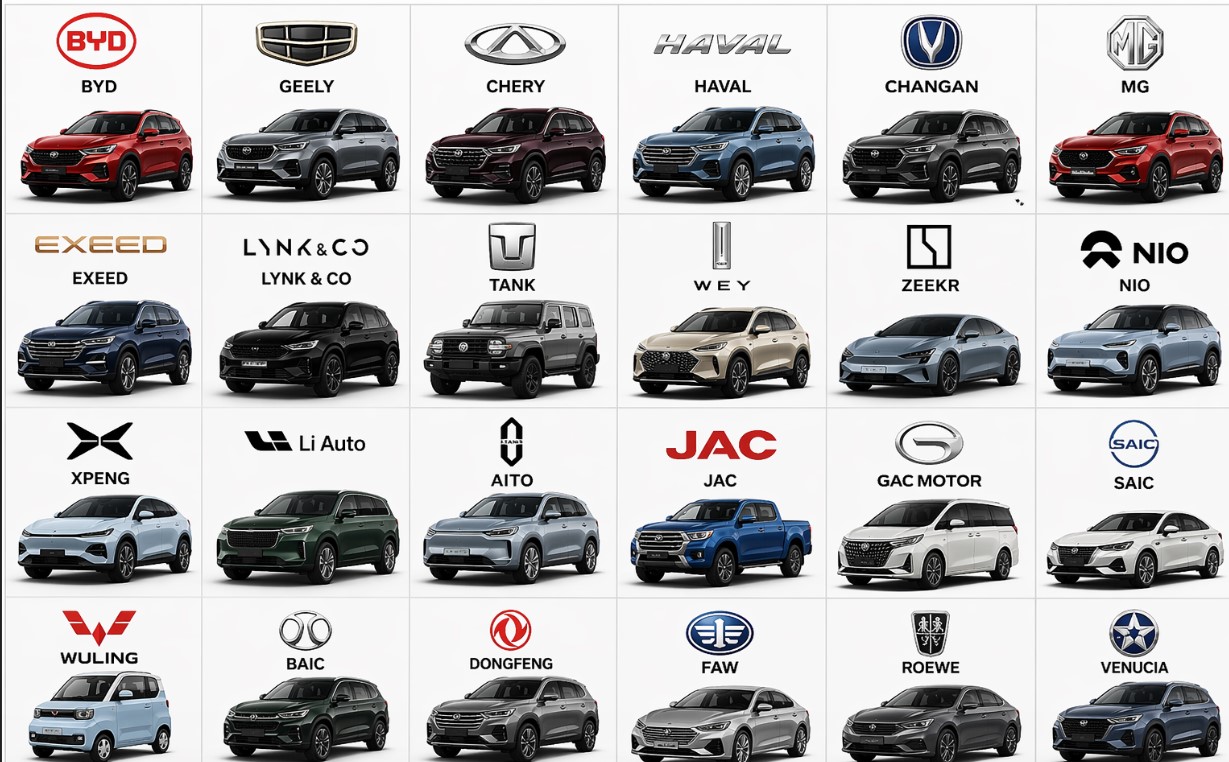
Chinese cars are one of the most discussed topics on the German used-car market in 2026. They are no longer just “cheap alternatives”. Many of them offer strong EV technology, impressive equipment and a modern digital interior. That makes them interesting — but also difficult to evaluate.
For a buyer, the danger is simple: the car can look like an excellent deal at first glance, while the real risks only appear later — during service, after software issues, when parts are needed, or when the car must be resold.
Germany has traditionally been one of Europe’s most conservative car markets. Buyers trust well-known German brands, Japanese reliability and established Korean manufacturers. But the market has changed. Electric mobility, high new-car prices, supply-chain problems and the demand for better equipment per euro opened the door for Chinese manufacturers.
The biggest movement is visible in the EV and plug-in hybrid segment. Chinese companies did not need to fight decades of diesel and petrol-engine reputation. Instead, they entered the market through batteries, software, digital interfaces and aggressive pricing.
When people talk about Chinese cars in Germany, they often think first of BYD. But the market is broader. In practice, buyers most often discuss several groups of brands.
| Brand | Main focus | What attracts buyers | What raises questions |
|---|---|---|---|
| BYD | EVs and hybrids | Battery technology, strong equipment, modern interiors | Resale value, service network, long-term statistics |
| MG | Affordable EVs, hybrids and petrol cars | Price, warranty, broad offer | Depreciation, interior quality, brand perception |
| NIO | Premium EV segment | Technology, battery ideas, digital experience | High price, niche market, infrastructure dependency |
| XPeng | Technology-focused EVs | Software, assistance systems, modern cabin | Long-term reliability, service coverage |
| Aiways / smaller brands | Limited market presence | Price, unusual positioning | Support, spare parts, resale risk |
There are several clear reasons. First, many buyers are tired of rising prices from traditional European brands. Second, some Chinese cars offer equipment that costs extra in many competing models. Third, Chinese manufacturers are strong in electric drive, battery systems, multimedia and software.
For a rational buyer, the temptation is obvious. If the same budget buys a larger battery, panoramic roof, 360-degree cameras, adaptive cruise control, seat heating, ventilation and a digital cockpit, the question becomes: “Why should I pay more just for a familiar badge?”
The main difference is not just the country of origin. It is the product philosophy. Many Chinese cars feel like digital consumer technology on wheels: large screens, bold design, strong visual impact and frequent software-driven updates.
German and Japanese manufacturers usually follow a more conservative path: ergonomics, predictable operation, long model evolution and familiar technical solutions. Chinese brands often move faster. This is exciting — but it also means less long-term market data.
| Criterion | Chinese cars | Established European / Japanese brands |
|---|---|---|
| Equipment for the money | Often stronger | Often more conservative |
| Long-term data | Limited for many models | Usually much better documented |
| Resale value | Still uncertain | Usually more predictable |
| Service and spare parts | Depends strongly on brand and region | Better established network |
| Digital systems | Often modern and attractive | Often more mature but less flashy |
This is the most obvious advantage. Chinese cars often include features that cost extra on European competitors: cameras, panoramic roof, adaptive cruise control, electric seats, large displays, ventilation, advanced assistance systems and modern infotainment.
In the EV segment, Chinese manufacturers are serious competitors. They do not need to catch up with decades of diesel-engine tradition. Instead, they compete with batteries, charging technology, electronics and software.
Many buyers get the feeling of a “better deal”: more equipment, more technology and a fresher interior for less money than many familiar brands.
Many Chinese cars look modern, digital and premium at first glance. This emotional factor should not be underestimated — especially for buyers who want a car that feels new and different.
This is one of the biggest issues. The German used-car market has not yet fully learned how to price many Chinese models. A car may look attractive when new, but it may be harder to sell later than a comparable Toyota, Hyundai, Volkswagen or BMW.
Even if there is an official dealer, it may not be nearby. Independent workshops may lack experience with the exact model. Diagnostic tools, software access and brand-specific procedures may also be limited.
For many established German and Japanese models, buyers know how they behave at 150,000, 200,000 or 250,000 km. For many Chinese cars, this long-term evidence is still thin. That does not mean they are bad — it means the market still lacks sufficient practical data.
The more digital the car, the more important the software becomes. Problems with screens, charging, assistance systems, control units or updates may not be solved by a regular mechanical repair.
After an accident or a specific electronic failure, spare-part availability can become a serious issue. A relatively small repair may become inconvenient if the part is rare or delayed.
This is where an interesting deal can turn into a difficult ownership experience. Before buying, you need to understand how the car will actually live in Germany — not in the brochure, but in real service conditions.
For traditional brands in Germany, the infrastructure is mature: official dealers, independent workshops, used parts, aftermarket parts and many specialists. For many Chinese models, this ecosystem is still being built.
Advertisement / *Affiliate link
Links and banners marked with an asterisk (*) are affiliate links or affiliate banners. If you use such a link and later request an offer, sign a contract or make a purchase, we may receive a commission from the provider. For you, there are no disadvantages: the price and conditions remain the same.
This is the most important question for a pragmatic buyer. A new car can look excellent during the first months or even the first two years. The real test begins later: when the novelty wears off, mileage increases, repairs outside normal service appear, and resale becomes relevant.
Over the next few years, Chinese brands in Germany will likely split into two groups. The first group will build a serious service network, secure parts supply and prove market stability. The second group may remain attractive at the start but lose value faster because of weaker support and buyer hesitation on the used market.
At higher mileage, the equipment list becomes less important. What matters is battery health, software stability, suspension durability, corrosion protection, repairability and unexpected repair costs.
| Scenario | What it means in practice |
|---|---|
| You buy new and keep the car 5–7 years | The purchase can make sense if warranty and local service support are strong. |
| You buy used and want easy resale later | The risk is higher because resale value is still less predictable. |
| You choose a rare brand or rare model | Service, spare parts and resale must be checked especially carefully. |
If you are considering a Chinese car in Germany, the inspection should be more detailed than with familiar models. The reason is simple: there is less long-term data, so the buyer must compensate with better diagnostics.
When checking a Chinese car before purchase in Germany, we do not only look at the visual condition. We focus on the full ownership risk: body, diagnostics, battery or hybrid system, service history, spare parts and future resale.
Yes, they can be worth buying if the price, equipment, warranty and service support are strong. But buyers must accept greater uncertainty around resale value, spare parts and long-term market experience.
BYD and MG are among the most visible brands. NIO and XPeng are more technology-focused and partly more premium. Smaller brands can be interesting but usually carry higher service and resale risks.
Not necessarily. Many new models feel well made. The bigger question is how the car will be serviced, repaired and resold after several years.
Yes, but only after a detailed inspection. Battery condition, charging system, software, fault codes, service history and local repair options must be checked before purchase.
The biggest risk is not always technical failure. Often it is the combination of uncertain resale value, limited service experience and possible delays in spare parts or software support.
How to detect expensive diesel-emission problems before purchase.
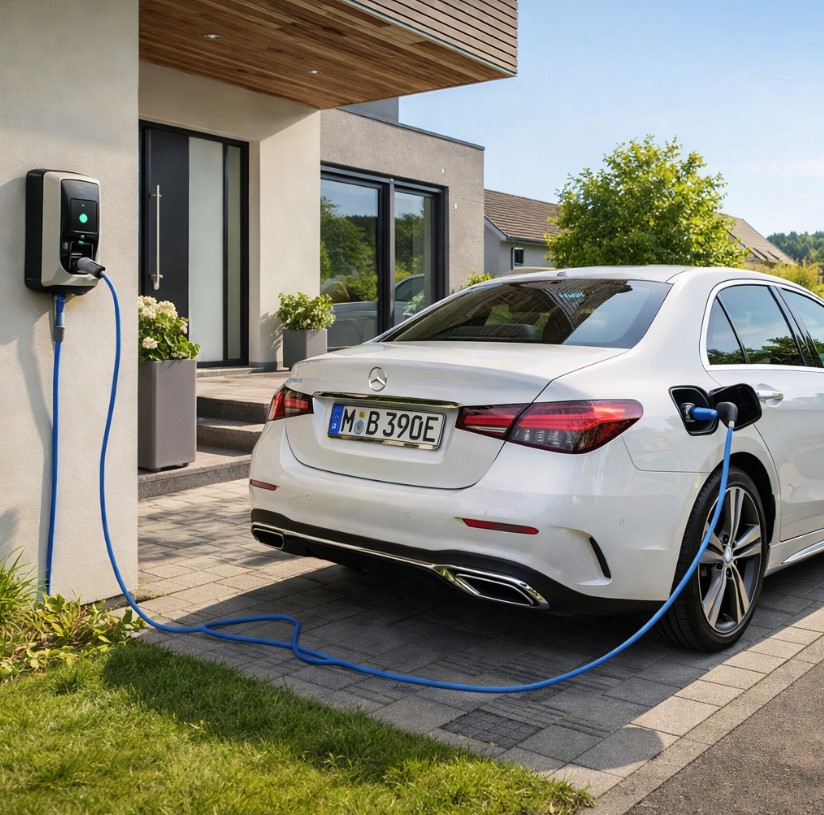
Battery, charging, ownership costs and diagnostics before buying.
Disclaimer:
The information on this page is provided for general informational purposes only and does not replace an individual on-site inspection, computer diagnosis or professional advice.
Despite careful preparation, we do not guarantee the accuracy, completeness or timeliness of the content.
By using the materials on this website, you act at your own risk.