Cheap in the listing, expensive to own: how to calculate the real cost of a car after purchase in Germany
Buying a car in Germany often starts with a price filter. A buyer opens Mobile.de or AutoScout24, sets a budget and chooses the car that looks like the best deal. But the listing price is only the entry ticket — not the real cost of ownership.
A car for 8,000 euros may already need tires, brakes, a major service, a battery, suspension work or a timing belt within the first year. A similar car for 10,000 euros with transparent history, fresh TÜV and proper maintenance can sometimes be cheaper in real terms.
In this article, we explain how to calculate the full cost of owning a car in Germany: Total Cost of Ownership, insurance, tax, fuel, TÜV, service, wear parts and hidden repairs after purchase.
cost of car ownership Germany
Total Cost of Ownership
pre-purchase inspection
costs after purchase
TÜV
insurance and tax
❗ Key point: a cheap car in the listing is not always a good deal. The real price is revealed by tires,
brakes, service, TÜV, insurance, tax, fuel consumption and the risk of hidden repairs.
Contents
- 💶 Why the listing price does not show the real cost
- 📊 Example: €8,000 car vs €10,000 car
- 🧾 Which costs await car owners in Germany
- 🛡 Insurance, tax and fuel
- 🔧 Service, tires, brakes and wear
- ⚠ Typical traps of cheap used cars
- 📈 How to calculate Total Cost of Ownership
- 👨👩👧 What families should consider
- 🔍 How inspection helps save money
- ❓ FAQ and conclusion
💶 Why the listing price does not show the real cost of a car
Most buyers look at a car through a simple logic: if one option costs 8,000 euros and another costs 10,000 euros, the first one is 2,000 euros cheaper. In the listing this looks reasonable, but for used cars this arithmetic is often wrong.
The real cost of a car does not begin with the “buy” button. It begins in the first year of ownership. That is when costs appear which are not visible in attractive photos: worn tires, brakes at the limit, an old battery, neglected service, hidden electronic faults, weak suspension or a major maintenance item that is due soon.
✅ The correct question is not “what is the listing price?” but “how much will this car cost after purchase, servicing and the first necessary repairs?”
A professional pre-purchase inspection in Germany helps not only to find defects, but also to convert them into money. The buyer gets a clearer picture: what the car really costs, which discount is justified and whether negotiations should continue at all.
📊 A car for €8,000 or €10,000: which one is really cheaper?
Let us take a typical situation on the German used-car market. A buyer compares two estate cars from the same class, same model year and similar equipment level.
🚗 Car A
- Price: €8,000
- Mileage: 240,000 km
- Worn tires
- Brakes at the limit
- No proof of timing belt replacement
- Last service unclear
🚙 Car B
- Price: €10,000
- Mileage: 180,000 km
- Fresh tires
- Brakes recently replaced
- Documented service history
- Fresh TÜV
Many buyers automatically choose the first car because it appears 2,000 euros cheaper. But after a few weeks, the situation may look very different.
| Possible work | Approximate cost |
|---|---|
| Set of tires | €500–900 |
| Brake discs and pads | €400–1,000 |
| Major service | €300–800 |
| Timing belt replacement | €700–1,500 |
| Battery | €150–400 |
❗ A saving of 2,000 euros can disappear in one visit to the workshop. That is why you should compare not only the purchase price, but also the car’s next expenses.
🧾 Which costs await car owners in Germany
After buying a car, the costs do not stop. Many buyers calculate only the transaction price and forget recurring payments and natural vehicle wear.
This is why the term Total Cost of Ownership (TCO) is used more and more often: it describes the full cost of owning and using a car.
Main cost categories for car owners
💶 Vehicle purchase
Purchase price and registration expenses.
🛡 Insurance
Liability insurance, partial coverage or full coverage.
⛽ Fuel
One of the largest yearly expenses.
🏛 Tax
Kfz-Steuer.
🔧 Maintenance
Oil, filters, fluids, spark plugs and scheduled work.
⚙ Wear parts
Tires, brakes, suspension, battery and other consumables.
🛡 Insurance, tax and fuel: hidden thousands of euros
🛡 Insurance
Insurance costs in Germany can differ significantly even between similar cars.
Important factors include:
- driver age;
- no-claims class (SF-Klasse);
- registration region;
- engine power;
- vehicle value;
- type of insurance.
The difference between models can easily reach several hundred euros per year.
⛽ Fuel
The difference between 5 and 8 litres per 100 km looks small only on paper.
| Average consumption | 20,000 km per year |
|---|---|
| 5 l / 100 km | ≈ €1,700 |
| 8 l / 100 km | ≈ €2,700 |
The difference is about 1,000 euros per year. Over five years of ownership, that is roughly 5,000 euros.
🏛 Vehicle tax
Kfz-Steuer depends on:
- engine displacement;
- CO₂ emissions;
- emission class;
- fuel type.
The difference is especially noticeable between modern cars and older diesel models.
⚠ Before buying a car, it is useful to estimate insurance and Kfz-Steuer in advance. Sometimes these costs affect the family budget more than the difference in purchase price.
🔧 Technical maintenance and natural wear
Even the most reliable car requires regular maintenance.
🛢 Scheduled service work
- oil change;
- oil filter;
- air filter;
- cabin filter;
- brake fluid;
- spark plugs;
- air-conditioning service.
The more modern and complex the car, the higher the maintenance costs can be.
⚙ Wear parts
A high-mileage vehicle may need replacement of:
- clutch;
- dual-mass flywheel;
- shock absorbers;
- suspension arms;
- tie rod ends;
- wheel bearings;
- battery.
Individual repairs can easily exceed 1,000 euros, especially on modern mid-range and premium vehicles.
⚠ Why cheap cars often become the most expensive ones
In practice, an unusually attractive price rarely appears by chance.
Low prices often hide costs the seller already knows about and would prefer to pass to the next owner.
🛞 Worn tires
A new set of quality tires can cost several hundred euros in the first month after purchase.
🛑 Brakes at the limit
Heavily worn discs and minimal pad thickness mean quick additional costs.
🔋 Old battery
Especially annoying in winter, when the car suddenly refuses to start.
🎨 Cosmetic preparation
Polishing and fresh interior cleaning can hide more serious bodywork problems.
📄 No service history
The buyer must budget for service work immediately after purchase.
🖥 Electronic faults
Many defects are visible only through computer diagnostics.
❗ Very often the seller lowers the price not out of generosity, but because upcoming costs are already known. The buyer’s job is to discover them before signing the contract.
📈 What Total Cost of Ownership means and why it matters
Many buyers compare cars only by purchase price. A more realistic approach is to calculate the full cost of ownership, also known as Total Cost of Ownership (TCO).
This approach shows how much money the owner will actually spend over the period of using the car, not only on the day of purchase.
What the real cost of ownership consists of
💶 Purchase price
Vehicle price and registration expenses.
📉 Depreciation
Loss of value over time.
🛡 Insurance
Liability, partial coverage or full coverage.
🏛 Kfz-Steuer
Annual vehicle tax.
⛽ Fuel
One of the biggest expenses for high-mileage drivers.
🔧 Service and repairs
Maintenance, tires, brakes, suspension and unexpected defects.
✅ This is why a car for €10,000 can be a better deal than a car for €8,000 if it requires fewer repairs and has lower running costs.
📊 Infographic: how the real cost changes after purchase
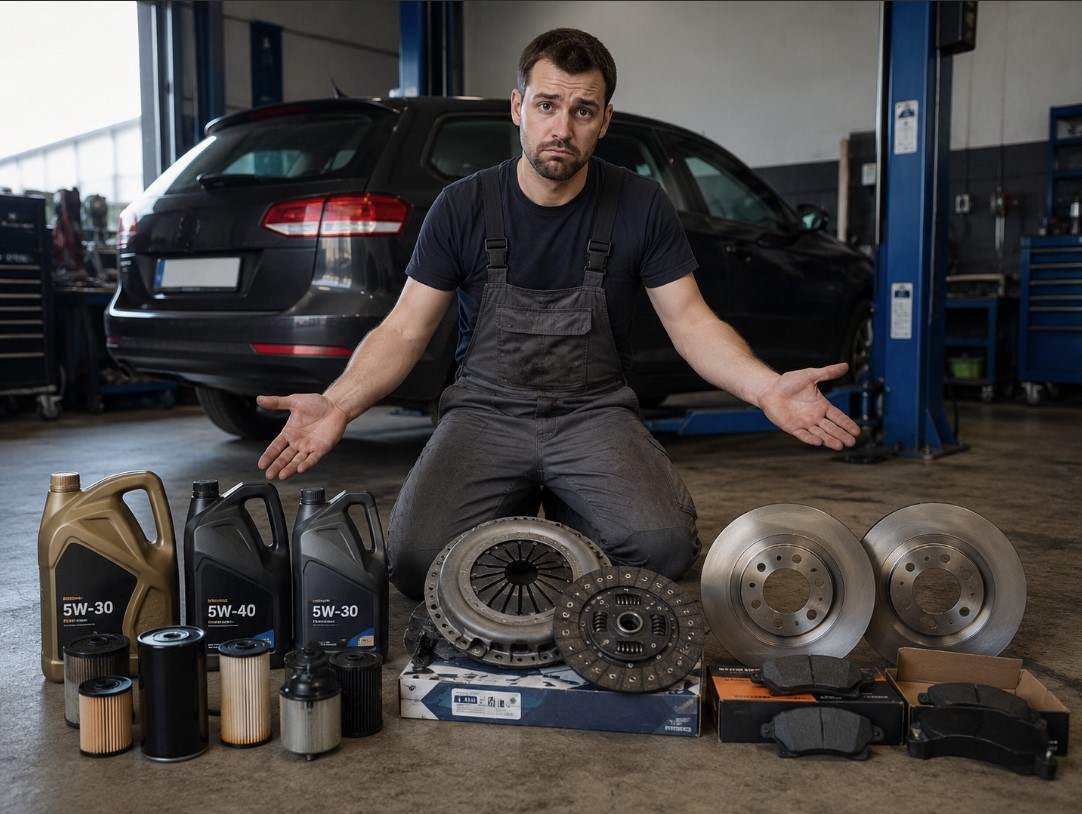
🚗 Car A
Purchase price: €8,000
- 🛞 Tires: €700
- 🛑 Brakes: €700
- 🔧 Service: €500
- 🔋 Battery: €250
Total first year: ≈ €10,150
🚙 Car B
Purchase price: €10,000
- 🛢 Scheduled maintenance: €200
Total first year: ≈ €10,200
⚠ The difference is only about 50 euros. But the owner of Car B gets a more predictable, better-maintained and lower-risk vehicle.
👨👩👧 What families should consider when choosing a car
If the car is being bought as family transport for several years, it is important to look beyond the listing price.
For a family, future expenses, reliability and the probability of unexpected repairs are often more important.
| What to check | Why it matters |
|---|---|
| Service history | Shows how well the car was maintained |
| Tire condition | Can save several hundred euros immediately after purchase |
| Battery age | Prevents unpleasant surprises in winter |
| Brakes | Safety and avoiding major costs soon after purchase |
| Next TÜV date | Helps avoid unexpected costs after registration |
| Body condition | Corrosion risk and loss of vehicle value |
| Insurance cost | Affects the family budget every year |
| Fuel consumption | Strongly affects running costs |
🔍 Why a professional inspection helps save money
Many buyers see a pre-purchase inspection as an additional expense.
In practice, an inspection often saves far more than it costs.
🛞 Tires
The remaining life and future costs can be estimated in advance.
🛑 Brakes
The degree of wear and need for replacement can be checked before purchase.
🖥 Diagnostics
Hidden electronic system faults can be found.
🎨 Bodywork
Accident repairs, repainting and hidden body repairs can be detected.
⚙ Engine and gearbox
Expensive technical risks can be identified before the deal.
💶 Negotiation argument
Found defects often help reduce the purchase price.
❗ An inspection before the deal is almost always cheaper than fixing one serious defect after purchase.
❓ Frequently asked questions
What is more important: purchase price or cost of ownership?
For most owners, the full cost of ownership is more important. It shows the real expenses over several years of use.
Why do cheap cars often become expensive?
Because a low price often hides tires, brakes, service, suspension or other costs that the new owner will soon have to pay.
Can future costs be estimated before buying?
Yes. This requires checking the technical condition, service history and diagnostics results.
Is it worth paying for a pre-purchase inspection?
In most cases, yes. One serious defect found before purchase can repay the inspection cost several times over.
Which costs are most often forgotten?
Tires, brakes, insurance, tax, battery, major service work and fuel consumption.
Conclusion
A cheap car in the listing is not always a good purchase.
Very often, saving money during the deal turns into expensive repairs during the first months of ownership. Tires, brakes, service, suspension and hidden faults can quickly consume the price difference between a good car and a problematic one.
That is why you should evaluate not only the purchase price, but also the future cost of keeping the car on the road.
💡 If your main goal is to avoid overpaying in the first year of ownership, a professional inspection before purchase often pays off faster than any discount promised by the seller.