Buying a Used Car in Germany: Warning Light On — Buy or Walk Away?
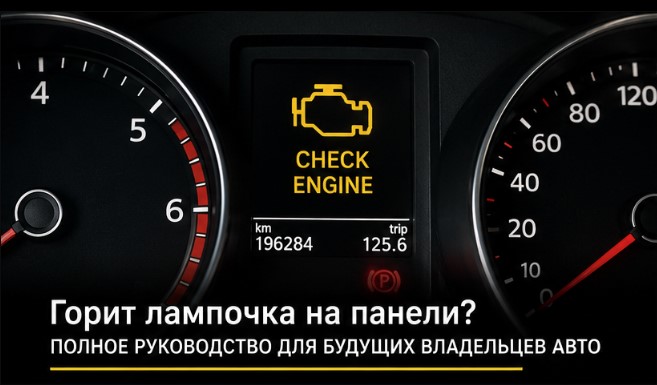
A dashboard warning light during a used car inspection is not a small detail. It is a signal: do not decide by feeling. Decide by diagnosis, fault code, fault status and repair risk.
A single symbol on the instrument cluster can mean many things: a cheap sensor, a due service, a software notice — or an expensive issue with the engine, DPF, AdBlue/SCR, ABS, airbag, brake system or automatic gearbox.
The colour of the warning light gives the first orientation: red warning lights usually require immediate action, yellow lights require diagnostics, while green and blue indicators are often information or operating-status lights. The final assessment, however, comes only after OBD diagnostics.
Check Engine Used Car
OBD Diagnostics Before Buying
DPF / AdBlue / SCR
ABS / ESP / Airbag
Permanent DTC
Readiness Monitor
❗ Quick conclusion: A warning light is not automatically a reason to reject a car.
But without an OBD scan, fault status, test drive and a second diagnostic check,
you should not buy it.
📋 Contents
- 🚨 Why a warning light often means more than the seller says
- 🔴🟡🟢🔵 Warning light colours
- 🔴 Red warning lights
- 🟡 Yellow warning lights
- 🟢🔵 Green and blue indicators
- 🖥 Why OBD diagnostics matter more than the lamp itself
- 📋 Active, Pending, Stored and Permanent DTC
- 🚗 Typical OBD codes for VW, Audi, BMW and Mercedes
- 🕵️ How to detect faults deleted before sale
- ✅ Checklist when a warning light is on
- 🔍 How Sicher-Check helps
- ❓ FAQ and conclusion
🚨 Why a warning light often means more than the seller says
Sellers often try to calm buyers down when a warning light is on: “It is only a sensor”, “the light has been on for ages” or “once it is cleared, everything is fine”. Sometimes that may be true. Very often it is just a guess — or a sales tactic.
A check engine light can point to a small defect, but it can also indicate problems with the turbocharger, DPF, EGR, catalytic converter, lambda sensor, fuel mixture, ignition, AdBlue/SCR or intake system. Without the fault code and live data, there is no serious way to judge the risk.
✅ A proper pre-purchase inspection checks not only bodywork, paint, service history and test drive, but also electronics: OBD scan, fault status, freeze frame, readiness monitors and a second scan after driving.
Even a “clean” dashboard is not always proof that everything is fine. Faults may be stored as Pending, History or Permanent DTC. Some faults appear only after load, temperature or several start cycles.
🚦 Warning light colour: first indication of urgency and risk
The colour is the first clue, but not the final diagnosis. Most modern vehicles follow a similar logic: red means critical, yellow means diagnostic action is needed, and green or blue usually indicates information or normal operating status.
🔴 Critical
🟡 Diagnostics needed
🟢 Information
🔵 Operating mode
⚠ The same symbol may be named differently by Volkswagen, Audi, BMW, Mercedes-Benz, Škoda, Seat or Opel. That is why the icon alone is not enough. The actual fault code, status and vehicle condition decide.
🔴 Red warning lights: when you should pause the purchase immediately
| Warning | Possible meaning | Risk | Practical assessment |
|---|---|---|---|
| 🛢 Red oil can | Oil pressure problem | Very high | Can range from sensor fault to engine damage |
| 🌡 Engine temperature | Overheating / cooling system problem | Very high | Do not continue without diagnosis |
| 🔋 Red battery | Charging system / alternator / belt / electrical system | High | The car may break down on the road |
| 🛑 BRAKE | Brake system, brake fluid, ABS-related fault | Very high | Safety-relevant issue |
| 🚫 AdBlue No Start | SCR system may prevent restarting | High | Evaluate only after diagnostics |
❗ If a red warning light is permanently on, do not buy the vehicle without proper diagnostics — even if the seller says: “That is normal.”
🟡 Yellow warning lights: often the key point for diagnostics and negotiation
Yellow warning lights usually do not mean you must stop immediately. But they almost always mean: find the cause, read the fault memory, test-drive the car and assess the repair risk.
| Warning light | Possible causes | Purchase risk |
|---|---|---|
| 🟡 Check engine | Sensors, turbocharger, DPF, EGR, AdBlue/SCR, intake system, ignition, mixture | From cheap to very expensive |
| 🟡 ABS | Wheel speed sensor, wiring, magnetic ring, ABS control unit | Safety-relevant, possible roadworthiness issue |
| 🟡 ESP / DSC | Steering angle sensor, wheel speed sensor, brake pressure sensor, ABS-related fault | Diagnostics needed, not just clearing codes |
| 🟡 DPF | Soot load, differential pressure sensor, temperature values, regeneration, EGR | Cleaning or expensive replacement possible |
| 🟡 Airbag / SRS | Connector, seat occupancy sensor, belt tensioner, accident history, control unit | Always serious, safety-relevant |
| 🟡 Service | Maintenance due, oil service, inspection, brake fluid | Usually calculable, but costs must be included |
💡 Yellow warning lights are often useful negotiation arguments when buying a used car — but only if diagnostics show which fault is actually stored.
🟢🔵 Green and blue indicators: usually information, but still worth checking
Green and blue indicators are often normal operating lights. They may show lights, turn signals, cruise control or high beam. Still, during the inspection you should check whether all relevant lights appear briefly when the ignition is switched on and then go out correctly.
| Indicator | Typical meaning | Check before purchase |
|---|---|---|
| 🟢 Turn signal | Normal indicator function | Check exterior lights as well |
| 🟢 Low beam | Lights are switched on | Check headlights, levelling and error messages |
| 🟢 Cruise control | Cruise control or ACC active | Test during the test drive if possible |
| 🟢 ECO / Start-stop | Driving or energy-saving mode | Check battery condition and related errors |
| 🔵 High beam | High beam active | Normal operating indicator |
| 🔵 Cold start / temperature notice | Engine not yet warm | Warm the car up and check temperature behaviour |
🖥 Why OBD diagnostics matter more than the warning light itself
A warning light only tells you that a system has detected a problem. The actual cause is stored in the control unit fault memory. That is why looking at the instrument cluster is not enough when buying a used car.
A proper inspection does not read only the engine control unit. Modern vehicles have many electronic systems where purchase-relevant faults can be stored.
⚙ Engine ECU
Engine operation, injection, turbocharger, DPF, EGR, AdBlue/SCR and exhaust system.
⚙ Automatic gearbox
Shift behaviour, adaptation values, overheating, jerking and stored gearbox faults.
🛑 ABS / ESP
Brake and stability systems, wheel speed sensors, steering angle and brake pressure.
💥 Airbag / SRS
Belt tensioners, airbag modules, seat occupancy and safety-relevant stored faults.
🚘 Comfort electronics
Climate control, windows, central locking, parking sensors, cameras, lights and body control units.
🔋 Battery / electrical system
Alternator, energy management, undervoltage, start-stop and onboard electrical issues.
⚠ A simple OBD adapter that reads only the engine may miss important faults. For a purchase decision, a scan of all reachable control units is much more useful.
📋 Active, Pending, Stored and Permanent DTC: how to read a diagnostic report
Not every fault in a diagnostic report has the same meaning. For the purchase decision it matters whether the fault is currently active, only starting to appear, stored historically or permanent and not easy to erase.
| Status | Meaning | Why it matters for buyers |
|---|---|---|
| Active / Current | The fault is currently present | Repair cost should be expected immediately or purchase paused |
| Pending | The fault is beginning to appear but is not fully confirmed yet | Often an early warning of a coming problem |
| Stored / History | The fault was stored in the past | Helps understand the technical history of the car |
| Permanent DTC | Persistent code that cannot simply be removed by normal clearing | Useful for detecting hidden or recently deleted faults |
| Freeze Frame | Vehicle data at the moment the fault occurred | Shows RPM, load, temperature, speed and operating conditions |
| Readiness Monitor | Status of self-tests after fault clearing | Can indicate whether faults were deleted shortly before sale |
✅ Especially important: compare diagnostics before and after the test drive. Some faults appear only under temperature, load, boost pressure or after several drive cycles.
🚗 Typical OBD codes for Volkswagen, Audi, BMW and Mercedes-Benz
OBD codes do not replace a full diagnosis, but they point in the right direction. The same code can have different causes depending on engine, software version and system condition.
| Brand / system | Code | Typical direction | What to check before buying? |
|---|---|---|---|
| Volkswagen / Audi | P0299 | Boost pressure too low | Turbocharger, vacuum system, charge-air path, actuator, leaks |
| VW / Audi / Diesel | P0401 | EGR flow too low | EGR valve, intake, DPF relation, wiring |
| Audi / Diesel | P2002 | DPF efficiency below threshold | Differential pressure, temperature values, regeneration, ash / soot load |
| BMW | 118001 | Mixture too lean / mixture adaptation | False air, EVAP, sensors, fuel system, live data |
| Mercedes-Benz | P13DF00 | AdBlue / SCR system | NOx sensor, AdBlue pump, lines, software, no-start risk |
⚠ The same check engine light can mean very different repair budgets. What matters is the exact code, status, freeze frame, live data and test drive result.
✅ Checklist: what to check when a warning light is on
| Inspection point | Status |
|---|---|
| Check all warning lights when switching ignition on | ☐ |
| Look for missing, covered or manipulated warning symbols | ☐ |
| Scan all reachable control units | ☐ |
| Check fault status: Active / Pending / Stored / Permanent | ☐ |
| Review freeze frame and mileage / operating conditions | ☐ |
| Check readiness monitors | ☐ |
| Carry out a test drive | ☐ |
| Scan again after the test drive | ☐ |
| Calculate possible repair costs against purchase price | ☐ |
| Use diagnostic results for negotiation or walking away | ☐ |
💶 When to negotiate — and when to walk away
Not every warning light is a reason to reject the car immediately. But every warning light is a reason to clarify the cause before buying.
| Situation | Recommendation |
|---|---|
| Service light with no other faults | Calculate maintenance cost and include it in the price discussion |
| ABS fault with a clear sensor cause | Negotiation possible; check repair cost |
| Check engine light without diagnosis | Do not buy before OBD and test drive have been checked |
| DPF, SCR or AdBlue fault | Decide only after clear cost and cause assessment |
| Red oil or temperature warning | Pause the purchase or walk away until the cause is clearly identified |
| Signs of deleted fault codes | High risk: consider further inspection or purchase cancellation |
🔍 How Sicher-Check helps when dashboard warning lights are on
When inspecting a used car, we do not check only bodywork, paint, interior and documents. If a warning light is on or the seller mentions “minor faults”, electronic diagnostics become especially important.
🖥 Full OBD diagnostics
Reading all reachable control units, depending on the vehicle and diagnostic access.
📋 Fault analysis
Assessment of fault codes, status, freeze frame, readiness and likely causes.
🚗 Vehicle inspection
Bodywork, interior, engine bay, suspension, brakes, tyres and test drive.
📄 Document check
Service history, TÜV report, invoices, registration documents and plausibility.
💶 Negotiation basis
Documented defects help discuss repair costs realistically.
📷 Photos and report
Clear summary with findings, risks and purchase recommendation.
❓ FAQ: warning lights when buying a used car
Can you buy a car with the check engine light on?
Only after a full OBD diagnostic scan. The same light can mean a cheap sensor fault, but also expensive issues with the engine, turbo, DPF, catalytic converter or AdBlue/SCR.
Is a deleted fault code really gone?
No. Clearing fault codes does not repair the cause. Many faults return after a test drive, several start cycles or completed readiness tests.
Why should all control units be scanned?
Faults may not be stored only in the engine ECU. ABS, airbag, automatic gearbox, climate control, comfort electronics and battery management can also store purchase-relevant faults.
Which warning lights are especially dangerous?
Red warnings are especially critical: oil pressure, engine temperature, brake system, charging system or SCR/AdBlue messages with a possible no-start countdown.
Is OBD diagnostics worth it before buying?
Yes. A diagnostic scan usually costs far less than a later repair. It reveals hidden faults and gives arguments for negotiation or walking away.
What is a Permanent DTC?
A Permanent DTC is a persistent fault code that cannot simply be removed by normal clearing. It helps identify recently deleted or hidden problems.
📌 Conclusion
A warning light is not an automatic death sentence for a used car. But it is a clear signal: diagnosis first, decision second.
When buying in Germany, do not rely on seller phrases. Evaluate fault codes, status, freeze frame, readiness, test drive and a second OBD scan. Only then can you distinguish between a manageable defect, a strong negotiation point and a real reason to walk away.
💡 If a car looks interesting but a warning light is on, professional diagnostics before purchase are almost always cheaper than an unexpected repair after signing.