
 Car sourcing in Germany: turbo diagnostics before buying a used car
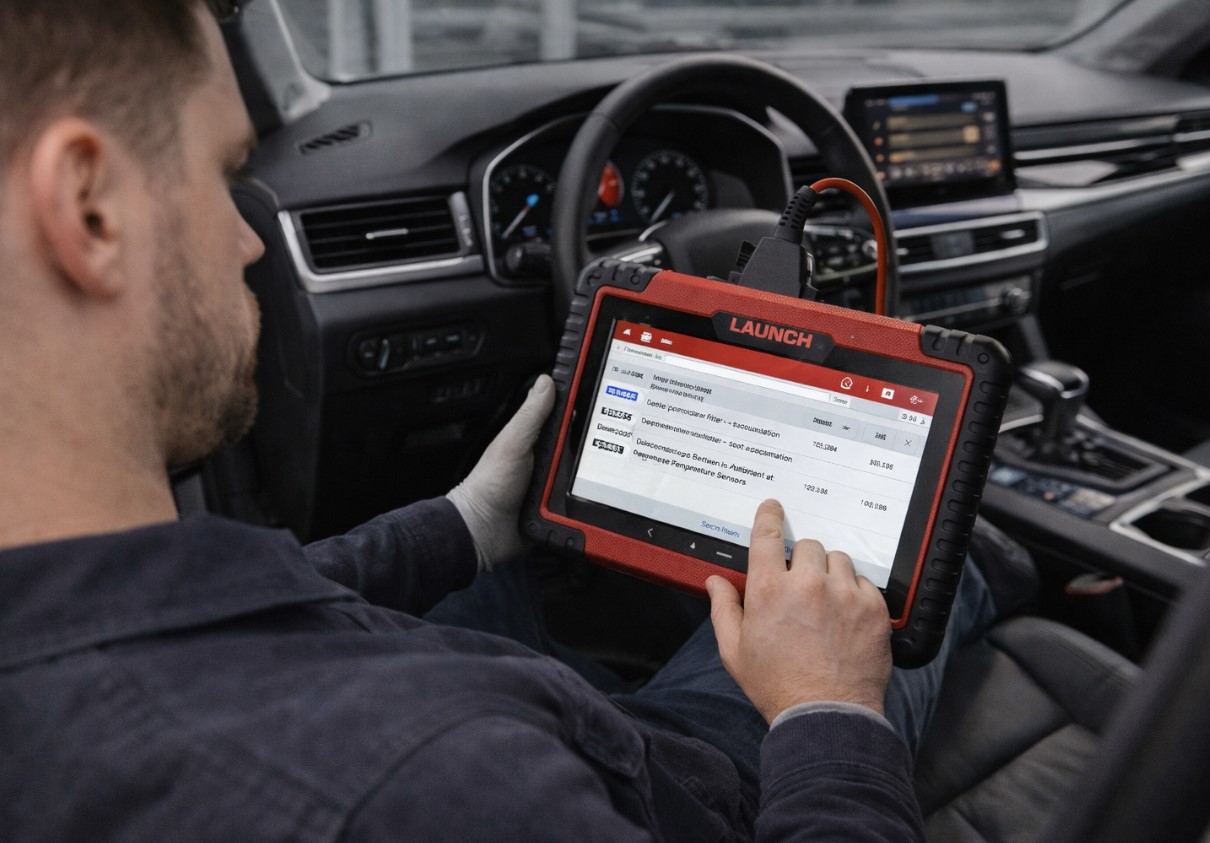
OBD car diagnostics is a tool that helps uncover hidden issues by connecting to the vehicle’s electronic systems. Modern cars have many sensors and control units that monitor the engine, transmission, safety systems, and comfort functions.
The key point: computer diagnostics are not a cure-all, but they are ultra-important because they let you quickly collect objective information about system status and faults. The best result comes from combining OBD with a body/suspension inspection, a proper test drive, and document + VIN/history checks.
The essence in one paragraph
OBD is a controlled “window” into electronic control units. A scanner reads DTC fault codes, Live Data (real-time parameters), and various status information. But if a seller cleared codes, if a defect is purely mechanical, or if a malfunction doesn’t meet the threshold to store a code, the scanner can appear “clean”. That’s why conclusions must always be based on the full picture.
What is OBD? A short history of on-board diagnostics
OBD stands for On-Board Diagnostics. Starting in the 1980s, manufacturers began using ECUs to monitor key engine parameters. Early systems were basic: the car could illuminate Check Engine without detailed information.
In the 1990s, standards were introduced. In the U.S., OBD-II became mandatory in 1996 with a standardized connector and codes. In Europe, the equivalent is often referred to as EOBD and became mandatory for petrol cars from 2001 and for diesels from 2004. Today, most vehicles have a 16-pin OBD-II port that provides diagnostic access.
Where does OBD get the information from?
OBD data originates from sensors and electronic control units (ECUs). Sensors measure temperature, pressure, exhaust composition, RPM, wheel speed, and many other variables. ECUs evaluate these values against expected ranges.
When something is out of range or a fault condition is detected, the ECU may store a DTC (Diagnostic Trouble Code). A scanner reads the memory of ECUs via the OBD port and can also display Live Data. In short: the car itself is the data source — OBD gives you structured access.
What we typically check before buying a used car
- ✔️Fault codes: active and stored (engine, transmission, ABS/ESP, SRS, etc.).
- ✔️Freeze Frame: conditions when the code was set (load, temperature, RPM).
- ✔️Live Data: temperatures, fuel trims, boost pressure, transmission parameters, etc.
- ✔️Readiness monitors: indications of recent code clearing before a sale.
- ✔️Indirect mileage hints: selected module records (where accessible on the model).
DTC fault codes: how to read and understand them
A DTC is typically five characters, for example P0420 or B1000. The first letter indicates the domain:
- 📜P (Powertrain) — engine/transmission
- 📜B (Body) — body electronics (often includes SRS/airbags)
- 📜C (Chassis) — chassis systems (ABS/ESP, etc.)
- 📜U (Network) — communication between modules
Rule of thumb: a code indicates a symptom, not “the exact part to replace”. For example:
| Code | Generic meaning | What it can be in real life |
|---|---|---|
| P0300 | Random/multiple misfire detected | Spark plugs/coils, fuel delivery, vacuum leak, compression, injectors |
| P0171 | System too lean (Bank 1) | Vacuum leak, fuel pressure, MAF, oxygen sensor influence, injectors |
| P0420 | Catalyst system efficiency below threshold | Catalyst, oxygen sensors, mixture issues, misfires, leaks |
Important: the same code can mean different root causes depending on the car and context. After reading DTCs, step two is always: Freeze Frame + Live Data + physical verification.
Basic OBD2 vs professional diagnostics
A simple OBD2 adapter (for example ELM327-based) often reads only generic engine-related codes and limited parameters. But a modern vehicle has many systems: ABS/ESP, SRS, transmission, climate control, assistance systems, immobilizer, and CAN networks. Their issues may sit in B, C, U groups or manufacturer-specific codes that basic adapters don’t show.
Professional diagnostics with multi-brand tools (e.g., Launch) typically provides:
- full-vehicle scanning across multiple ECUs;
- advanced parameters and status data;
- Freeze Frame and readiness monitor status;
- in many cases — active tests of actuators (model-dependent).
Quick table: what OBD can realistically deliver in minutes
| System | What you can see | Why it matters when buying |
|---|---|---|
| Engine / ECU | DTCs, fuel trims, temperatures, boost pressure | Assess engine health and identify hidden deviations |
| Transmission | Transmission codes, temperatures, sometimes adaptations | Transmission issues are among the most expensive surprises |
| ABS/ESP | Wheel speed sensors, hydraulic unit, communication issues | Safety-critical; can also impact TÜV outcome |
| SRS/Airbag | Airbag/pretensioner/crash sensor faults | Safety + potential accident history indicator |
Can you trust the scanner alone?
A scanner is powerful, but there are scenarios where OBD won’t show a problem — or may mislead you:
- ☝Codes can be cleared shortly before viewing (readiness monitors help detect this).
- ☝Mechanical defects may not be captured (suspension, clutch, brakes, rust, body geometry).
- ☝Intermittent faults may not reach the threshold to store a code.
- ☝“Ghost codes”: old stored events that do not repeat.
Fast orientation: symptom → likely meaning → buyer risk
| What you see | What it may indicate | Risk for the buyer |
|---|---|---|
| “No codes”, but readiness monitors are not complete | Recent memory reset / cleared faults | High: the issue may return after a short drive |
| Repeated mixture/misfire-related P-codes | Vacuum leak, fuel, ignition, compression | Medium/high: from service items to major repairs |
| Transmission codes or abnormal transmission temps | Overheating, wear, valve body/solenoids | High: expensive and critical |
| ABS/ESP faults | Sensors, wiring, hydraulic unit | Medium: safety + potential TÜV remarks |
| SRS/Airbag faults | Sensors/pretensioners/accident aftermath | High: safety + costly repairs |
Practical takeaway: no codes ≠ “perfect car”. And a code ≠ “replace this exact part”. You need context: documents, test drive, physical inspection, and correct interpretation.
Why expert interpretation matters
The same code can have many causes. An experienced diagnostician:
- distinguishes active vs historic codes;
- checks Freeze Frame and Live Data behaviour;
- matches electronic findings with real-world signs: noises, vibrations, leaks, behaviour under load;
- builds a logical troubleshooting path instead of guessing by replacing parts.
That is why the best approach for buying a used car in Germany is a comprehensive inspection, where OBD provides fast objective data and an expert converts it into clear conclusions: risk, likely cost, negotiation leverage, or a recommendation to walk away.
A quick checklist before you call the seller (helps avoid wasted trips)
- Do they have a valid TÜV (HU/AU) report and what mileage is stated?
- Do they have service invoices (paper or digital service history)?
- Are any warning lights currently on: Check Engine / ABS / Airbag?
- Any complaints about the automatic transmission (jerks/delays) or turbo?
- Will they allow a proper OBD scan and a 15–20 minute test drive?
- Will they meet in daylight for a paint inspection?
Pre-purchase OBD/computer diagnostics with Sicher-Check (Berlin & Germany)
We provide professional OBD/computer diagnostics before purchase — quickly in Berlin and with travel across Germany. We use professional equipment, scan key control units and document results in a clear report.
What you get
- Full scan: engine, transmission, ABS/ESP, SRS and other modules (where supported).
- Prioritization: what is critical, what is acceptable, and what is a historical “trace”.
- Readiness check: signs of recent code clearing before sale.
- Live Data review: fast assessment of how major systems operate.
- Recommendation: buy/negotiate/perform deeper inspection/walk away.
Werbung / *Affiliate-Link
Links and banners marked with an asterisk (*) are affiliate links/banners. If you use such a link and subsequently request an offer, sign a contract or make a purchase, we receive a commission from the respective provider. For you, there are no disadvantages: the price and conditions remain the same.
FAQ — frequently asked questions
Can OBD diagnostics detect mileage tampering?
Sometimes you can see indirect hints (data stored in certain modules, inconsistencies, service records), but it depends on the make/model and how the odometer was manipulated. A more reliable approach is a combination of documents, TÜV reports, VIN/history checks, and professional module diagnostics.
Why does “no codes” not guarantee the car is fine?
Codes can be cleared, the issue can be purely mechanical (suspension/brakes/rust), or an intermittent fault may not reach the threshold for storing a code. That’s why a comprehensive check is essential: inspection + test drive + documents + OBD.
Is an ELM327 adapter enough for a purchase decision?
It can help for a quick first look, but it often sees only generic engine codes and limited data. For buying a used car in Germany, professional full-vehicle diagnostics and correct interpretation are strongly recommended.
Related posts
Car sourcing in Germany: turbo diagnostics before buying a used car
 Service intervals (TO-0, TO-1 etc.): what’s included and how to keep warranty