
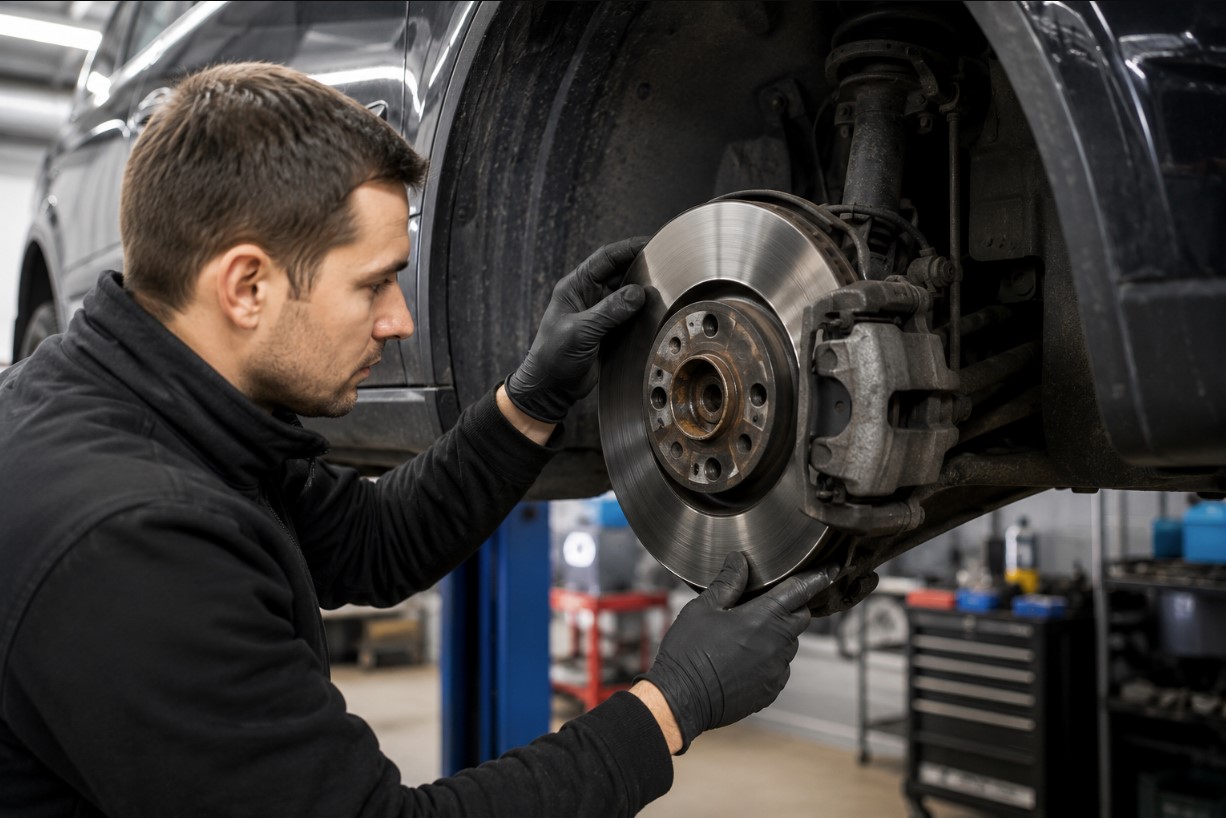
 How to reduce the risks when buying a used car in Germany
🏁 Porsche · German used-car market
Buying a Used Porsche in Germany: Why a Cheap Cayenne Can Become Expensive, Which Models Are Worth Considering and What to Check Before You Buy
The German used-car market offers Porsche models at remarkably different price levels — from ageing SUVs for only a few thousand euros to rare sports cars worth hundreds of thousands. The asking price, however, tells you surprisingly little about the true cost of owning the car.
An early Porsche Cayenne can sometimes cost less than an ordinary used Volkswagen. A Boxster may be advertised for the price of a compact hatchback, while a rare 911, Cayman GT model or original Turbo can command several times the price of a more common version from the same generation.
That is why anyone looking for a used Porsche in Germany should clearly distinguish between a low purchase price and a genuinely good-value car. With Porsche, the cheapest example is very rarely the cheapest way to own one.
Used Porsche Germany
Porsche Cayenne used
Porsche 911 Germany
Boxster & Cayman buying guide
Porsche inspection Berlin
Porsche pre-purchase inspection Germany
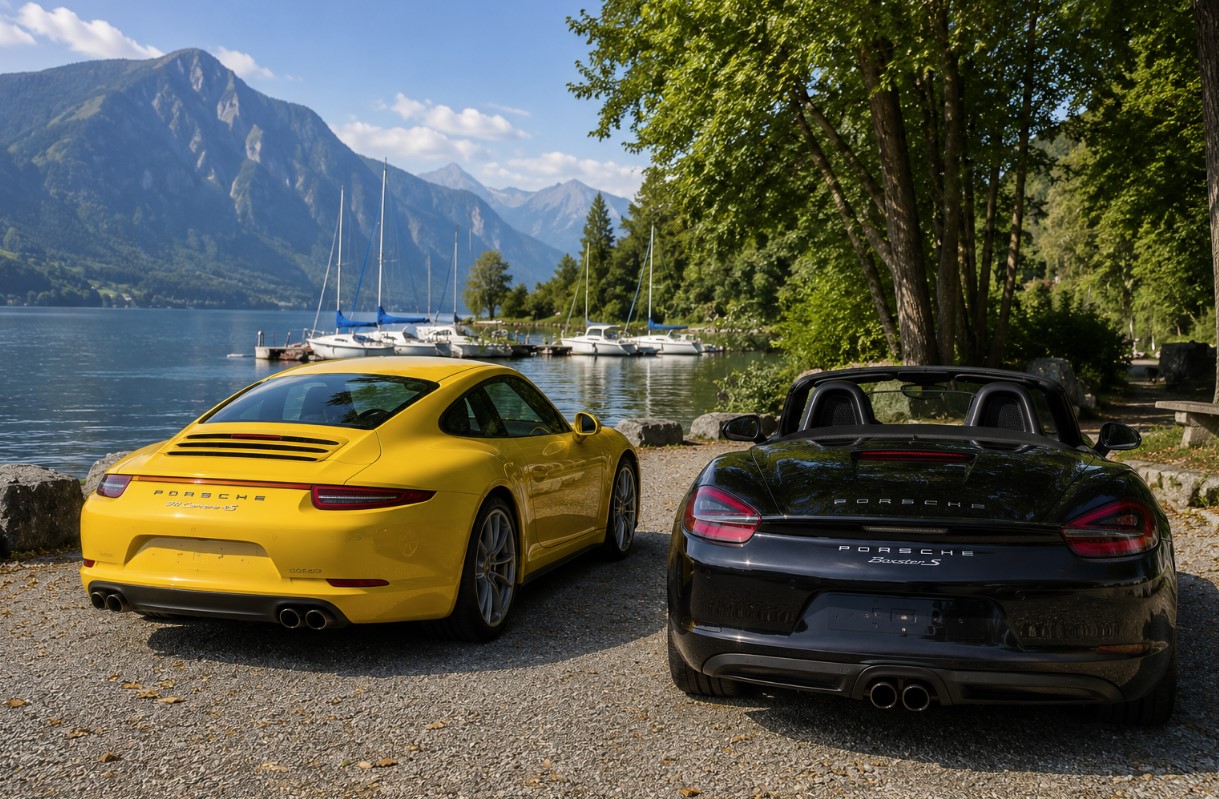
⚡ Quick answer: is a cheap used Porsche in Germany worth buying?
It can be — provided the car is properly inspected and your budget includes more than the purchase price. A reasonably priced Boxster, Cayman, Porsche 944, 996 Carrera or older Cayenne can provide an enormous amount of enjoyment. But a Porsche bought for €5,000–€15,000 may still contain components whose repair cost represents a substantial percentage of the vehicle's entire market value.
A sensible buyer therefore evaluates not only the advertisement price and mileage, but also the service history, engine and transmission, body condition, factory specification, upcoming maintenance and the financial reserve required after purchase.
📑 Contents
- Porsche on the German used-car market
- Why can an old Cayenne be so cheap?
- Can a cheap Cayenne still be a good buy?
- Cayenne 955/957: engines and common risks
- Porsche Cayenne 958
- Porsche Boxster 986/987
- Porsche Cayman 987
- Porsche 911 generation 996
- Porsche 911 generation 997
- Porsche Panamera 970
- Porsche Macan
- Porsche 924, 944 and 928
- Which Porsche engines are worth considering?
- Affordable Porsche models for driving enjoyment
- Can a Porsche be an investment?
- What to check before buying a Porsche
- Porsche Approved and Porsche Classic
- Porsche inspection in Berlin and Germany
- Frequently asked questions
🇩🇪 Used Porsche Cars in Germany: One Brand, Completely Different Types of Car
Germany is one of the most interesting places to search for a used Porsche because the market contains an exceptionally broad range of models, ages and price categories. One search can return an ageing Cayenne, an affordable Boxster, a carefully maintained Cayman, an ordinary Carrera, a rare Turbo and a collector-grade GT3.
Buyers naturally see the same Porsche crest and start comparing cars mainly by model year, mileage and asking price. With Porsche, that can be misleading. Two apparently similar cars from the same generation can differ dramatically in mechanical condition, provenance and the amount of money they will require after purchase.
This is particularly important for international buyers searching on German platforms such as Mobile.de or AutoScout24. An attractive advertisement may justify a closer look, but it should not replace an independent assessment of the actual car.
🚙 Cayenne
Often the cheapest entry into Porsche ownership by purchase price, but it remains a large and technically complex premium SUV with expensive tyres, brakes, suspension and drivetrain components.
🌤 Boxster
One of the most enjoyable ways to own a genuine sports Porsche without paying 911 prices — particularly when a well-maintained manual example can be found.
🏁 Cayman
A mid-engined coupé with excellent chassis balance. Good examples are increasingly valued and are no longer necessarily among the cheapest Porsche sports cars.
🏎 911
Porsche's most recognisable model line. Condition, originality, accident history and documented maintenance can have a major effect on both value and risk.
🛋 Panamera
A remarkable amount of performance, comfort and technology for the used-car price — but depreciation does not make the underlying engineering any simpler or cheaper to repair.
🧰 Classic Porsche
Cars such as the 924, 944 and 928 require a different buying strategy. Body condition, completeness and originality can be more important than mileage alone.
❗ Key rule when buying a used Porsche: a low purchase price does not mean low ownership costs. A more expensive car with documented maintenance can ultimately cost substantially less than the cheapest attractive-looking example.
💸 Why Can an Old Porsche Cayenne in Germany Be So Cheap?
Early Cayenne listings are often the first surprise for buyers entering the German Porsche market. A vehicle that originally belonged to the premium SUV segment can sometimes be advertised for the price of an ordinary ageing family car.
There is no single reason for this depreciation. It is usually the combined effect of age, fuel consumption, maintenance costs, potentially expensive faults and a smaller pool of buyers willing to take responsibility for an older premium SUV.
| Why the price is low | What it means for the buyer |
|---|---|
| ⛽ High fuel consumption | A large petrol V6 or V8 remains expensive to fuel even after the market value of the vehicle has fallen sharply. |
| 💶 Tax and insurance | Engine size, power, emissions and insurance costs should be calculated before buying the car, not discovered after registration. |
| 🛞 Large tyres and brakes | A quality set of tyres or a substantial brake overhaul can represent a significant percentage of the purchase price of a cheap Cayenne. |
| ⚙ Complex drivetrain | Automatic transmission, four-wheel drive, transfer-case components, driveshafts and related systems require proper assessment. |
| 🛠 Deferred maintenance | Some of the cheapest vehicles reach the market just before major maintenance or expensive repairs become unavoidable. |
| 📉 Limited demand | Not every buyer is prepared for the fuel consumption and potential repair costs of an ageing premium SUV. |
🧾 German Used-Car Ad Wording That Deserves Attention
International buyers should pay particular attention to the wording used in German advertisements. Some expressions sound reassuring when translated literally but offer far less information than a buyer may initially assume.
“Motor läuft”
Literally means that the engine runs. It does not confirm that the engine is healthy, quiet, leak-free or free from internal wear.
“fahrbereit”
The vehicle is capable of moving or driving. This should not be interpreted as “fully functional and ready for trouble-free use”.
“für Export”
Often used for vehicles that the seller prefers to sell without preparing them for a conventional German retail customer. The actual contractual situation must still be checked carefully.
“Bastlerfahrzeug”
Usually indicates a vehicle intended for repair, hobby work or restoration. Buying one as an immediate daily driver can carry substantial risk.
“im Kundenauftrag”
Means the car is being offered on behalf of a customer. Establish who the legal seller actually is and what liability provisions will appear in the purchase contract.
“TÜV neu”
A recent German HU roadworthiness inspection can be useful, but it does not certify the remaining life of the engine, transmission, four-wheel-drive system or other expensive components.
🤔 Can a Cheap Porsche Cayenne Still Be a Good Buy?
Yes. An old Cayenne should not automatically be rejected simply because its market value is low. Germany still has cars that have remained with one owner for many years, received regular maintenance and are being sold mainly because of age, fuel costs or replacement by a newer vehicle.
The important distinction is between a cheap Porsche and a neglected Porsche. They are not necessarily the same thing.
✅ The most interesting Cayenne is usually not the cheapest listing. It is the car with a comprehensible history, documented repairs and a technical condition that makes sense at the asking price.
What would we ideally want to see before purchase?
- 📚 a consistent and plausible service history;
- 🧾 invoices for major servicing and repairs;
- 🌡 no evidence suggesting repeated overheating;
- 🛢 no obvious excessive oil consumption or major oil leaks;
- ⚙ correct operation of the transmission and four-wheel-drive system;
- 🛞 acceptable condition of the tyres, brakes and suspension;
- 🖥 no critical diagnostic findings after a meaningful test drive;
- 💶 enough money left in the budget for maintenance after purchase.
⚠ If your entire budget is required simply to pay the seller, an inexpensive old Porsche is usually not a sensible purchase. A maintenance and repair reserve should be treated as part of the buying budget rather than as an optional extra.
🚙 Porsche Cayenne 955 and 957: An Affordable Entry into Porsche Ownership, but Not a Cheap Car to Maintain
The first-generation Porsche Cayenne was a major turning point for the brand: a large premium SUV combining powerful petrol engines, four-wheel drive, automatic transmissions, sophisticated suspension and a considerable amount of electronics.
Today, early Cayenne 955 and facelift 957 models often occupy the lowest price category in the used Porsche market in Germany. That can make them extremely tempting.
The mistake is to evaluate one simply as “an old SUV costing a few thousand euros”. It remains a technically complex premium vehicle whose repair requirements are determined by its engineering, not by its current classified-ad price.
| Version | Why it can be attractive | Main areas to investigate | Best suited to |
|---|---|---|---|
| Cayenne 3.2 V6 | Comparatively straightforward entry model, calmer character and potentially more manageable ownership than a neglected V8 | Timing-chain system, cooling, ignition coils, intake leaks, transmission and four-wheel drive | Buyers who prioritise condition over maximum performance |
| Cayenne S 4.5 V8 | Strong character, V8 sound and substantially better performance | Cooling system, leaks, cylinder condition and oil consumption | Enthusiasts with a realistic repair reserve |
| Cayenne Turbo | Serious performance and usually generous equipment | Turbochargers, cooling, engine condition, expensive brakes and suspension components | Buyers prepared for detailed inspection and premium-level running costs |
| Cayenne 4.8 V8 | Later facelift version with stronger performance | Cylinder condition, oil consumption, cooling and drivetrain | Buyers willing to investigate suspicious engine symptoms properly |
| Cayenne 3.0 Diesel | Strong torque and lower fuel consumption, particularly attractive for long-distance use | DPF, EGR, turbocharger, intake system, fuel system and cooling | Drivers who regularly cover longer motorway distances |
🔧 Cayenne 3.2 V6: Less Dramatic Than the V8, but Not Maintenance-Free
The 3.2-litre VR6 is often considered one of the more rational ways into first-generation Cayenne ownership. It does not turn the heavy SUV into a particularly fast sports car, but that may be irrelevant to someone who wants a practical Porsche rather than maximum performance.
During a pre-purchase inspection, attention should include:
- ⛓ timing-chain condition;
- 👂 abnormal noise immediately after a cold start;
- 📈 available camshaft timing values;
- 🌡 cooling-system condition;
- 🛢 oil leaks and evidence of abnormal oil consumption;
- ⚡ ignition coils and misfire data;
- 🌬 intake-system leaks;
- ⚙ automatic-transmission operation;
- 🛞 four-wheel-drive system and driveline condition.
✅ With a budget Cayenne, the condition of the individual car matters more than engine output. A well-maintained V6 can be a far more sensible purchase than a cheap V8 with an unknown history.
🔥 Cayenne S 4.5 V8 and Turbo: Depreciated Purchase Price, Premium Repair Costs
The early V8 Cayenne models remain attractive because of their performance, sound and character. They can also represent excellent value when genuinely well maintained.
At the same time, this is exactly where a buyer should take cooling-system history, overheating and the mechanical condition of the engine particularly seriously.
Areas requiring attention include:
- 💧 coolant leaks and ageing cooling-system components;
- 🌡 evidence of previous overheating;
- 🧱 cylinder-wall condition where symptoms justify further investigation;
- 🛢 excessive oil consumption;
- 🌫 smoke after start-up or following load;
- ⚡ recurring misfires;
- 🌀 turbocharger condition on Turbo models;
- 🔩 auxiliary components and visible leaks;
- 🛑 brakes, tyres and suspension.
❗ If a V8 produces pronounced mechanical noise when cold, consumes substantial amounts of oil, smokes, repeatedly misfires or shows other suspicious engine symptoms, buying it without further diagnosis can expose the buyer to substantial financial risk.
🔬 When Does a Porsche Engine Borescope Inspection Make Sense?
A standard OBD scan cannot directly confirm the mechanical condition of cylinder walls. If an engine has suspicious mechanical noise, significant oil consumption, recurring misfires, smoke or an unclear repair history, a borescope inspection may provide valuable additional information.
Its findings should not be interpreted in isolation. Depending on the symptoms, they may need to be considered together with:
- compression or other mechanical test results;
- the pattern and quantity of oil consumption;
- spark-plug condition;
- misfire data;
- the condition of the engine oil and oil filter;
- engine noise when cold and fully warm.
🚘 Porsche Cayenne 958: More Modern and Refined, but Still Technically Complex
The second-generation Porsche Cayenne became lighter, more efficient and significantly more modern than its predecessor. A well-maintained example can work very well as a family car, a long-distance vehicle or even a daily driver.
However, a newer design does not automatically mean lower risk. The Cayenne 958 combines sophisticated electronics, expensive optional equipment, complex drivetrain systems and, on some versions, air suspension or hybrid technology.
For that reason, a used Cayenne 958 in Germany should be evaluated as a complete technical system rather than simply by engine, mileage and cosmetic appearance.
⚙ Transfer Case
Jerking, shuddering or hesitation under steady acceleration should not automatically be blamed on tyres or poor road surfaces. Drivetrain behaviour needs to be assessed carefully.
🛞 Air Suspension
Check how quickly the vehicle rises, whether the ride height is even, whether warnings are present and whether it maintains its level after standing.
🌧 Panoramic Roof
Drainage channels, roof operation and signs of moisture beneath carpets or trim deserve close attention.
🖥 Electronics
Cameras, headlights, climate control, seat functions, infotainment and comfort systems should be tested individually.
🔋 Hybrid Versions
Conventional engine diagnostics are not enough. The high-voltage system and traction battery require a separate assessment.
🛑 Brakes
Large discs and pads are expensive. Their remaining life should be included when calculating the real purchase price.
⚠ A Cayenne 958 may look far fresher than a first-generation car, but one expensive problem involving the drivetrain, air suspension or electronic equipment can quickly eliminate the apparent saving of an attractive purchase price.
🌤 Porsche Boxster: One of the Most Interesting Affordable Sports Porsche Models
The Porsche Boxster remains one of the most accessible ways to experience a genuinely engaging sports car from the brand without paying the premium associated with a comparable 911.
Its mid-engined layout, precise steering, naturally aspirated character and two luggage compartments make it surprisingly useful for a weekend sports car.
The challenge is that the cheapest Boxster on the German market is often cheap for a reason. Age, engine condition, water leaks, roof mechanisms and deferred maintenance can transform a tempting purchase into a costly project.
🏁 Porsche Boxster 986
The first-generation Boxster was once widely viewed as the “budget Porsche”. Today, well-preserved and largely original examples are increasingly appreciated by enthusiasts.
That does not make every 986 collectible or low-risk. It simply means that condition, history and originality matter more than they did when these cars were just cheap used sports cars.
⚖ Main Strength
Excellent balance, compact dimensions, open-top driving and a genuine sports-car feel.
🛠 Main Risk
Age-related engine issues, cooling, roof problems, water ingress and neglected maintenance.
🔍 What Should You Check on a Porsche Boxster 986?
- ⚙ IMS-related history, taking the engine version and year into account;
- 🛢 RMS and other visible oil leaks;
- 🔬 cylinder condition where symptoms justify additional inspection;
- 🌡 cooling-system condition;
- 💧 water-pump condition;
- 🧴 expansion tank and coolant system;
- 🌬 front radiators and air-conditioning condensers;
- 🌧 roof mechanism and drainage channels;
- 💦 evidence of water ingress into the cabin;
- 🖥 electronic modules located in vulnerable interior areas;
- ⚙ gear-selector mechanism and transmission feel;
- 🛞 suspension wear;
- 🛑 brake lines and underbody condition.
⚙ IMS: A Real Issue, but One That Requires Context
The IMS topic is often presented in overly simplistic terms. A more accurate approach is to recognise that the concern applies to certain M96/M97 engine configurations and that the level of risk depends on engine generation, model year, construction and vehicle history.
Two extreme statements should both be avoided:
- ❌ “Every Boxster engine will inevitably suffer an IMS failure”;
- ❌ “The engine sounds fine today, so there is no risk at all”.
What matters much more is documentary evidence. Useful documentation may include:
- 🧾 an invoice for previous IMS-related work;
- 📅 the date and mileage when the work was completed;
- 🔩 information about the solution or component installed;
- ⚙ records of clutch and RMS work completed at the same time;
- 🛢 evidence from previous oil or filter inspections where available.
✅ On a Boxster 986, a documented service history can be considerably more valuable than a freshly polished body and a suspiciously low odometer reading with little supporting paperwork.
🆕 Porsche Boxster 987
The second-generation Boxster brought a more modern design, improved interior quality and further development of the platform. Later 987 models are particularly attractive when they combine transparent history, good mechanical condition and sensible ownership.
Inspection points include:
- cold-start behaviour;
- abnormal oil consumption;
- cooling-system condition;
- intake and fuel-system operation;
- PDK operation where fitted;
- roof and drains;
- air-conditioning performance;
- suspension;
- documented routine maintenance.
⚠ On a car equipped with PDK, it is not enough to confirm that the control unit shows no current fault codes. Shift quality should also be assessed when cold, fully warm and under different loads.
🏁 Porsche Cayman 987: An Excellent Sports Coupé That Is Often Undervalued
The Cayman uses the same fundamental mid-engined architecture as the Boxster, but the fixed roof creates a stiffer body and, for many drivers, an even sharper handling experience.
For buyers who want a serious sports Porsche but do not want to pay the additional premium associated with the 911 badge, a good Cayman can be one of the most rewarding options on the German used market.
Cayman 987.1
Early 987.1 cars require attention to many of the same engine-related areas as Boxster models from the same period.
- IMS, depending on the specific version;
- cylinder condition;
- oil consumption;
- metallic debris in the oil filter where relevant;
- cooling-system condition;
- water pump;
- ignition coils;
- engine leaks;
- evidence of previous overheating.
Cayman 987.2
The later 987.2 is often viewed as a particularly attractive combination of relatively modern everyday usability, naturally aspirated character and compact dimensions.
Good examples are no longer genuinely cheap, which is itself a sign that buyers increasingly recognise the appeal of this generation.
✅ Chassis
One of the strongest reasons to buy a Cayman: balanced handling, precision and strong feedback.
📦 Practicality
For a compact sports coupé, the Cayman is surprisingly useful thanks to luggage space at both ends.
📈 Market Interest
Original, well-kept cars are becoming increasingly desirable and often command a clear premium over neglected examples.
💡 If the goal is driving enjoyment rather than simply owning a car with a 911 badge, a good Cayman may be the more rational and rewarding purchase.
🏎 Porsche 911 Generation 996: An Affordable Carrera or an Expensive Mechanical Project?
For many years, the 996 was the most affordable entry point into Porsche 911 ownership. Its distinctive headlight design, Boxster-influenced interior and concerns surrounding the M96 engine all contributed to weaker values compared with other 911 generations.
The market has gradually changed. Original cars with manual transmissions, a coherent history and a well-preserved body are receiving considerably more attention.
That does not mean that every cheap 996 is now a future classic. It means that the difference between a good car and a poor one is increasingly important.
🧭 Classic 911 Layout
Rear-engine architecture, compact dimensions and the unmistakable dynamic character of a 911.
⚙ Manual Transmission
Well-maintained manual Carrera models are particularly interesting to enthusiasts.
📈 Market Potential
The market increasingly values original cars that have not been heavily modified or cosmetically altered without documentation.
🔬 What Should You Check on a Naturally Aspirated 996 Carrera?
- IMS-related history;
- cylinder condition;
- RMS and visible oil leaks;
- oil-pressure behaviour where meaningful data is available;
- oil consumption;
- cooling system;
- front radiators;
- heat exchanger;
- ignition coils;
- expansion tank;
- camshaft timing systems;
- evidence of overheating;
- records of engine replacement or major engine repairs.
❗ A brief start-up in a dealer's car park is not enough to assess a 996 properly. If symptoms or history justify it, additional work can include oil-filter inspection, borescope examination, live diagnostic data and underbody inspection.
📊 Over-Rev Data on a Porsche 996
On supported cars, diagnostic data can contain information about previous engine over-rev events. These values should not be interpreted in isolation.
A useful assessment considers:
- the over-rev range recorded;
- the number of recorded events or ignitions;
- how long ago the event occurred;
- the current mechanical condition of the engine;
- the broader history of how the car was used.
🚀 Porsche 996 Turbo and GT3
Turbo, GT2 and GT3 models use a different engine architecture from the naturally aspirated Carrera versions, so the classic IMS discussion surrounding the standard Carrera is not the central issue on these cars.
That does not make them inexpensive or simple to own. Inspection should include:
- 🌀 turbocharger condition;
- 🌬 boost-system integrity;
- 🌡 cooling-system condition;
- ⚙ gearbox and clutch;
- 🛞 four-wheel-drive system on Turbo models;
- 🏁 evidence of intensive track use;
- 🎨 body originality and accident-repair quality;
- 📚 complete and credible maintenance records.
🏎 Porsche 911 Generation 997: One of the Most Attractive Modern-Classic 911 Generations
The 997 returned to a more traditional 911 visual identity and is now widely regarded as one of the most appealing compromises between classic Porsche character, modern usability and relatively compact dimensions.
That combination has helped good examples retain strong market interest, especially where the vehicle remains original and has a clear history.
⚙ Porsche 997.1
Early naturally aspirated Carrera models still require careful attention to the familiar M97-related areas. A beautiful body, low mileage or a healthy-sounding engine during a short viewing should not be treated as proof that the car is mechanically excellent.
| Area to inspect | Why it matters |
|---|---|
| ⚙ IMS, depending on the specific version | Construction and relevance differ according to model year and engine version. |
| 🔬 Cylinder condition | Mechanical cylinder damage may not generate a direct fault code in the engine control unit. |
| 🛢 Oil consumption | Abnormal consumption can be an indirect sign of mechanical wear or another engine problem. |
| 🌡 Cooling system | Previous overheating can significantly increase the risk of expensive engine damage. |
| ⚙ Camshaft timing | Faults or implausible values can justify further mechanical investigation. |
| 💧 Oil and coolant leaks | It is important to distinguish minor age-related seepage from significant active leaks. |
✨ Porsche 997.2
The facelift brought direct fuel injection and PDK, creating a more modern driving experience while preserving much of the compact character that makes the 997 attractive.
A well-preserved 997.2 is attractive both to enthusiasts and to buyers who intend to use a 911 regularly rather than keep it purely as an occasional collector car.
✅ Later Engine Architecture
The later DFI engine architecture is different from the earlier M96/M97 generation and avoids the most discussed early-style IMS configuration.
⚙ PDK
Fast and highly usable in everyday driving, but shift quality should still be evaluated when cold, warm and under load.
📈 Strong Resale Interest
Original cars with excellent documentation, desirable specifications and especially manual transmission continue to attract strong demand.
Important inspection points include:
- the DFI fuel system;
- engine behaviour when cold and fully warm;
- possible intake deposits;
- water pump and thermostat;
- PDK operation;
- cooling-system condition;
- service history;
- over-rev data on manual cars where available;
- previous body repairs;
- whether specification and equipment correspond with the VIN and supporting documentation.
💡 Originality is particularly important on a Porsche 997. A correctly specified and well-documented factory car may be more desirable than a cheaper example with unclear tuning, extensive repainting or an inconsistent history.
🚗 Porsche Panamera 970: A Lot of Porsche for the Money — but Never a Cheap Car to Own
The first-generation Porsche Panamera is one of the most striking examples of depreciation on the German used-car market. Cars that once cost well into the premium segment can now appear in listings at prices similar to an ordinary family SUV or executive saloon.
This is exactly why the Panamera 970 attracts so many buyers: for comparatively modest purchase money you can get a large, powerful Porsche with high-quality materials, strong long-distance comfort, impressive performance and a genuinely premium cabin.
The mistake is to assume that because the purchase price has fallen, the cost of ownership has fallen in the same proportion. It has not.
💶 The purchase price may be used-car money. The repair bills can still be Porsche money.
🔧 What Should Be Checked on a Used Panamera 970?
- 🛢 engine oil leaks and coolant leaks;
- 🌡 cooling-system behaviour and temperature stability;
- ⚙ PDK operation or Tiptronic behaviour, depending on version;
- 🛞 air suspension, if fitted;
- 🧭 Porsche Dynamic Chassis Control and other chassis systems, where equipped;
- 🖥 infotainment, cameras, seat functions and comfort electronics;
- 🔋 battery condition and charging voltage;
- 🛑 brake-disc and pad wear;
- 🛞 tyre age, tyre quality and uneven wear;
- 🚘 underbody damage caused by low ride height;
- 📚 service history and evidence of major scheduled maintenance.
⚙ Diesel Panamera
Diesel versions can be attractive for drivers who cover long motorway distances. They combine strong torque with relatively reasonable fuel consumption for a car of this size and performance.
However, on a used diesel Panamera the inspection should also include:
- DPF load and regeneration history;
- EGR operation;
- AdBlue / SCR on relevant versions;
- turbocharger condition;
- intake-system contamination;
- signs of prolonged short-trip use.
🔋 Hybrid Panamera
Hybrid versions require an entirely different level of inspection. A standard engine scan does not provide enough information.
On a used hybrid Panamera, it is useful to check:
- high-voltage fault memory;
- battery State of Health where accessible;
- charging behaviour;
- cooling of the high-voltage components;
- transition between electric and combustion drive;
- warning messages relating to hybrid operation.
❗ A very cheap Panamera can be one of the most expensive “bargains” on the German market. Buying one without a proper inspection is especially risky because several age-related faults can easily appear at the same time.
🏙 Porsche Macan: The Porsche That Can Work as a Daily Driver
The Porsche Macan became one of the brand's most successful models because it combines the image and driving character of Porsche with the practicality of a compact SUV.
On the German used market it is particularly interesting because many buyers want one car that can cover almost everything: city driving, motorway travel, family use and still provide more dynamic handling than a typical SUV.
The Macan can be a genuinely good used-car purchase, but it is not mechanically simple. Different engines, PDK, all-wheel drive, adaptive suspension, large brakes and extensive electronics all need to be checked together.
⚙ Engines
Depending on year and version, the Macan was offered with several petrol engines and, during part of its European lifecycle, diesel powertrains.
For a used-car buyer, the exact engine code and maintenance history are more important than the badge on the rear.
⛽ Petrol Versions
Attractive for shorter annual mileage and urban use, but fuel consumption and maintenance costs should be calculated realistically.
🚛 Diesel Versions
Strong long-distance economy, but DPF, EGR, emissions equipment and short-trip history need careful assessment.
⚙ PDK
One of the defining features of the Macan. Shift quality should be checked cold, warm and under different loads.
🛞 AWD
Check for drivetrain vibration, abnormal noises and uneven tyre wear that may place additional load on the system.
🔍 Typical Inspection Areas on a Used Macan
- engine oil leaks;
- cooling-system condition;
- PDK service history;
- transfer-case behaviour;
- suspension bushes and control arms;
- air suspension, where fitted;
- brakes;
- panoramic-roof drainage;
- multimedia and comfort electronics;
- cameras, parking sensors and driver-assistance systems;
- underbody damage;
- tyre age and matching tyre specification.
✅ For many buyers, a well-maintained Macan is one of the easiest Porsche models to integrate into everyday life. But the best value is usually not the cheapest listing: it is the car with the clearest history and the fewest upcoming costs.
🕰 Porsche 924, 944 and 928: Affordable Classics or Restoration Projects?
Older front-engined Porsche models occupy a very different part of the market from a modern Cayenne, Macan or Panamera. Here the main question is often not simply “Is the car technically roadworthy today?” but rather “How original is it, how much restoration has already been done, and how expensive will preservation become?”
These cars can be extremely rewarding, but buying the wrong one can mean years of bodywork, parts hunting and mechanical restoration.
🟡 Porsche 924
The 924 was once treated as the inexpensive, less desirable entry-level Porsche. Today, original examples increasingly attract collectors precisely because so many cars were modified, neglected or scrapped.
Areas to inspect include:
- corrosion;
- accident repairs;
- fuel-system condition;
- wiring;
- dashboard and interior originality;
- suspension wear;
- condition of seals and rubber parts;
- completeness of model-specific trim.
🔴 Porsche 944
The 944 is one of the most interesting classic Porsche models for buyers who want a car that still feels genuinely usable. It offers balanced handling, a distinctive design and a strong analogue driving experience.
The 944 has also become considerably more expensive in good condition, especially in attractive specifications.
Before purchase, check:
- timing-belt service history;
- balance-shaft belt;
- water pump;
- oil leaks;
- cooling system;
- clutch condition;
- transaxle noises;
- suspension;
- rust and previous body repairs;
- dashboard cracking and interior wear;
- electrical faults;
- originality of wheels, steering wheel, seats and trim.
⚠ On a 944, missing proof of timing-belt maintenance should be treated as an immediate maintenance item, not as a detail to postpone indefinitely.
🟢 Porsche 928
The Porsche 928 occupies a special position: V8, transaxle layout, luxurious grand-tourer concept and engineering that was highly sophisticated for its era.
A good 928 can be fascinating to own. A neglected one can be financially demanding because the car combines age, complexity and model-specific parts.
Check:
- timing-belt history;
- cooling system;
- electrical equipment;
- instrument cluster;
- central locking and seat functions;
- automatic transmission operation;
- fuel system;
- suspension and steering;
- evidence of long-term storage;
- originality and completeness.
❗ With a classic Porsche, the cheapest car is rarely the cheapest route to ownership. A more expensive but complete, documented and mechanically sorted example can easily be the better value.
⚙ Which Porsche Engines Are the Most Sensible on the Used Market?
There is no universal answer to the question “Which Porsche engine is the most reliable?” because Porsche used very different architectures across different generations and model families.
A more useful question is: Which engine is appropriate for your intended use, and which version has a service history that proves it has been maintained correctly?
| Engine / model family | Strengths | What requires attention |
|---|---|---|
| M96 / M97 naturally aspirated flat-six | Character, sound, classic Porsche driving experience | IMS depending on version, cylinders, oil consumption, cooling, leaks and documented maintenance |
| Later DFI flat-six engines | More modern architecture, strong performance and usability | Fuel system, cooling, oil leaks, carbon deposits depending on use, service history |
| Mezger-derived Turbo / GT engines | Strong reputation, motorsport heritage, high collector interest | Turbo system, heavy use, clutch, gearbox, cooling, accident history and ownership history |
| V8 Cayenne / Panamera engines | Performance, torque, premium driving experience | Cooling, leaks, timing-related components depending on version, intake systems, cylinder condition where relevant |
| Diesel engines | Long-distance economy, torque, Autobahn suitability | DPF, EGR, AdBlue / SCR, turbochargers, short-trip history |
| Plug-in Hybrid powertrains | Urban efficiency, performance, quiet operation | HV battery, charging system, cooling, BMS and hybrid electronics |
💡 A Porsche with 180,000 km and complete, consistent maintenance can be a far safer purchase than a 90,000 km car with missing invoices, unclear servicing and unexplained gaps in its history.
💶 Which Affordable Porsche Models Can Still Bring Real Enjoyment?
Not every buyer is looking for an investment-grade 911. Many simply want to own a Porsche without spending six figures and without turning the purchase into a financial disaster.
On the German used market, several models can still make sense if selected carefully.
🌤 Boxster 986
An affordable open-top sports car with genuine Porsche character. Best when bought on condition and history rather than price alone.
🏁 Cayman 987
Excellent handling and strong enthusiast appeal. Often one of the best compromises between price, sports-car feel and everyday usability.
🚘 Cayenne 957 / early 958
A lot of car for the purchase price, especially when family usability matters. Maintenance reserve is essential.
🚗 Panamera 970
Premium comfort and performance at a surprisingly low entry price. Only advisable if the buyer can absorb expensive maintenance.
🕰 Porsche 944
A classic with real character and increasing collector interest. Condition, originality and timing-belt history are critical.
🏎 Porsche 996 Carrera
One of the least expensive routes into 911 ownership, but engine condition and documentation must be checked carefully.
🧠 What Is the Best “Cheap Porsche”?
The best cheap Porsche is usually not the model with the lowest advertised price. It is the car where:
- the major known risks have already been addressed;
- maintenance history is complete;
- the body has not been poorly repaired;
- expensive options actually work;
- the tyres and brakes are not immediately due;
- there is no evidence of serious overheating or abuse;
- the buyer still has a financial reserve after the purchase.
💡 A sensible Porsche budget should include not only the purchase price but also the first service, tyres, brakes, fluids and a reserve for unexpected repairs.
📈 Buying a Porsche as an Investment: What Has Real Potential and What Is Mostly Wishful Thinking?
The phrase “investment Porsche” is used far too easily. A car does not automatically become an investment just because it carries a Porsche badge or because it is old.
The cars that tend to attract the strongest long-term interest share several characteristics.
✅ Features That Can Support Long-Term Value
- rarity;
- desirable factory specification;
- manual transmission on models where the market values it;
- low and credible mileage;
- original paint or high-quality documented repairs;
- complete service documentation;
- original engine and transmission where this matters to collectors;
- original interior;
- rare factory colours;
- limited-production variants;
- clear ownership history;
- absence of questionable tuning.
❌ What Usually Does Not Make a Good Investment
- a neglected car bought only because it is cheap;
- a heavily modified car without documentation;
- a vehicle with structural accident damage;
- incomplete service history;
- non-original mechanical components without clear provenance;
- extensive corrosion;
- a common specification presented as “rare” by the seller;
- a car whose restoration costs already exceed realistic market value.
🏁 Models That Often Attract Collector Interest
Depending on condition, originality, specification and market cycle, enthusiast attention is often strongest around:
- air-cooled 911 generations;
- 996 and 997 GT3;
- Turbo variants with strong documentation;
- selected manual Carrera models;
- Cayman R and other limited variants;
- rare 944 Turbo / S2 specifications;
- well-preserved 928 variants;
- original early Boxster and Cayman examples in desirable specification.
⚠ No used Porsche should be purchased solely because someone claims “prices will only go up”. Restoration, storage, insurance, servicing, tyres, taxes and transaction costs can absorb a significant part of any future gain.
📌 If investment potential matters, documentation and originality become even more important than they are for a normal enthusiast purchase.
🔍 Why a Porsche Pre-Purchase Inspection in Germany Should Go Further Than a Normal Used-Car Check
A Porsche inspection should not be limited to “no warning lights, engine starts, paint looks good”. The financial exposure is simply too high.
A fault that might be a minor inconvenience on an ordinary used car can become a four-figure or even five-figure issue on a Porsche, particularly when several systems are affected simultaneously.
1️⃣ Documents and Identity
Before concentrating on technical details, confirm that the vehicle itself and its documentation are coherent.
- VIN on the vehicle;
- registration documents;
- service invoices;
- digital service records where available;
- HU / TÜV reports;
- previous repair invoices;
- equipment and specification consistency;
- evidence of engine or gearbox replacement.
2️⃣ Bodywork and Paint
Paint-depth measurement is useful, but numbers alone are not enough. The structure of the repair matters more than the simple fact that an element has been repainted.
We look for:
- paint thickness on multiple panels;
- filler;
- transitions between repaired and original areas;
- removed bolts and disturbed fasteners;
- overspray;
- replaced structural parts;
- inconsistent panel gaps;
- welding or straightening;
- underbody damage.
✅ A repainted bumper is not the same as repaired rear chassis structure. The goal is not to reject every cosmetic repair, but to understand the scale and quality of previous work.
3️⃣ Cold Start
A proper Porsche inspection should ideally begin with a genuinely cold engine. A seller who warms the car before arrival may simply be being helpful, but it also removes an important diagnostic opportunity.
During cold start, useful observations include:
- cranking speed;
- chain or tensioner noises;
- hydraulic tappet noise;
- smoke colour;
- unstable idle;
- unusual fuel or oil smell;
- initial oil-pressure behaviour where applicable.
4️⃣ OBD and Control-Unit Diagnostics
Modern Porsche models contain many control units. A basic generic scan is not enough for a serious assessment.
Useful diagnostic targets may include:
- engine management;
- PDK / automatic transmission;
- all-wheel-drive system;
- air suspension;
- ABS / PSM;
- adaptive chassis systems;
- airbag system;
- climate control;
- infotainment;
- seat and comfort modules;
- parking assistance;
- hybrid or high-voltage systems.
⚠ “No active fault codes” does not equal “no mechanical problems”. Mechanical wear, cylinder damage, leaks or early-stage component failure can exist without triggering a warning light.
5️⃣ Live Data
Where the diagnostic system provides access, live data can be more valuable than fault-code memory alone.
Depending on the model, useful parameters can include:
- coolant temperatures;
- intake-air temperatures;
- fuel trims;
- boost pressure;
- camshaft adaptation values;
- misfire counters;
- DPF differential pressure;
- DPF soot load;
- battery voltage;
- transmission temperatures;
- high-voltage battery values on hybrid models.
6️⃣ Test Drive
A Porsche should be driven long enough to reach full operating temperature. A three-minute drive around the dealership is not enough.
During the test drive we pay attention to:
- steering response;
- abnormal vibration;
- wheel-bearing noise;
- drivetrain shudder;
- PDK or automatic-transmission behaviour;
- clutch take-up on manual cars;
- engine response under load;
- braking stability;
- suspension noises;
- warning messages appearing only after warm-up.
🧰 How Sicher-Check Inspects a Used Porsche Before Purchase in Germany
A Porsche is not the type of used car where a quick walk-around, a short test drive and a glance at the dashboard are enough. The purchase price may already be substantial, but the real financial risk lies in the systems that are difficult to evaluate from an advertisement: engine condition, transmission behaviour, chassis electronics, previous accident repairs, expensive brakes, air suspension, cooling systems and hidden maintenance backlog.
Our approach is therefore based on one simple principle: we do not try to prove that a car is good — we try to understand what risks the buyer is actually accepting.
📄 Documents
VIN, registration documents, service records, invoices, HU/TÜV reports and maintenance chronology.
🎨 Bodywork
Paint-depth measurement, previous repairs, panel alignment, fasteners, structural areas and underbody.
📟 Diagnostics
Control-unit scan, stored and active faults, relevant live values and plausibility checks.
⚙ Drivetrain
Engine behaviour, gearbox, clutch or PDK, AWD system, transfer case and driveline noises.
🛞 Chassis
Suspension, steering, air suspension, brakes, tyres, wheel condition and uneven wear.
🛣 Test Drive
Cold and warm behaviour where possible, acceleration, braking, vibrations, temperatures and warning messages.
🔎 We Also Look for the Things That Do Not Appear in the Advertisement
- recently cleared fault codes;
- freshly washed engine bays hiding leaks;
- new tyres fitted only to conceal uneven wear;
- fresh paint without supporting repair documentation;
- missing invoices for major maintenance;
- service intervals that do not match the claimed use;
- wear that does not correspond to the displayed mileage;
- signs of intensive Autobahn, towing, track or commercial use;
- expensive equipment that operates only intermittently;
- upcoming maintenance that can materially affect the real purchase cost.
💡 The objective is not to find a “perfect” Porsche. It is to understand whether the price reflects the car's actual condition, what should be repaired immediately, what can wait, and whether the remaining risk is acceptable for the buyer.
✅ Buy, 💶 Negotiate or ❌ Walk Away?
A professional pre-purchase inspection should end with a practical conclusion. A long list of technical observations is useful, but the buyer ultimately needs to know what those observations mean for the transaction.
✅ Buy
Appropriate when the car has a coherent history, no major structural problems, no serious drivetrain warnings and the required maintenance is proportional to the asking price.
💶 Negotiate
Appropriate when the car is fundamentally sound but clearly needs tyres, brakes, servicing, suspension work or other measurable expenditure.
❌ Walk Away
Appropriate when several expensive risks overlap: unclear engine condition, serious accident repairs, manipulated history, major transmission faults or evidence that the seller is withholding important information.
🚩 Porsche Red Flags That Deserve Particular Attention
- engine already warm before inspection without a clear reason;
- seller refuses access to invoices or VIN before purchase;
- large gaps in service history;
- major engine work with no invoice or specialist documentation;
- very low mileage but significant interior wear;
- different tyre brands or specifications on AWD models;
- active chassis, PDK, PASM, PSM or drivetrain warnings;
- oil or coolant leaks presented as “normal for Porsche”;
- fresh underbody coating hiding previous corrosion or repairs;
- extensive tuning without supporting documentation;
- seller discourages a proper test drive or independent inspection;
- price dramatically below the comparable German market without a plausible explanation.
❗ A low purchase price is not compensation for unknown mechanical risk. On Porsche models, uncertainty itself has a financial value and should be reflected either in the negotiated price or in the decision to walk away.
🚘 Buying a Used Porsche in Germany? Inspect the Car Before You Commit
Whether you are considering a Cayenne for €8,000, a Boxster or Cayman as a weekend car, a Panamera for daily use, or a 911 worth tens or hundreds of thousands of euros, the same rule applies: the cost of a proper inspection is small compared with the cost of one overlooked major defect.
Sicher-Check provides independent used-car inspections in Berlin, Brandenburg and by arrangement throughout Germany. We can inspect the vehicle on your behalf, communicate with the seller, document the condition with photos and video, read diagnostic data and give you a practical recommendation before you sign the purchase contract.
This is particularly useful if you are buying from abroad, cannot inspect the vehicle personally, or simply want an independent second opinion before transferring money.
🔍 Our Porsche Pre-Purchase Check Can Include
- VIN and document review;
- service-history analysis;
- paint-depth measurement;
- body and accident-repair assessment;
- OBD diagnostics;
- selected live-data analysis;
- engine and transmission assessment;
- suspension and brake inspection;
- tyre and wheel assessment;
- underbody inspection where access allows;
- test drive;
- photo and video documentation;
- purchase recommendation;
- negotiation points for the buyer.
📍 Berlin and Brandenburg: fast on-site inspections depending on availability. For vehicles located elsewhere in Germany, inspection and travel can be arranged individually.
📑 Vehicle History Check Before Inspection
A vehicle-history report cannot replace a physical inspection, but it can be useful as an additional filter before travelling to see a Porsche. Depending on available data, such reports may contain mileage records, registration information, previous damage records or other historical indicators.
The most reliable approach is to combine several sources: history report, service invoices, TÜV records, diagnostic data and the physical condition of the car.
Advertising / *Affiliate link
Links or banners marked with an asterisk (*) are affiliate links. If you use such a link and make a purchase, we may receive a commission from the provider. This does not increase the price for you.
❓ FAQ — Buying a Used Porsche in Germany
Is a Porsche Cayenne for €3,000–€6,000 really worth buying?
Sometimes, but only in very specific circumstances. At this price level, a first-generation Cayenne can easily need suspension, brakes, cooling-system work, tyres, transmission-related repairs or expensive electronic work. The car may be cheap to buy but still expensive to restore to a reliable condition.
Which affordable Porsche is the safest choice for a first-time owner?
There is no single model that is automatically safe, but a well-maintained Boxster, Cayman, Macan or carefully selected Cayenne can make sense depending on intended use. Condition and maintenance history are more important than choosing a supposedly “reliable” model in poor condition.
Is a Porsche with 150,000–200,000 km automatically a bad purchase?
No. High mileage alone does not make a Porsche bad. A regularly serviced car with motorway mileage, complete invoices and a healthy drivetrain can be preferable to a low-mileage vehicle that spent years parked, missed maintenance or has an unclear history.
Should I avoid every Porsche with repainting?
No. Cosmetic repainting is common on older premium cars. What matters is why the panel was repainted, how extensive the repair was, whether structural elements were affected and whether the work was performed correctly.
Is IMS failure inevitable on a Porsche 996 or Boxster 986?
No. The IMS topic affects certain engine configurations and must be evaluated according to model year, engine version and repair history. It is a real technical issue, but it should not be simplified into the claim that every M96/M97 engine will fail.
What is more important on a used Porsche: low mileage or service history?
Usually service history and actual condition. Mileage is useful only when it is credible and supported by service records, TÜV reports, invoices and the physical wear of the vehicle.
Can a cheap Porsche become a good investment?
It can, but this should never be assumed. Long-term value depends on model, originality, specification, condition, documentation, rarity and future market demand. Restoration and ownership costs must also be included when evaluating investment performance.
Should I inspect a Porsche even if it is being sold by a dealer?
Yes. A dealer sale does not eliminate technical risk. An independent inspection gives the buyer a separate assessment of bodywork, mechanical condition, diagnostics, upcoming maintenance and potential negotiation points.
Can Sicher-Check inspect a Porsche if I live outside Germany?
Yes. The inspection can be useful for buyers who are abroad and cannot visit the vehicle personally. Depending on the assignment, we can inspect the car on site, document its condition and provide an independent purchase assessment.
🏁 Final Verdict: A Used Porsche Can Be a Great Purchase — If You Buy the Right Car
The German market offers almost every possible Porsche: neglected Cayennes for a few thousand euros, affordable Boxsters, surprisingly usable Caymans, heavily depreciated Panameras, daily-driver Macans and rare 911 models worth more than many apartments.
That diversity is exactly what makes the market interesting, but also dangerous for inexperienced buyers. Two cars of the same model year and similar mileage can differ by tens of thousands of euros in real mechanical condition and future repair costs.
The most important rule is therefore simple: buy condition, history and transparency — not just a Porsche badge, low mileage or an attractive advertised price.
A cheap Porsche can bring enormous enjoyment when the major risks are understood before purchase. The wrong Porsche can become a permanent restoration project. And a rare, original, well-documented Porsche can sometimes be both an emotional purchase and a valuable long-term asset.
✅ Before buying: inspect the car, verify its history, calculate the next maintenance items and keep a financial reserve. That is usually much cheaper than discovering the truth after the purchase contract has already been signed.
📚 Related Articles
How to reduce the risks when buying a used car in Germany
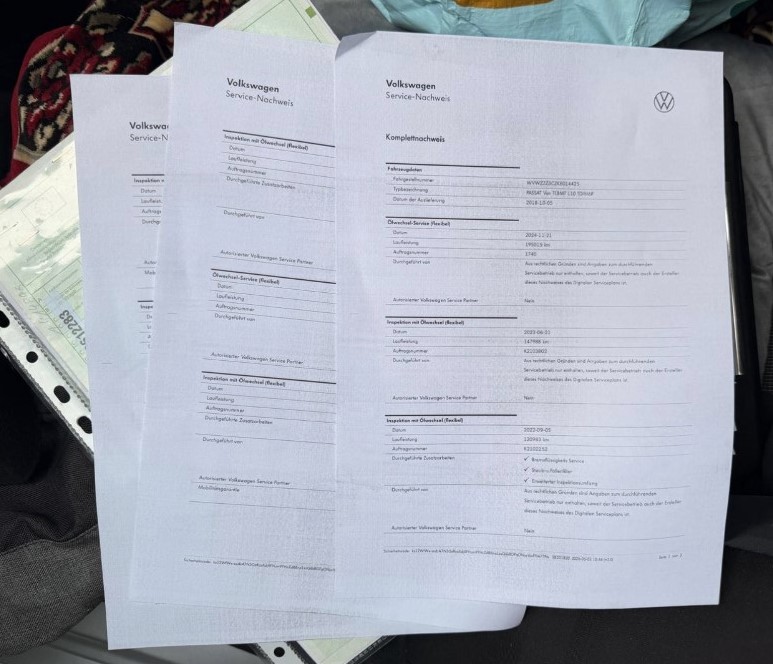 Service history without illusions: how to verify maintenance and mileage