
 Computer diagnostics for Audi, VW, BMW and Mercedes with LAUNCH X-431
The ideal used car from Germany is the one that fits you – not the one that looks best in the advert. When you buy in Germany (including Berlin and Brandenburg), there is no universal “best car“. There is only the best match for a specific driver, family, route pattern and budget.
Good car sourcing starts with understanding your life, not the seller’s marketing. We take into account the make and model you like, your price range and your personal preferences. At the same time, German consumer law requires dealers to provide at least a one-year warranty on most used cars and to disclose known defects – which gives buyers a baseline level of protection. Your job (and ours) is to go beyond nice photos and price tags and focus on what really matters: who will be driving, how often, on which roads – and what that means for the car you choose.
Key factors when choosing a car in Germany
Before we even look at adverts, we clarify the main criteria that define your “ideal” car. This is where every serious sourcing project starts.
📜1. Purpose and use case
What do you need the car for? A large family, commuting, regular long trips on the Autobahn, short city runs, transporting goods, light off-road use – each scenario points to a different combination of body style, size and equipment.
- ✔️Family with children – three proper rear seats, Isofix, sliding doors on MPVs, large boot.
- ✔️Business trips and frequent long journeys – motorway stability, comfortable seats, low fuel consumption, good noise insulation.
- ✔️Mainly city driving – compact size, easy parking, good visibility, efficient stop-and-go consumption.
- ✔️Workhorse vehicle – payload, robust interior, durability and simple maintenance are key.
📜2. Mileage and daily routes
If you cover 80–100 km or more per day, mostly on motorways, a diesel often makes sense. On long-distance runs a diesel engine typically uses 15–20% less fuel than a comparable petrol engine and delivers strong torque at low revs.
In contrast, a diesel that is used only for short urban trips with frequent cold starts and stop–go traffic will struggle: the DPF and EGR system suffer, and the fuel savings disappear. In that case, a small petrol car is usually the smarter choice: it warms up faster, is simpler to maintain and easier on the wallet in the workshop.
📜3. Climate and real-world lifestyle
A coupé or cabriolet looks fantastic in summer, but if you regularly drive with children, luggage and winter gear, that “dream car” can become a daily irritation. A large SUV feels great on open roads, but can be a nightmare to park in old European city centres.
Realistic expectations are key. We often tell clients frankly: the car that looks best on Instagram may spend eight months per year in the garage, while a well-chosen estate or MPV will quietly make your life easier every single day.
📜4. Size and parking
Narrow courtyards, tight underground garages and older parking structures in German cities are not designed for XXL vehicles. A compact hatchback is often the best tool for the job: easy to park, easy to manoeuvre, cheap to run.
If you genuinely need more space for people and luggage, a well-chosen estate or a sensible SUV can be the right answer – but we always discuss where you park, how often you drive into city centres and how much hassle you’re prepared to accept.
📜5. Fuel type and transmission
Petrol cars are usually cheaper to buy and simpler in terms of emissions hardware, but they use more fuel at high motorway speeds. Diesels are more complex and often more expensive when something big fails, but at high mileages they can save serious money.
An automatic gearbox is extremely pleasant in traffic and on long trips. Many diesels feel “right” only with an automatic. Manual gearboxes are cheaper and mechanically simpler but can be tiring in heavy traffic. As part of the sourcing process we discuss how important an automatic is for you and what that means for the models and price range we look at.
📜6. Budget and running costs
The purchase price is only the beginning. Proper budgeting includes tax, insurance, tyres, regular servicing, wear-and-tear parts and fuel. In broad terms:
- petrol cars tend to be cheaper to buy and more straightforward to maintain,
- diesels cost more initially but can be more economical at high mileages,
- larger vehicles cost more to insure, to tyre, to fuel and to repair after minor accidents.
We also factor in parking costs, seasonal tyres and the type of servicing your chosen brand typically needs. The goal is simple: you know in advance what your “ideal” car will really cost to keep on the road.
How we source cars in Germany – step by step
Whether the car will live in Berlin, Brandenburg or elsewhere in Germany, our sourcing process always starts with a conversation about your plans. We translate “I want a reliable family car that isn’t too expensive” into concrete criteria: body style, fuel type, gearbox, safety level, budget and expected running costs.
Then we match these criteria with the reality of the German used-car market. We look at model-specific strengths and weaknesses, typical repairs and parts prices and what a realistic car in your budget will look like in terms of age, mileage and equipment.
What we actually do during a sourcing project
- Define a car profile based on your use case (family, commuting, city vs motorway, comfort expectations).
- Search across major platforms (Mobile.de, AutoScout24, eBay Kleinanzeigen) and via dealer networks.
- Filter adverts for plausible history: service records, TÜV history, number of owners, usage pattern.
- Check typical weak points for the specific model families you consider.
- Talk to sellers, request VINs, service documents and detailed photos.
For example, for a family with three children we often recommend seven-seater MPVs. The Volkswagen Sharan is a classic: sliding doors, three separate rear seats with Isofix, a big and flexible boot and sensible running costs. If the budget allows, a Mercedes V-Class or similar people carrier can add a more premium feel – but also brings higher purchase and maintenance costs.
Throughout the process we look not just at pretty pictures, but at how the car has been used: service history, previous repairs, type of owners. And we keep asking the same questions: will this car make your daily life easier, or will it just look nice for a week and then annoy you?
Example recommendations in typical sourcing scenarios
Every client story is different, but certain patterns repeat. Here are a few simplified scenarios to illustrate how we think when recommending cars.
👓Scenario 1: family with three children
Our usual recommendation is a practical seven-seater. A Volkswagen Sharan is often a sweet spot between price, space and reliability:
- three separate, full-size seats in the second row,
- space for three child seats side by side,
- large, flexible boot and clever interior layout,
- sensible fuel consumption compared to full-size SUVs.
If budget is less constrained, we can look at a Mercedes V-Class or similar models, which offer even more space and comfort – but also higher running costs.
👓Scenario 2: high daily motorway mileage (>80 km/day)
Here, a well-chosen diesel with automatic transmission is usually the most comfortable and economical option:
- significantly lower fuel consumption at motorway speeds,
- strong torque at low revs, relaxed cruising,
- larger range between fill-ups.
In these cases we focus on models with robust diesel engines and proven gearboxes. We pay particular attention to the fuel system, turbocharger and DPF during diagnostics – topics we explain in more detail in article no. 42 on computer diagnostics.
👓Scenario 3: mainly city driving
For pure urban use, a compact hatchback is often the most rational choice:
- easy to park and manoeuvre,
- low fuel consumption and tyre costs,
- usually cheaper insurance and simpler servicing.
Think VW Polo, Toyota Yaris, Fiat 500 and similar. With this type of car we pay close attention to body condition, signs of heavy city damage, previous taxi or car-sharing use (which good VIN reports often reveal) and the overall honesty of the mileage and history.
👓Scenario 4: image and fun
Sports coupés and convertibles are emotional purchases. They can be absolutely worth it – but usually as a second car. Together we clarify:
- where the car will live in winter,
- how often you will realistically drive it,
- whether the limited rear space and smaller boot fit your life.
👓Scenario 5: space and tougher conditions
If you regularly need ground clearance and boot space, we look at crossovers and SUVs (for example Skoda Kodiaq, VW Tiguan Allspace, BMW X5). At the same time, we put real numbers on tyres, fuel, brakes and suspension work, so you understand what that extra space really costs per year.
👓Scenario 6: running-cost optimisation and fuel choice
General rules of thumb:
- Petrol – better suited to lower annual mileages and city driving, simpler emissions systems, often cheaper repairs.
- Diesel – makes financial sense mainly when you rack up significant motorway kilometres and can keep the DPF happy.
We don’t push a particular fuel type or fashionable drivetrain. Instead, we do the maths for your specific mileage and routes and show you in plain numbers which option is likely to work out cheaper over several years.
Car sourcing and deal safety when buying in Germany
Beyond the technical side, legal safety matters as well. In our experience, cars from official dealer networks tend to be safer legally: they usually come with a statutory used-car warranty and clear documentation of known defects.
If a serious hidden defect becomes apparent shortly after purchase from a dealer, German law gives the buyer specific rights. In private sales, your protection is far weaker. As part of our sourcing service we therefore:
- check registration documents (Zulassungsbescheinigung Teil I & II),
- compare registered owner data and change history,
- examine service book entries and workshop invoices,
- look for signs of mileage tampering, finance or seizure issues.
Safe car sourcing is not only about finding a great car – it’s about making sure the deal is legally clean and will not turn into a legal headache three months later.
Why car sourcing must be combined with VIN checks and live diagnostics
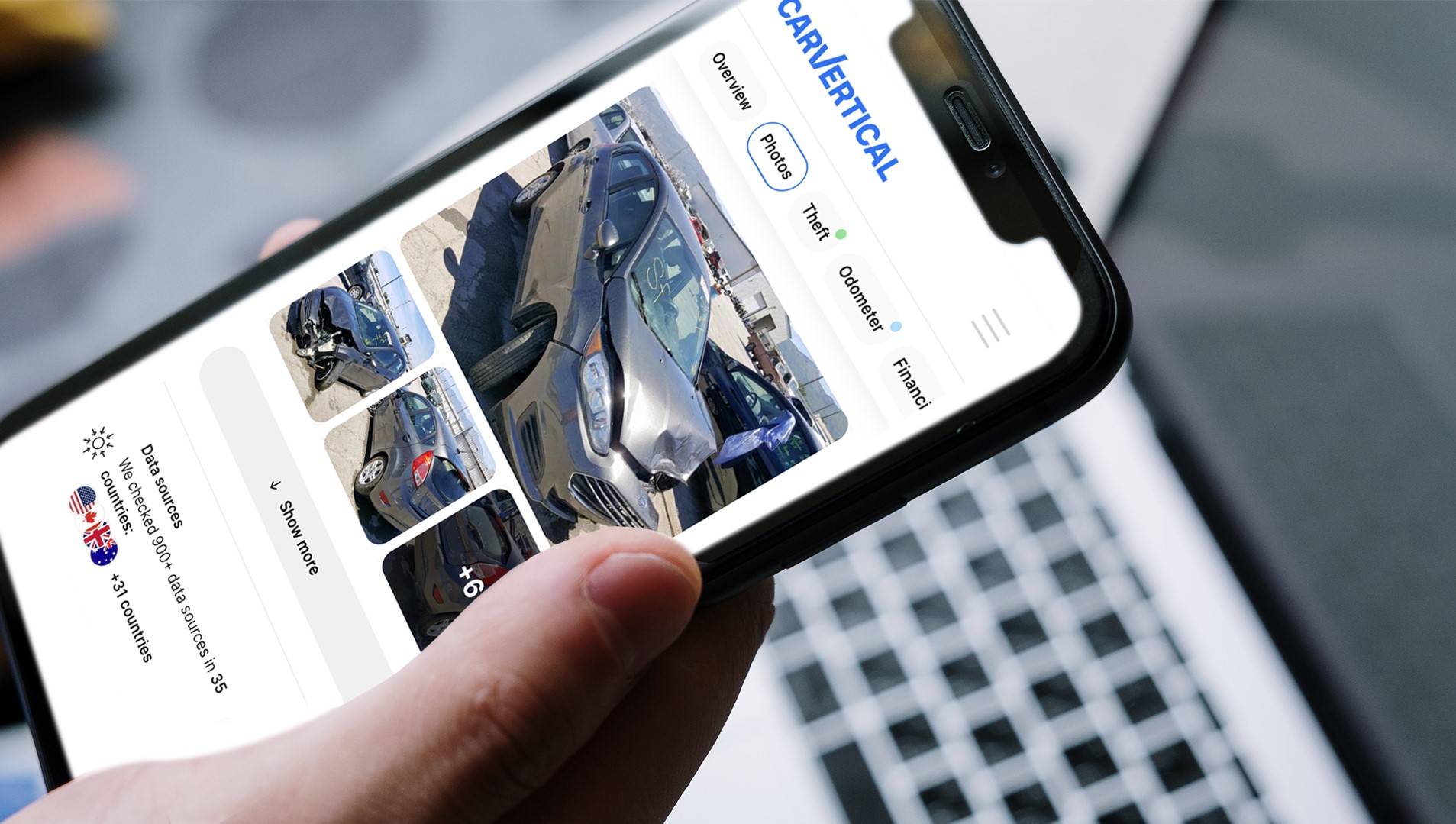
One of the pillars of professional sourcing is a proper VIN history check plus full technical diagnostics. In our VIN-check article with a -20% carVertical voucher we explain in detail how to use those reports.
In short: a VIN report reveals the car’s past – accidents, mileage entries, number of owners, previous taxi or rental use, sometimes even flood damage. But no database can tell you whether the turbocharger, timing chain, injectors or DPF are healthy today.
That is why our sourcing packages in Germany always combine:
- a high-quality VIN report (for example carVertical with -20% discount),
- a thorough visual inspection of body and interior,
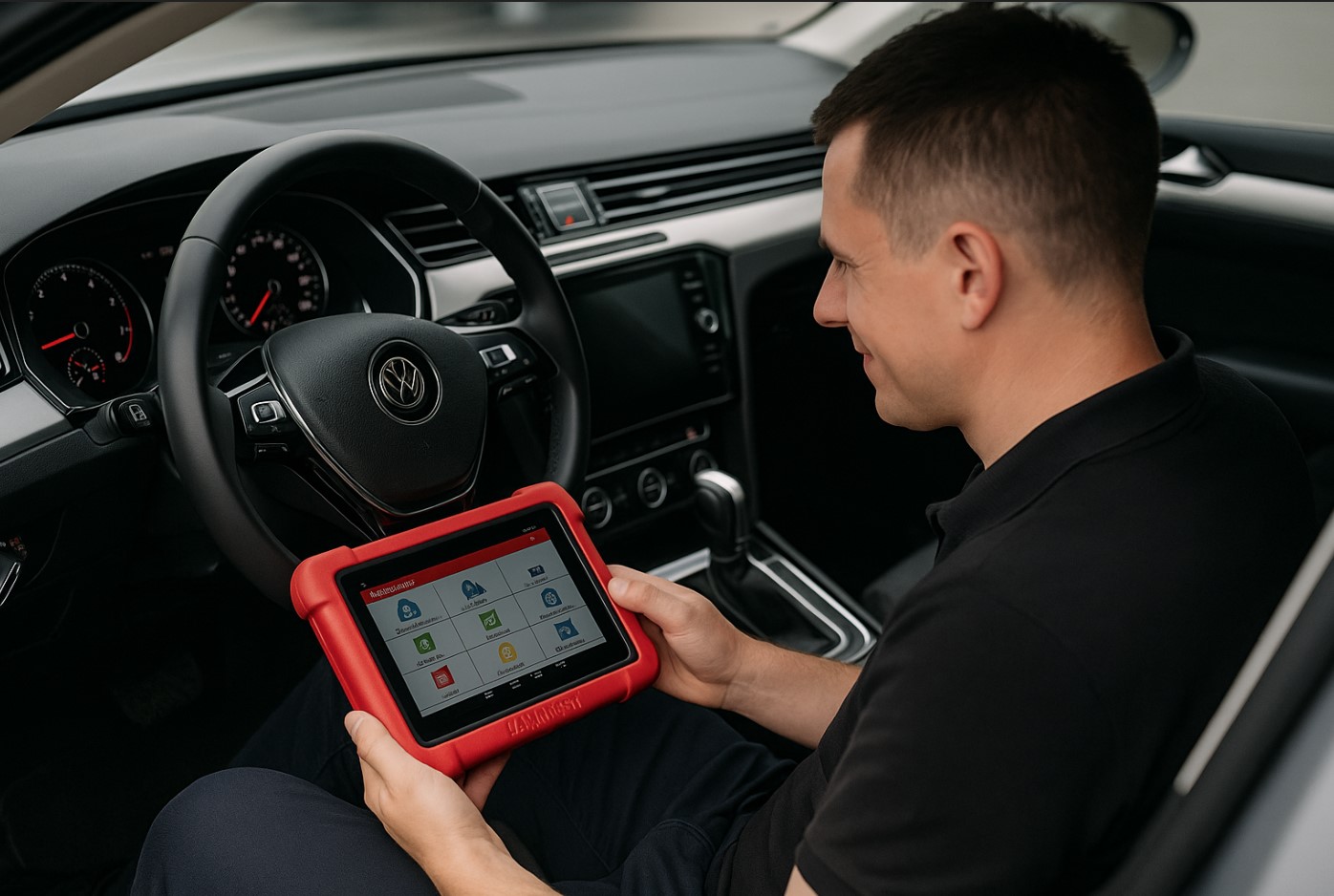
- computer diagnostics of all major ECUs (engine, gearbox, ABS, airbags etc.),
- a proper test drive under realistic conditions.
Only this combination tells you whether a particular used car from Germany is truly “your ideal car” – or just a nicely polished compromise that will demand money and nerves later.
Conclusion: how to find “your” ideal used car from Germany
In the end, the ideal used car from Germany is the one that fits your life, not someone else’s checklist. Space for your family, suitable fuel type for your mileage, comfortable ergonomics for your body, running costs that fit your budget – and a technical condition that won’t surprise you in the first year.
With a professional sourcing partner in Germany, you don’t have to guess. We take care of the search, talk to sellers, check VIN and documents, carry out on-site inspections and diagnostics and help you understand the true pros and cons of each candidate. Recommendations are based on data and experience, not on commission pressure.
In simple terms: families need seven seats and safety, high-mileage drivers need an efficient and comfortable motorway car, city drivers need something compact and economical. Add to this a solid VIN history check, a proper diagnostic session and legally clean paperwork – and you have a used car from Germany that will make you happy instead of draining your bank account.
Werbung / *Affiliate-Link
Links and banners marked with an asterisk (*) are affiliate links/banners. If you use such a link and subsequently request an offer, sign a contract or make a purchase, we receive a commission from the respective provider. For you, there are no disadvantages: the price and conditions remain the same.
FAQ – common questions about car sourcing in Germany
How much does car sourcing in Germany cost and what is included?
Prices depend on the scope of work, region and type of vehicle. A typical sourcing package includes: a detailed needs analysis, market research and shortlist, talks with sellers, VIN and document checks, on-site inspection with computer diagnostics, a test drive and support with the buying process. Some packages also include negotiation with the seller, help with plates and export or delivery. For current prices, please see the “Prices” section on our website.
I have already found a car on Mobile.de. Can you just inspect this one?
Yes. We frequently perform one-off inspections for cars that clients have already chosen: visual inspection, LAUNCH diagnostics, VIN and document checks and a test drive. If the car turns out to be a poor choice, we can extend the cooperation into a full sourcing project and help you find a better alternative.
What is more important: year of manufacture or real condition?
Condition and history always come first. A slightly older car with honest mileage, transparent servicing and no structural damage is usually a better buy than a newer car with a questionable past. Year and mileage matter, of course, but they are only meaningful together with a clear, documented history and a clean diagnostic report.
Can I fully trust dealers when buying a used car in Germany?
Authorised dealers have stronger legal obligations and offer used-car warranties, which is positive. However, this does not replace independent checks. A dealer may still be unaware of some previous damage or “cosmetically repaired” issues. That’s why we always combine dealer purchases with VIN checks and diagnostics – in many cases this also provides strong arguments for negotiating the price.
Related posts
Computer diagnostics for Audi, VW, BMW and Mercedes with LAUNCH X-431
 VIN check before buying: full report + carVertical -20% voucher