
 Test drive before buying a car in Germany: steps and tips
A used car purchase in Germany should always include a legal status check. That means verifying there are no hidden legal risks: the car is not reported stolen, it is not pledged as collateral, it is not under outstanding finance, and it is being sold by the lawful owner with complete original documents.
Skipping these checks can lead to serious consequences — including losing the car without compensation, if it turns out the vehicle belonged to someone else or was flagged in a theft investigation. Below you’ll find a practical step-by-step checklist and how Sicher-Check helps clients avoid risks.
Why legal verification matters
Before signing anything, you want to confirm the vehicle is legally “clean”. Otherwise, you may face serious problems: the car could be stolen, pledged to a bank, or the rightful owner could be a third party.
In Germany and the EU you generally do not become the lawful owner of a stolen vehicle, even if you purchased it in good faith. In that scenario the car may be seized and returned to the rightful owner, while the buyer has to pursue repayment through legal action.
Main goals of a legal check before buying:
- 💯Verify the seller’s right to sell (ownership / authority).
- 💯Ensure there are no liens, pledges or legal restrictions.
- 💯Check for theft alerts or suspicious registration history.
- 💯Confirm document authenticity and VIN consistency.
Next, we go through the concrete steps to verify a used car’s legal status on the German market.
✔️ Step 1: Check documents and the seller
Start with a careful review of documents and the seller’s identity. In Germany, the seller should provide:
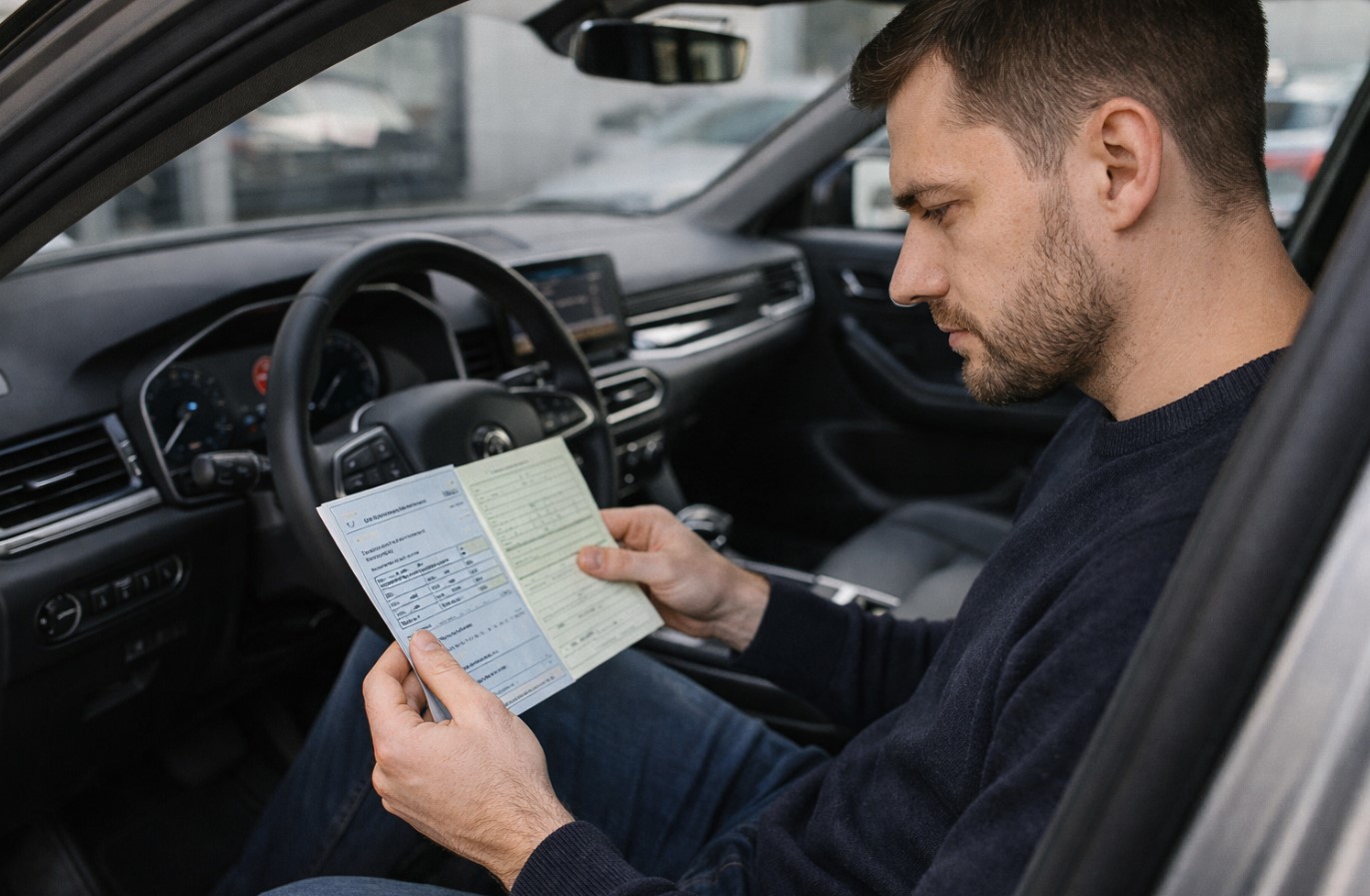
- ❗ Zulassungsbescheinigung Teil I and Teil II. Teil I is the registration certificate carried in the car. Teil II is the key ownership/registration document (often called “Fahrzeugbrief”). Make sure the seller has the original Teil II. With car financing, banks often keep the original Teil II until the loan is fully paid. If the seller says Teil II will be sent later or is “not available”, treat it as a major red flag (possible outstanding finance).
- ❗ Valid TÜV / HU-AU documentation. This confirms roadworthiness at the time of the last inspection and records important data (including mileage).
- ❗ Service history (service book / invoices / digital records). Many brands keep service records digitally. If there is no evidence at all, be cautious.
- ❗ Seller identification and authority. A private seller should match the name in Teil II. A representative sale requires proper authorization (power of attorney).
VIN cross-check: Compare the VIN (Vehicle Identification Number) on the car with the VIN in Teil I/II. The VIN is usually visible under the windshield, on the door pillar, and/or in the engine bay. Any mismatch is unacceptable and can indicate tampering (“cloned” vehicles, altered VIN).
At Sicher-Check we validate documents, cross-check VINs, review inspection history and seller behaviour, and immediately flag typical fraud patterns. This reduces legal risk before you travel, pay deposits or sign a contract.
✔️ Step 2: Check theft/alerts
Even if the paperwork looks correct, you should verify the vehicle is not flagged as stolen. Stolen cars can be moved across borders and sold with manipulated data. Practical checks include:
- ❗ VIN history reports. Some providers may show theft-related flags (when such information is available in their sources). This is especially useful for cars with international history.
- ❗ Police verification (in serious doubt cases). If you have strong concerns, you can request a VIN verification through the authorities. Practical availability depends on the situation and local procedures.
- ❗ Registration history plausibility. If a car was imported, examine the timeline: dates, countries, and any “too fast” flips can be suspicious.
Werbung / *Affiliate-Link
Links and banners marked with an asterisk (*) are affiliate links/banners. If you use such a link and subsequently request an offer, sign a contract or make a purchase, we receive a commission from the respective provider. For you, there are no disadvantages: the price and conditions remain the same.
Key point: if you buy a stolen car, you may never become its lawful owner. The issue can surface later and the vehicle may be seized. Spending time on verification upfront is cheaper than dealing with legal disputes later.
✔️ Step 3: Check outstanding finance and liens
In Germany, financed vehicles commonly involve the bank holding the original Teil II until the loan is paid off. Therefore, the first practical test is simple: does the seller have the original Zulassungsbescheinigung Teil II? If not, and you hear excuses like “I will mail it later”, assume a high risk of outstanding finance.
How to reduce finance/lien risk:
- ❗Confirm the seller has the original Teil II in hand.
- ❗Ask for written proof that financing was settled (if the car previously had a loan).
- ❗If needed, arrange payment via a controlled process (e.g., direct settlement with the bank).
Unlike some countries, Germany does not offer a simple public online lien registry for private buyers. That’s why document checks, seller identity verification, and contract wording matter. In our service, we analyse ownership signals, document integrity and timeline plausibility and advise you on safe transaction structure.
✔️ Step 4: Additional legal checks
Beyond theft and finance risks, consider these legal and practical points:
- ❗ Consistency of major components and paperwork context. Engine numbers are not typically printed in German registration documents, but major replacements should make sense within service records and invoices. If you see signs of heavy repairs, confirm the story and documentation.
- ❗ Restrictions and administrative blocks. Fines in Germany are tied to the person, not the vehicle, so old tickets usually do not transfer to you. However, if a vehicle is administratively blocked, it can complicate deregistration or re-registration.
- ❗ A proper purchase contract (Kaufvertrag). Your contract should include correct identities, VIN, vehicle details, price, and explicit statements that the vehicle is free of third-party rights (no liens/pledges) and not stolen. Standard templates often include these clauses — do not skip them.
Sicher-Check can help with a correct purchase contract and, if needed, provide bilingual versions. A well-written contract gives you legal leverage if the seller made false statements.
VIN reports (CARFAX, carVertical and others): how to use them correctly
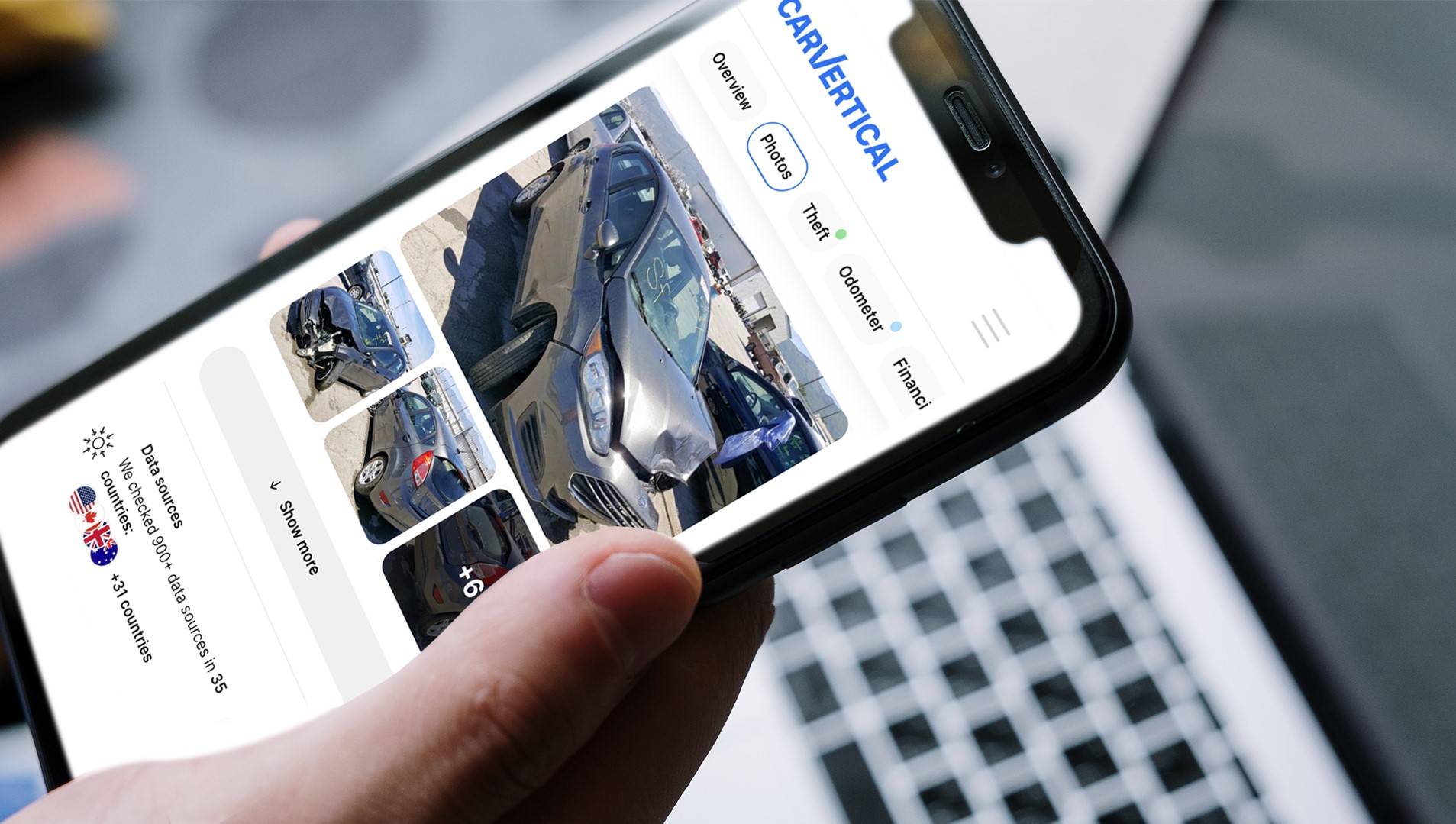
Online vehicle history services can be helpful as an additional filter. They compile data from various sources: registration events, accident/insurance records, mileage snapshots, and sometimes service entries. In Germany, they can support your decision — but they are not a full guarantee.
🚗 Benefits of VIN reports:
- 📌They may reveal recorded issues such as theft flags (where available), total loss, mileage inconsistencies, taxi/rental usage, flood/accident markers, etc.
- 📌They can show ownership count and cross-border timeline, helping to spot suspicious “quick flips”.
- 📌Sometimes they include dealer service entries if such data is shared by participating sources.
🚗 Limitations you must understand:
- 📌Germany does not have one mandatory unified history database like Belgium’s Car-Pass. Not all repairs are reported, and many incidents never appear in databases.
- 📌A “clean” report does not prove the car is perfect — it only means nothing problematic was found in the available sources.
- 📌Reports cost money (€20–50 is common). For clients, we often use reports as part of a broader verification package.
- 📌Data can be incomplete or occasionally incorrect. Always cross-check against documents and physical inspection.
We treat VIN reports as an auxiliary tool and combine them with document checks, communication with the seller, on-site inspection and diagnostics.
Conclusion: let professionals verify before you buy
A legal status check is as important as a technical inspection. Even a car that looks perfect can have legal problems that lead to losing your money — and the vehicle itself.
Sicher-Check provides a comprehensive pre-purchase service in Germany: we analyse documents, check available history sources, identify legal risks and communicate with the seller.
If we detect red flags — missing Teil II, VIN inconsistencies, unclear seller authority, refusal to provide proof — we inform you immediately and recommend walking away.
If the vehicle passes checks, we help you complete the deal safely: correct contract wording, payment process guidance, and support with re-registration/export steps as needed.
FAQ — common questions
Can I buy a car in Germany without Teil II?
It is strongly discouraged. The original Zulassungsbescheinigung Teil II is the key document linked to ownership/registration control. If the seller cannot provide the original, it often indicates outstanding finance or other serious issues.
Does a VIN report guarantee legal safety?
No. A VIN report is an additional tool. It may reveal recorded issues, but it does not replace document verification, seller identity checks and professional inspection.
Can I check liens online in Germany?
There is no simple public online lien registry for private buyers in Germany. That’s why the practical approach is: original documents (especially Teil II), seller verification, contract clauses, and safe payment structure.
Do you support the deal until completion?
Yes. We can support the full process: document checks, on-site inspection, contract review, negotiation support, and guidance through the transaction and re-registration/export steps (depending on the package).
Related posts
Test drive before buying a car in Germany: steps and tips
 VIN check before buying: why it matters and how to get a full report