

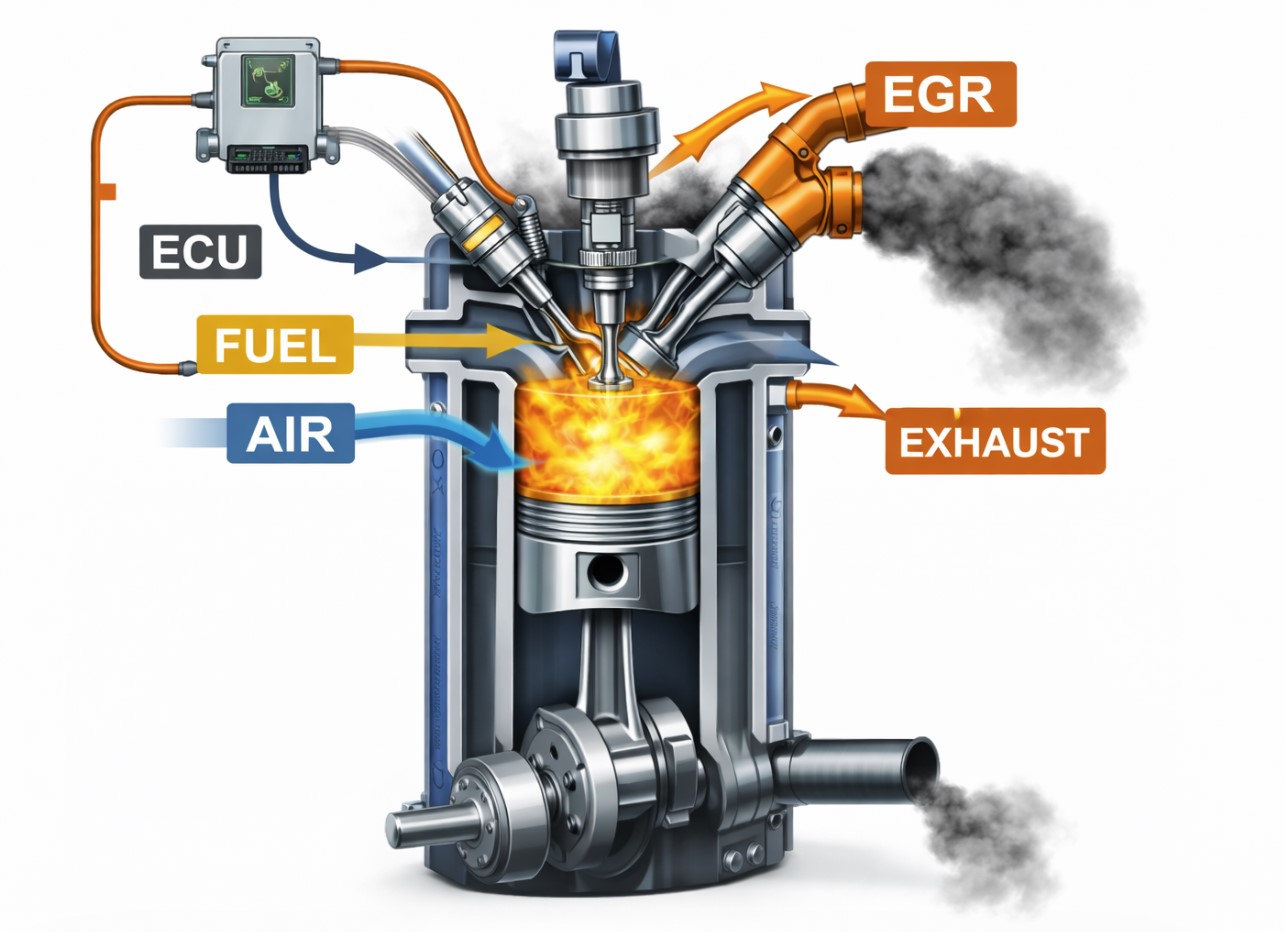
 Diesel in Germany in 2026: restrictions, risks and how to check a car properly before buying
H registration is a special legal registration status for vehicles that were first registered at least 30 years ago, are in good preserved condition, largely correspond to their original character and are recognized as part of automotive heritage. The H at the end of the number plate stands for historisch.
The main thing to understand is this: age alone is not enough. The car must pass an expert inspection under §23 StVZO, be technically roadworthy, not show serious neglected defects and stay within the acceptable limits of originality or period-correct modification. That is why a classic car in Germany should be bought with a clear head, not only with emotion.
🏁 Why Germany introduced historic registration in the first place
The H plate was introduced in Germany in 1997 as a tool to preserve automotive heritage. The idea was simple: many older vehicles disappeared from the roads not because they had lost cultural value, but because they fell under ordinary tax and environmental rules that did not always make sense for classic machinery.
H registration became a compromise between the public interest and the owner’s interest. On one side, historically relevant vehicles are preserved. On the other side, the owner gets more predictable conditions for keeping and using the car.
⭐ The main benefits for the owner
1. Flat annual vehicle tax
For passenger cars and most other H-registered motor vehicles, the flat annual tax is €191.73. For motorcycles, the flat annual amount is lower. That is especially attractive for cars with large petrol engines, V8s or older diesels, where normal taxation could be much higher.
2. Access to environmental zones
Vehicles with H registration are exempt from the usual sticker requirement in German environmental zones. For Berlin and other major cities, that is a serious practical advantage. At the same time, it is wise to distinguish between the general Umweltzone system and any separate local traffic restrictions that a city may regulate differently.
3. Insurance options
Classic cars can often qualify for special insurance products that may be more attractive than normal vehicle insurance, depending on storage, mileage, driver profile and use pattern. The exact terms depend on the insurer, not on the H plate alone.
4. Potential value stability or growth
Some models genuinely increase in value. But that is not magic created by the letter H. It usually depends on a combination of factors: rare specification, originality, transparent history, strong body condition, good documentation and careful ownership.
In short: H registration can be financially sensible, but only if you are buying a truly good example rather than a shiny shell hiding expensive problems.
⚖ Limits and the real-world side of ownership
Many buyers romanticize the status of a historic car. But H registration is not a free pass. It is a framework that assumes a certain ownership logic.
✅ What most owners see as the advantage
- flat annual tax;
- easy access to environmental zones;
- historic status and collector appeal;
- better club and enthusiast interest;
- possible value stability or upside.
⚠ What many people underestimate
- bodywork and metalwork costs;
- shortage of certain spare parts;
- risk of status problems if condition or originality deteriorates;
- age-related issues with rubber, wiring, seals and hoses;
- limited practicality as an only everyday car.
Although there is no simple legal “daily use mileage limit” attached to H registration, a classic car is still understood as a vehicle preserved as technical heritage, not just another routine commuting tool. That is why, before buying, it is important to be honest with yourself about the purpose of the car: hobby, collection, weekend driving, events or your only transport for daily life.
📋 Can you get H registration later if the car never had it before?
Yes — and that is very common. Many vehicles simply reach the age threshold and only then does an owner decide to apply for historic registration. The fact that a car did not previously have H registration is not, by itself, a problem.
The real problem starts elsewhere: the car may no longer meet the standards for originality or condition. In that case, passing the inspection can be difficult unless the vehicle is repaired or brought back to a more appropriate configuration.
How the process usually works
- preparing the vehicle properly;
- obtaining an expert report under §23 StVZO from an approved inspector;
- receiving the formal report;
- registering the vehicle at the Zulassungsstelle;
- receiving new number plates ending in H.
Practical nuance: the main cost is often not the bureaucracy itself, but bringing the car into a condition that can actually pass the expert report.
🚨 Where the real buying risks begin
The most common buyer mistake is to assume that an H plate automatically means the vehicle is in perfect condition. It does not. A classic car can have H registration and still hide corrosion, poor-quality body repair, originality issues or mechanical defects.
A typical real-world classic-car sourcing case
A client was interested in a Mercedes W124 with H registration. The advertisement said “Top condition, rust free”. In the pictures the car looked convincing: shiny bodywork, clean interior, no obvious drama.
But the inspection revealed:
- hidden corrosion around structural areas;
- signs of non-original welding;
- a later engine conversion without a particularly clean or transparent documentation history.
Formally, the car had an H plate. But from a stricter point of view, the long-term stability of that status was questionable, and the buyer was at risk of buying an expensive project instead of a ready classic.
The main point: the H on the number plate is not a substitute for proper inspection. It does not measure filler thickness, it does not look inside the sills and it does not tell you whether the restoration was done correctly.
🛠 Rust — the number one enemy of classic cars
When sourcing historic vehicles in Germany, we always pay special attention to the body shell and hidden areas. Even in a comparatively good climate, rust is not rare, especially if the car saw winter use in the past or spent long periods standing without proper care.
What we check first
- sills;
- underbody;
- longitudinal members and suspension mounting points;
- battery tray area;
- boot floor and side wells;
- wheel arches, door edges and strut towers;
- signs of old welding or “cosmetic” body repair.
| Area | Why it matters | What we look for |
|---|---|---|
| Sills and underbody | Structural strength and expensive repair risk | bubbling, repairs, coating over defects, patchwork |
| Longitudinal rails and mounting points | Direct impact on safety and geometry | cracks, welding, deformation, weakened metal |
| Hidden cavities and internal pockets | Rust often starts there out of sight | moisture, loose rust, traces of old repairs |
| Arches and edges | Typical age-related rust areas | paint bubbles, filler, repaint transitions |
🔧 Engine and mechanical condition: age matters
On a 30-plus-year-old car, even excellent visual condition does not automatically mean technical health. Age works against gaskets, rubber components, wiring, seals and many mechanical systems.
In practice that can mean:
- oil and fluid leaks;
- aging vacuum hoses and hardened rubber parts;
- fatigue in metal brackets and fixings;
- wear in fuel-injection, cooling and ignition systems;
- play in suspension and steering components;
- a suspiciously smooth idle only once the engine is fully warm.
That is why mechanical inspection is still essential even when the vehicle looks almost museum-grade. In the classic-car world, not only engines and bodywork are expensive. Many “small” age-related issues add up into a large budget very quickly.
🧭 Originality vs modernization
One of the most delicate topics when buying a car intended for H registration is originality. Owners often improve classics “for convenience”: modern multimedia, different wheels, seats, lights or even engine swaps.
Some modifications may still be acceptable if they are period-correct, meaning consistent with the era or generally acceptable within the logic of historic status. But the line is not broad. Aggressive modern tuning, obvious LED solutions, an unsuitable engine or questionable body modifications can all create problems.
The key idea: a beautiful restomod and a car that safely fits H-registration expectations are not always the same thing. Before you buy, it is important to understand what you are actually buying: an original collector’s car, a partly modified classic or a technical project in disguise.
🔍 Why pre-purchase inspection matters even more for H registration cars
A classic car is not just transport. It is simultaneously a hobby object, a collector’s item, an emotional purchase and a technical project. That means the cost of a buying mistake is often much higher than with an ordinary daily-use car.
What we check when sourcing a classic
- legal status and paperwork;
- the overall logic of compliance with §23 StVZO;
- ownership history and signs of transparent long-term care;
- body shell, underbody, sills, hidden areas and repair traces;
- originality of major components and questionable modifications;
- engine, gearbox, suspension, brakes and steering;
- test drive and the real behavior of the vehicle.
❌ Buyer mistake No. 1
“It looks beautiful.” Fresh paint, a tidy interior and good photos do not prove that there is no filler, poor welding or old accident damage underneath.
❌ Buyer mistake No. 2
“It is Germany, so everything must be honest.” The market is more transparent than in many countries, but even here you will still find hidden rust, questionable repairs, non-original parts and drivetrain swaps with weak documentation.
🚘 Which models buyers most often look at
Among the cars most often considered by buyers aiming at H registration, you regularly see:
- Mercedes W123 and W124;
- BMW E30 and E34;
- Audi 80 and Audi 100;
- Porsche 944;
- VW Golf I and Golf II.
But the decision should never be based only on the iconic name of the model. What matters far more is the condition of the individual example, the transparency of its history and the quality of previous repair work.
📈 Investment reality: where the market is real and where it is illusion
The word “investment” sounds attractive when people talk about classic cars, but this is exactly where many buyers begin to drift into illusion. Not every old car becomes a growing asset.
What usually does hold value better
- rare specifications;
- highly original cars;
- examples with a clear and transparent history;
- strong body condition with minimal poor-quality repair work;
- cars with documented maintenance and correct storage.
What usually does not become a strong investment
- a rebuilt “construction set” made from several donor cars;
- an example after serious structural rust;
- a car with a non-original engine or questionable tuning history;
- a vehicle where it is difficult to separate real restoration from cosmetic masking.
If your goal is investment, pre-purchase inspection becomes even more important. For hobby use, you can forgive more. For investment logic, you should forgive less.
🏁 Conclusion: when H registration is the right choice
A historic vehicle can be a wonderful choice if you truly understand why you want it. It is a good fit when you appreciate automotive history, are ready to maintain an older machine, understand the limits of classic technology and want to use the car within a framework that makes sense for preservation.
But buying such a vehicle without professional inspection is a risk. In the classic-car world, the price of a mistake is usually higher than it first appears in the advertisement.
Why it makes sense to order classic-car sourcing and inspection in Germany
We help you:
- choose a truly worthwhile example;
- avoid hidden corrosion and poor-quality repairs;
- assess originality and H-registration risk;
- understand the real value of the car, not only the advertised one;
- complete the deal more calmly and more safely.
A historic vehicle is not just a purchase. It is a project, an emotion and a responsibility. If you are considering a car with H registration in Germany, start with professional sourcing and pre-purchase inspection. That gives your dream a much better chance of turning into the right decision instead of an expensive mistake.
FAQ
Does being 30 years old automatically qualify a vehicle for H registration?
No. The vehicle must not only be at least 30 years old from its first registration date, but also be in good condition, broadly original and able to pass the expert inspection under §23 StVZO.
Can a vehicle with H registration enter the Berlin environmental zone?
Yes. Vehicles with H registration are generally exempt from the environmental-zone sticker requirement. Separate local restrictions should still be checked for the specific city and route.
If a car already has H registration, does that mean it is definitely in perfect condition?
No. H status does not replace a full inspection. The car may still hide rust, poor-quality repair work, mechanical issues or questionable originality changes.
Can H registration be obtained later if the car used to have normal number plates?
Yes. That is very common. If the vehicle is old enough and meets the legal requirements for condition and originality, H registration can be applied for later.
Is an H-registered car a good idea as your only everyday vehicle?
In practice, that is rarely the ideal solution. For most owners, a historic vehicle is better understood as a hobby car, second car, collection piece or project rather than the best possible everyday transport.
Related posts
Diesel in Germany in 2026: restrictions, risks and how to check a car properly before buying
 Car sourcing in Germany: how to inspect a vehicle before buying and avoid expensive mistakes