
 Used car inspection in Germany: hidden defects, diagnostics and real risks
Spring is the season of desire. And desire is often stronger than calculation. Buyers feel like changing something, planning trips, treating themselves, or finally buying the car they postponed all winter. That is exactly why spring buying decisions in Germany become noticeably more emotional.
And that is where the real risk begins. Many expensive mistakes do not start with a bad car. They start with a buyer who has already decided internally: “I want this one.” Once that happens, technical reality becomes easier to ignore.
🌦 Why April reveals more hidden defects
This is not just about the market. It is about physics, climate and selling logic. A car can look fresh in April, but this is exactly when the after-effects of winter begin to show up more clearly.
1️⃣ Salt, moisture and temperature swings
Winter in Germany means road salt, humidity and frequent temperature changes. In spring, we very often see:
- brake disc corrosion;
- sticking brake calipers;
- rust on brake lines;
- suspension wear and corroded fasteners.
2️⃣ Long periods of storage
A car that stood unused for 3–5 months may have:
- dried seals;
- a weakened battery;
- oxidized contacts;
- early signs of cooling-system problems.
On the day of sale, everything may still appear “fine.” But two or three weeks later, the new owner starts paying for all the things winter quietly prepared.
3️⃣ Cosmetic preparation before sale
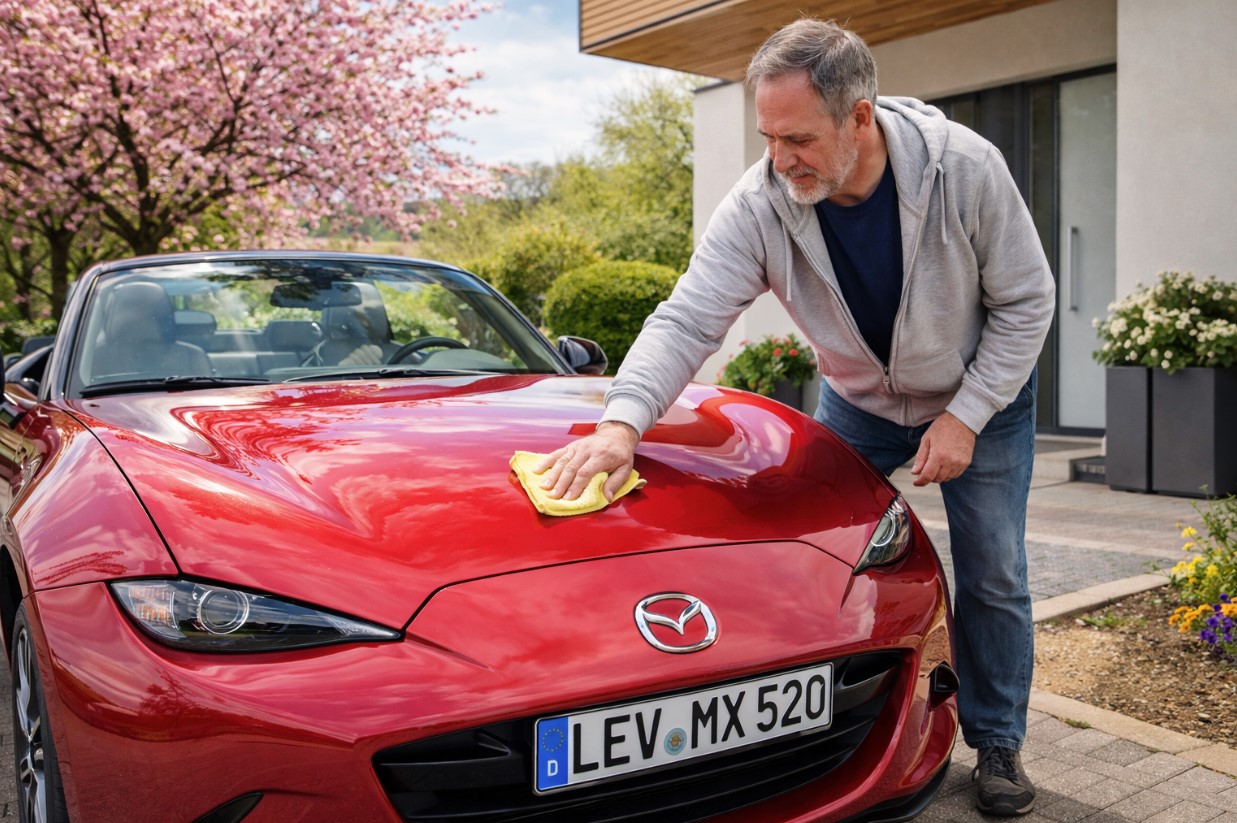
Spring is the perfect time for sellers to polish, deep-clean, wash the engine bay, repaint small areas and hide visual imperfections. The result is simple: the car often looks more convincing than its technical condition deserves.
Main April risk: the car looks fresher than its mechanics. The buyer sees a spring-ready vehicle, while the actual condition still reflects winter salt, humidity, standing time and hidden corrosion.
🧠 How buyer priorities change in spring
In winter, buyers tend to be more rational. In spring, they become more emotional. Suddenly the search shifts toward thoughts like:
- “Maybe I want a cabriolet.”
- “Maybe it is finally time for something sporty.”
- “Maybe I should buy a camper.”
- “Maybe I want something unusual this year.”
Spring buyers think more about mood and image than resale value. But a car is not just a purchase. It is future running cost, liquidity, market demand and the reality of selling it again later.
🚘 Seasonal cars: attractive, but risky
☀ Cabriolets
- complex roof mechanisms;
- leak risks;
- extra body stress;
- higher service costs;
- often used only 4–6 months per year.
🏎 Sports cars
- expensive tyres;
- faster brake wear;
- higher insurance costs;
- stronger value loss if chosen poorly;
- easy to buy in spring, harder to sell in autumn.
🚐 Campers and motorhomes
Emotionally, they are one of the strongest spring purchases. In reality, they bring parking issues, storage costs, maintenance, seasonal demand and often a much tougher resale process than buyers expect.
The problem is not that these vehicles are bad. The problem is that in spring they are especially easy to buy for emotion instead of logic.
📉 Illiquid cars: the hidden money trap
An illiquid car is not necessarily a bad car. It is simply a car that becomes hard to sell later without a noticeable price drop. And spring is exactly when such vehicles get bought impulsively because they feel more exciting than practical.
Why a car may be hard to resell
- rare or unpopular engine choice;
- odd specification;
- controversial styling;
- poor engine reputation;
- high fuel consumption;
- high tax or insurance burden.
Typical scenario: the buyer chooses a rare, powerful or unusual version “for themselves,” then two years later discovers there are very few buyers and has to drop the price by 20–30% just to move the car.
Spring makes illiquid cars easier to buy precisely because buyers think less about future demand. But future resale begins the moment you buy.
❌ Most common spring buying mistakes
❌ Mistake #1
Buying for mood. Spring makes “you only live once” feel convincing. But the better question is: will I be able to sell this car in 2–3 years without losing too much money?
❌ Mistake #2
Ignoring the cost of underuse. Even if you drive the car only 4 months a year, you still pay tax, insurance, parking, maintenance and depreciation.
❌ Mistake #3
Ignoring market demand. A stylish or unusual car may still be a poor financial decision if it becomes difficult to resell later.
❌ Mistake #4
Trusting seasonal visual freshness. A clean body, polished paint and fresh interior do not cancel suspension wear, hidden rust, standing moisture or weak batteries.
🔍 Which defects are most often found in spring inspections
In spring inspections, we most often find the exact kinds of defects winter tends to create or accelerate:
| System | What is often found | Why it appears in spring |
|---|---|---|
| Brake system | disc corrosion, sticking calipers, uneven wear | winter salt, moisture and storage time |
| Suspension | cracked dust boots, tired bushings, play and looseness | temperature swings and age-related winter stress |
| Battery | low capacity, weak starting performance | cold weather and long periods of standing |
| Air conditioning | leaks, weak cooling, stored faults | drivers start using the system actively again |
🎭 Typical spring seller tricks
Spring is one of the best seasons not only for selling, but also for disguising problems. That is why this time of year especially often includes:
- fault codes cleared before viewings;
- fresh paint on selected panels;
- cheap parts fitted just for the sale;
- cosmetic repair without fixing the root cause.
Without diagnostics, this is hard to catch. In spring, cars often look convincing precisely because they were prepared for a seasonal emotional sale — not for long, trouble-free ownership by the next buyer.
❓ 5 questions to ask before buying in spring
To avoid being carried away by spring emotion, ask yourself five very practical questions before you buy:
- Will I really use this car all year round?
- How liquid is this model on the used market?
- What will demand look like in 2–3 years?
- What is the real ownership cost, not just the purchase price?
- Has it been professionally inspected?
If you do not have clear answers to at least two of these, the purchase should slow down — not speed up. Spring is exactly when both buyer and seller are most tempted to close the deal quickly.
🛠 Why a pre-purchase inspection matters even more in spring
Spring combines three risk factors at once:
- more impulse-driven purchases;
- more cosmetically prepared cars for sale;
- more vehicles coming out of winter storage.
That is why a proper used car inspection in Germany should go beyond a quick OBD scan and short test drive. In spring, it is especially important to assess:
- real technical condition after winter;
- market liquidity of the model;
- future value loss;
- hidden defect risk;
- real ownership cost, not just buying price.
Practically speaking: a good spring inspection is not only about “is the car working today?” but also about “how likely is this car to become expensive or inconvenient in the next 2–6 months?”
✅ A smarter buying strategy for April
If you want your spring purchase to be successful rather than emotional and expensive, stick to a simple strategy:
✅ What to do
- choose liquid models;
- verify service history;
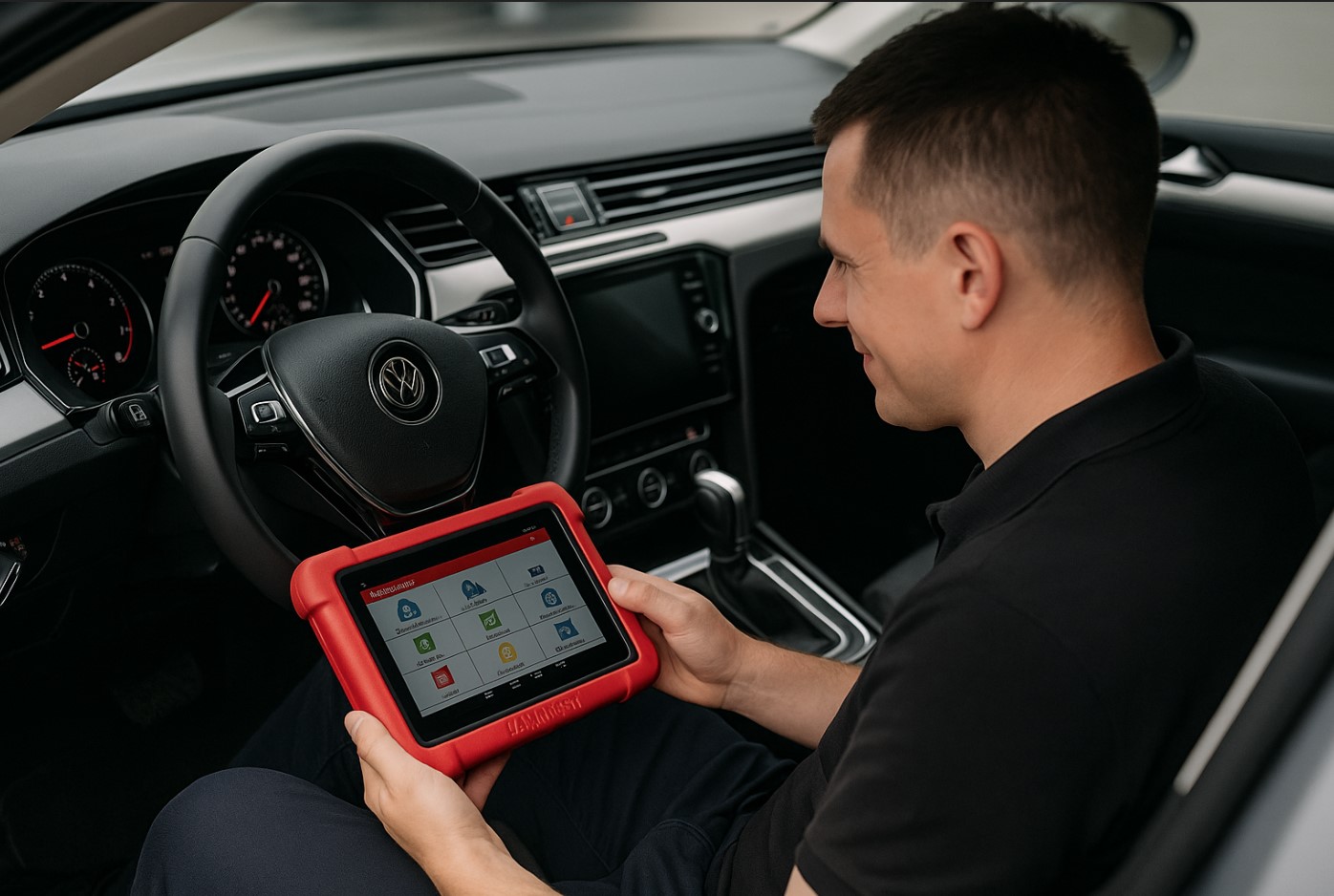
- run full diagnostics;
- check the car specifically for post-winter wear;
- think about resale at the moment of purchase.
⚠ What to avoid
- impulsive seasonal purchases;
- rare or controversial versions without market understanding;
- cars after long storage without proper diagnostics;
- buying “by photos and feeling.”
🏁 Final conclusion
Spring really is one of the most active times to buy a car in Germany. But it is also one of the most dangerous times for expensive emotional mistakes. April often combines hidden post-winter defects, seasonal excitement, visually refreshed cars and the temptation to buy “something interesting” without cold calculation.
If you are planning to buy a used car in Germany in April, the safest move is to start with a professional pre-purchase inspection. That helps not only to spot technical problems, but also to understand how liquid the model is, what it will cost to own and how painful future resale may become.
We help you:
- choose a model with better resale logic;
- avoid hidden defects;
- avoid overpaying in a spring seller’s market;
- buy a vehicle that will be easier to sell later.
A spring purchase should give you a good car — not a polished problem.
Advertisement / *Affiliate link
Links and banners marked with an asterisk (*) are affiliate links or affiliate banners. If you use such a link and later request an offer, sign a contract or make a purchase, we may receive a commission from the provider. For you, there are no disadvantages: the price and conditions remain the same.
FAQ
Why do hidden car defects show up more often in spring in Germany?
Because spring reveals what winter caused: salt exposure, moisture, standing time, corrosion and weak components. On top of that, many cars are cosmetically prepared for sale right before the season starts.
Why is it easier to make a bad buying decision in April?
Because spring changes buyer psychology. People become more emotional, think more about lifestyle and enjoyment, and less about resale, liquidity and future repair costs.
Which cars are especially risky to buy in spring without inspection?
Cabriolets, sporty cars, campers and other seasonal vehicles are especially risky. They often come out of winter storage, look attractive in listings and hide expensive issues that only appear after purchase.
What should always be checked before buying a spring car in Germany?
Brakes, suspension, battery, air conditioning, post-winter wear, traces of water or corrosion, service history, full diagnostics and the model’s resale logic.
Why should resale already matter at the moment of purchase?
Because a car is not only a purchase — it is also a future sale. If you ignore liquidity when buying, you may lose much more money later than you expected.
Related posts
Used car inspection in Germany: hidden defects, diagnostics and real risks
 Diagnostics and hidden defect detection before buying a used car in Germany